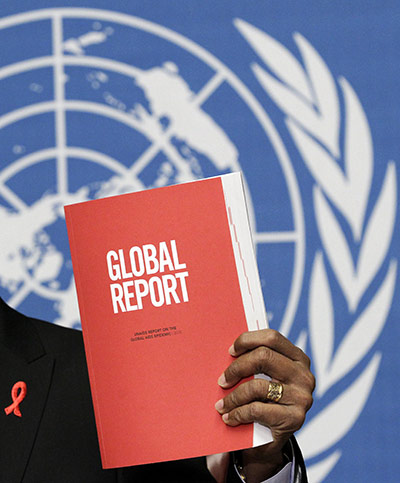
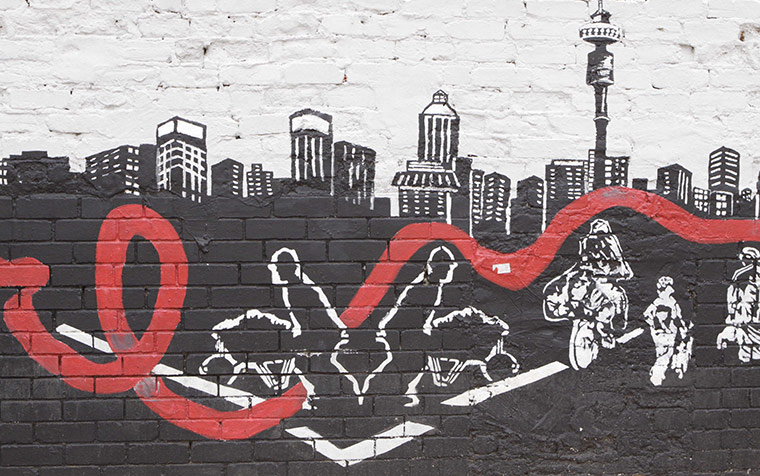
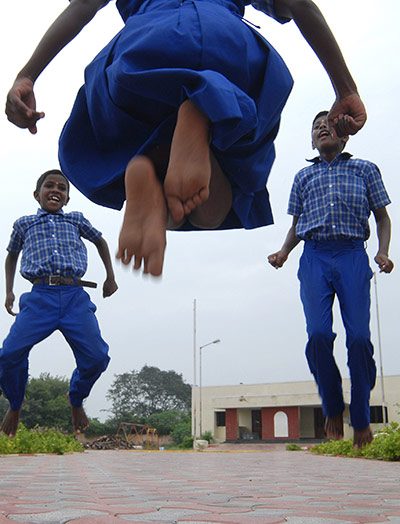
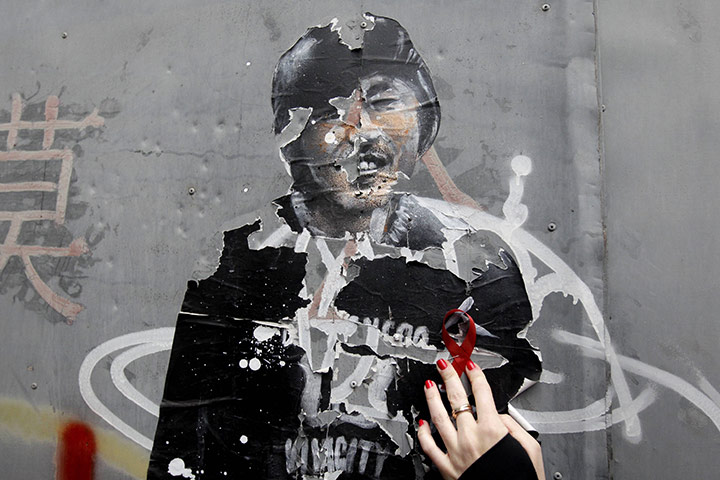
Michel Sidibe, executive director of UNAIDS, holds a copy of the organisation's 2010 report on the global Aids epidemic at the UN European headquarters in Geneva last weekPhotograph: Denis Balibouse/ReutersA wall mural in downtown Johannesburg shows a city skyline with an Aids ribbon passing through workers who make a living in the town. The UN report says the global Aids epidemic has slowed and cited a drop in new HIV infections. Infections rates in South Africa have reduced by more than 25% in the past decadePhotograph: Denis Farrell/APHIV infected and affected children play outside their primary school premises of the Community Health Education Society on the outskirts of Chennai, India. The Indian health minister Ghulam Nabi Azad told parliament last week that nearly 53,000 children in the country are HIV positive. He admitted that the major source of the infection "is vertical transmission from their infected pregnant mothers". While India may have stemmed the Aids epidemic "it miserably failed in prevention of parent to child transmission of HIV", says the Aids Society of India (ASI), a professional body of doctors in HIV carePhotograph: Nathan G./EPA
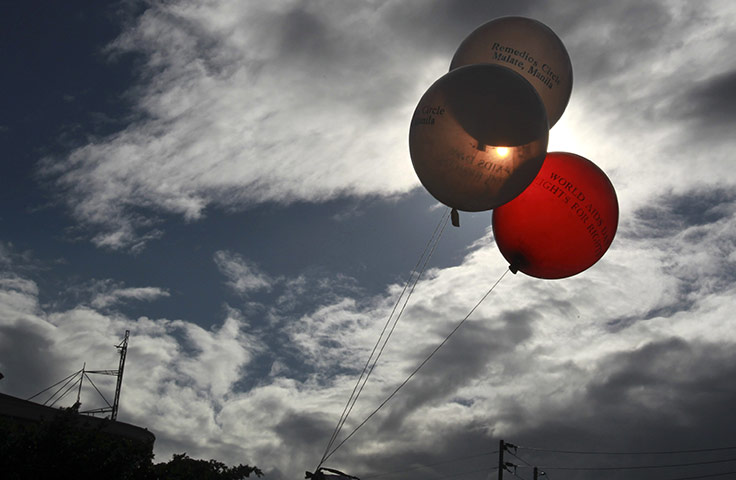
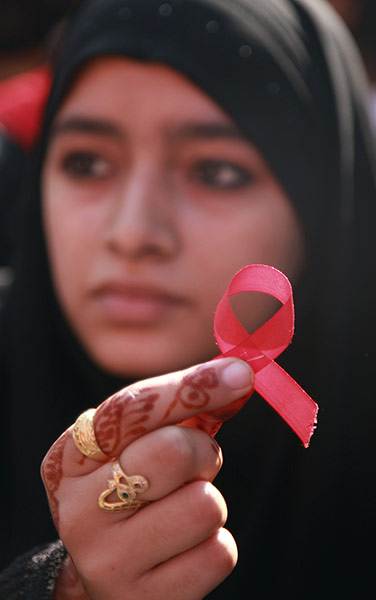
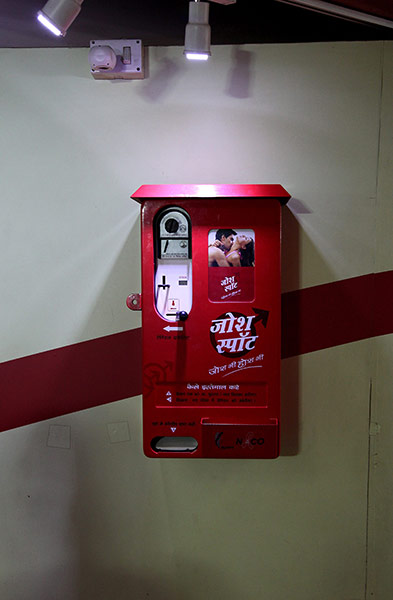
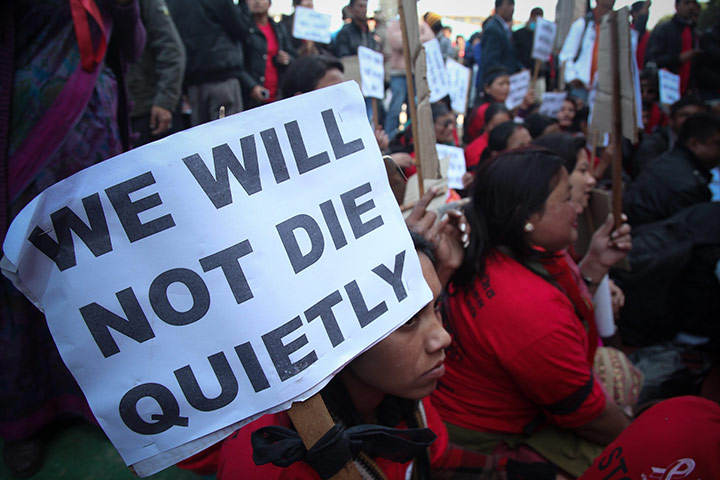
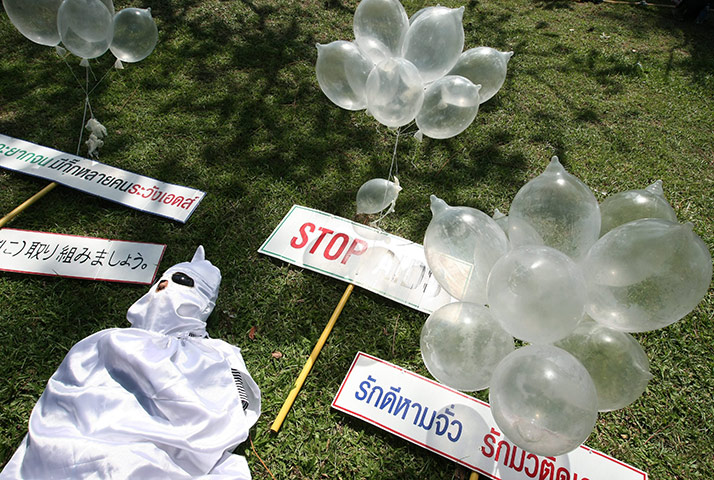
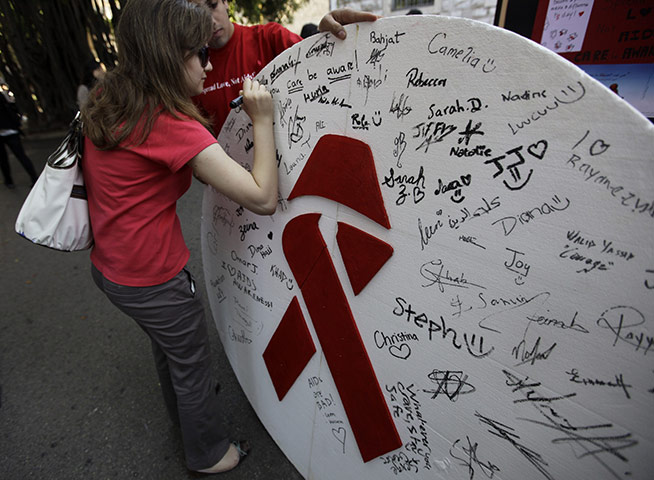
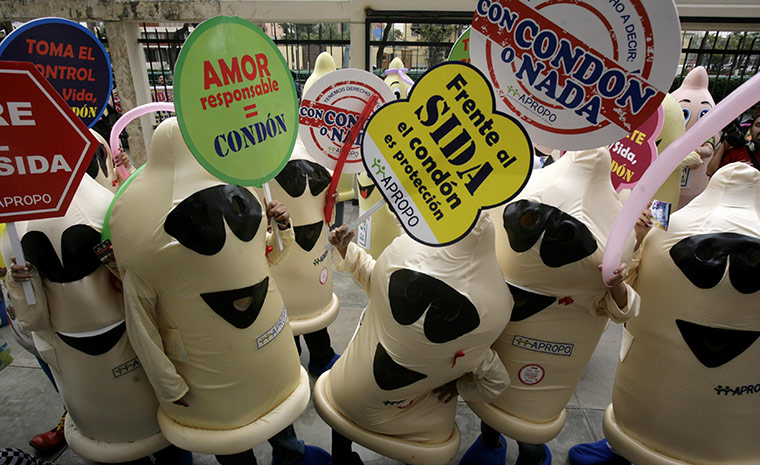
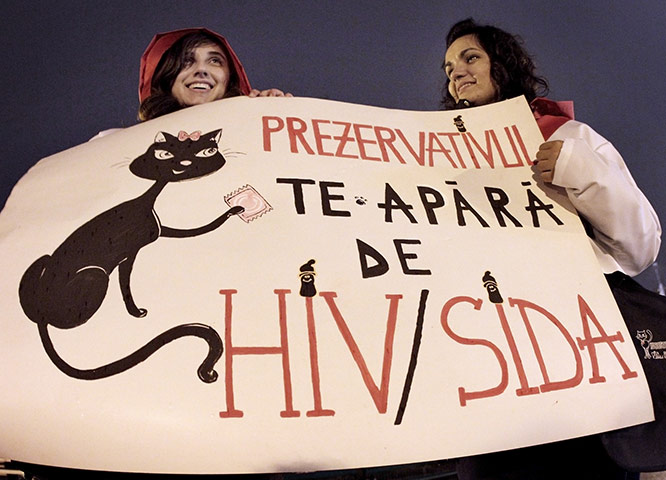
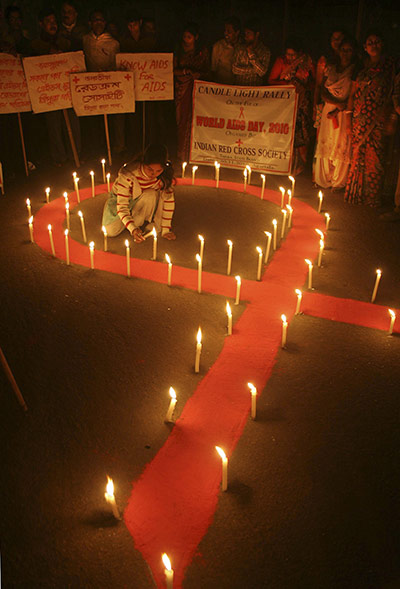
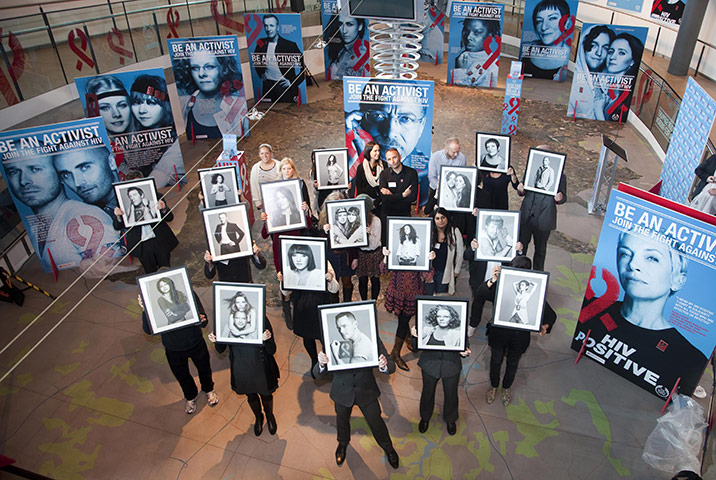
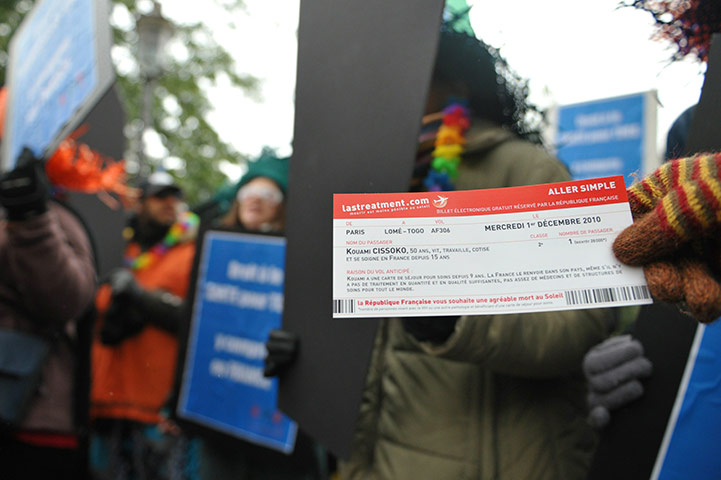
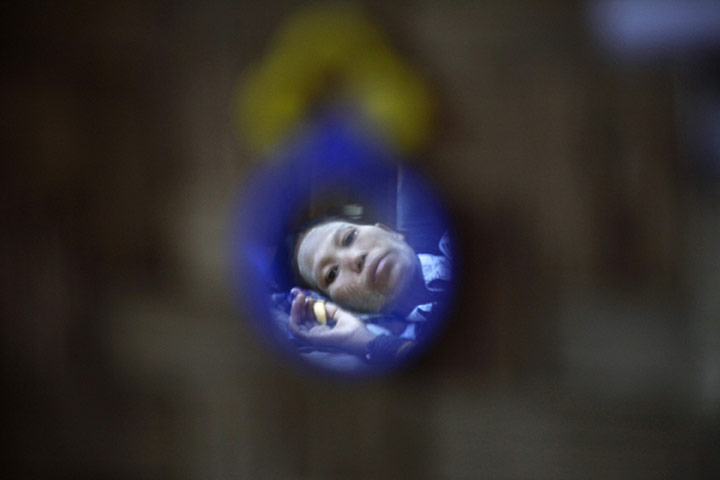
Aids activists take part in a flash-mob to mark World Aids Day today in Paris. The banner reads: "Right to heath for anyone, including in France." Around the world there were an estimated 2.6 million new infections last year, down from about 3.3 million at the peak of the Aids epidemic in 1999, according to Paul De Lay, deputy executive director of UNAIDSPhotograph: Bertrand Langlois/AFP/Getty ImagesRed and white balloons are tied to a platform during World Aids Day in Manila, PhilippinesPhotograph: Bullit Marquez/APA volunteer prepares red ribbons for the Red Carnival - World Aids Day awareness campaign in Kuala Lumpur, Malaysia, held last Sunday. The World Health Organisation declared the first World Aids Day in 1987 to remember those who had died of the diseasePhotograph: Ahmad Yusni/EPAA college student displays a red ribbon, the symbol for Aids awareness, at a rally to mark World Aids Day in Jammu, IndiaPhotograph: Channi Anand/APView of a condom vending machine installed on the Red Ribbon Express, a train for spreading Aids awareness. The eight-coach train, with both doctors and volunteers, has arrived in Delhi after a one-year journey. The volunteers will distribute information on prevention of HIV/Aids. During the year it travelled to 10,000 villages in 141 districts across the countryPhotograph: Harish Tyagi/EPAA Bangladeshi sex worker takes a rest after attending a rally to observe World Aids Day in Dhaka, Bangladesh. The total number of HIV infected people in the country now stands at 1,745Photograph: Abir Abdullah/EPAA member of National Association of People Living with HIV/Aids in Nepal holds placard during a function to mark World Aids Day in Kathmandu. The protesters are demanding clarification on how the donation of $30m provided by the World Bank for people who are HIV positive will be spent. The Nepalese government says 13 people are being infected each day. Some 72,000 people are HIV-positive in Nepal, according to the latest UNAIDS annual estimation, although the Ministry of Health and Population claims the figure stood at 14,787 in mid-OctoberPhotograph: Narendra Shrestha/EPAThe Sydney Opera House and harbour bridge in Australia were lit red yesterday to mark World Aids Day. More than 80 iconic landmarks across 13 countries will be 'turned' red to promote awareness of the ongoing fight against the Aids epidemicPhotograph: Don Arnold/Getty ImagesAn Indian sex worker looks on during an Aids awareness rally, in which sex workers, transgendered minorities and HIV-positive people took part yesterdayPhotograph: Dibyangshu Sarkar/AFP/Getty ImagesA volunteer tries to paste an red Aids ribbon on a poster during a World Aids Day event in Beijing. China has reported more than 68,000 Aids-related deaths as of the end of October, up nearly 20,000 year on yearPhotograph: Jason Lee/ReutersA Thai activist wears a condom costume as he sleeps next to placards and condoms during the commemoration of World Aids Day in Bangkok, ThailandPhotograph: Narong Sangnak/EPAA Turkish activist performs with a transparent ball on during a World Aids Day rally in the centre of IstanbulPhotograph: Mustafa Ozer/AFP/Getty ImagesA girl signs a board next to a red ribbon as students commemorate World Aids Day at the American University of Beirut, LebanonPhotograph: Hussein Malla/APPeople dressed as condoms hold up signs during a performance during an Aids and HIV prevention campaign in Lima, Peru yesterday. The signs read "responsible love = condom", "Protect from Aids, use a condom" and "Condom or nothing"Photograph: Mariana Bazo/ReutersGirls hold a banner that reads "condoms protect you of HIV/Aids" during an HIV/Aids awareness event staged by the Red Cross in Bucharest, Romania, yesterdayPhotograph: Vadim Ghirda/APA volunteer of the Indian Red Cross Society lights a candle during an HIV and Aids awareness rally yesterday in Agartala, the capital of India's northeastern state of TripuraPhotograph: Bapi Roy Choudhury/APDrag queen Chantal performs during an Aids awareness event sponsored by Cuba's National Center for Sex Education (CENESEX) in Havana last SundayPhotograph: Desmond Boylan/ReutersLondon Mayor Boris Johnson unveils the Body Shop Be an activist exhibition at City Hall in London. The exhibition features photography by Rankin of individuals affected by HIV/AidsPhotograph: Body Shop/Handout PhotoAt a flash-mob in Paris, an Aids activist shows a false plane ticket explaining the case of a 50-year-old Togolese worker, who has been living, working and receiving medical care in France for 15 years, but who the French authorities want to send back to AfricaPhotograph: Bertrand Langlois/AFP/Getty ImagesA patient is reflected in a mirror on a wall as she rests in a HIV/Aids hospice founded by a member of Aung San Suu Kyi's National League for Democracy (NLD) party in Yangon, Burma last week. Currently patients in this hospice need to obtain permits, which are issued by the government, to allow them to stay for two-week periods. All permits will expire on Friday and will not be extended by the government, according to a hospice worker. There are around 270,000 people who are HIV positive in Myanmar and most are unable to afford antiretroviral drugs, according to the UNPhotograph: Soe Zeya Tun/Reuters
Sign up to read this article
Read news from 100’s of titles, curated specifically for you.