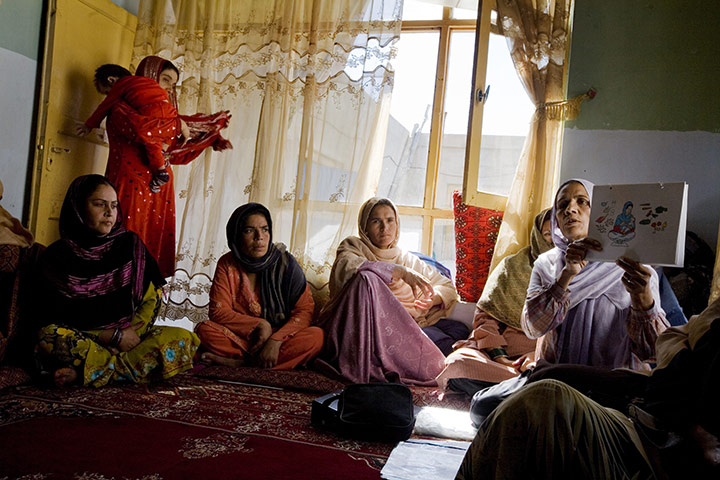
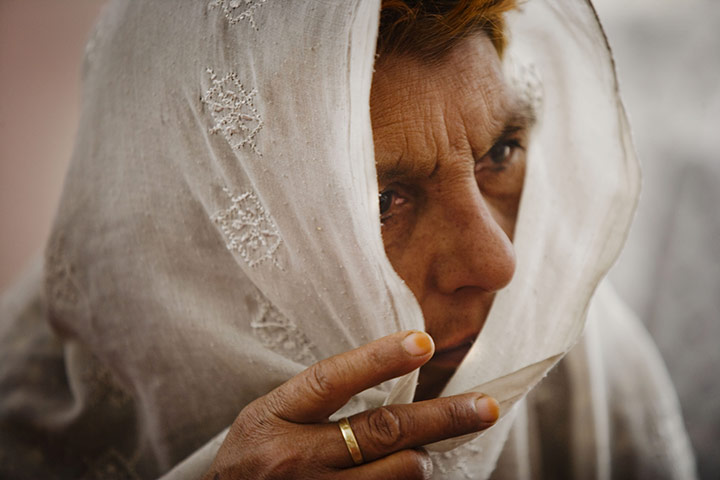
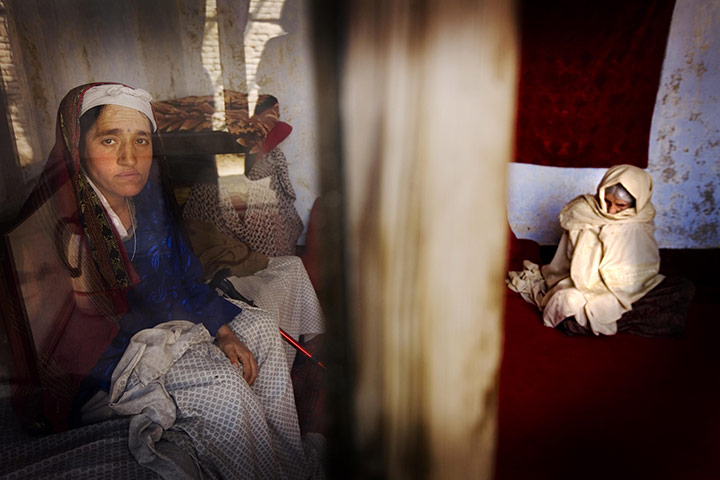
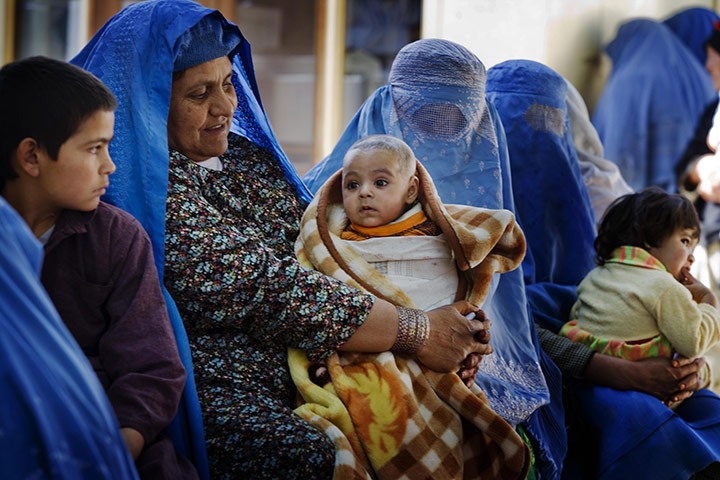
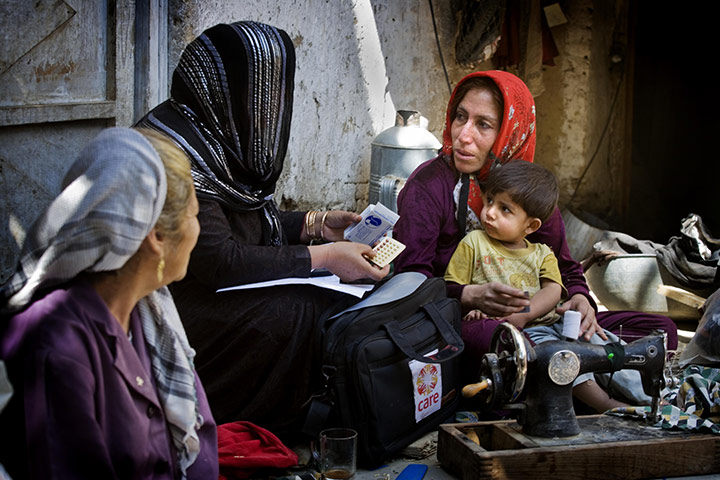
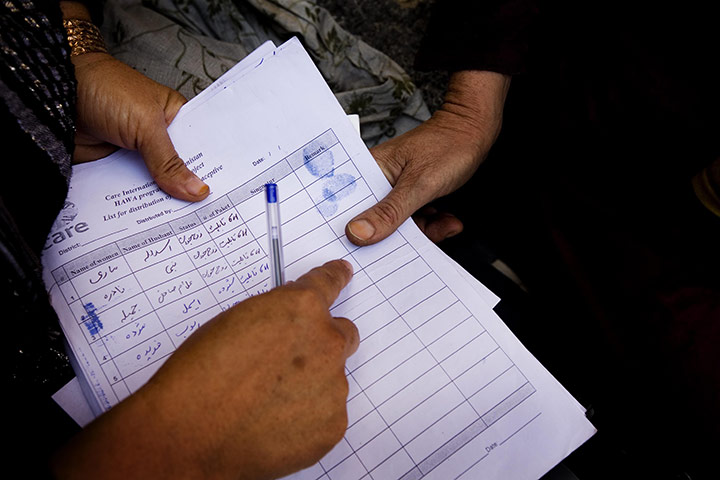
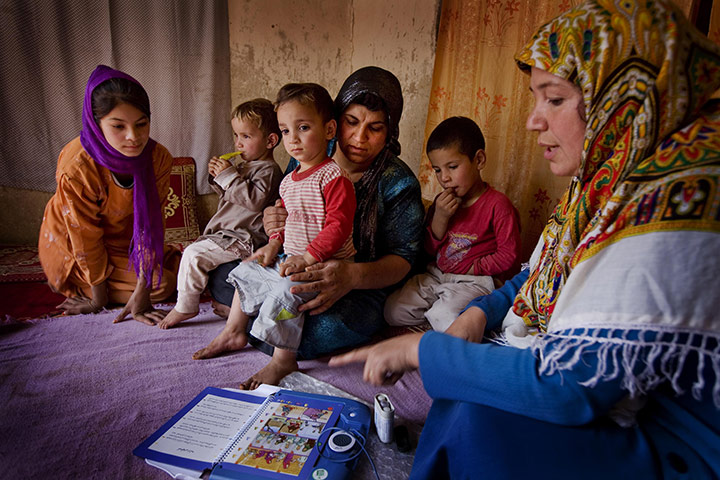
Mahboba Sharieffy was trained to become a community-based educator (CBE) by the NGO Care International three years ago. Sharieffy demonstrates to women through a flip chart the importance of nutrition and hygiene while pregnant and lactating at a weekly health "shura" (meeting) she organises in District 8 in Kabul, AfghanistanPhotograph: Kate Holt/CAREThe CBEs work in each of Kabul's districts, educating women about health issues surrounding pregnancy and motherhood. The CBEs run meetings like this one and visit individual households to offer advice. They refer women and children to hospital if necessary Photograph: Kate Holt/CAREA woman listening to the advice given at a health shura meeting in Kabul. Care International has been developing community-based maternal and child health projects in the districts of Kabul since 2005Photograph: Kate Holt/CARE
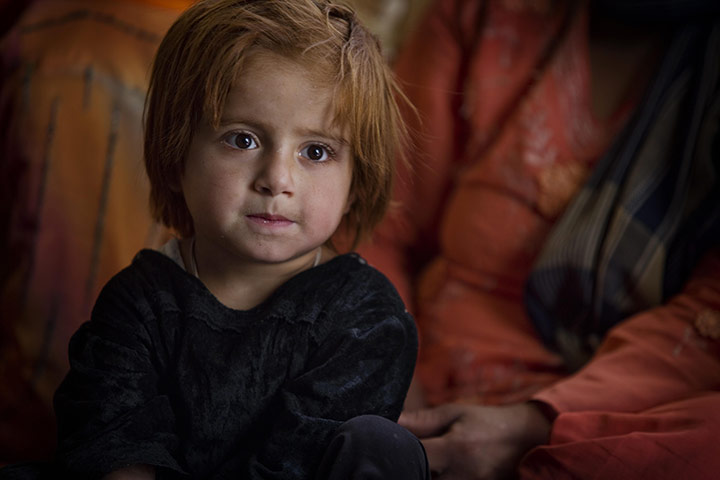
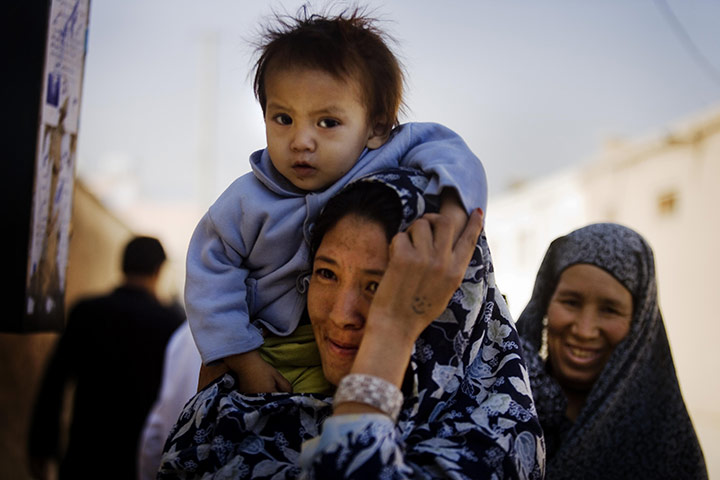
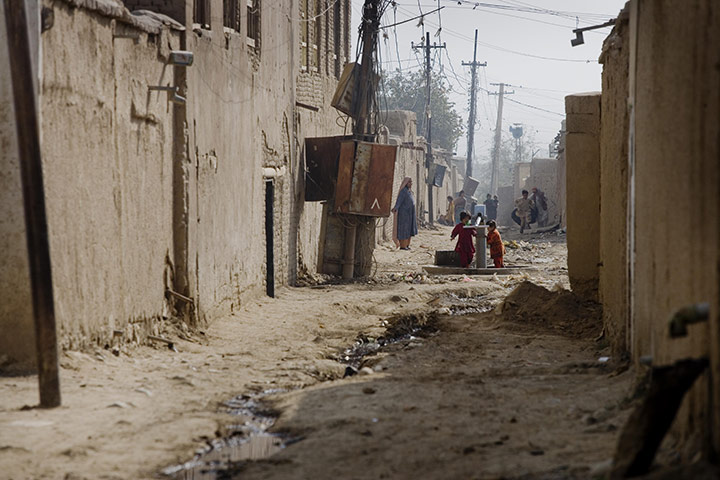
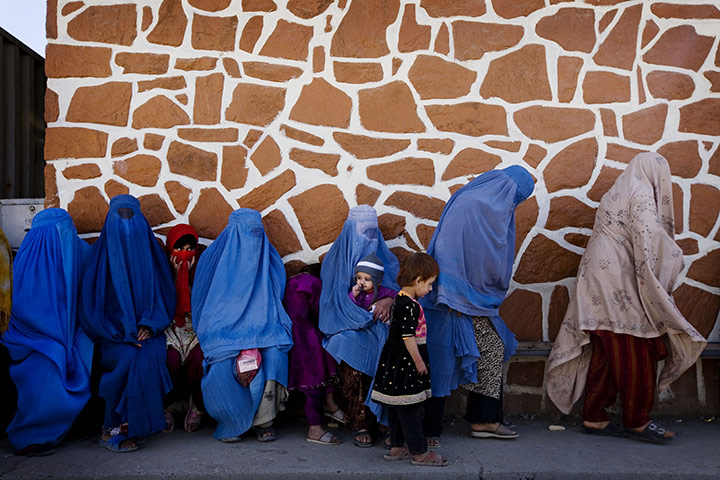
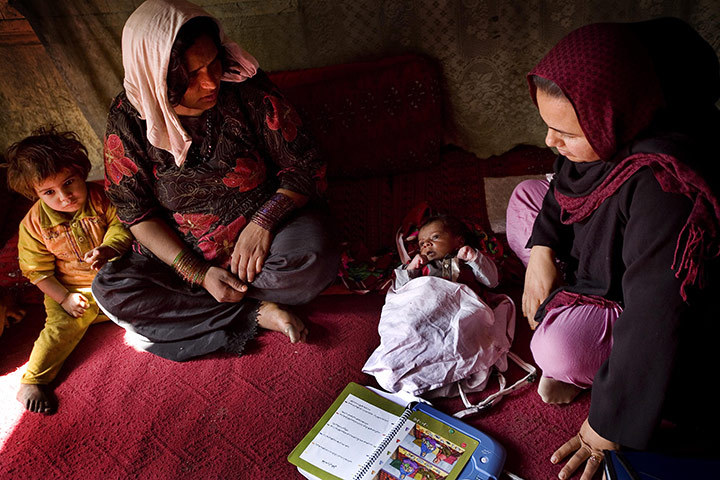
A young girl sits with her mother at a weekly health shura that has been organised by a community-based educator in District 8 in Kabul. According to UN figures, the under-five mortality rate in 2008 was 257 per 1,000 live births (down from 260 in 1990). In India, the figure is 69 deaths per 1,000 live births, while in the UK the figure is sixPhotograph: Kate Holt/CAREWomen arrive with their children to a health shura in Kabul's District 6. The shura is held at a health centre twice a month. One in eight women die during pregnancy and childbirth in AfghanistanPhotograph: Kate Holt/CARENafisa Jan Mohammed is three months pregnant with her ninth child and has recently suffered a stroke that has crippled half her body and made her unable to walk. She sits on her bed in the one room she shares with her husband, nine children and mother in law, who is seated on the floor, in District 5 of KabulPhotograph: Kate Holt/CAREA woman holds her grandchild while they queue to see a doctor at a maternal health clinic that is held weekly at the Dash Barchi hospital in District 6 of KabulPhotograph: Kate Holt/CAREAlia Walezada (centre), a CBE, talks to Farida, a 32-year-old mother of seven children, who has been recently displaced from Kandahar, about the importance of contraception. Farida is now living at her mother's home in District 6 of KabulPhotograph: Kate Holt/CAREWalezada gets Farida to use her thumb to sign for her prescription for contraceptives. The number of women between the ages of 15 and 49 using contraceptives in Afghanistan in 2008 was estimated to be 10%Photograph: Kate Holt/CAREYoung girls collect water from a central collection point near to an open sewage drain in District 5 of Kabul, AfghanistanPhotograph: Kate Holt/CAREA group of women wait with their children to see a doctor in Rahameena hosptial in District 8 in Kabul. CBEs meet weekly in district hospitals like these to advise pregnant and lactating womenPhotograph: Kate Holt/CAREAt her home in Kabul's District 6, Fawizia Nabi, who has 11 children, listens to a talking book that a CBE uses to explain health issues. The colourful book is known in the communities as a "magic book" because it talksPhotograph: Kate Holt/CAREKadrigol Namodin, who has eight children, discusses with a CBE how to look after her new born baby. She lives in one room with her husband and all of her children in District 5Photograph: Kate Holt/CARE
Sign up to read this article
Read news from 100’s of titles, curated specifically for you.