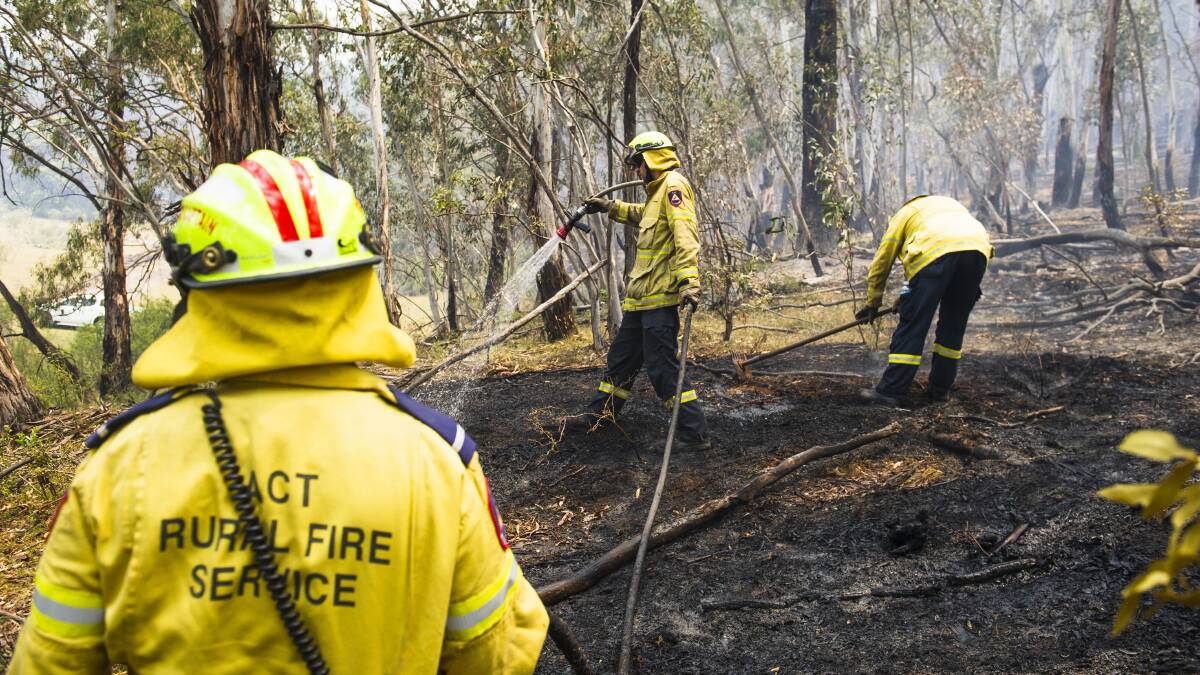
ACT volunteer firefighters who develop cancer after years on the job will be more likely to get workers' compensation after an inquiry.
The federal government on Friday announced it had accepted all six recommendations from a legislative review into the Safety, Rehabilitation and Compensation Act 1988.
The legislation set out that if an "employed" firefighter developed any of 13 cancers and had been in the role for a certain amount of time, authorities would have to presume their work contributed to them getting the disease.
But an "anomaly" meant ACT volunteers weren't afforded the same presumption that applied to volunteers in every other state and territory.
The ACT Volunteer Brigades Association, led by president Allison Ballard, was among those pushing for that to change.
"It is a good outcome for volunteers," Dr Ballard said on Saturday.
"It has taken a lot of pressure off, so rather than them having to establish that their cancer was caused by their firefighting duties, now there is a presumption that [federal workplace insurer] Comcare will accept the claim if they've been a firefighter for long enough.
"They won't have the fight on their hands that they would otherwise have had."
The review findings also recommended that a 14th cancer, malignant mesothelioma, be added to the list of those there should be a presumption about.
Mesothelioma is a rare cancer caused by asbestos and forms in the lining of the lungs, abdomen or heart.
The government accepted that the 25-year "qualifying period" for oesophageal cancer should be reduced to 15 years, meaning a firefighter would have had to have been in the job for 15 years for the presumption to be granted.
The review findings recommended against lung cancer being added to the list of diseases there should be a presumption about, given that "evidence did not support that working as a firefighter increased the risk of developing lung cancer, in either smokers or non-smokers".
Federal Attorney-General Christian Porter on Friday said the government was working with industry stakeholders to implement the recommendations.
"The government will continue to review the available scientific literature from time to time to ensure the list of prescribed diseases remains up-to-date and consistent with current science," Mr Porter said.