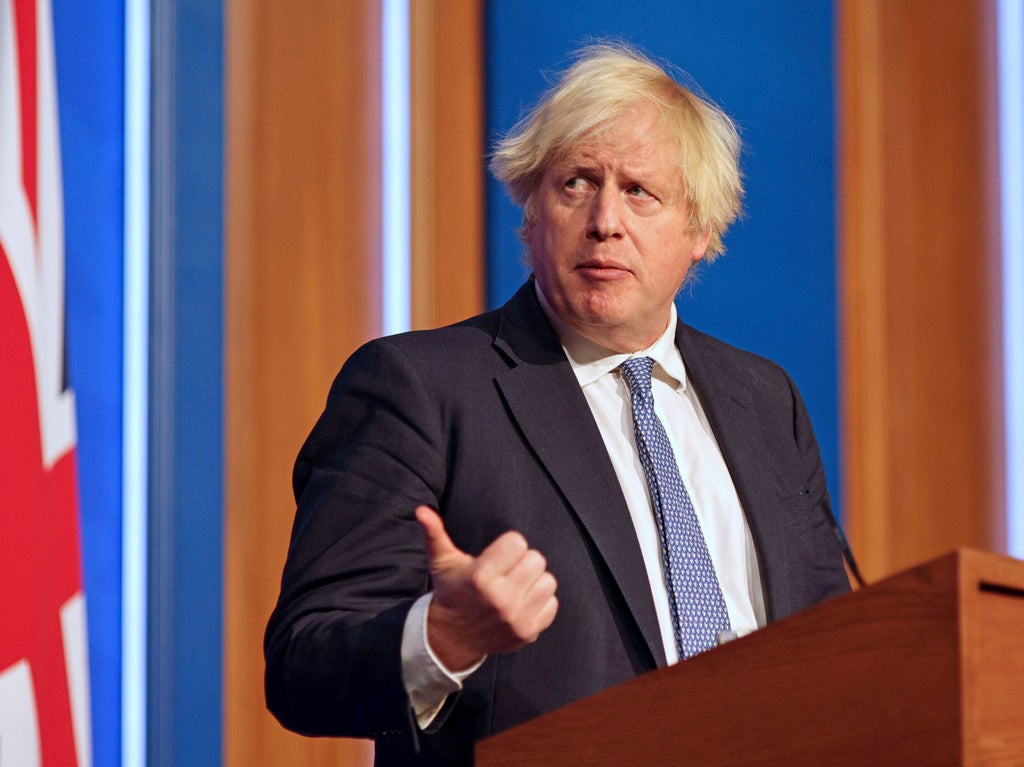
Boris Johnson’s government has implemented its “Plan B” for dealing with the coronavirus pandemic, bringing back social restrictions in England to curb the spread of the new Omicron variant of the virus.
Having previously hoped to press on with “Plan A” - encouraging the takeup of booster jabs - the prime minister’s hand was forced after a meeting of the government’s Covid operations committee in which the potential threat posed by the more transmissible new variant was laid bare.
The new strain drove soaring infection rates over Christmas and the New Year, with the UK hitting a pandemic high of 218,724 cases in one day on 4 January, according to the UK Health Security Agency.
London mayor Sadiq Khan declared a major incident over the extent of the Omicron outbreak in the capital before Christmas while NHS England announced a return to its highest level of emergency preparedness, level four national incident, meaning that the health service’s response will be coordinated as a national effort, rather than led by individual trusts.
As a result, face masks are now mandatory on public transport and in shops, cinemas, theatres and places of worship, an NHS Covid Pass is required for entry to crowded venues and booster vaccines are gradually being made available to all adults, not just the elderly and vulnerable.
But perhaps the most significant new measure for many is the return of the order to work from home.
Experts on the government’s Scientific Advisory Group for Emergencies (Sage) had been calling for the measure since at least last week while others have been recommending it since as long ago as October.
Taking time out from his schedule of firefighting Tory scandals over second jobs and illicit Downing Street parties - and his wife going into labour for the second time - Mr Johnson told a press conference on Wednesday 8 December: “We will reintroduce the guidance to work from home.
“From Monday you should work from home if you can. Go to work if you must but work from home if you can. I know this will be hard for many people but by reducing your contacts in the workplace, you will help slow transmission.”
This will be the case for at least six weeks but the state of play will be reviewed on Wednesday 26 January 2022, according to health secretary Sajid Javid, although it is feared the present restrictions could still be extended or even replaced by more severe “Plan C” measures if Covid-19 once more runs rampant and the high rate of infections beings to translate into an unmanageable level of hospitalisation.
Mr Johnson struck a cautious note during his press conference announcing the work-from-home guidance and said: “We can’t yet assume that Omicron is less severe than previous variants.
“So while the picture may get better, and I sincerely hope that it will, we know that the remorseless logic of exponential growth could lead to a big rise in hospitalisations and therefore, sadly, in deaths.
“That’s why it is now the proportionate and the responsible thing to move to Plan B in England while continuing to work closely with our colleagues in the devolved administrations, so we slow the spread of the virus, buy ourselves the time to get yet more boosters into arms, especially in the older and more vulnerable people.”
The decision was not taken lightly as the adverse impacts of the policy on the mental health and wellbeing of individuals is well documented, as is its detrimental effect on businesses, particularly office-adjacent services like cafes, restaurants, pubs, dry cleaners and gyms.
Many offices around the country have welcomed staff back to their desks for around two-to-three days per week since the easing of restrictions on 19 July - once known as “Freedom Day” - and the reversal will come as a blow to many people who were delighted to be reunited with their colleagues in person after a year of Zoom meetings and Slack messages conducted in isolation from spare rooms and kitchen tables.