David Cameron doesn’t have one, Gordon Brown’s was modest but workable, Tony Blair’s started massive but shrank over time and John Major had a little one and then lost it. A parliamentary majority is not a constitutional requirement for governing Britain, but it certainly helps. It also looks harder to come by these days. Parliament is hung now and is almost certain to stay hung after May’s general election.
That is because politics itself is hung: the Tories are losing; Labour is not winning. The exchange of voters between them is almost negligible. Most of the dynamic movement in opinion polls is elsewhere: in Liberal Democrat decay and spikes in support for Ukip, Scottish Nationalists and the Greens.
This all means that 2015 will be a year in which politics takes an arithmetical turn. The magic number is 325 – half the total number of MPs. On current polling it looks almost impossible for Cameron to hit that jackpot. He won 306 seats in 2010 and has since lost three in byelections. Tory strategists are confident their share of the vote will pick up as polling day approaches (history records a routine swing to incumbents) but translating that into constituency gains is the tricky bit. In marginal constituencies, former Lib Dems have turned to Labour while Ukip recruits disproportionately from the ranks of disaffected Tories. Conservative MPs take comfort in their poll lead on questions of leadership and economic trust, but the confidence shrivels when they try to name 22 places on the map that didn’t go blue in 2010 yet will do next year – and without losses anywhere else. Most say it can’t be done.
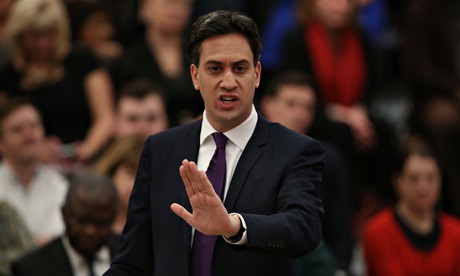
As for Ed Miliband, he has to win 68 new seats and lose none of the 257 he currently holds. He is helped by constituency boundaries that skew the pitch in Labour’s favour, but even then the leap required looks improbable. A surge in support for the Scottish Nationalists since the independence referendum has led many of Miliband’s MPs to abandon hope of a majority.
Each leader will insist throughout the campaign that he intends to win outright, but both sides are already thinking about ways to govern after an incomplete election victory. One gruesome and plausible scenario involves Labour and Conservatives holding about 285 seats each and the Lib Dems winning fewer than 30 (down from 56 today). Then Nick Clegg would not even have it in his gift to bestow legislative control on either Miliband or Cameron. Just to make the situation even more chaotic, Labour might have taken a lower overall number of votes than the Tories yet still – thanks to those boundaries – have more seats. Who then gets to be prime minister?
Constitutional protocol dictates that the incumbent has the right to try to cling on, as Ted Heath almost did in 1974. Feelers have already gone out from Cameron’s allies to the Democratic Unionist party (current tally: eight seats). There may also be a handful of Ukip MPs with whom many Tories will want to make common cause, but Cameron’s allies treat that option with cold contempt. The SNP has said it won’t deal with Conservatives but could find some arrangement with Labour. It doesn’t take a great stretch of the imagination to envisage a situation where a Prime Minister Miliband is cutting ad hoc deals with Welsh and Scottish nationalists plus Caroline Lucas, sole representative of the Greens, to legislate.
Then there is the disloyalty factor. The basic arithmetic of coalitions presumes Labour and Tory MPs vote as the whips command them. The evidence of recent history suggests otherwise. In the current parliament, Lib Dem MPs have often protected Cameron when his own backbenchers tried to injure him. In opposition Labour MPs have been remarkably disciplined. In government, once invited to vote for painful budget cuts, their rebellious urges would soon stir.
Regardless of who is prime minister, every significant vote in parliament after May could degenerate into an unseemly scramble to reach the magic 325: building quickie alliances; drafting back-of-an-envelope amendments. And at every turn there would be the possibility of a weak government finding it impossible to govern and falling apart.
Politics in the first half of 2015 will be dominated by campaign messages but few of those delicate promises will pass without compromise through the subsequent grinder of parliamentary deal-making. Words may be what wins power; keeping it will be a question of numbers.