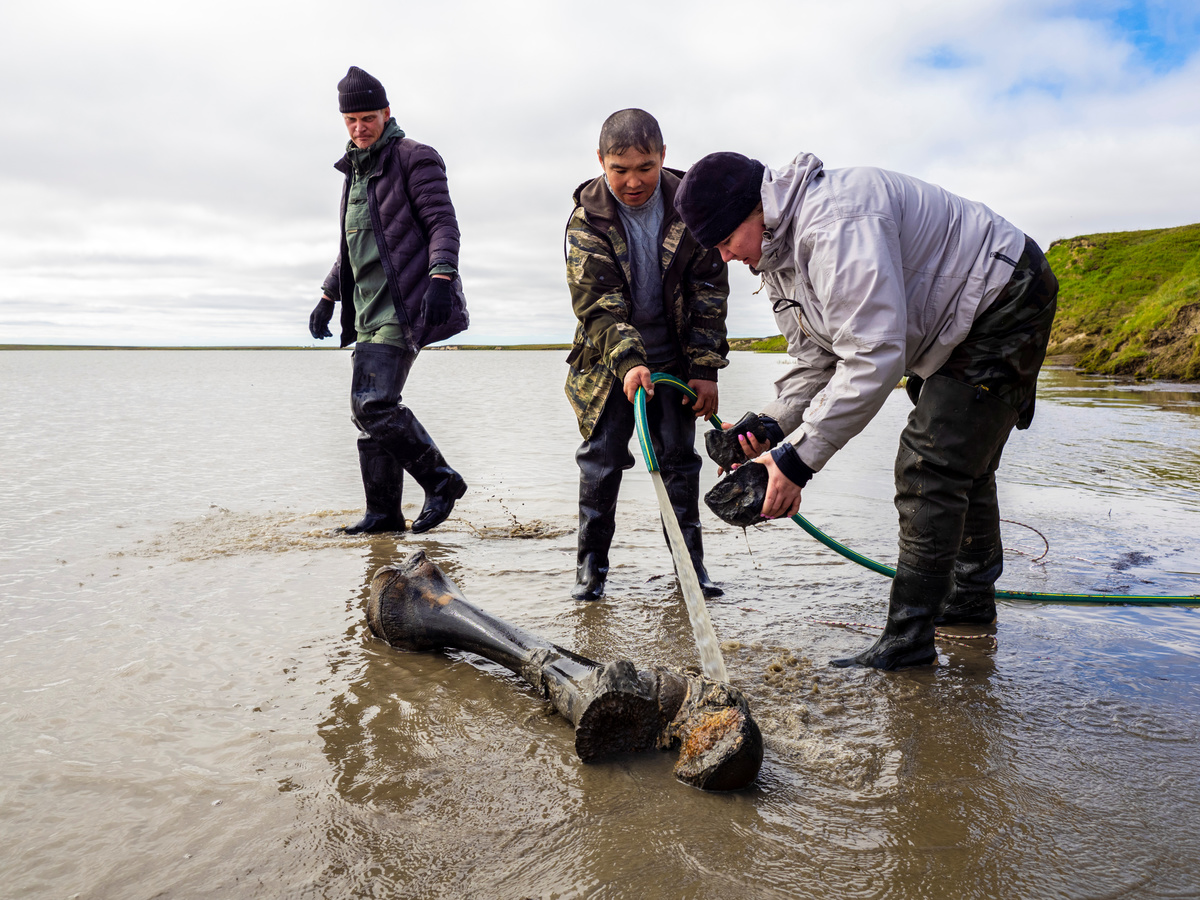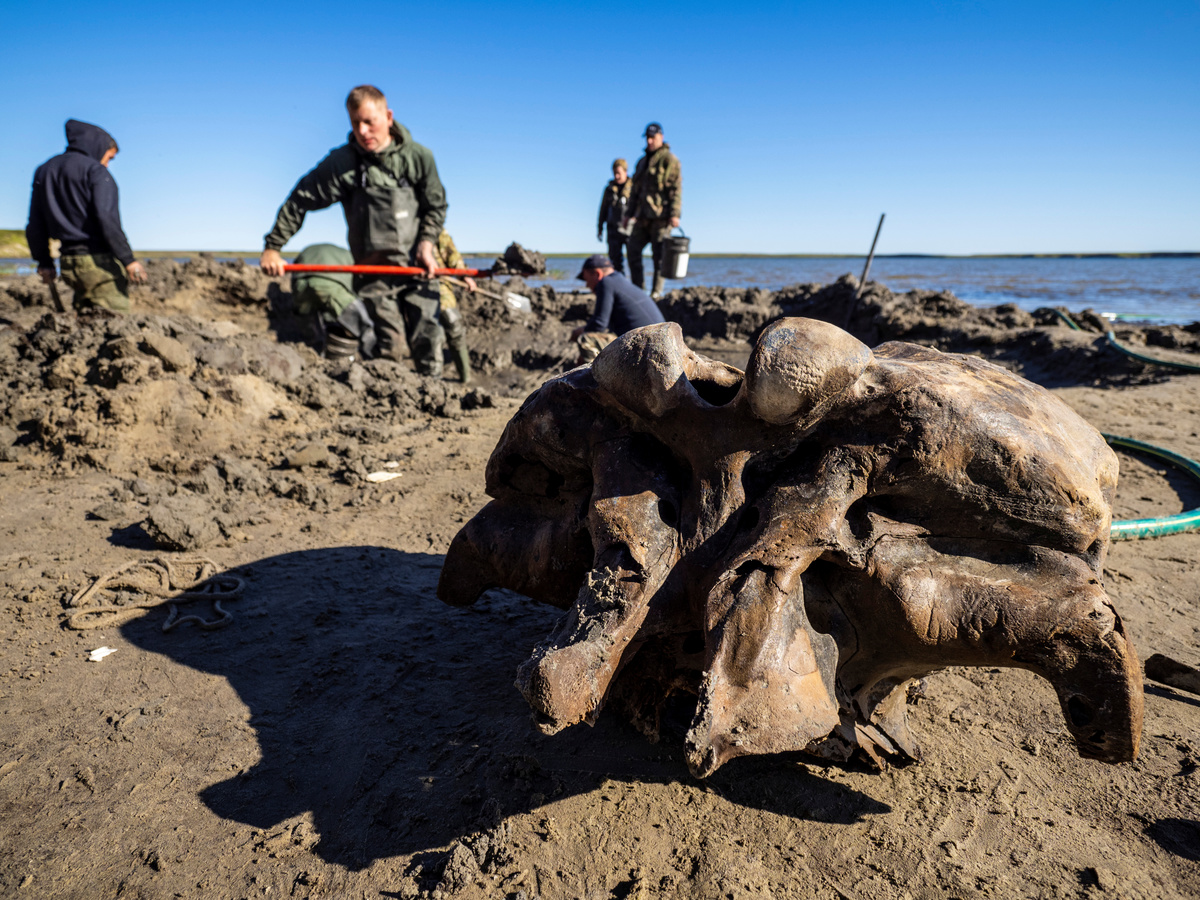
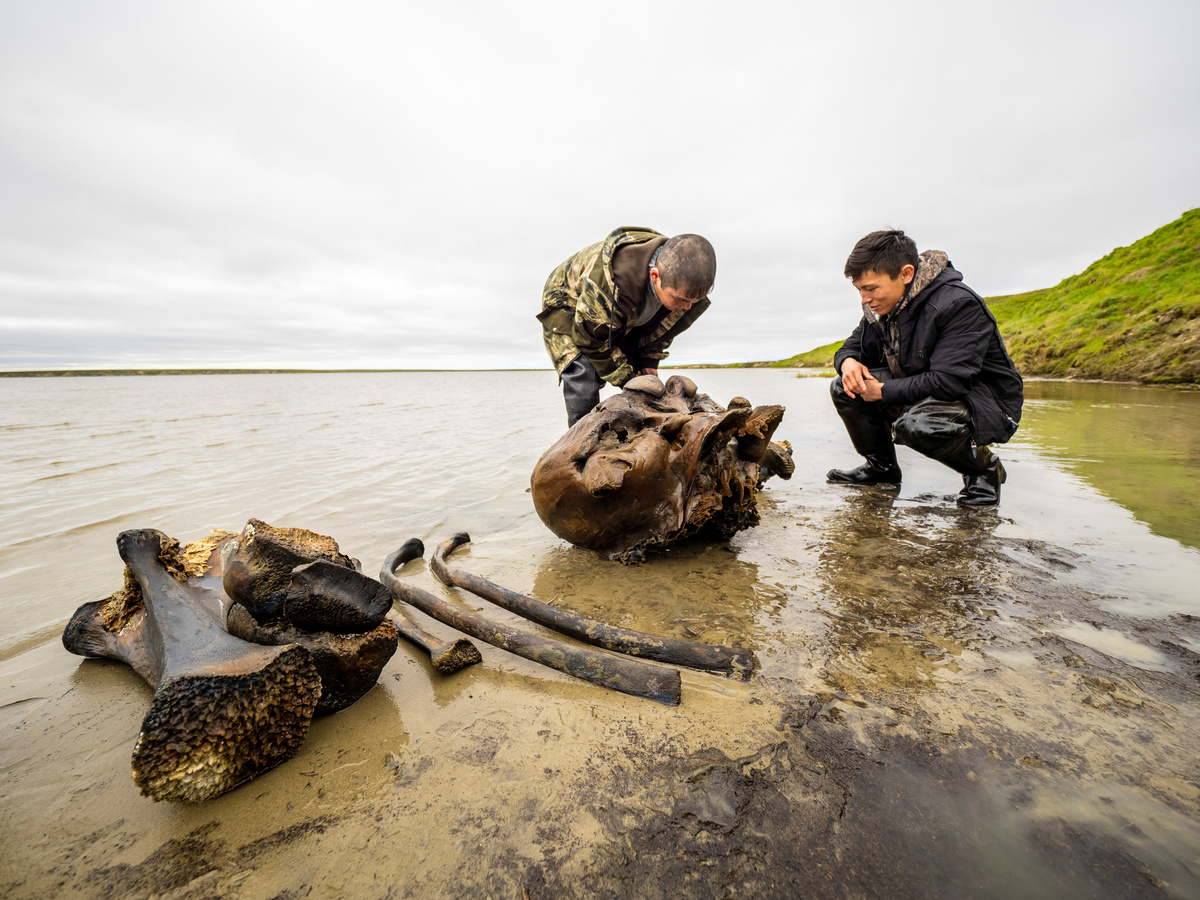
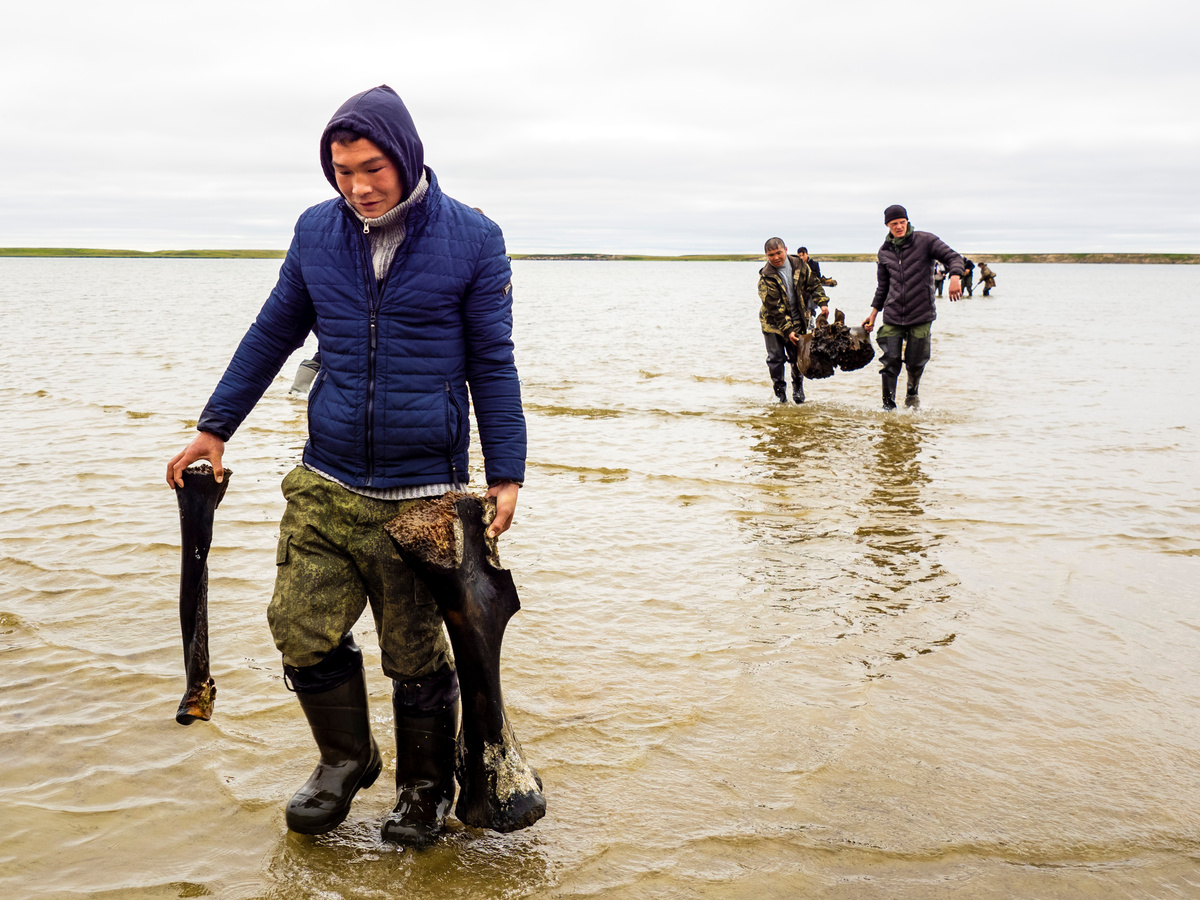
Russian scientists are poring over the stunningly well-preserved bones of an adult woolly mammoth that roamed the earth at least 10,000 years ago, after local inhabitants discovered its remains in the shallows of a north Siberian lake.
Part of its skull, several ribs and foreleg bones, some with soft tissue still attached to them, were retrieved from Russia's remote Yamal peninsula above the Arctic circle on July 23. Scientists are still searching the site for other bones.
Similar finds in Russia's vast Siberian region have happened with increasing regularity as climate change warming the Arctic at a faster pace than the rest of the world has thawed the ground in some areas long locked in permafrost.
Scientists circulated images in December of a prehistoric puppy, thought to be 18,000 years old, that was found in the permafrost region of Russia's Far East in 2018.
The mammoth remains are at least 10,000 years old, although researchers don't yet know exactly when it walked the earth or how old it was when it died, said Dmitry Frolov, director of the Scientific Centre for Arctic studies.
Researchers have found mammoth fossils dating from up to 30,000 years ago in Russia, he said.
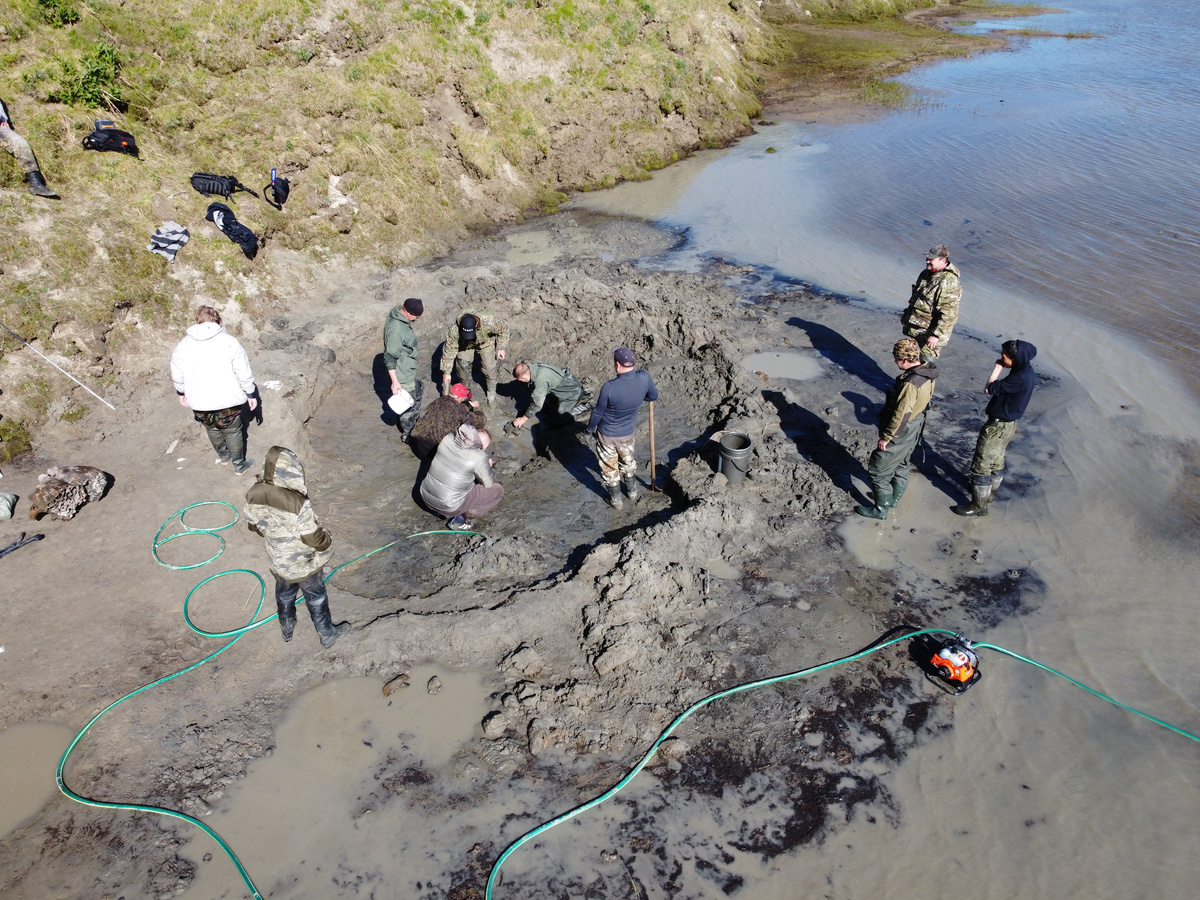
Yevgeniya Khozyainova, a scientist from a local museum, said it was unusual to find so many bones belonging to a single species and to know where they came from.
"Of course, we'd like to find the remaining parts, to understand how complete a find it is. Whenever there is soft tissue left behind, it is valuable material to study," she said.
(Reporting by Dmitriy Turlyun; Writing by Tom Balmforth; Editing by Raissa Kasolowsky)