
I kept my surname when I got married many years ago. I’d already made a name for myself in my career and also, I didn’t see why my entire identity (and all my official documents) had to change simply because someone put a ring on my finger. My then-husband was completely cool with it, but of course, not everyone shared his open-minded ways of thinking.
Historically, women changed their surnames upon marriage because, under English common law and in a patriarchal society, they “belonged” to their husbands. Nowadays, many still do, but for different reasons. And then there are those who buck tradition and hold onto the names they were born with.
Someone asked married women to share their reasons for keeping or not keeping their maiden names, and some of the answers may surprise you. Bored Panda has put together a list of the best. You’ll find that below, along with some info on where this tradition of taking someone else's name really comes from.
#1

© Photo: kingshelbs
Women didn’t have much of a choice back in the day. Getting married meant you no longer belong to your father, your husband now “owns” you and legally, you must take his surname. It came down to something known as coverture. In short, the erasure of a woman’s identity.
“Coverture is a legal formation that held that no female person had a legal identity,” explains Catherine Allgor, a historian and president of the Massachusetts Historical Society. “A female baby was covered by her father’s identity, and then, when she was married, by her husband’s.”
Allgor adds that while the idea of a husband and wife becoming “one” under marriage might sound romantic, it really wasn’t because the ‘one’ essentially was the husband, while the wife was ‘legally deceased.’
“She does not exist in law,” Allgor said. “Only the husband does.”
#2
© Photo: sams_tok
#3
© Photo: prblynotyourpsychologist
Allgor goes on to say that coverture severely limited a woman’s rights. “Married women could not make contracts, because they couldn’t own businesses... Married women owned nothing—not even the clothes on their backs," she told Brides.com. "They had no rights to their children, and no rights to their bodies, so men could send their wives out to labor, and [the men] could collect the wages.”
A husband also had an absolute right to intimacy because within marriage, a woman’s consent was implied. The Dark Ages were pretty dark, for women at least...
#4

© Photo: stephychristiansito
#5

#6
Fortunately, albeit slowly, the wheels started to turn and women were eventually allowed to do things like go to school, get driver’s licenses, and work. In 1920, American women were granted the right to vote. But there was a twist...
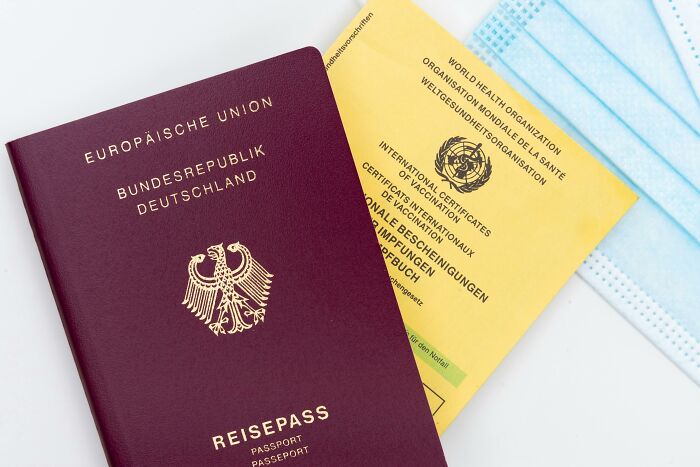
Prior to the 1970s in the U.S., a woman could not obtain a driver’s license, get a passport, or register to vote unless she took her husband’s last name. We've moved with the times since then and women nowadays are seen as (a lot more) equal.
Yet, despite this, around 80% of women who do choose to get married to a man end up taking his surname.
#7

© Photo: reagangracie
#8

© Photo: nessavedder
#9

© Photo: sunny_ivy_01
While it’s no longer law to do so, many brides lose their maiden names nowadays either as a symbolic or romantic gesture of “two becoming one,” because they want their new family unit to share a last name, or out of social pressure.
Of course, some opt to take their husband’s surname because it simply sounds better than their own. Or because, as one Mrs. quipped, going from being a King to being a Butler would be an unwanted demotion.
#10
#11
#12

© Photo: strressed
A 2023 poll conducted by Pew Research Center found that 14% of married women chose to keep their last name, while 5% hyphenated both their name and their spouse’s name. Interestingly, but not too surprisingly, 92% of married men said they kept their last name.
“Just 5% took their spouse’s last name, and less than 1% hyphenated both names,” Pew reported.
#13

© Photo: allyboying
#14
#15
When Pew Research dug deeper, the survey revealed that certain groups of women were more likely than others to keep their maiden name after marriage.
"20% of married women ages 18 to 49 say they kept their last name, compared with 9% of those ages 50 and older," notes the site, adding that some women with a postgraduate degree were also reluctant to let their husbands steal their thunder.
"26% of married women with a postgraduate degree kept their last name, compared with 13% of those with a bachelor’s degree and 11% of those with some college or less education," Pew reported.
Democratic and Democratic-leaning women were also twice as likely as Republican and Republican-leaning women to say they kept their last name.
#16

© Photo: ccactus5
#17
#18

Whether you choose to keep your maiden name, take your husband's name, or use a hyphenated version of both is a personal decision. But it's not one to be taken lightly, warn some experts. It can impact your daily life, your identity, your career, your finances and even your future family.
"This choice will follow you in social settings, professional environments, and legal situations," Loverly.com explains. "It’s not just a formality; it’s a reflection of who you are and how you want to present yourself to the world."
#19
#20
#21
#22
#23
#24
#25
I have to change my name in 2 different countries and going to the consulate/embassy is a nightmare.
#26
#27
#28
#29
#30
#31
#32
#33
#34
Please ask my husband why he didn’t change his name instead.
#35
#36
#37
#38
#39
#40
#41
#42
#43
#44
#45
I was really excited to change my name. I am not contact with my birth parents and had a lot of trauma so having thr last name of someone who loves me was a definite improvement 😅💜
#46
#47
#48
#49
#50
#51
#52
#53
#54
#55
#56
#57
#58
#59
#60
#61
#62
#63
#64
#65
#66
#67
#68
I’m a lawyer. He is not.