One of the best things about turning 40, and then 41, was realising that I didn’t have to do things I used to think were obligatory. It turns out this is a huge category, from replying promptly to text messages, to maintaining relationships with people I don’t really like, and – a new revelation – participating in events rather than watching them on TV.
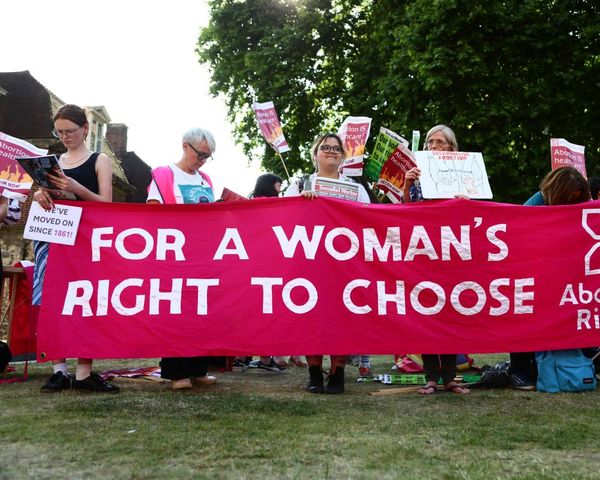
This came to me a few weeks ago when friends asked if I was planning on going to the women’s march, the huge anti-Trump rally taking place in Washington DC on 21 January. My initial response was: of course I’m going, I’ll get an overnight babysitter, it’s a historic event and a symbolic gesture and something I’ll one day tell my children about.
Then I thought: what is it exactly I’ll tell them? I revived a lot of miserable memories of Glastonbury. I thought about the hell of the annual Halloween parade in downtown Manhattan and some old, grim experiences at the Notting Hill carnival. Mostly, I thought about being at Barack Obama’s inauguration; not at the ceremony itself, but the back of the crowd approximately three miles away, in frigid DC weather and surrounded by thousands of other scuffling, freezing, depressed-looking people, trying to squeeze a sense of occasion from what felt like being at the back of a demo.
Very occasionally, crowds can be electrifying – the spontaneous gathering in Times Square on the night of Obama’s election victory was one. But from experience, I suspect that unless I camp overnight to get a good spot at the front, the women’s march on Washington will be less a wonderful, uplifting celebration of womanhood, than five hours of shouting, “What did she say?” to the woman standing next to me and a lot of anxiety about where to go to the toilet.
And where once I would’ve lied and made up an excuse, it felt good to be old enough to say, “No, I hate crowds. I’m staying home to watch it on TV.”

Why Edna still shocks
When I was in my teens, my mother would urge novels she’d read in her youth on me with the caveat, “They might be terribly dated by now.” Some I read, but then came the phase when anything she recommended was tainted and to be avoided like the plague. This passed. But for some reason I remained suspicious of Edna O’Brien, whose first novel, The Country Girls, was beloved by my mother and which I used to think sounded horribly boring. Then last week I found an old copy on my shelf and started to read it, and of course it’s brilliant in a way that makes its late-1940s setting seem as fresh as any modern coming-of-age novel.
There is one exception to this. The heroine, Caithleen, is expelled from her convent for writing a tame note implying sexual relations between a nun and a priest, an act she considers so lewd she hesitates to share it with the reader. At the same time, she is, at 14, being wooed by a married man decades older than her, which the author presents as a thrilling but more or less straightforward love interest.
You couldn’t do that today without calling it grooming, which I suspect the author would see as a piece of fussy editorialising with no place in fiction. It’s interesting; it simultaneously dates the novel, which was banned in Ireland on first publication, and preserves something of its original shock value.
Machine moments
When I was a baby, my mother would park me in front of the washing machine to watch the socks go round for minutes at a time. My kids watch the vacuum cleaner; I think they think it’s a pet. Some people worry about the day their children will stop believing in Father Christmas; I worry about the day mine figure out the Roomba doesn’t have agency and I lose those precious few moments to read another paragraph or glance up at the crowds on TV.