KIGALI -- Women's empowerment is one of the major agenda items to be discussed at the seventh Tokyo International Conference on African Development (TICAD), which will kick off in Yokohama on Wednesday. While a handful of countries on the African continent now have a number of female policymakers, many other areas see no end to incidents in which women become victims of violence and discrimination.
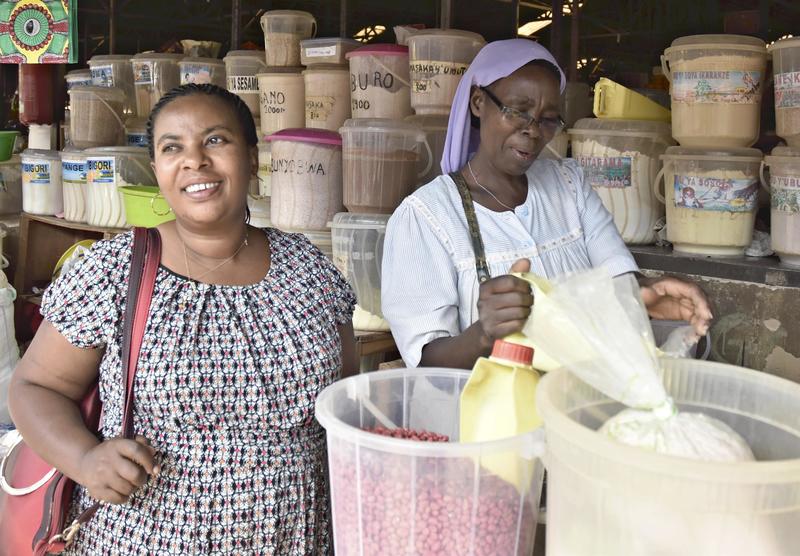
"Women support our country's development with their hard work and adaptable nature," Christine Mukabunani, a 45-year-old member of Rwanda's parliament, said in Kigali in an interview with The Yomiuri Shimbun earlier this month.
Women account for 61 percent of the members of Rwanda's parliament, the world's highest rate thanks to a quota system the African nation introduced in 2003 to assign a certain number of seats and candidacies to women.
During Rwanda's 1994 genocide that was triggered by conflicts between ethnic groups, an estimated 800,000 people -- more than 10 percent of the country's population -- were killed. The population of women ended up surpassing that of men.
Up until that point, women did not have access to education and had mostly been engaged in domestic work and farming. To rebuild the country, women were encouraged to play leading roles in politics and business. Private companies also hired more women.
According to the World Economic Forum's global gender equality rankings for 2018, Rwanda came sixth among 149 countries surveyed, far higher than Japan, which stood at 110th. Women's active participation in society is believed to have worked as a major factor that has helped Rwanda achieve the "African miracle," marking more than 7 percent annual GDP growth.
Escape from living hell
Rwanda, however, is only one of a small handful of examples of African countries that have empowered women.
In Nakivale, a refugee settlement in southern Uganda, a 33-year-old woman shared her horrific account of what happened to her two years ago in her native country, the neighboring Democratic Republic of Congo.
"It was either be raped, or be killed," she said in tears. "It was just hell."
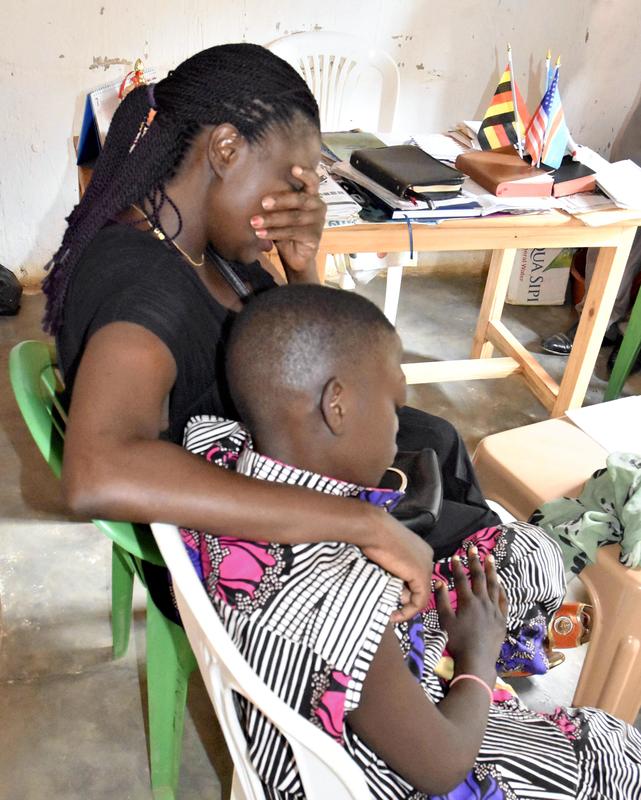
The woman recounted that she was at home with her three daughters in eastern DR Congo, a region that has long suffered protracted conflicts, when seven militants burst into her house. She and her daughters were raped. When she finally managed to get her battered self to crawl out of the house, she found out that women in 10 other houses in her community had been raped and murdered. One of her daughters, now 10, lost her eyesight when something was sprayed into her eyes during the assault.
The woman and her daughters fled for their life to Nakivale. She later found out she was impregnated from the rape and gave birth to a child who has turned 1. Every time the woman sees her youngest child, she said, "I can't stop crying when I remember what happened."
Even while taking shelter from conflicts in refugee camps, women still face the risk of being sexually assaulted. That happened to a 43-year-old woman in the Nakivale camp when she was attacked by six men while working on farmland on the premises.
"Women are oppressed no matter where they are," the 43-year-old said. "Is there any safe place for us?"
In South Africa, meanwhile, 100 women are said to be sexually assaulted every day.
Girls in sub-Saharan Africa not only have a higher out-of-school rate than boys, but also this figure is higher than any other region in the world.
The low number of girls who attend school is believed to be a major factor behind the fact that 40 percent of women are married before they turn 18.
An expert has pointed out that sexual assault in the region remains rampant because of a persistent view that women are the property of men.
Through such aid as offering assistance for girls to attend school or for women to get out of poverty, it is vital to create an environment that will allow women to play leading roles in their countries' development.
Read more from The Japan News at https://japannews.yomiuri.co.jp/