By Chandra Ganapathy
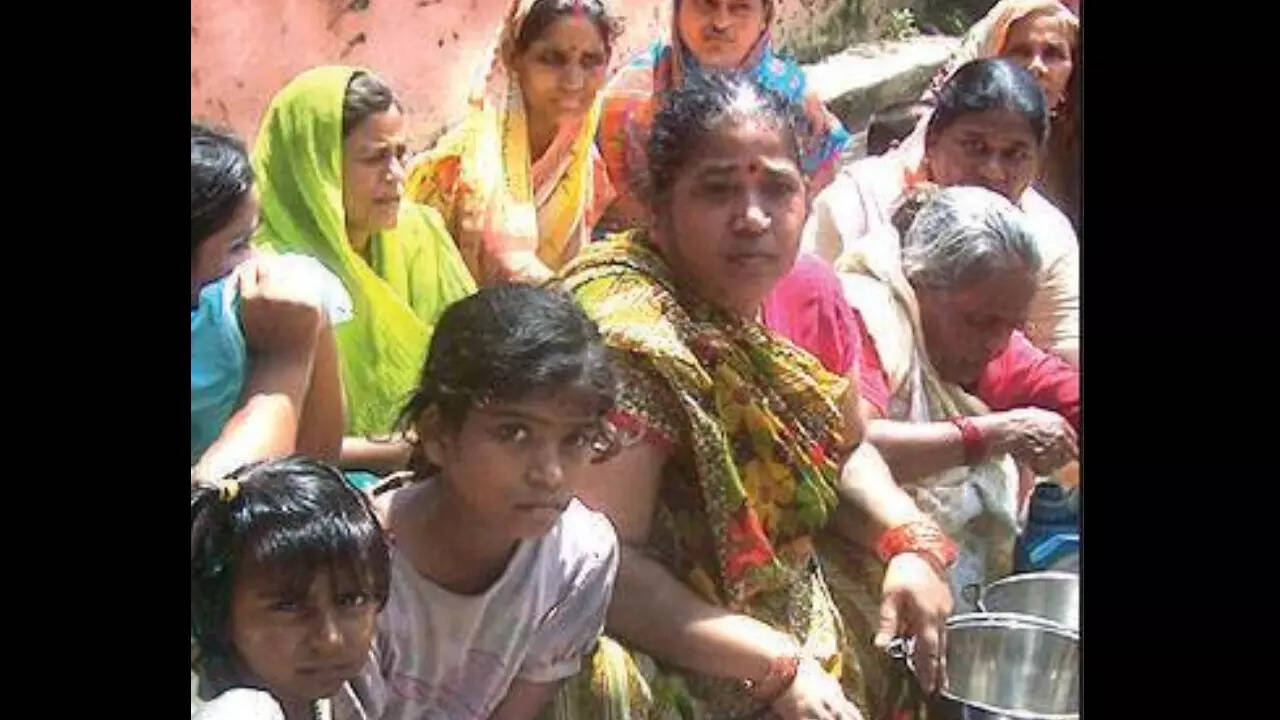
The role of women in family and public spheres is central to water and environment in India. Women fulfil daily needs of water, leading to multiple trips to a water point which causes mental and physical stress.
Efforts are being made by the government and non-government actors to formally recognise the vital role played by women in water provision and its management, but it still goes unrecognised.
Access to clean water closer to home can unlock a woman’s potential – economically, educationally and socially. Women’s voices and leadership are critical to realising safe, private, accessible and functional water sources for everyone.
The government of India has set the ambitious goal of ensuring safe and adequate drinking water through functional taps in every rural household by 2024. In the meantime, the commitment is to ensure the availability of safe water at a horizontal or vertical distance of not more than 100 metres from a household.
As per the 76th round report (December 2018) of the National Sample Survey Office (NSSO), 9.3% households across India have primary source of drinking water beyond 200 metres, and 9.6% households have principal source of drinking water beyond 30 minutes for a round trip.
According to a rough estimate, 12 crore women everyday spend over 2-3 hours in water collection, walk more than 2 kilometres and carry nearly 200 litres of water.
The burden of water collection on women and the time consumed every day adds to uncounted and unpaid hard labour. It is estimated that women spend 150 million workdays every year fetching water which amounts to the national loss of income of Rs 10 billion. This time should be utilised by women for education, work, family or for themselves.
Experiences indicate that women and their collectives, when given training and opportunities, have contributed not merely to the operational aspects of water supply systems, but have also efficiently taken up technical and management roles.
The participation of women in local water governance is recognised as necessary for achieving sustainable management of water resources. Institutions are being created to enable effective participation and leadership of women in the use and management of resources.
The recent compendium of stories of women water champions, from various WaterAid offices across the country and other experiences compiled by UNDP, present the wide spectrum of women’s role in local water governance.
In Madhya Pradesh, thousands of women have led the process of making village action plans for household tap connections, ensuring that no one is left behind and people decide and lead on the design, delivery and sustainability of the Jal Jeevan Mission.
These women lead drinking water quality monitoring, share findings and ensure remedial action wherever necessary. The trained women in Bihar, Uttar Pradesh, Madhya Pradesh, Maharashtra and Odisha create awareness on water quality, mobilise community members for restoring abandoned dug wells, recycle waste water to productive use in the garden, construct rainwater harvesting systems and maintain water purification systems.
In the remote forest villages of Debagarh, women’s collectives have taken up repair and maintenance of handpumps and other water supply systems making a livelihood from these services.
In water scarce villages, women have catalysed a community’s collective action to improve water use practices securing drinking water.
In Jharkhand, women have dug ponds and, while sustaining drinking water in the area, started a pond-based livelihood programme. The campaign is led by women on the ground to promote water literacy, stewardship and bring about change in water conservation and governance.
Experiences indicate how gender disparity and power differences can be addressed by women leadership and result in beneficial effects of water governance in communities.
(The writer is advisor, programme and learning, WaterAid India)