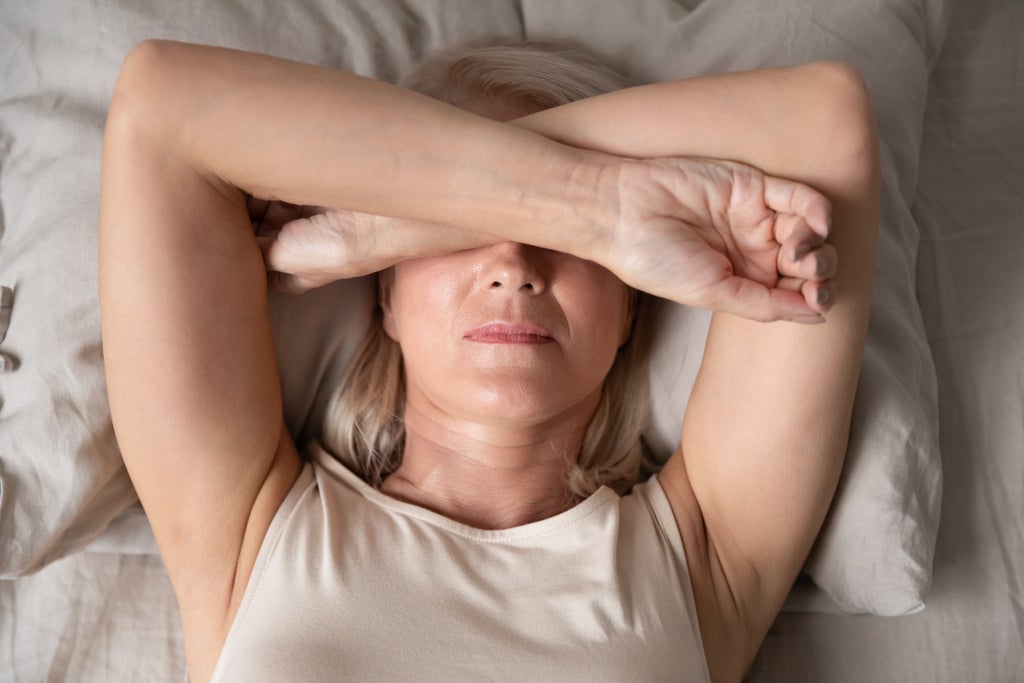
Women in the UK are having trouble accessing treatment for the menopause, a new survey reveals.
Carried out for menopause medic Dr Louise Newson, who runs the non-profit organisation Newson Health Research And Education, the survey included responses from 5,187 women and found that many were experiencing symptoms from the menopause but not receiving the support they needed.
Roughly 70 per cent of those surveyed said that they had experienced sweats, low mood, brain fog, and memory problems, with 74 percent saying they’d been having symptoms for more than a year.
Additionally, 15 per cent of women said they’d been experiencing symptoms for more than six years.
The survey also revealed that women often have to visit their GP several times before receiving help.
Recommended
Of those surveyed, 7 per cent said that they’d visited their doctor more than 10 times before receiving help or advice to cope with their menopausal symptoms.
Additionally, out of those who did receive treatment, 44 per cent had to wait at least one year for it, while 12 per cent had to wait more than five years.
In terms of the treatment that was prescribed, 37 per cent of women received hormone replacement therapy (HRT).
Meanwhile, 23 per cent were given antidepressants, which goes against guidance from the National Institute for Health and Care Excellence (Nice), which states that women should not be prescribed antidepressants for symptoms like hot flushes and night sweats.
Dr Newson commented: “Our survey confirmed that women are still facing delays in getting a diagnosis for their perimenopause and menopause and they’re waiting too long to get HRT, if it’s prescribed at all.
“Only 37 per cent of women were offered HRT, and nearly half of these had to wait over a year to get it.”
She continued: “A third of respondents were referred to at least three different hospital specialists for further investigations when in most cases the perimenopause and menopause should be managed by a local GP practice.
“This is a huge waste of NHS resources, including increasing the strain and workload to primary care not to mention women’s time.”
Dr Newson added that she has seen a surge in interest from medical professionals surrounding the menopause and how it can be managed.
“This can’t come soon enough for women who are struggling,” she said.
The NHS describes the menopause as when a woman stops having periods and is no longer able to get pregnant naturally.
It usually occurs between 45 and 55 years of age, as a woman’s oestrogen levels decline. In the UK, the average age for a woman to reach the menopause is 51.
However, around one in 100 women experience the menopause before 40 years of age.
Symptoms listed by the NHS include night sweats, vaginal dryness, low mood, anxiety, and problems with memory and concentration.
They usually start a few months or years before your periods end, a period known as the perimenopause.
Other forms of treatment in addition to HRT include vaginal oestrogen creams and cognitive behavioural therapy.
The survey comes after the UK faced a major HRT shortage in 2019. The Department for Health and Social Care said at the time that it was aware of “ongoing supply issues” regarding HRT, which it put down to “manufacturing delays”.
For more support on the menopause and information on symptoms, visit the British Menopause Society website here.