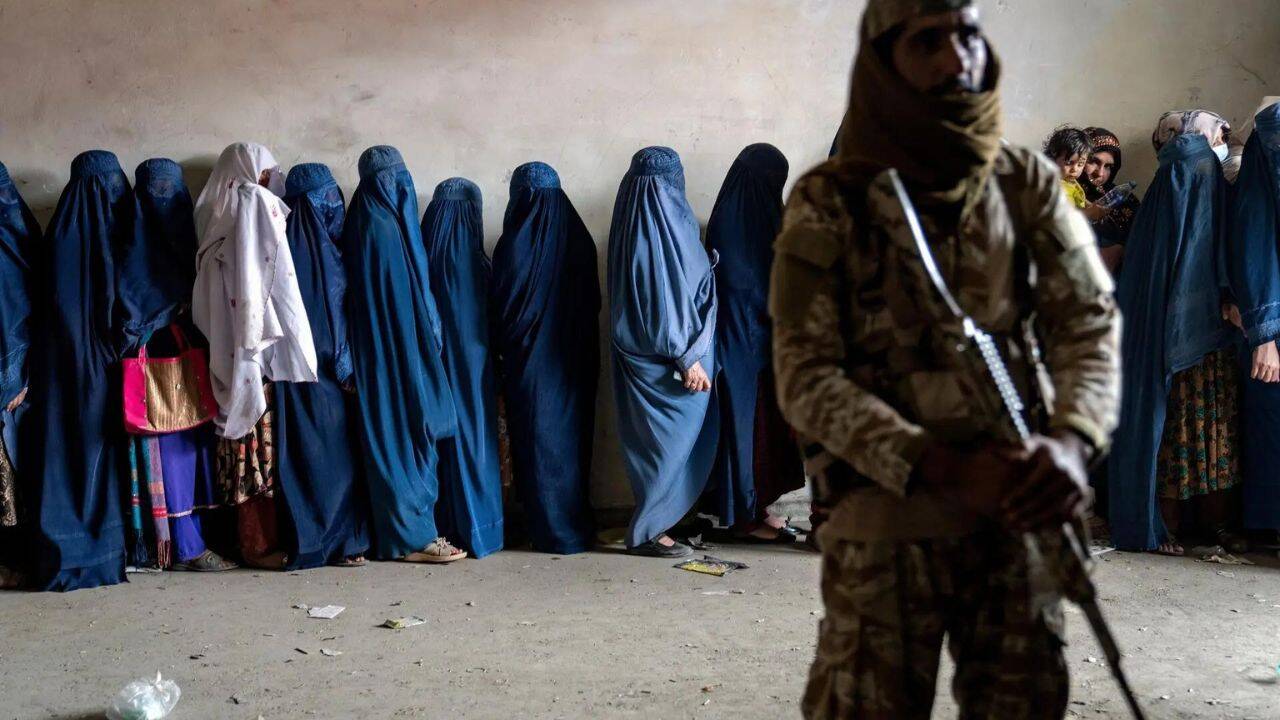
A group of United Nations experts has expressed serious concern over a new Taliban decree regulating the separation of spouses in Afghanistan, warning that it could effectively legitimise child marriage and make it significantly harder for women and girls to leave abusive relationships.
Get breaking news anytime, anywhere. Download the TOI app now!
The decree, issued by Afghanistan's de facto Ministry of Justice in April 2026, outlines conditions under which women may seek separation from their husbands, reads a UN press release published on June 18.
However, UN experts said the provisions leave women and girls vulnerable to abuse, exploitation and discrimination while potentially affecting members of the Shia community and other religious minorities.
Concerns over child marriage
According to the experts, several provisions in the decree appear to validate child marriage despite earlier Taliban commitments requiring the consent of an "adult woman" for marriage.
They noted that the decree allows a child to seek separation upon reaching puberty, a provision that implicitly recognises marriages involving minors rather than preventing them altogether.
"The decree increases the potential for abuse of power by guardians, including in marriage arrangements, rendering it almost impossible for girls to report or act on domestic abuse," the experts said.
They warned that girls could be subjected to years of physical, psychological, sexual and economic harm before being able to seek legal relief.
While the decree lists grounds such as incompatibility, disappearance, obstinacy and religious differences as reasons for separation, the terms are not clearly defined.
“On the surface, these appear to be an attempt to protect women and girls by creating uniform guidance nationally, but in practice these provisions are undermined by fundamentally discriminatory treatment of women and girls and bias against them, similar to many other Taliban policies and in contravention to international human rights law,” the experts said.
Restrictions limit access to justice
The experts noted that Taliban authorities continue to impose severe restrictions on women's freedom of movement, education and employment, making it difficult for women to access courts or legal remedies.
The restrictions also increase the likelihood that abuse occurs behind closed doors and make it harder for victims to find witnesses to support their claims.
“De facto authorities currently severely restrict women and girls’ freedom of movement, education and employment. It is nearly impossible for women and girls to claim any rights provided by the decree, including appearing before a court,” it reads.
The decree's requirement for arbitration and witness testimony in cases involving domestic violence could further discourage women from attempting to leave abusive marriages due to fear of retaliation, the experts warned.
Call for reversal of discriminatory provisions
The UN experts stressed that Afghanistan remains bound by international human rights treaties, including the Convention on the Elimination of All Forms of Discrimination Against Women (CEDAW), the Convention on the Rights of the Child and the Convention against Torture.
"We remind the de facto authorities of their obligations under international human rights law which require them to protect women and children from violence and ensure their rights to dignity, equality and safety," the experts said.
They called on the Taliban to reverse the discriminatory provisions and ensure meaningful protections for women and girls across the country.