FORT WORTH, Texas _ A woman sentenced Wednesday to five years in prison for voting illegally in 2016 is one of more than 500,000 in Texas and 6 million nationally who have lost their right to vote.
Individuals who have been convicted of felonies in Texas cannot vote until their sentences have been cleared, and that includes people on probation and parole, according to a report released in 2016 by The Sentencing Project, a criminal justice reform advocacy group.
Crystal Mason, 43, was sentenced to five years in prison on Wednesday after testifying that an election worker walked her through the process of filling out a provisional ballot.
Mason was assigned supervised release after pleading guilty to a federal charge in 2011 and claimed in court that she was not aware that Texas felons were prohibited from voting until they completely finished their sentences.
Mason told the court that worker told her that the vote would either be counted or not counted and guided her through filling out the paperwork.
Mason was arrested by Tarrant County sheriff's deputies after a visit to her supervision officer in February 2017.
The laws that regulate felons who wish to vote are so complex and varied, that election officials in many states have trouble keeping up with them, said Marc Mauer, executive director for The Sentencing Project.
"There is a great deal of misinformation even among elections officials in every state," said Mauer, who added that he has studied this issue for 20 years. "People are assured that they have the right to vote by elections officials and often they are operating on erroneous information."
In every state, the rate that African-American felons are disenfranchised is disproportionate to the rate of disenfranchisement in other ethnic groups, Mauer said.
"These policies particularly impact African-American communities because of the high rate they are supervised in the criminal justice system," Mauer said. "African-Americans are disenfranchised at an average of four times the rate of others in nearly every state."
Lengthy penalties for illegal voting are increasingly being challenged, according to Mauer.
"People who have voted illegally can be prosecuted but there needs to be perspective," Mauer said. "It's not as though there is massive voting fraud going on and the courts need to be punitive. "
Mauer said that during the past 20 years, he has heard of only about a dozen or so cases of voting fraud cases coming to trial across the country.
"And there is no evidence that one year or even one month in jail would not accomplish the same thing as eight years or five years," Mauer said.
Mason could be subject to additional time in prison depending on how a federal judge rules on her original 2011 case, according to Natalia M. Cornelio, Criminal Justice Reform Director Texas Civil Rights Project.
"The federal judge can sentence her to up to two years for violating supervised release," said Cornelio, a former federal public defender. "The guidelines will be higher because the conviction is a felony. But the judge has discretion to decide ultimately what, if any, sentence to give."
Mason pleaded guilty to defrauding the federal government in 2011 and received a five year sentence in prison and served nearly three years.
Mason was placed on a three-year term of supervised release after she got out of prison and was ordered to pay $4.2 million in restitution, according to court documents.
The fraud charge stemmed from a tax preparation business Mason and her ex-husband, Sanford Taylor Hobbs III, owned and operated in Everman in which they submitted inflated tax refunds to the Internal Revenue Service on behalf of clients.
Mason later divorced her husband, who received a similar sentence after he also pleaded guilty. Mason testified Wednesday that she has remade herself since her release from prison, including getting a degree in a new field and getting a new job.
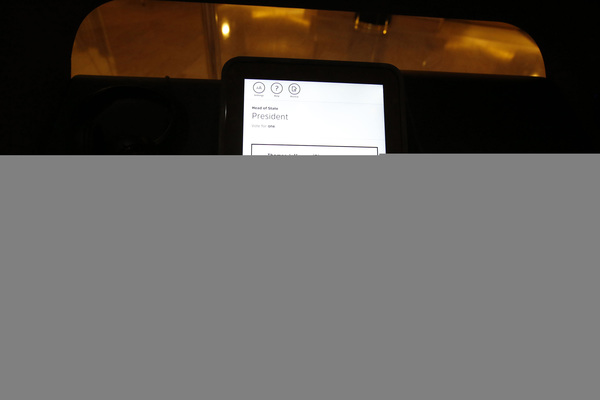
But at the insistence of her mother, she tried to vote in the 2016 presidential race and was given a provisional ballot to complete because election workers did not find her name on the voting rolls.
According to her testimony on Wednesday, Mason signed an affidavit stating that she had not been convicted of a felony, without closely examining the form.
Prosecutors with the Tarrant County District Attorneys Office, Matt Smid and Johnny Newbern, argued that Mason signed the form with the intent to vote illegally or that she should have known that she was prohibited from voting.
Mason's defense attorney, J. Warren St. John, argued that his client made an innocent mistake.
"This is the issue. The state did not prove she intended to vote fraudulently," St. John said during his closing argument on Wednesday. "She voted because she had a good faith belief that she could vote."