
Karen L. Daniel was one of the best in her line of work: freeing people from prison who’d been wrongfully convicted of murder.
More than 20 people owe their freedom, in large part, to Daniel, who for years headed up Northwestern University’s Center on Wrongful Convictions until she stepped down in August.
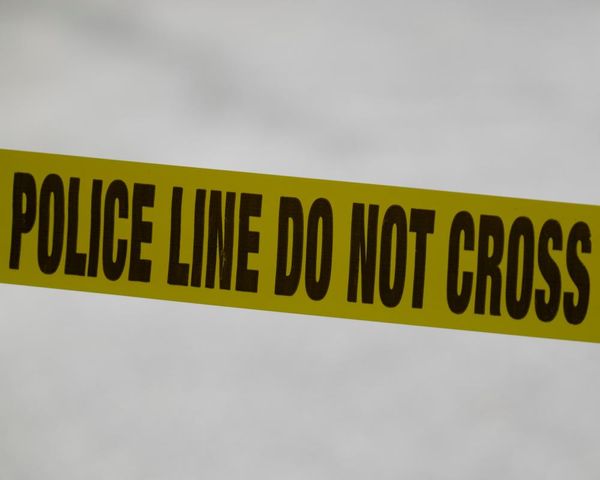
On Thursday morning Daniel, 62, was fatally struck by a pickup truck while walking her dog in Oak Park.
Daniel was weeks away from beginning a new job performing the same duties at the Exoneration Project, which is affiliated with the University of Chicago’s law school. She was also set to begin teaching criminal justice classes at Stateville Correctional Center, a state prison near Joliet.
“I weep not only for her friends and family and clients, but for all the future men and women whose cell doors she would have helped unlock ... She was at the top of her game,” said Steven Drizin, co-director of Northwestern’s wrongful convictions center.
Daniel was struck about 8 a.m. as the pickup truck turned eastbound onto Pleasant Street from Scoville Avenue, according to Oak Park police and the Cook County medical examiner’s office.
The driver submitted to blood and urine testing and passed a field sobriety test, police said. He was issued citations for failure to reduce speed to avoid an accident and failure to yield to a pedestrian.
Daniel, who lived in Oak Park, was pronounced dead at the scene, authorities said. The incident remains under investigation.
The work Daniel did touched a nerve with many people who assume anyone in prison deserves to be there.
Ron Safer was one of those people. He had a background as a federal prosecutor and was working as a partner at a big law firm when Daniel called him and somehow convinced him to work with her as outside counsel on several cases.
“I just didn’t think this happened; it was insane to me that there was anyone in jail who was innocent,” Safer said. “I was skeptical of the whole endeavor, and then she showed me the forensic evidence on one case and innocence was clear, and I said, ‘Let’s show it to the prosecutor, no prosecutor would continue to go forward if they knew about this evidence ’... I was naive, incredibly naive.
”And then Karen told me, ‘The criminal justice system is administered by people, and people make mistakes, and some people don’t like to admit they made mistakes, even if the evidence is incontrovertible.’ She showed me that I could spend my entire life working on wrongful conviction cases and not make a dent on the population of innocent people who are in jail.”
Safer continued, “She taught me that you have to, in this area of the law, bang your head against the wall for years until the wall finally cracks. And so you need people like Karen. There are very, very, very, very, very few people in the world like Karen, who will correct those mistakes against all odds.”
The people she freed consider themselves family.
”To so many of us, she was like our second mother because she gave us our lives back,” said West Sider Eric Blackmon, who was released after serving 16 years for a murder he didn’t commit.
“She was the first face I seen walking out of Cook County Jail, and she hugged me and welcomed me home,” said 38-year-old Blackmon, who is working toward a college degree and hopes to go to law school to follow in Daniel’s footsteps.
“Maybe if I could be half the person she was, I’ll be great. She was truly an angel to so many of us. And I just want to say, ‘Thank you’ and please let everyone know how great she was,” he said.
Friends noted that Daniel’s passing comes five years and one day after the death of her good friend and colleague Jane Raley.
“I called them fire and ice,” said Kristin Bunch, who came to known Daniel and Raley as the pair worked to free her from an Indiana prison for arson and murder charges in the death of her three-year-old son.
“Jane would be waving her arms and getting a little loud and Karen just had a monotone that could cut someone to shreds,” said Bunch, who was exonerated in 2012 after spending 17 year behind bars.
Daniel’s involvement didn’t end there. She helped Bunch move into an apartment in Chicago and find a job. And the two hung out.
“We went to movies and got our nails done. She was a constant source of strength and encouragement,” said Bunch, who described Daniel and her colleagues as superheroes.
“Many of the cases Daniel took on lacked DNA evidence and those are the toughest ones because a lot of investigation, you basically had to go back to square one and really pound the pavement and do what needs to be done to figure out what actually happened and she was an expert at it,” said Northwestern law professor Thomas F. Geraghty.
Geraghty said emails kept arriving in his inbox Friday from grief stricken former students who worked with Daniel on on exoneration cases.
“The kind of work she did was not very well received by prosecutors and judges, but she did it courageously and with dignity and in a way that earned her their respect. There’s going to be a tremendous void in the leadership of the wrongful conviction movement because of her passing. She’s someone that everyone looked up to,” Geraghty said.
Daniel — who attended the University of California at Davis and graduated from Harvard Law School — was honored by the Center for Wrongful Convictions in November. This is her bio from the Northwestern law school website:
Karen Daniel is a Clinical Professor of Law. She served as the Director of the Center on Wrongful Convictions (CWC) through 2018. She supervises second- and third-year law students in the representation of convicted persons with claims of innocence in state and federal court proceedings and before the Governor’s clemency board. She also speaks frequently about her work and the causes of wrongful convictions. Since joining the CWC in 2000, Professor Daniel and her students have freed numerous wrongfully convicted clients, achieving exonerations in both DNA and non-DNA cases. In 2012, Professor Daniel co-founded the Women’s Project of the Center on Wrongful Convictions. Professor Daniel is a graduate of Harvard Law School and a former member of the Illinois Office of the State Appellate Defender, where she represented hundreds of convicted defendants on appeal and supervised staff attorneys and law student interns.
Professor Daniel’s clients at the Center on Wrongful Convictions have included Michael Evans, who served 27 years in prison for a murder he did not commit prior to his exoneration through DNA testing; Dana Holland, who was freed after a decade of incarceration for two wrongful convictions; Randy Steidl, who became the 18th and most recent former Illinois death row inmate to be exonerated since the Illinois death penalty was reinstated in 1977; Marlon Pendleton, who was exonerated by DNA testing in 2006; Robert Wilson, whose conviction for a 1997 attempted murder was vacated nearly 10 years later after the victim admitted she was mistaken in her identification of him; Julie Rea Harper, who was acquitted of the murder of her son after a retrial in 2006; and Alan Beaman, whose 1995 murder conviction was reversed by the Illinois Supreme Court in 2008 based on prosecutorial misconduct.