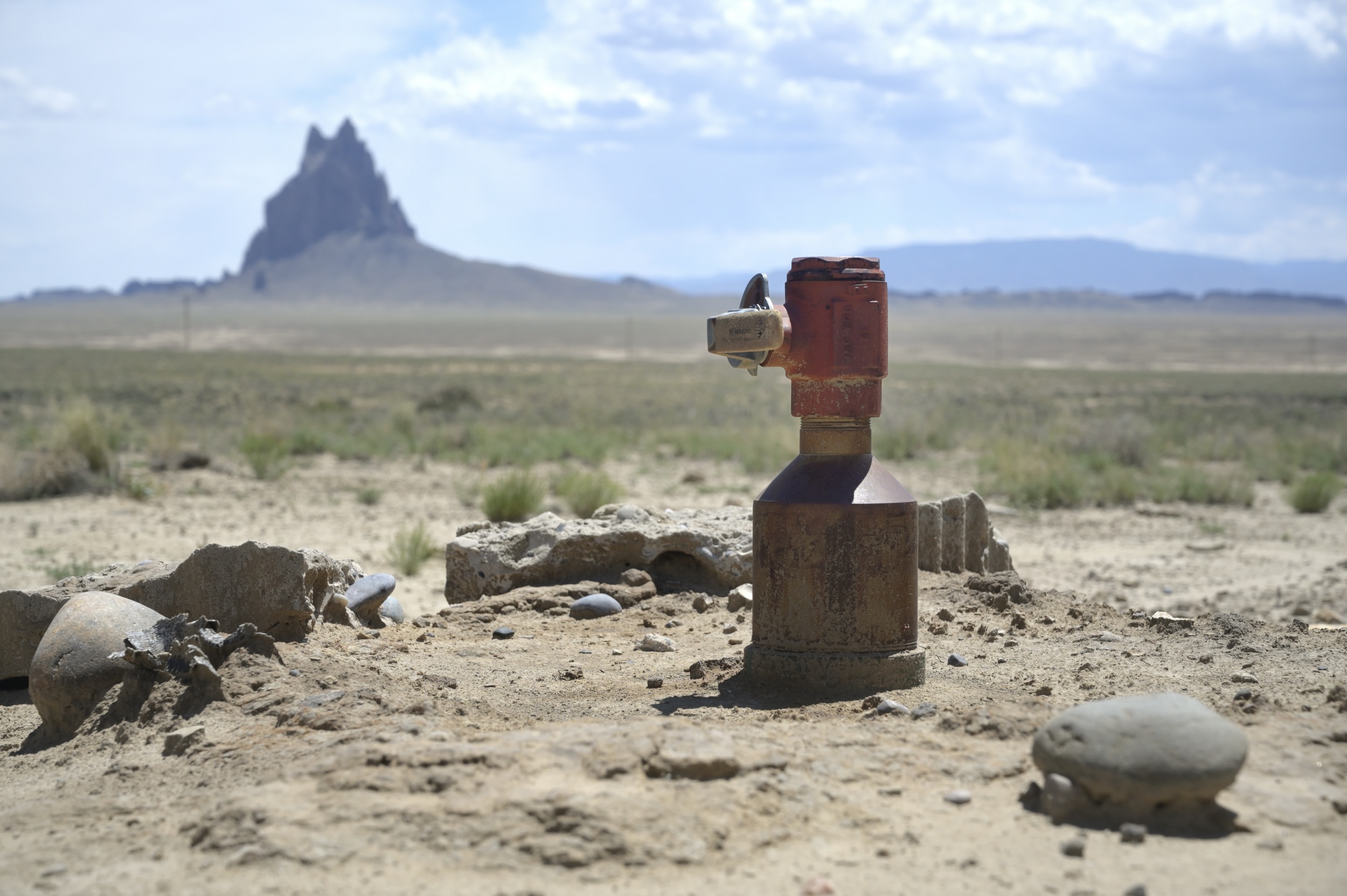
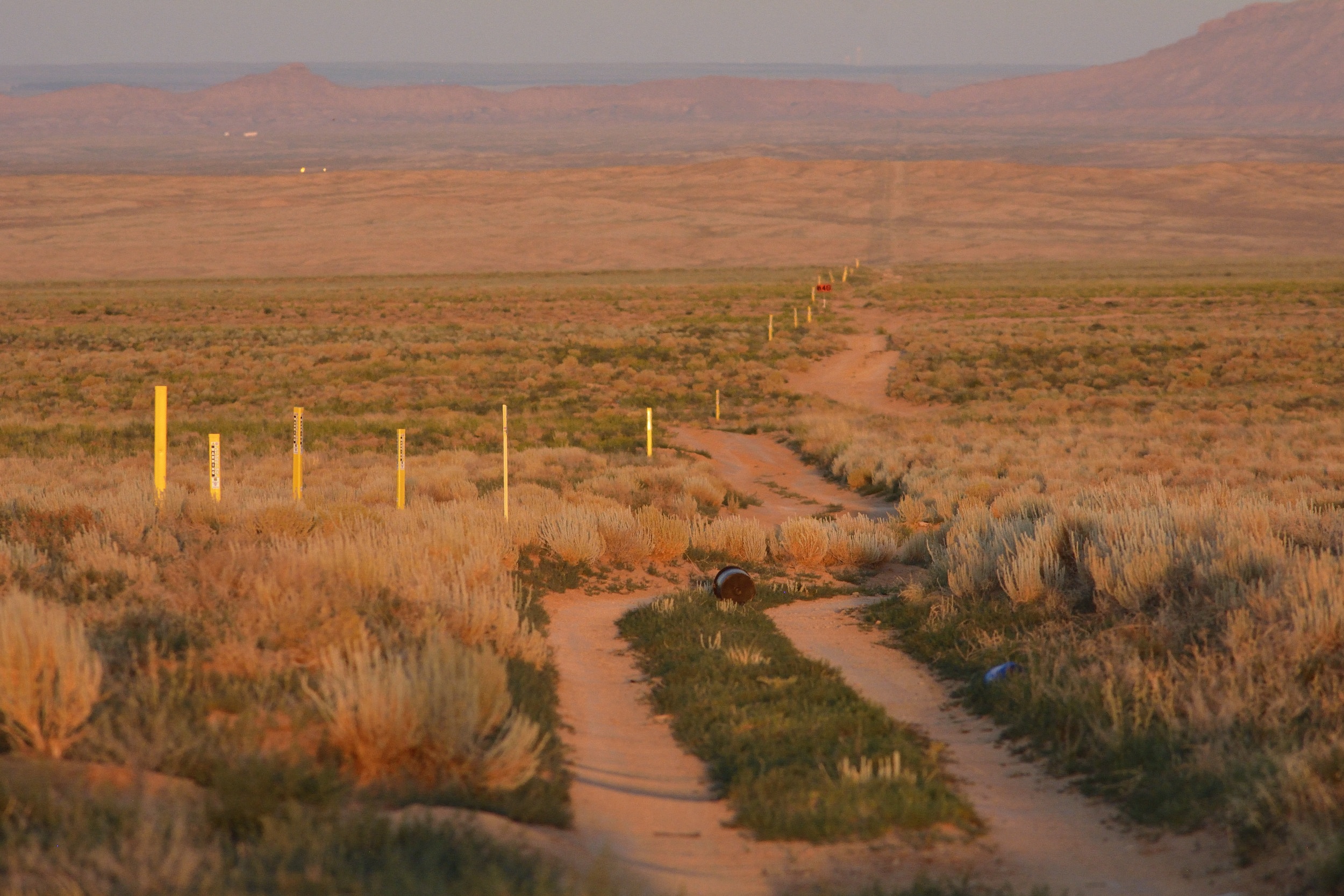
A 234-mile stretch of pipeline that could carry natural gas or natural gas-hydrogen blends across the Navajo Nation is a step closer to reality.
The Resources and Development Committee of the Navajo Nation Council passed a resolution at the end of March to conditionally allow Tallgrass Energy — through its subsidiary GreenView Resources — to begin work on a section of a natural gas pipeline that will traverse the Navajo Nation, running from a spot near Farmington, New Mexico, to another spot roughly 40 miles north of Flagstaff, Arizona. It is the only vote the Nation will take on this measure. It is also the only segment of the pipeline to be publicly announced.
The resolution passed 3-1, with one council member absent and committee chair Brenda Jesus abstaining.
According to the resolution, the right-of-way is contingent on completion “of all required environmental studies and archaeological clearances.” But the committee debate focused primarily on money — who had it and how to get more of it.
“As tribes we don’t have the capital or the equity to have Indian tribes and Indian country be able to build out a project of this magnitude,” Jesus said. “At the end of the day, we have to partner up.”
Committee member and resolution co-sponsor Danny Simpson said, “Any type of energy development we propose on the Navajo Nation we will definitely have opposition. … And it stops projects.” But, he continued, “If we don’t have any revenues … how can we help our communities?”
The project is already five years in the making. Plans initially called for the pipeline to transport hydrogen but shifted last year to natural gas or a blend of the two. The change was made without consulting the Navajo Nation, rankling many.
During the March hearing, Otto Tso, delegate to the Navajo Nation Council, was clearly still bothered by the shift away from hydrogen and said, “We had to find this out through a third-party source.” He was the only committee member to vote against the resolution allowing Tallgrass to begin work.
“My issue is that you’re going forward rather radically,” Tso said. “We don’t do this for our [Navajo] enterprises. We don’t give them this.”
At the hearing, Adam Schiche, vice president for business development at Tallgrass Energy, responded, “We’ve tried to be transparent about our intentions.” He said the hydrogen was planned for Asian markets and the fuel change “was a market decision. The market decided there was a need for natural gas, particularly for power centers, for data centers.”
The fuel change also altered the project’s environmental underpinnings. The original plan would have transported hydrogen for clean energy and industrial projects. The plan now calls for natural gas or natural gas-hydrogen blends to be burned for electricity.
It wasn’t clear that everyone on the committee understood the difference in the fuels. “We’re talking about energy. And we’re talking about clean energy,” Simpson said during the hearing. Natural gas is not generally considered a clean energy source — burning it generates climate-warming and air-polluting emissions, and leaks in its production chain lead to further climate-warming emissions and air pollution.
“I know that natural gas still comes from a fossil fuel,” Simpson continued, “but the Navajo Nation needs to enforce clean energy.” In the end he voted to let the project proceed.

This legislation was the first official step for a pipeline that will require buy-in and permits across multiple governments. As of publication there were no publicly filed documents referencing either Tallgrass or GreenView with the regulatory agencies in New Mexico, Arizona or the Federal Energy Regulatory Commission, the prime federal pipeline permitting agency. Those permits and subsequent construction will likely take years.
The project could supply fuel for up to three new power plants in Phoenix and Yuma, Arizona. Steven Davidson, senior vice president for government and public affairs at Tallgrass, said the company is courting other customers “across the Southwest” as well.
A slide from a Tallgrass presentation to the Arizona Corporation Commission last year read, “Tallgrass’ GreenView project is the bold, forward-looking solution Arizona needs to ensure reliable and affordable energy.” The slide shows arrows connecting a major Tallgrass pipeline in northwest Colorado with Arizona, passing through New Mexico and Utah along the way. Even so, Davidson said the project start is centered on the San Juan Basin around Farmington and is “not planning to go up to Colorado at this point.”
At the March 30 hearing, debate focused less on environmental and permitting concerns than on annual payments by Tallgrass to communities along the proposed route. In addition to annual fees paid to the tribe based on the length of the pipeline and the amount of land used for compressor stations, roads and other facilities, the committee members debated an amendment under which Tallgrass would pay roughly $30,000 to each of the 13 local government chapter houses along the route, totaling $400,000 annually.
Committee member Rickie Nez spoke directly to Tallgrass’ Schiche during the meeting and said, “We want you to take an oath and say yes, we’re gonna do this. We’re gonna take care of the chapters. And we’re gonna give them $400,000.”
Schiche replied, “I’m going to be as succinct as I can possibly be, 100% on the record. We will support a $400,000 community benefit program for local chapters from day one, starting today.”
In response, Nez said, “I believe that Mr. Schiche’s word is what he spoke into law verbally and it is what they will do.”
Thirty minutes later, Nez addressed Schiche again and said, “You’re an energy company. You’re gonna use Navajo land. Yes, I agree that you’re gonna pay the Navajo Nation.” But he continued, “Mr. Schiche, I believe $30,000 [per chapter house] is not enough. … What is the maximum that you can do?”
“We haven’t signed all the customer commitments yet to make even one dollar off this project,” Schiche replied. “Irregardless of that, our commitment has been steadfast to bring benefits to the Navajo Nation.”
Schiche said, “We’ve given close to a million dollars in benefits already to these local communities, and we will continue to offer benefits even outside of this community benefits program.”
He added that Tallgrass had already budgeted $30,000 per chapter house for the next year, but “I’d be happy to entertain the $50,000 per chapter per year for the annual fund. I will find a way to rob the piggybank.”
Nez said the next council could perhaps negotiate the better deal and continued, “I know as well as Mr. Schiche that when he says, ‘We haven’t made a dollar’ I know that he is going to make tons of money. Tons of cash. That we understand, and that is why we are here.”
Controversy preceded the meeting. The bill was first posted on the Navajo Nation’s website at 4 p.m. on Friday, March 13, with the public comment period ending the following Wednesday. By Monday, a slew of New Mexico businesses and state politicians had written in support of the measure, including Gov. Michelle Lujan Grisham.
By the time comments closed, state Sen. William Sharer, five state representatives, the New Mexico Chamber of Commerce, the Jicarilla Apache Nation Council, the dean of the San Juan College School of Energy in Farmington as well as Farmington and San Juan County officials had written in support of the project. In all, the council tallied 32 messages in favor of permitting the Tallgrass/GreenView pipeline and just seven opposed.
One of those opposed was Tó Nizhóní Ání, a conservation group led by Nicole Horseherder. “There needed to be a lot more work done before this vote came up,” she said. Her group was surprised by the timing and filed its dissent days after the initial deadline for comment.
“This came up all the sudden,” she said, “and was not on the agenda the prior week.” She said the short public comment period was designed to prevent groups like hers from commenting.
Tó Nizhóní Ání has fought the pipeline at the local level for the past four years and in that time collected petitions from 16 chapter houses opposed to the plan, both along and outside the proposed route. After more than a century of fossil fuel development on the Nation with little prosperity and long-term environmental problems to show for it, the group objects to any new projects that continue the legacy.
“If they’re going to move forward in this manner, then they should have a three-fourths vote of the [committee] before it can pass,” Horseherder said. With a missing committee member and the chair abstaining, “That is power-tripping. That is trying to hoard all the power,” she said.
Horseherder said that at this point, the only way the project would not happen is if Tallgrass decides to step back. “I’ve never seen the Navajo Nation pull back from a project when it gets past this first step,” Horseherder said. “That’s been my experience and I’ve seen it a number of times.”
Carolyn Raffensperger, the executive director of the Science and Environmental Health Network, worked alongside tribes in the years-long fight against the controversial 1,172-mile-long Dakota Access Pipeline, reviewing state and federal permits as well as construction of that project. She also drafted a handbook for pipeline construction monitors. Even so, she said, “We lost, but it was a good run.”
Raffensperger said that companies have used early permits “to sort of ask forgiveness rather than permission for various phases … especially if they’ve got a major permit to construct the pipeline.” She said companies use the early work as a bargaining chip for later work, arguing, “How could you possibly cause the state [or tribe] to lose so much money when we’ve already invested?”
She added, “We know a lot about natural gas in the Southwest. There’s a lot of it. But hydrogen [is] really different. Hydrogen is pretty explosive. … Are they prepared for the kinds of big problems that these pipelines can pose?”