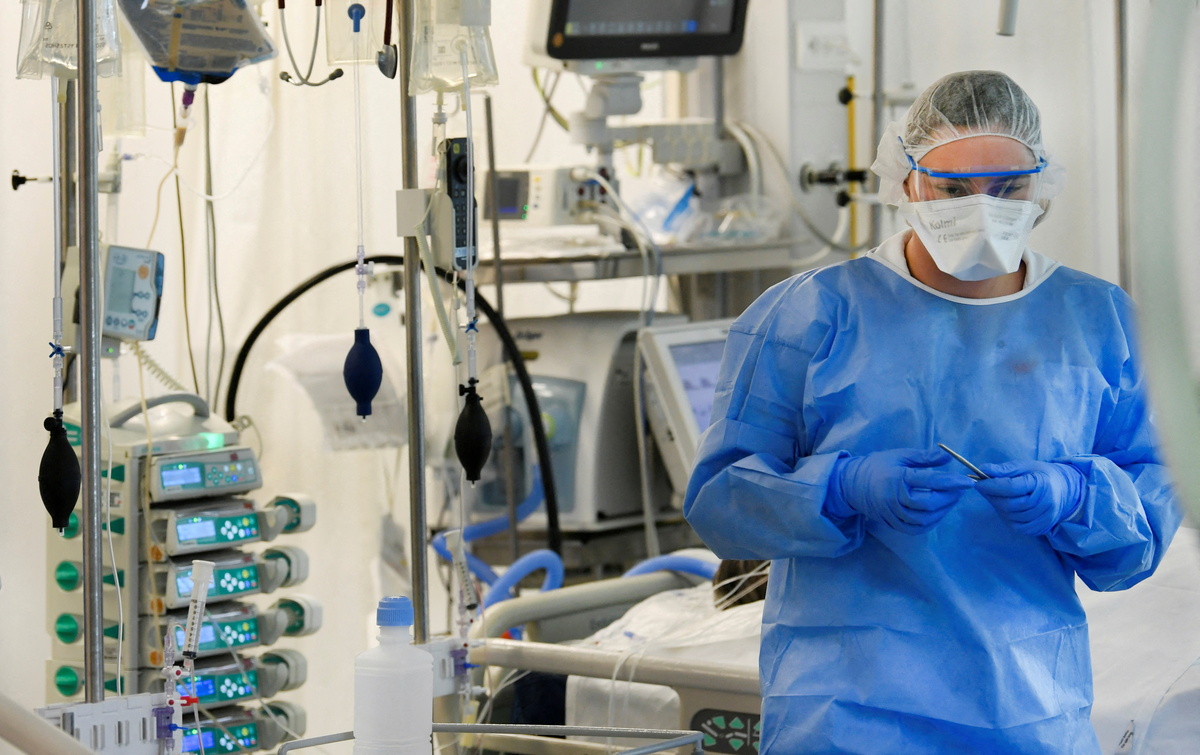
Europe's healthcare systems are being strained once again by the rapid spread of the Omicron variant of the coronavirus over the holiday period, with large numbers of key staff ill or self-isolating and experts predicting the peak of infections is yet to come.
Despite early studies showing a lower risk of severe disease or hospitalisation from Omicron compared to the previously-dominant Delta variant, healthcare networks across Spain, Britain, Italy and beyond have found themselves in increasingly desperate circumstances.
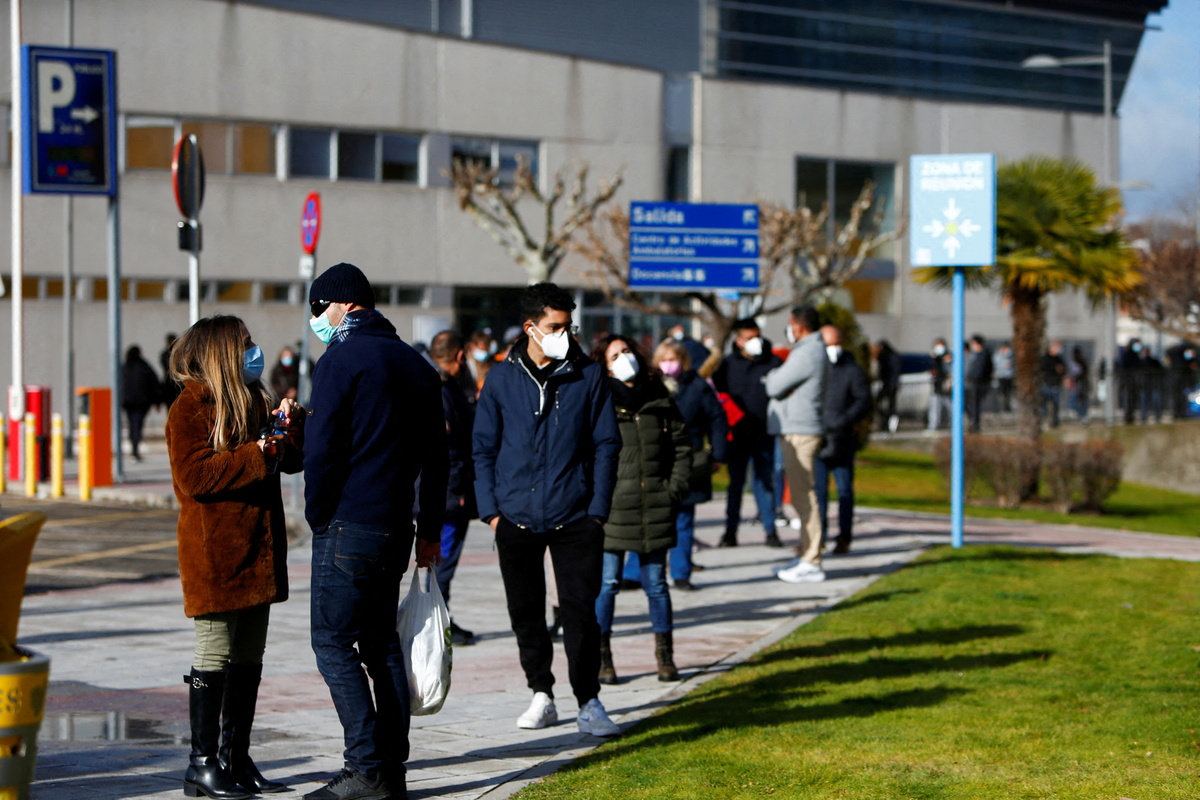
Britain put its biggest private health companies on high alert on Monday to deliver key treatments including cancer surgery should unsustainable levels of hospitalisations or staff absences overwhelm National Health Service (NHS) hospitals in England.
The country also began deploying military personnel to support hospitals on Friday due to record COVID-19 cases.
"Omicron means more patients to treat and fewer staff to treat them," NHS Medical Director Professor Stephen Powis said in a statement.
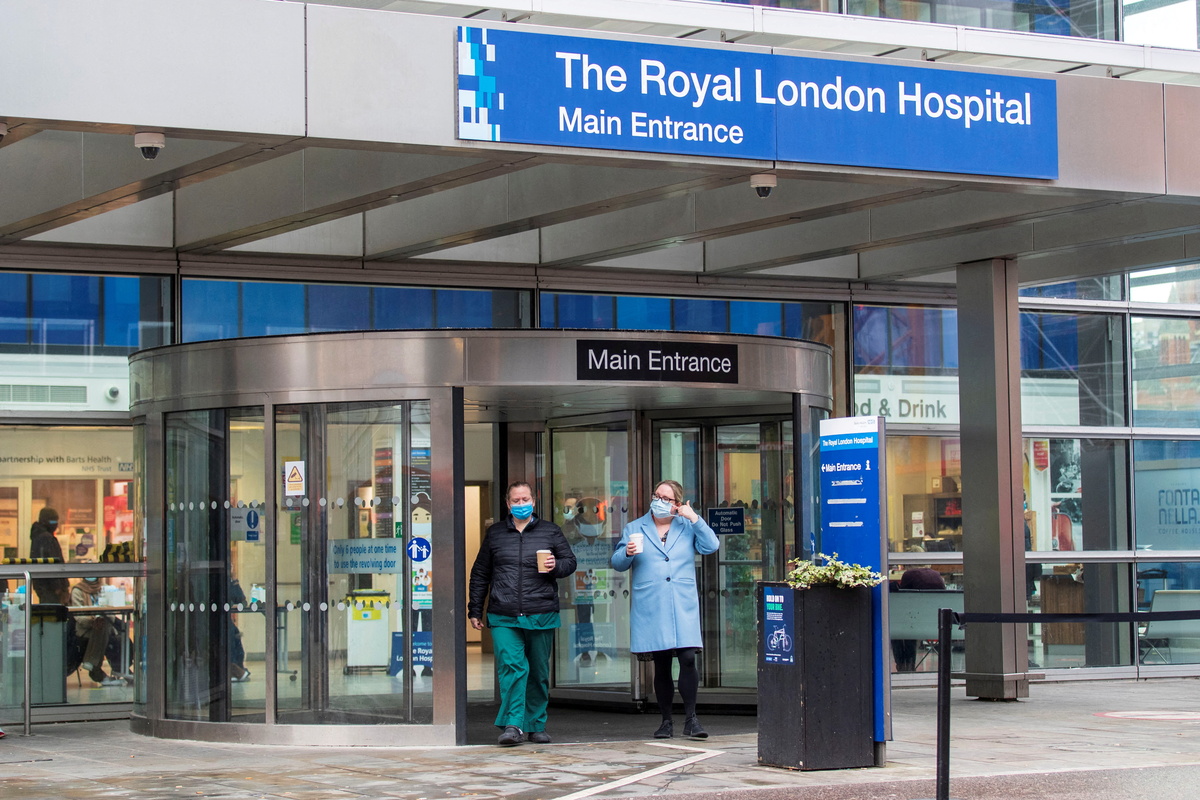
In the United States, hospitals are postponing elective surgeries to free up staff and beds, while Spain's primary healthcare network is so strained that on the penultimate day of 2021 authorities in the northeastern region of Aragon authorised the reincorporation of retired medical workers and nurses.
"The exponential increase in cases means primary care can perform neither their contact tracing and vaccination campaign duties adequately, nor their ordinary activities," the authorities said in a statement.
Spanish Prime Minister Pedro Sanchez said on Monday it may be time to use different parameters to track the pandemic, confirming a report from El Pais newspaper.
El Pais said the government was considering methods similar to those used to track flu, without such widespread testing and recording of cases.
INFECTION RATES RISING SHARPLY
Front-line workers such as nurses and physiotherapists are the hardest hit, Spanish nursing union SATSE said in a statement, noting that in Andalusia they accounted for more than 30% of staff on COVID-related leave in the second half of December.
The sunny southern region registered roughly 1,000 workers infected with the coronavirus in the final weeks of the year, "generating grave issues in service coverage", the statement said.
In the Netherlands, infection rates are also rising sharply among hospital staff, particularly nurses and nursing assistants, Dutch daily De Telegraaf reported on Friday, following a survey of eight major hospitals.
In the worst cases, one in four tested positive in the run-up to Christmas, as in Amsterdam's University Medical Centre where 25% of staff are now testing positive, compared to 5% a week ago.
Dutch hospitals are considering changing their quarantine rules so infected staff who do not have symptoms can come to work, De Telegraaf said, as Dutch daily case numbers break records despite a strict lockdown since December 19.
In Italy, the problem of infected health workers - more than 12,800 according to data gathered last week - is being compounded by the suspension of doctors, nurses, and administrative staff who are not vaccinated and represent just over 4% of the total workforce.
PEAK ON HORIZON
In a last-ditch bid to plug gaps in the service, Italian health agencies are freezing or deferring staff holidays, and freezing or postponing scheduled surgeries not classified as "urgent".
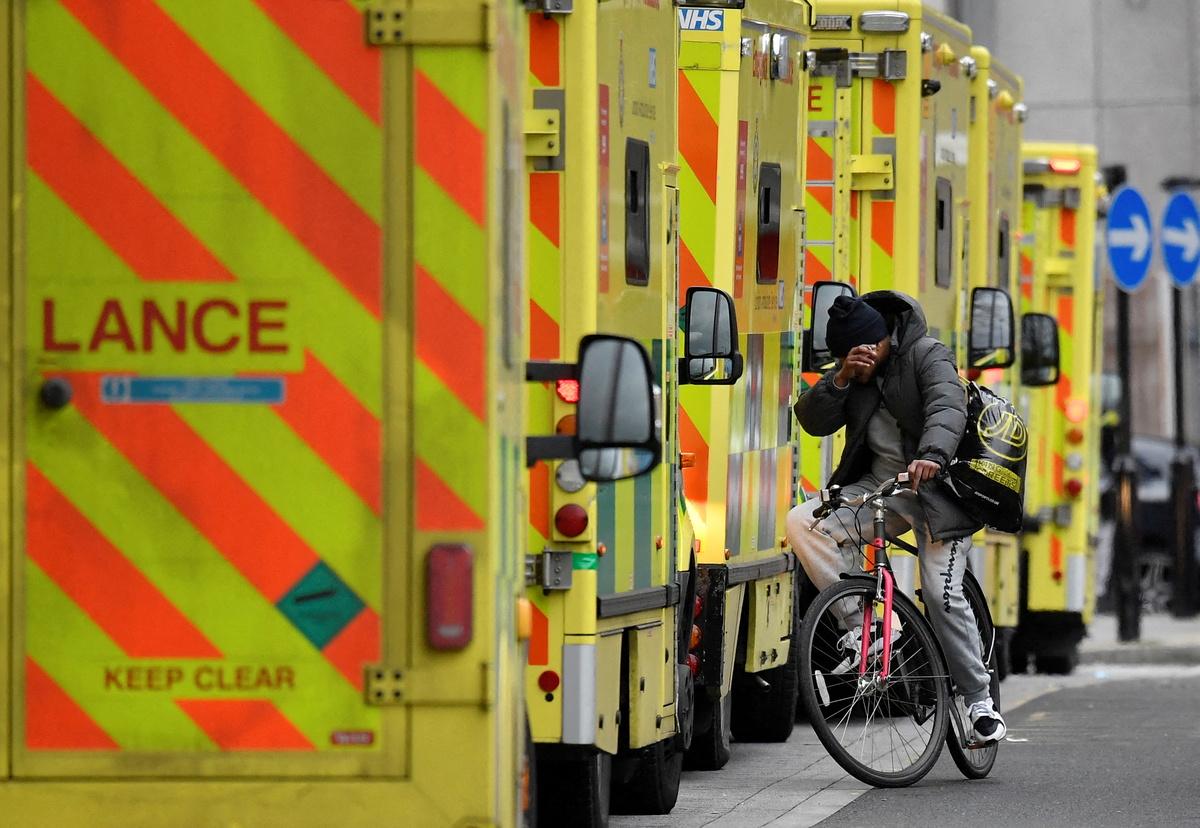
Hospitalisations in Britain are already at their highest since last February and the NHS is expected to face even more pressure as COVID-19 surges amongst older people.
"We are still seeing rising hospitalisations, particularly with the case rate rising in older age groups. That is of concern," UK health minister Sajid Javid said on Friday. "When we look at the NHS, it will be a rocky few weeks ahead."
An average of around 80,000 medical staff were absent from work every day in the week to Jan. 2 - the most recent period for which data is available - a 13% rise on the previous week, according to NHS England. Almost half of those absences, or 44%, were due to COVID-19, a rise of more than a fifth from the week earlier.
Rafael Bengoa, co-founder of Bilbao's Institute for Health and Strategy and a former senior WHO official, said Spain had failed to take sufficient measures to reinforce vital services and pressure would continue to ratchet up.
"Spain has several weeks - basically all of January - of rising cases...then hopefully we'll hit a plateau that goes down just as fast," he told Reuters.
He considers it unlikely that a more infectious variant which is also more deadly than Omicron will appear and is optimistic the current wave might signal the beginning of the pandemic's end.
"Pandemics don't end with a huge boom but with small waves because so many have been infected or vaccinated...After Omicron we shouldn't have to be concerned with anything more than small waves."
(Reporting by Clara-Laeila Laudette, Nathan Allen and Inti Landauro in Madrid, Alistair Smout in London, Emilio Parodi in Milan; additional reporting by Stephanie van den Berg in Amsterdam; writing by Clara-Laeila Laudette; editing by Kirsten Donovan)