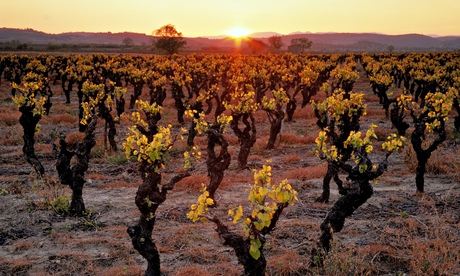
Tesco Finest* Vin de Pays Gascogne Gros Manseng Sauvignon Blanc, France 2014 (£7.99) If there were any sense to wine fashion, the eclectic collection of white grape varieties planted in south-west France would be far better known. I’ve never understood why more growers haven’t taken to gros manseng, the senior partner in this brilliant blend from Gascony, in the way they have to the supporting player, sauvignon blanc. Maybe it’s just too distinctive, with its ability to summon up mango and pineapple, cut with pink grapefruit. Or maybe it’s the name. Either way, its lack of renown makes for a bargain, with the sauvignon adding its usual leafy lift.
Domaine Bellegarde Jurançon Sec, France 2014 (£13.25, Yapp) Many of the best examples of gros manseng are made in a historic French appellation, Jurançon. There seems to be an extra degree of fruit intensity in wines from this stretch of land in the foothills of the Pyrenees. Both Domaine Bellegarde and Domaine Cauhapé (Les Chants des Vignes 2014; £8.75, thewinesociety.com) blend their gros manseng with the local camarelet. But gros manseng’s sibling, petit manseng, is the real star, adding still more depth and intensity of tropical fruit to a wine such as Château de Cabidos Petit Manseng Sec Cuvée Comte Philippe 2009 (£15.95, South Downs Cellars).
Château Bouscassé Les Jardins Pacherenc, France 2012 (£15, Highbury Vintners) The mansengs are also renowned for making some of the world’s finest sweet wines in Jurançon. The taste of candied and honeyed tropical fruit combines with grapefruit marmalade in a graceful 100% petit manseng such as Charles Hours Uroulat Moelleux Jurançon 2013 (£12.60, 37.5cl, oxfordwine.co.uk). The two mansengs are also found in Producteurs Plaimont’s dessert wine Saint Albert Pacherenc du Vic Bilh 2011 (£14.26, 37.5cl, Corney & Barrow), while petit manseng joins petit corbu for the mineral white from Alain Brumont’s Bouscassé.