It is barely midday but Swapnil Sankhe is already on to his fifth glass of wine.
From behind the bar in a concrete-walled room dotted with low-hanging lights, the effusive sommelier gives the go-ahead and Mr Sankhe swills around a large goblet of red, pokes his nose in and takes a sip.
“I’m getting a mix of fruit plus some wood flavour,” Mr Sankhe says of an open-barrel 2013 shiraz. The confessed wine novice, inspired to learn more by a recent trip to Europe, is among millions of increasingly affluent Indians developing a taste for the tipple who are fuelling a boom in the domestic wine industry.
In the tasting room at the Sula Vineyards, home of India’s leading winemaker in the southern grape-growing region of Nashik, the crowd is curious, well-off and worldly.
“We want her to become a global citizen, we want her to try everything,” says Mr Sankhe, pointing to his 10-year-old daughter Gargi, who is brimming with excitement at having been allowed to sample a fruity Riesling and a crisp Brut Rosé.
Sales of wine in India shot up by 75 per cent between 2009 and 2014 to 24 million litres, according to the research group Euromonitor International. The industry, valued at almost £200 million, is projected to continue to grow at a healthy 15 per cent each year.
Driving the growth are increasing numbers of young urban professionals, especially women, with disposable incomes and an expanding choice of watering holes springing up across India’s major cities of Delhi, Mumbai and Bangalore. Millions of upwardly mobile young people are now forming their drinking habits with wine in the mix, unlike a decade ago when their only real choice was between local beer and cheap, low-quality spirits.
“Vodka has gone out. Wine is in,” says Aniket Gulabi, 28, an IT worker who has joined his friends on a road trip to Nashik, about 100 miles north-east of Mumbai.
Of the 1.2 billion population, most are not prohibited by their religion from drinking alcohol, although cultural taboos persist, especially among the older generation and outside metropolitan areas. A handful of states ban alcohol entirely and there are regular “dry days” coinciding with public holidays across the country.
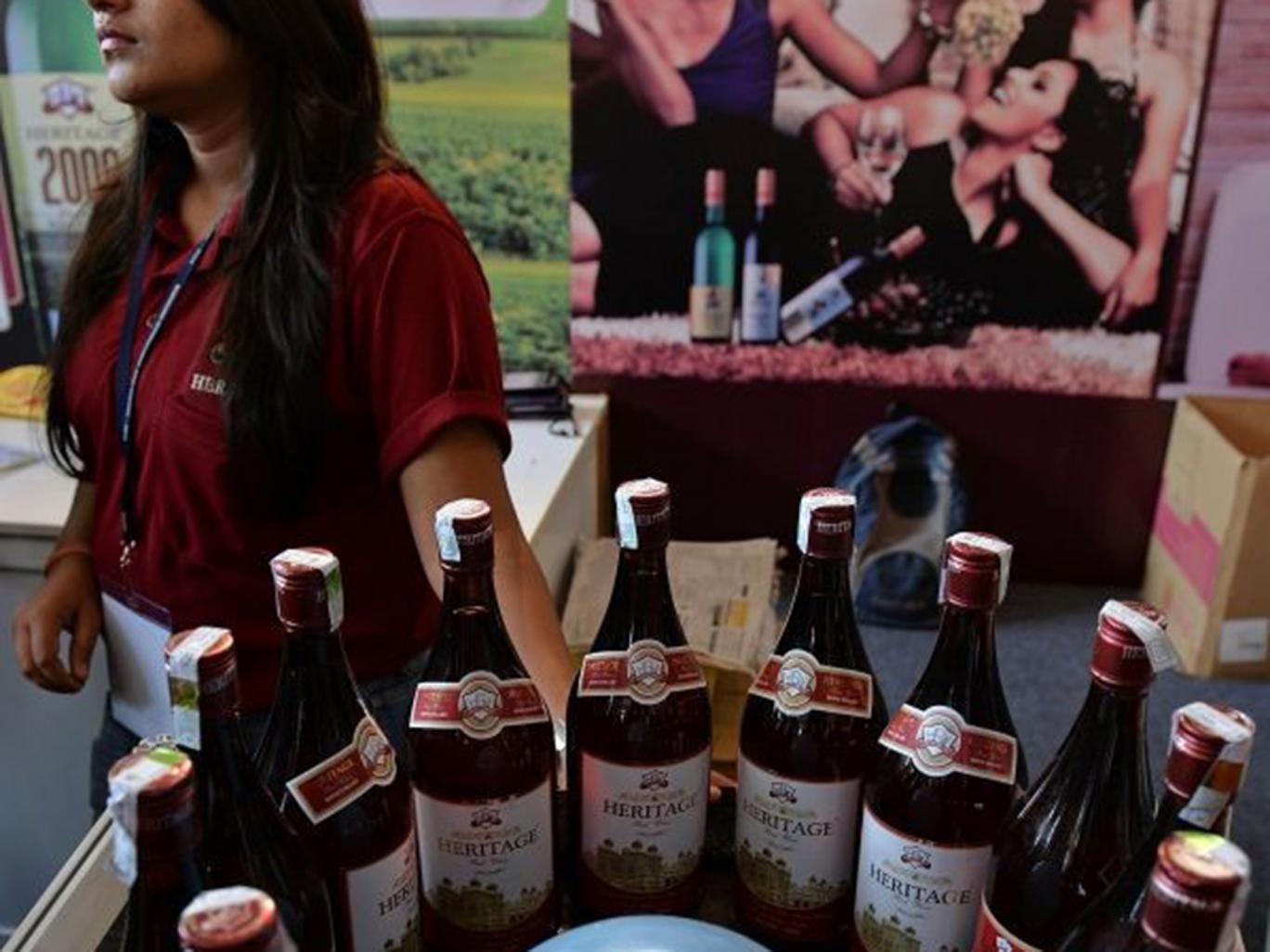
Bottles of basic Indian-made red or white wine now sell for as little as Rs150 (£1.50), depending on the state, although most people buy varieties for between Rs300 and Rs500. Despite taxes hugely inflating the cost of drinking in bars or restaurants, many Indians are embracing wine as a sophisticated treat, to be enjoyed occasionally in the right setting.
Producers are working on developing wines to match different Indian dishes, to encourage the habit of drinking with a meal. “Complex wine does not work with complex food. We have to design wine that suits the Indian palate,” says Jagdish Holkar at the All India Wine Producer Association.
Exports still constitute only a fraction of total production, while sky-high duties on imported wines mean they are out of reach for all but the wealthiest citizens. But things are changing in this respect too – Sula wines, for example, can now be found in Marks & Spencer food halls.
The Wine Society of India, which offers an education on foreign wines through masterclasses and tastings, says in the past two years it has seen a 50 per cent increase in active members, to 10,000 enthusiasts. However, there is certainly some snobbery towards the local product among wealthier drinkers, who will consider only expensive Old World wines.
“The audience we speak to want to be different and unique. If we talk about Indian wine, they would be indistinguishable from the crowd,” says Priya Gandhi, the Wine Society’s commercial director.
Rajeev Samant, the chief executive of Sula Vineyards, says his company, with its logo of a moustachioed sun, has never shied away from promoting its origins, with the aim of making wine more accessible to an audience unfamiliar with its many nuances.
Tours of the expansive Nashik site, with a step-by-step guide to the winemaking process, cost an affordable Rs350 a person and are a key means of raising awareness, attracting more than 200,000 visitors last year.
“The numbers are so huge [in India]… If even 1 per cent of the population become regular wine drinkers, we won’t be able to keep up,” Mr Samant says.
Sitting on a balcony with sweeping views across neat rows of grape vines, Ankita Bajpai, a 25-year-old banker from the northern state of Uttar Pradesh, has just tried wine for the first time. Her verdict: “It’s awesome – very fruity.”
Spending the day at the Sula vineyard, as part of a long weekend visiting friends in the south, she doesn’t believe she has adopted foreign habits. “The inspiration is from Western countries but the experience is Indian,” she says.