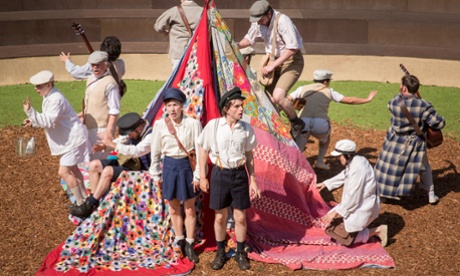
It is hard to imagine a more congenial location for Wind in the Willows than Grosvenor Park; a pleasant greensward sandwiched between the Dee and the city of Chester, where wildlife calls penetrate the action and the audience stretches out on picnic blankets for an afternoon by the river.
You almost don’t need any actors to complete the illusion, although Glyn Maxwell’s adaptation catches the wistful tone of Kenneth Grahame’s writing – “a feeling in the air of change and departure” – more subtly than most. While the classic stage versions, from AA Milne to Alan Bennett, have a tendency to become the Toad show, Maxwell embraces the proto-psychedelic elements that inspired Pink Floyd’s The Piper at the Gates of Dawn. There’s also a rare inclusion of the enigmatic Sea Rat, who pops up to persuade his cousin to leave the riverbank for a better life on the Greek islands (under present circumstances, this is probably less enticing than it sounds).
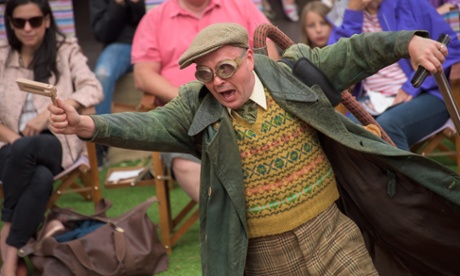
Jessica Curtis’s design favours gentle anthropomorphism over cuddly costumes – a wise decision considering the manner in which Grahame’s human and amphibian characters interrelate, even intermarry. (“What animal is Toad’s girlfriend supposed to be?” my seven-year-old niece wants to know. It’s a good question.)
The performances – with the exception of Daniel Goode’s ebullient Toad – have a form of sad nostalgia that seems naggingly familiar: the homeliness of Alix Ross’s Mole; the vague anxiety of Adam Keast’s Ratty that life has passed him by; Sarah Quist’s cantankerous, patrician Badger, stubbornly resistant to change. You begin wonder where you may have seen these creatures before; although the answer may lie in another theatrical parable about the destruction of a beloved wood. It’s a weeping version of the Willows that feels less like furry pantomime than Chekhov with whiskers.
• In rep at Grosvenor Park Open Air theatre, Chester, until 23 August. Box office: 0845 241 7868.