Afternoon summary
- Yvette Cooper, a candidate for the Labour leadership, has said that David Cameron has a “blind spot” with women and does not know how to handle them in the Commons. (See 3.52am.)
- David Cameron has said that, although it will be “predominantly” for the parliamentary authorities to respond to the report saying repairing parliament will cost at least £2bn more if MPs do not move out, cost is a factor. “In all these things we have to be cost-effective,” he said.
-
Enda Kenny, the Irish prime minister, has told Cameron he will be as “supportive and constructive” as possible to Cameron n his bid to renegotiate the terms of Britain’s membership of the EU. After talks in Number 10, Kenny said:
We want that to be a referendum that can be carried. It is critically important that Britain stays a central and leading player in the European Union of the future. In that we will be as supportive and as constructive as we can. It doesn’t mean we will follow you blindly on every issue. But insofar as the process is concerned I want to see that leading to a decision by the British people to stay in European Union because that is where the future for everybody lies.
- MPs have voted by a majority of 45 against a Labour/SNP bid to let 16 and 17-year-olds vote in the EU referendum.
3 Tory MPs voted for @UKLabour amdt to give 16/17 year olds the vote in EU Referendum: @PeterBottomley_ @JasonMcCartney @sarahwollaston
— Labour Whips (@labourwhips) June 18, 2015
-
Liz Kendall, a candidate for the Labour leadership, has said she is not in favour of setting up a separate Scottish Labour party. On a visit to Scotland she said:
I am not in favour of an independent Scottish Labour Party as I am not in favour of an independent Scotland, because I believe in solidarity.
-
Downing Street has said Cameron will host talks with Egyptian president Abdel Fattah al-Sisi later this year. As the Press Association reports, Downing Street insisted that “no issues are off the table” when the former head of Egypt’s armed forces, who led the coup overthrowing Islamist president Mohammed Morsi, takes part in the bilateral discussions.
That’s all from me for today.
Thanks for the comments.
Updated
MPs have just voted down a Labour bid to allow 16 and 17-year-olds to vote in the EU referendum. The proposals was defeated by 310 votes to 265. The SNP supported Labour, but the result was not even close.
As I said earlier, the Tory MP Sarah Wollaston gave a powerful speech in favour of the idea. Here’s an extract.
We all visit schools in our constituencies, and I am sure I am not alone in thinking that some of the most thoughtful and challenging discussions in those visits have been with 16 and 17-year-olds. Do I feel that they have the capacity to understand the information, to weigh it and to communicate their views? Absolutely I do. The question is whether Members of Parliament have the capacity to change our view and give those young people a voice and a vote. I could not return to my constituency, look those young people in the eye and tell them that I had denied them the opportunity to take part in the forthcoming referendum ...
I absolutely agree ... that the time has come. The time came in Scotland, and we saw very clearly how important that was for young people. More than 90% of young people in Scotland registered to vote. They now permanently have a voice and a vote, and I do not think they will accept its being taken away from them now. That would be infantilising. We should accept that they have the capacity to make these decisions, and the House should embrace that.
Yvette Cooper at the press gallery hustings - Summary and verdict
If you are looking for a candidate embodying change, or excitement or a fresh start in the Labour leadership contest, then Yvette Cooper is unlikely to find her name at the top of your list. Like all the candidates, she has paid ritual lip service to the need for Labour to come up with new ideas, but, apart from being strong on the future feminist agenda (she was particularly good on the caring challenge for women), essentially she sounded like someone who would pick up where Labour left off in 2010.
And yet - it was an impressive performance, that will reinforce suggestions that Cooper is catching up. (According to Mike Smithson, that’s what the bookies think too.) Why? Because, although Cooper did not say anything particularly novel or revelatory, she made it clear that she could talk about a range of issues with knowledge and authority, and some humour too. On policy, she is probably the most substantial of the four candidates. She was particularly fluent on the economy (a subject on which, partly because it was colonised by her husband, she has said little for the last five years). And she made a good fist of addressing the claim that she had too much “baggage”. As Rafael Behr says (see below) there may be dangers in her running the ‘Vote for me because I’m a woman’ line, but she is probably right about David Cameron. If Andy Burnham, her main rival, wins, then Cameron will have his PMQs script sorted for the next five years (Mid-Staffs, Unite, Mid-Staffs, Unite, etc etc, ad nauseam). Handling Cooper he would probably find more tricky.
Also, Cooper did not say anything objectionable. Leadership contests, particularly those involving preferential voting systems, are often won by the person those voting object to least. On that count, Cooper is probably ahead.
Here are the key points from her speech and Q&A.
-
Cooper said that David Cameron had a “blind spot” with women and did not know how to handle them in the Commons.
I think that David Cameron has a blind spot on women. He does not quite see it. He does not quite see issues that affect women in different ways. We had all the history about the “Calm down, dear” moment and so on. I don’t think he quite knows how to handle women in parliament as well. So I do think he has an issue. He’s often had a blind spot in terms of doing the cabinet reshuffles in the past, and I think we should be calling him out on it.
My colleague Rafael Behr has a good take on this.
I suspect Cooper is right abt Cam struggling against a woman at PMQs, but not necessarily right to be making that a big sell in this contest
— Rafael Behr (@rafaelbehr) June 18, 2015
-
She said voters would not want Boris Johnson in Number 10 in a crisis and that Labour could challenge him on a whole range of issues.
I think we can challenge Boris Johnson on a whole serious of things. And do you really want Boris Johnson to be the person answering the phone when Angela Merkel calls and says ‘What are we going to do about Vladimir Putin?’ The challenge to Boris Johnson is about whether or not he can be a serious government minister, never mind anything more serious than that, and I think in parliament we can challenge him on that in a way that he can’t be [challenged] as mayor. We’ve got to make sure that we do so.
- She rejected claims that she had too much “baggage” to be Labour leader. This was a suggestion that Liz Kendall made in the Labour hustings last night, when she said: “I think we do need a fresh start and I don’t have the baggage of the past.” Cooper said that leading the Labour party was a tough job and that it needed someone with experience. Experience was important, she said.
- She said that, if Cameron tried to use the EU renegotiation to weaken workers’ rights in the UK by relaxing the impact of EU law, then he would make it harder for Labour to support him in the referendum.
- She said she still supported the return of the 50p top rate of tax of the highest earners.
- She said that she was worried that EU leaders were under-estimating the impact of Greece leaving the eurozone. They thought the damage could be contained, she said. But they were making the same mistake as US Treasury officials were making when they thought it would be acceptable to let Lehman Brothers go bust, she said.
It’s hugely serious and I do worry that there seems to be a growing view about how to handle the problem of Greece that is similar to the kind of view we saw in the US Treasury over Lehman Brothers bank where the view seemed to be that somehow we can cut them off, cauterise the problem by letting them go. We saw what happened. The US Treasury thought that they could do that over Lehman Brothers and in fact it was catastrophic and caused huge instability in the financial markets.
My warning to the government and across Europe is do not do a Lehman Brothers over Greece. Do not think that you can simply cauterise a problem without there being huge financial and economic instability and we need a long term solution for Greece.
-
She said she would put “country first” ahead of party. This came when she was asked, in a reference to Andy Burnham’s comment last night, whether she it was “party first” or “country first” for her. Country came first, she said, but you needed a strong party to change the country.

Updated
Here are two comments from journalists on Yvette Cooper’s performance.
From the New Statesman’s George Eaton
Yvette Cooper impressive at Press Gallery lunch: funny, relaxed, politically and economically authoritative.
— George Eaton (@georgeeaton) June 18, 2015
From the BBC’s Sam Macrory
Cooper lacked the surprise factor/headlines of Liz Kendall's lobby lunch, but that was a solid showing. She's quietly moving through gears..
— Sam Macrory (@sammacrory) June 18, 2015
Macrory may have borrowed this line from the BBC’s Nick Robinson’s tweet about the hustings last night.
Lab debate verdict : Cooper crunching thru gears after slow start. Burnham will regret "putting party first". Kendall showed ruthlessness
— Nick Robinson (@bbcnickrobinson) June 17, 2015
Q: Jim Murphy this week attacked the “boss politics” of the unions. Are you worried about the power of the unions?
Cooper says unions will not play the role in this contest that they did in previous contests because the rules have changed. The relationship between Labour and the unions must be modern, she says.
Q: Ed Miliband spoke a lot about reforming markets, but not much about reforming the state. Do you want to reform the state?
She says there has to be reform. As shadow home secretary, she proposed ways of cutting the Home Office budget by £800m. And she developed plans for police reform.
And that’s it.
Summary coming up soon.
Q: If you become leader, will Ed join you on stage as your husband?
Cooper says, when Ed ran for leader, she made it clear she would never join him on stage in that role. She would not expect him to do that, she says.
Q: How do you respond to the charge you have too much “baggage”?
This is a tough job, and it needs experience. All the candidates have experience of some kind. She makes no apologies for running a big department, taking charge of the future jobs fund, setting up Sure Start. Experience is important.
You need new ideas for the future too, she says.
Q: So you don’t accept Labour needs a clean break with the past?
You need experience to do the job.
Q: Should Labour take any blame for the financial crash?
The problem was with the risks being taken by the banks. No one around the world understood the scale of that risk. Financial products were amplifying the problems of imbalance in the economy. Regulation was not adequate, and Labour has to take responsibility for that. But other parties wanted less regulation.
Q: Is there any evidence Cameron has a woman problem?
Cooper says polling during the parliament showed the Tories were doing worse among women than men. There is some evidence that narrowed during the campaign.
Labour has a really good record on this, she says. When Harriet Harman started campaigning on childcare, people did not think that was an issue for government. Now there is a real problem with women being left with caring responsibilities.
She says Cameron has a “blind spot” with women. She thinks he does not know how t handle women in parliament. And he has made mistakes over women in reshuffles.
Q: What is your answer to the Boris problem?
Labour needs to challenge him, she says. He can be challenged much more in parliament than he can as mayor. Do people want Boris Johnson in Number 10 when Angela Merkel calls about how to handle Vladimir Putin.
Q: How would you assess Labour’s election campaign?
It was too narrow, she says. Labour did well in cities, but not in towns.
You had a lot of fun about the Ed stone, she says. There were apparently 10 meetings on it, she says. But don’t be too hard on Labour; at another meeting, plans for a fiscal responsibility were blocked, she jokes.
(At least, I presume it’s a joke.)
Q: Should Labour have stamped on the idea of a Labour/SNP deal more?
We did stamp on it, Cooper says.
She says she is worried about the way Cameron exploited this issue. The Tories will continue to do this. Labour needs to focus on what people in the UK have in common.
Q: Would you rule out a pact with the SNP?
She says she cannot see how you can have a pact with a party that wants to break up the UK.
Q: Did your husband, Ed Balls, give you any tips on how to win the leadership?
Cooper says Balls told her that, by the time the hustings are over, the candidates end up using each other’s stories.
Q: How confident are you that you can win the election in 2020?
She says she is confident Labour can win. But it depends on Labour taking the right decisions.
Q: What do you think of Osborne’s proposed budget surplus law?
Cooper says Osborne does not have a plan to deliver a surplus.
Labour governments have run surpluses in the past, and will in the future. Since 1945 they have run surpluses four times as often as Tory government. On Osborne’s bill, let’s wait and see what it says.
Generally, the debt and the deficit need to come down, she says.
The key thing is to promote growth, she says.
On taxation generally, she thinks it is right to have a 50p top rate of tax at the moment, while the deficit still applies.
Q: Do you accept schools in the north did not improve as much as schools in London under Labour? What would you do about that?
Cooper says schools improved across the board. You could learn lessons from the London Challenge and apply them to raise standards elsewhere in the UK.
Q: What did you mean when you said the EU needed a sensible approach to Greece?
Cooper says she will not get into exactly what Greece should do. Clearly it needs to reform. What she is saying is that it would be a mistake to think Grexit could be contained.
She always thought Greece should not have been in the euro. But, now it is in, it needs to be managed properly.
Q: Is it easier for you to present yourself as Labour’s future now Ed Balls has lost his seat?
Cooper says Balls’ election defeat was very hard. But they have always done different jobs at different times. She was elected to parliament some time before him.
Q: Are you party first or country first?
Country first, says Cooper, but she says you need a strong party to change the country.
Q: If Cameron did dilute workers’ rights, would you withdraw support for the Yes campaign.
Cooper says it is strongly in Britain’s interests to be in Europe. She would campaign for those rights to be re-instated.
We are now on to questions.
Q: Would you have a separate Yes campaign from the Tories?
Yes, says Cooper. There should be lots of different campaigns. People have different reasons for favouring Europe. But it would be wrong to boycott the umbrella campaign.
Q: Would you share a platform with David Cameron on this?
Cooper says she is “not wild about that idea”.
Cooper turns to other issues. She says Cameron is ignoring problems facing the UK, like the widening gap between rich and poor. Families are being stretched. Family life is stretched to fit around work. It should be the other way round.
Labour needs to “write a different future for the country”.
She says many journalists think it is inevitable that the Tories will win the next election. She does not agree with that, she says.
Labour needs to do three things.
First, it needs to reach out to more voters.
Returning to the 1997 playbook won’t work. Then, Labour just had to win back Tories. Now, it has to win back voters from several parties.
She talks about her background, echoing this passage from a recent speech.
Second, Labour needs big ideas.
And, third, Labour needs to take on the Tories, she says.
She says decisions taken by the Tories have hit women harder than men. That will happen again. Cameron has a woman problem. Maybe we should give him another woman problem, and elect a woman as leader, she says.
Cooper says she will start with Europe.
We have to remain part of Europe, she says. It promotes jobs and growth, and the EU is an organisation that has helped Europe avoid war.
Labour has to campaign for a Yes vote. But it must argue for reform, before the referendum, during it, and after it too.
We should not get caught up in a process row about types of campaign. There will be an overall campaign, but there needs to be a distinctive Labour campaign too.
She says there is a Haribo factory in her constituency that exports to Europe. Labour needs to highlight the threat to firms like this, she says.
She says David Cameron needs to ensure the reforms he argues for help to build the broadest support for Europe. There are reports that he wants to pull out of employment rights, or social chapter rights. Doing this may make it easier for him to win over people in his party, but it will make it harder for Labour people to back his renegotiation, she says.
And she says the focus on the renegotiation should not distract attention from other EU issues, especially Greece. We have not heard much from Cameron and George Osborne on this. She says she is worried that the view is the same as the US Treasury’s approach to Lehman Brothers. The US Treasury thought it get just let Lehman’s go, and “cauterise” the problem. So, don’t let Greece go, she says.
She says Britain should urge the eurozone to take a long-term approach to solving the Greek problem.
Yvette Cooper is speaking now. She says this is the first time she has spoken at a lobby lunch.
Normally lobby lunches are three-course affairs. Today it is just canapes. Cooper says she thinks we have taken the Tory cuts mantra too seriously. She was promised a packed lobby lunch, she says. Instead, it is more of a lobby packed lunch.
She says the media has changed. Organisations like BuzzFeed are important now. They did an article headed seven interesting things about Yvette Cooper. It was supposed to be 12, she says.
She says she is in trouble at home. Journalists have been writing about whether her husband, Ed Balls, would be doing Strictly Come Dancing. That is her fault, she says. She floated the idea in an interview on Woman’s Hour.
She says she is amazed journalists took this seriously. Balls will not be doing Strictly, she says.
Yvette Cooper speaks at press gallery Labour leadership election hustings
Yvette Cooper is speaking at a Labour leadership hustings at the press gallery this afternoon. She is the second leadership candidate to speak here. Liz Kendall appeared last month.
It will start very soon. She will deliver a short speech, then take questions from journalists. I will be covering it in detail.
Lunchtime summary
- Frank Field, the former Labour minister, has secured an influential role scrutinising welfare policy following his election as chair of the Commons work and pensions committee. John Bercow, the Commons speaker, announced the results of all the elections this morning. (See 11.30am.)
- A report has concluded that taxpayer faces a bill of up to £7.1bn to stop the Palace of Westminster falling down unless MPs and peers agree to move out. This news has just been snapped by the Press Association. I will post more on it as it comes in.
-
Martin Schulz, president of the European parliament, has told David Cameron in talks in Number 10 that he will have to compromise over his plans for EU reform. (See 12.21pm.) After their talks the prime minister’s spokeswoman said the two men had had a “good and free-flowing, open-minded discussion”. She went on:
They are two politicians that come to these issues from different perspectives and differing views but there was clearly an appetite on both sides on how you can work together to solve this.
On issues around free movement and welfare, the president came to that with an understanding of some of the challenges that can be presented by free movement across the EU after his time as a mayor in Germany, where he spoke of facing some of these challenges. He is very clear that you must respect the principle of free movement, which the prime minister has himself been clear he supports, but there are issues that should be looked at here and further discussions needed.
- The Conservative MP Sarah Wollaston, who has just been re-elected as chair of the Commons health committee, has told MPs that she will be supporting a Labour/SNP call for 16 and 17-year-olds to be allowed to vote in the EU referendum. She made a powerful speech in the debate which is still going on. I will post excerpts later.
Tom Greatrex, Labour’s former UK energy spokesman, said there were still significant unanswered questions about the actual number of onshore projects that will be hit by the UK government decision to stop renewables obligation funding a year early.
Greatrex, who lost his seat to the Scottish National party at the general election, said he suspects not many schemes will stop as a result, but the policy would still have a significant political impact – helping the Tories and the Scottish National party, he added. He said:
The significant question which hasn’t been answered yet is how many of the onshore wind projects currently in planning were likely to reach the April 2017 cut off date for the closure of the renewables obligation and won’t reach 1 April 2016 or the grace period arrangements.
It suits both the Tories, who need to keep their anti-onshore awkward backbenchers on board, and the SNP who get a new front of constitutional outrage rather more. With Scotland receiving around a third of renewables support payments with less than a tenth of the consumer base, simply passing a population share of the budget to Holyrood does not provide a solution.
The wider signals it sends to investors about changing regimes, and the resulting increased risk premium which is passed on to the public eventually, are more concerning. For as long as onshore wind is cheaper than offshore or marine renewables, there is a blatant contradiction between the Tory mantra of lowest cost decarbonisation and today’s announcement.
Frank Field wants DWP committee to look at making benefit sanctions fairer
All candidates standing for election as a select committee chair had the chance to produce a mini “manifesto”. You can read Frank Field’s here and although, as he says, it will be for the new work and pensions committee to decide its agenda, he has already identified four areas that he wants to focus on. They are:
1 - Getting the Department for Work and Pensions to pay benefits more effectively and making sanctions fairer.
The committee must therefore seek to work with the Department for Work and Pensions to yield improvements in the delivery of benefits. Indeed, if the Department could set itself the goal of delivering benefits promptly, and move toward a fairer system of applying sanctions, then the numbers of people needing to go to food banks would be halved. The gains to poorer people from making progress on this front are therefore huge
2 - Monitoring the development of universal credit.
3 - Promoting early intervention.
We now know how effective early intervention can be if we are to prevent poor children from becoming poor like their parents. The Committee should therefore work jointly with other Committees to scrutinise government policy in this crucial field.
4 - Ensuring that people who draw down their pension are not ripped off.
The reform allowing people to draw down safely their pension capital has at last been delivered. But there is now a real danger that groups, similar to those who have already ripped off pension savers so consistently over the latter post-war years, will be at it again.
Updated
The new chair of the Commons foreign affairs committee, Crispin Blunt, has not wasted any time setting his agenda, according to the BBC’s Ross Hawkins.
Chilcot cd face MPs' enquiry. New foreign affairs cttee chair Blunt tells me he's sure new ctte will want to pursue issue urgently.
— Ross Hawkins (@rosschawkins) June 18, 2015
European parliament president tells Cameron he will have to compromise over EU reform

David Cameron met Martin Schulz, president of the European parliament, at Number 10 this morning. Afterwards Schulz said that Cameron would have to compromise over his demands for EU reform. He said:
Dialogue is necessary. Solutions are always coming via dialogue and at the end via compromise. There is a long list of common interests and I think common ground could be found by analysing and discussing content. That is what we did.
There were some controversial items and it is not surprising that in the European Parliament some views are different than here in London.
According to the Press Association, Schulz said that among the issues they had discussed had been how they could stop “abuse” of welfare systems while at the same time guaranteeing the fundamental rights of citizens under the EU treaties.
David Cameron said that his renegotiation talks were getting off to a good start.
I think that these discussions have got off to a good start. We have got a long way to go in this reform and renegotiation, a lot of difficult issues to discuss, things that I believe fundamentally need to change, but it has been good to start these discussions today.
Afterwards Cameron and Schulz went to St Paul’s Cathedral for the service to commemorate the 200th anniversary of the battle of Waterloo.

The Department of Energy and Climate Change is rejecting claims that its decision today to abolish wind farm subsidies will lead to prices going up for consumers, as RenewableUK (see 9.20am) and Greenpeace (see 10.25am). This is from a DECC spokesman.
We have a cap on the cost of renewables to consumers, so this won’t push up bills. We have enough onshore wind now – including projects that have planning permission, we have as much as we’d projected. If we’d allowed the RO [renewables obligation] to stay open longer, we could have ended up with more projects than we can afford – which would have led to either higher bills, or other renewable technologies losing out on support.
Select committee chair elections - Analysis of key results
Culture committee: Jesse Norman, the Conservative Edmund Burke biographer and critic of “crony capitalism”, saw off four rivals to win this post. The biggest threat came from Graham Stuart, who chaired the education committee in the last parliament but who, unusually, tried to switch to another committee. On the first ballot Norman got 221 votes and Stuart 157 but, after the votes of the other three candidates were redistributed, Norman won with 319 votes to Stuart’s 211.
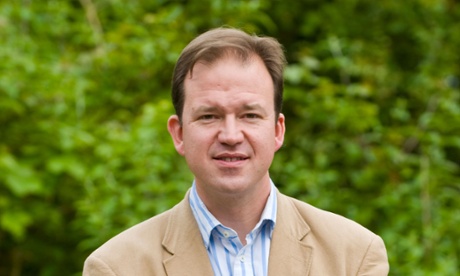
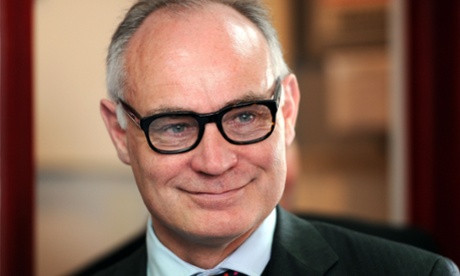
Foreign affairs: Crispin Blunt, the Conservative former justice minister, beat four other MPs to get his first select committee chairmanship. His main rival was Nadhim Zahawi, who was only 6 votes behind Blunt in the first round (173 votes to 167). Blunt was a noted liberal while in government and this may have helped him with Labour MPs given that Zahawi is someone who often takes to the media as an enthusiastic cheerleader for the government.
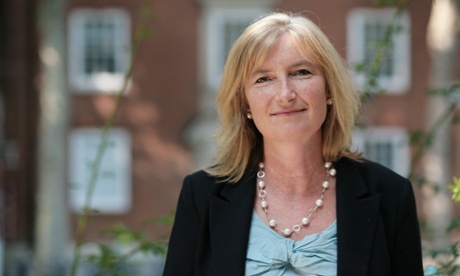
Health: Sarah Wollaston, a very independent-minded Conservative and a former GP, beat her only opponent, David Tredinnick, by 532 votes to 64. No other chair was elected by such a wide margin.
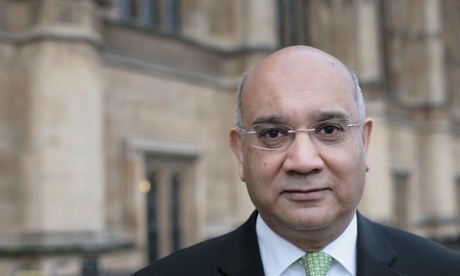
Home affairs: Keith Vaz, the Labour MP who chaired the home affairs committee in the last parliament, was up against Fiona MacTaggart, a respected former Home Office minister. Vaz has his flaws (read this for a laugh), and his defence of Greville Janner more than 20 years ago has haunted him recently, but he is a formidable networker, and his victory reflects a recognition that he was an excellent chair in the last parliament, putting the committee and its work at the heart of any home affairs controversy. He beat MacTaggart by 412 votes to 192.
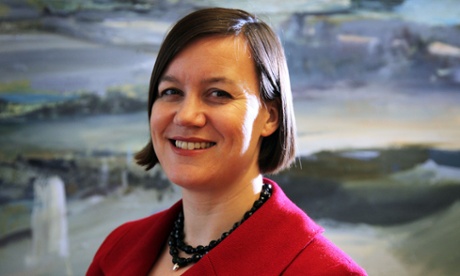
Public accounts: This is the most prestigious committee in the Commons and Meg Hillier, a Labour former Home Office minister, beat three opponents, Gisela Stuart, Helen Goodman and David Hanson. Stuart, a Eurosceptic admired by some Tories, was ahead on the first round (by 222 votes to 211) but, after other candidates were eliminated, Hillier won by 303 votes to 270.
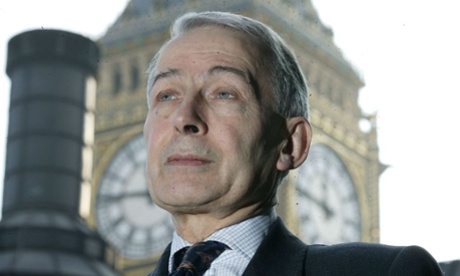
Work and pensions: Frank Field’s election may turn out one of today’s most important results. A Labour former welfare minister, and one of parliament’s most informed poverty/welfare experts since he was first elected in 1979, Field was an outstanding chair when he headed the social security committee in the 1990s. With welfare cuts set to be a key issue in this parliament, Field will probably give the DWP committee a much sharper edge than it has had recently. Field won on the first round, with 307 votes, beating Kate Green, a former shadow welfare minister, who got 248 votes and Teresa Pearce, a member of the committee in the last parliament, who got 56.
Updated
Some 621 MPs voted in the select committee chair elections.
Until relatively recently, the whips got to choose which MPs would chair Commons select committees. As a result, the committees were not always as robust and independent as they might have been.
Following a report from the Wright committee in 2009, it was decided that chairs would be elected. Chairmanships of particular committees are allocated to particular parties (eg, the culture chair had to be a Tory) but all MPs get to vote when more than one candidate stands for a particular position. This means that, to win, a candidate normally has to have cross-party appeal.
Results of select committee chair elections announced
John Bercow has just announced the winners of the elections to Commons select committees.
Here they are:
Backbench business - Ian Mearns
Business - Iain Wright
Culture - Jesse Norman
Defence - Julian Lewis
Education - Neil Carmichael
Environmental Audit - Huw Irranca-Davies
Foreign affairs - Crispin Blunt
Health - Sarah Wollaston
Home affairs - Keith Vaz
International development - Stephen Twigg
Justice - Robert Neill
Petitions - Helen Jones
Public accounts - Meg Hillier
Science - Nicola Blackwood
Work and pensions - Frank Field
I will post an snap analysis shortly.
The main industry body for wind energy in Scotland, Scottish Renewables, has warned that the cancellation of onshore wind subsidies could cause huge damage to future investment, cutting spending on new projects by £3bn and thwarting efforts to speed up the shift to low carbon energy.
In a statement, Scottish Renewables’ chief executive Niall Stuart said they saw no justifiable rationale for scrapping the renewables obligation.
“We believe this decision could put around two gigawatts of onshore wind projects in Scotland at risk,” Stuart said. “These are projects that could provide the equivalent electricity demand of 1.23m Scottish homes and significantly improve our energy security, while bringing around £3bn pounds of investment.”
Lang Banks, director of WWF Scotland, the conservation campaign, said: “Opinion polls consistently show onshore wind to be one of the most popular forms of electricity, generating thousands of jobs across Scotland and helping to cut our carbon emissions.
“This decision is especially contradictory coming in the week that the European Commission warned that the UK is set to miss its 2020 renewables target.”
However, Scottish Tories and some Labour MSPs have been harsh critics of onshore wind in Scotland, where large scale projects are operating across the central and south of Scotland where there are some vociferous anti-wind campaigns.
Graham Lang, chair of the anti-windfarm campaign Scotland Against Spin, they were delighted by the Tory government’s decision and urged Amber Rudd, the UK Energy and Climate secretary to also abolish feed-in tariffs for small green power projects.
“Speculative developers from across the world have flocked to Scotland because of the SNP’s open door policy to the wind industry. Scottish communities besieged by subsidy-chasers can at last look forward to some respite,” he said.
And this is from Patrick Harvie, the co-convenor of the Scottish Greens.
The Conservative government is far too willing to appease the irrational climate deniers on its backbenches, and this can be the only rationale for pulling the plug on the renewable energy industry.
To do so while committing to decades of funding for nuclear energy, giving the green light to new fossil fuel extraction and dragging their feet on demand management shows that their energy policy is stuck in the 20th century and failing to grasp the challenges and opportunities facing us today.
Greenpeace UK is also saying that the government’s decision to abolish wind farm subsidies will lead to bills going up for consumers. This is from Daisy Sands, a Greenpeace energy campaigner.
Ministers have just moved to raise everyone’s energy bills by blocking the cheapest form of clean power, whilst continuing to back the impossibly expensive Hinkley C and going ‘all out’ for unpopular, risky, and unproven fracking. Even if this omnishambles of an energy policy survives the many legal challenges threatened against it, it will send a clear message to international investors that the UK government is willing to wreck our power sector to please their most ideological backbenchers. This mistake will cost the UK dearly.
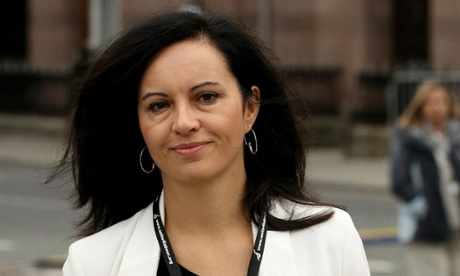
Here’s Caroline Flint, the shadow energy secretary, responding to the government’s announcement.
Renewable energy investment was undermined by the mixed messages of David Cameron’s last government and sadly that looks set to continue.
Onshore wind is the cheapest and most developed form of clean energy and there are 1,000 projects whose investment plans could be affected by the latest moving of the goalposts. Ministers need to make clear which projects exactly the grace period will apply to.
We already know the government is on course to miss a key renewables target, and not only do these knee-jerk changes affect onshore wind, they dampen confidence across the renewable sector.
Adam Vaughan is the Guardian’s environment site editor. Here’s his take on today’s announcement.
Last night energy and climate secretary Amber Rudd told an audience in London how important she thought climate change is. This morning she has, as heavily trailed, cut subsidies for onshore wind power a year earlier than expected. There’s an obvious tension between her claim to be “keep[ing] bills as low as possible for hard-working families” and the fact that onshore wind is the cheapest form of renewable power. By contrast the offshore wind that the Tories have promised to prioritise instead is around twice as expensive.
In its announcement about the abolition of wind farm subsidies, the government says there will be a grace period for projects that already have planning permission. (See 9am.) Emily Gosden, the Telegraph’s energy editor, says she think in practice this will make little difference.
Govt finally announces onshore wind subsidy axe by closing RO scheme early. Devil in detail; 'grace period' could mean it makes little diff
— Emily Gosden (@emilygosden) June 18, 2015
Govt plans 'grace period' for consented wind farms-most farms that don't yet have planning consent wouldn't have qualified for scheme anyway
— Emily Gosden (@emilygosden) June 18, 2015
Most wind farms now seeking planning permission are hoping for subsidies from a new scheme. Govt says nothing on that in announcement today.
— Emily Gosden (@emilygosden) June 18, 2015
Curious: gov't says wind farm subsidy axe will be brought in through primary legislation. Previous changes were secondary.
— Emily Gosden (@emilygosden) June 18, 2015
Having said devil in detail...there basically is no detail yet. Apparently as primary legislation, a brief press notice is all we get today.
— Emily Gosden (@emilygosden) June 18, 2015
Scottish government threatens to use judicial review to try to block wind farm subsidy cut
The Scottish government said this morning that it may use judicial review to try to block the UK government’s decision to end wind farm subsidies early. In a lengthy statement Fergus Ewing, the Scottish energy minister, said this would have a disproportionate impact on Scotland because 70% of UK onshore wind projects in the planning system are based there.
This announcement goes further than what had been previously indicated. It is not the scrapping of a ‘new’ subsidy that was promised but a reduction of an existing regime - and one under which companies and communities have already planned investment.
Onshore wind is already the lowest cost of all low carbon options, as well the vital contribution it makes towards tackling climate change, which means it should be the last one to be scrapped, curtailed or restricted.
The UK government has ignored the concerns of businesses and organisations who are integral to the future energy security of both Scotland and the UK, as well as to environmental organisations who recognise the importance of renewable energy in helping reduce emissions. The UK government have chosen to place at risk a huge investment pipeline, conceived in good faith by developers based on statements from the UK government ...
Therefore we have warned the UK government that the decision, which appears irrational, may well be the subject of a judicial review.

RenewableUK, which represents the renewable energy industry, says today’s announcement from the government will lead to bills going up for consumers. This is from its chief executive, Maria McCaffery.
The government’s decision to end prematurely financial support for onshore wind sends a chilling signal not just to the renewable energy industry, but to all investors right across the UK’s infrastructure sectors.
It means this government is quite prepared to pull the rug from under the feet of investors even when this country desperately needs to clean up the way we generate electricity at the lowest possible cost - which is onshore wind.
People’s fuel bills will increase directly as a result of this government’s actions.
Ministers are out of step with the public, as two-thirds of people in the UK consistently support onshore wind.
Meanwhile the government is bending over backwards to encourage fracking, even though less than a quarter of the public supports it.
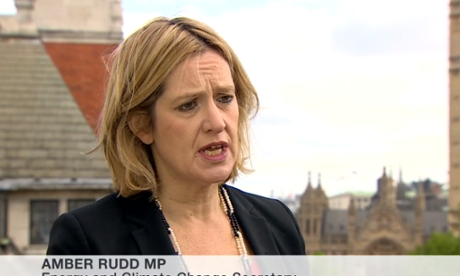
Here’s the statement from Amber Rudd, the energy secretary, about her plans to end wind farm subsidies early.
We have a long-term plan to keep the lights on and our homes warm, power the economy with cleaner energy, and keep bills as low as possible for hard-working families.
As part of our plan, we are committed to cutting our carbon emissions by fostering enterprise, competition, opportunity and growth. We want to help technologies stand on their own two feet, not encourage a reliance on public subsidies.
So we are driving forward our commitment to end new onshore wind subsidies and give local communities the final say over any new windfarms. Onshore wind is an important part of our energy mix and we now have enough subsidised projects in the pipeline to meet our renewable energy commitments.
Updated
At the election the Conservatives said they would end new subsidies for wind farms. But it is going to happen earlier than expected, the Department of Energy and Climate Change has announced today.
Here is the DECC press release.
And here is the Press Association story.
The government is to end new subsidies for onshore wind farms by closing the existing payments schemes a year early, it has announced.
The move aims to fulfil a Conservative promise ahead of the election on ending new public subsidies for onshore wind farms and changing the law so local people have the final say on them.
The Tories claim the onshore turbines “often fail to win public support and are unable by themselves to provide the firm capacity that a stable energy system requires”.
But the industry and environmental campaigners have criticised the Conservatives for attacking the cheapest form of clean energy, and one which enjoys the support of 65% of people, while saying they want to cut carbon in the most cost-effective way.
Under the plans, the “renewables obligation” scheme, through which subsidies are paid to renewable schemes, will be closed to onshore wind farms from April 1, 2016.
There will be a grace period offered to projects that already have planning consent, a grid connection offer and acceptance and evidence that the scheme has the right to use the land.
This could allow up to 5.2 gigawatts (GW) of wind capacity to go ahead - potentially leading to hundreds more wind turbines going up in the countryside across the UK.
The renewables obligation has already been closed to large scale solar farms, amid Tory concerns that the technology was a blight on the landscape, and is due to close to all new renewables schemes in 2017.
A new system for subsidies for low carbon energy, known as “contracts for difference” is being brought in, and it is not clear whether new onshore wind farms will be eligible for the scheme in the future, though it is believed to be unlikely they will.
I will publish reaction to this as it comes in.
Here is the agenda for the day.
Morning: David Cameron has a breakfast meeting with Martin Shulz, president of the European parliament.
9.10am: Nicky Morgan, education secretary, speaks at the Sunday Times Festival of Education.
10.30am: The results of the elections for select committee chairs are announced.
Around 11.30am: MPs resume their debate on the EU referendum bill.
12pm: Nicola Sturgeon takes first minister’s questions in the Scottish parliament.
Lunchtime: Cameron meets Enda Kenny, the Irish prime minister, for a working lunch at Number 10.
1pm: Parliament publishes a report on the £3bn restoration needed at the House of Commons, and whether MPs should move out while it takes place.
1.30pm: Yvette Cooper address a Labour leadership hustings at the press gallery.
As usual I will be covering the breaking political news as it happens, as well as bringing you the best reaction, comment and analysis from the web. I will post a summary at lunchtime and another in the afternoon.
If you want to follow me on Twitter, I’m on @AndrewSparrow
Updated