Wiltshire council’s homecare service used to work in a familiar way: the council would assess a service user’s needs and then assign a provider to carry out an agreed set of tasks, such as helping them get dressed in the morning.
But three years ago, the council introduced a new service; Help to Live at Home (HTLAH). Under this model, a resident being assessed for their homecare needs is asked what outcomes they would like to achieve, and how they want them met.
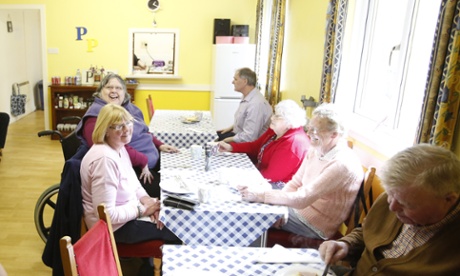
This new way of working requires service providers – reduced in number from a pool of more than 100 to just four – to be flexible. Nicola Gregson, head of commissioning for older people at Wiltshire, explains: “It could be that person has an outcome related to nutrition. That could be met by the provider taking that person to a lunch club, or bringing them together with a friend and cooking them a meal together.”
Payment is partly contingent on the provider achieving the outcomes: 20% of the value of a plan is paid up front, and the provider is paid the balance when the service user confirms the outcomes have been met.
Wiltshire’s move to commissioning for outcomes has been widely admired, and other councils are beginning to adopt a similar model. It has, says a new report, “enormous potential to deliver better outcomes for customers at lower cost”.
Councils have suffered from cuts of £3.5bn in the past three years, so reducing costs is an imperative. In Wiltshire, money is no longer spent on inessential work; if a service user doesn’t want – or need – a particular task carried out, the provider doesn’t do it. The bigger saving, however, comes from focusing on the long-term outcome, which is helping people to live independently at home. Since the council introduced HTLAH, the number of service users entering residential care homes has dropped, resulting in a substantial saving for the local authority.
But moving to an outcome-based model has challenges. Richard Ellis, deputy director of adult services at Hampshire county council, explains that payment by results is an essential part of outcome-based commissioning.
He adds: “However, moving to a 100% outcome payment model is asking providers to take a massive risk, which certainly the voluntary sector and small [providers] couldn’t bear.” Hampshire, which is adopting the approach for its domiciliary care services, has made £1 of the £15.20 an hour it pays providers dependent on outcomes.
Deciding what those outcomes are, how to measure them, and how to reward providers for meeting them, is an essential part of the planning process. Steve Burton, head of category for social care and health at the Eastern Shires Purchasing Organisation, says determining whether outcomes have been met can be difficult: “It needs really careful thought to get those things absolutely right, so it doesn’t become some fluffy, woolly process where a lot of people seem really busy doing lots of things with ultimately little impact.”
And councils should not penalise providers for achieving desired outcomes in a shorter timeframe or with less input. Steve Carefull, a director at PA Consulting Group, says: “It’s in the council’s interest that providers thrive in this context.” Commissioners, he adds, should incentivise effective innovation and share the benefits with their providers.
An even bigger challenge is that the model requires both service providers and commissioners to work in a new way. Commissioners no longer get involved in the minutiae of the service user’s care, says Burton: “It takes some courage on the part of the commissioner to step back and say, ‘That’s sorted for six weeks – let’s see how they get on.’”
In Wiltshire, Gregson says, the council decided to make change on a large scale: starting with a blank sheet of paper enabled it to take more risks. It helped that councillors were very supportive from the outset. Even so, she says, a new mindset was required: “The staff in my organisation are no longer doing the support planning function, which was a core part of a social worker’s role. That is now done by a Help to Live at Home provider.” Wiltshire ran a programme of 12 workshops with staff to support the behavioural change required to make the new model work.
The outcome-focused model also requires a very different approach from providers. “You have to have providers who are willing to employ people with a wider range of skills who can make a judgment about how to best achieve an outcome,” says Carefull. These providers also need to be flexible in managing their workforce, with care workers being required to vary the content, length or timing of their visits.
Above all, the outcomes-based approach requires much greater collaboration says Ray James, president of the Association of Directors of Adult Social Services: “I would encourage people to be willing to co-produce the solution with other local stakeholders. All too often, commissioners find themselves thinking they need to be an absolute expert who specifies to the nth degree exactly what it is they require.”
In Wiltshire, although the process hasn’t always been smooth, says Gregson, providers have adapted well. “It’s surprising how few outcomes aren’t met,” she says. The money the council has saved means it is now working with providers to improve conditions for care workers, including moving them from zero hours to salaried contracts. The development of a partnership approach between the council and providers has been integral to this success, she adds: “We share the risks. We are learning together.”
Content on this page is paid for and produced to a brief agreed by PA Consulting Group