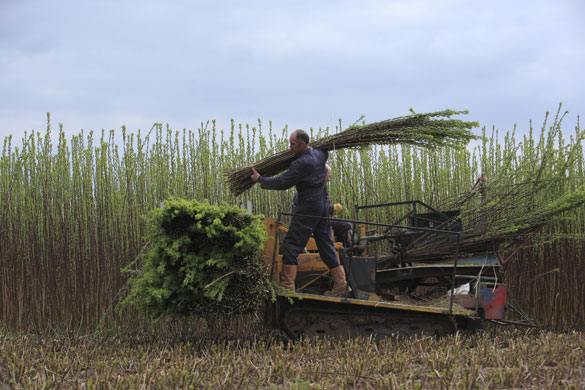
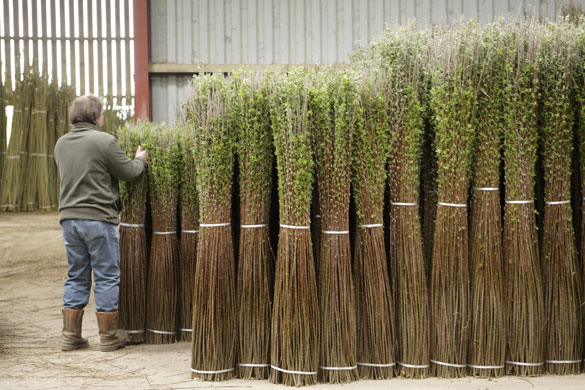
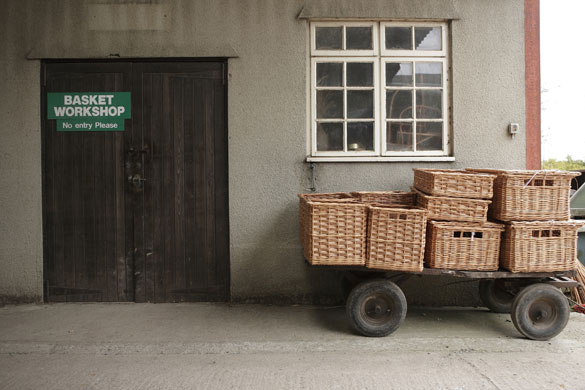
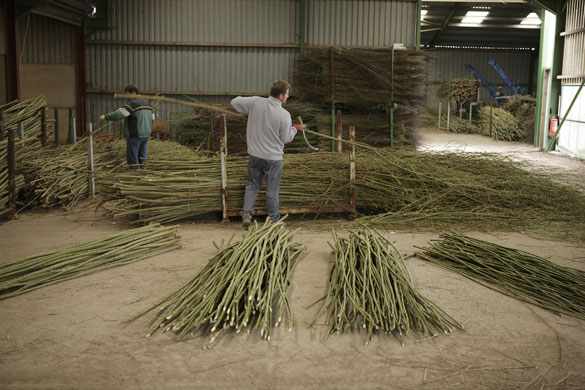
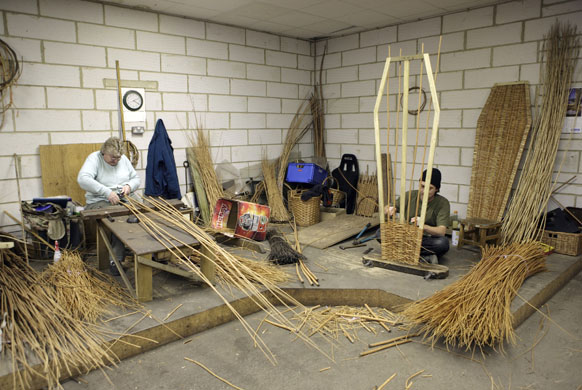
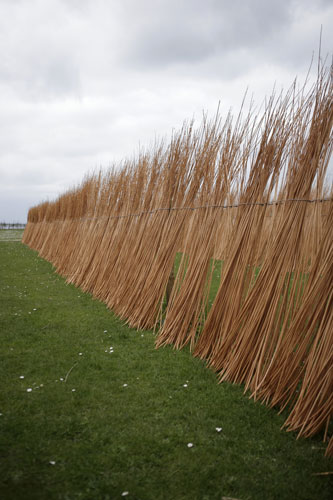
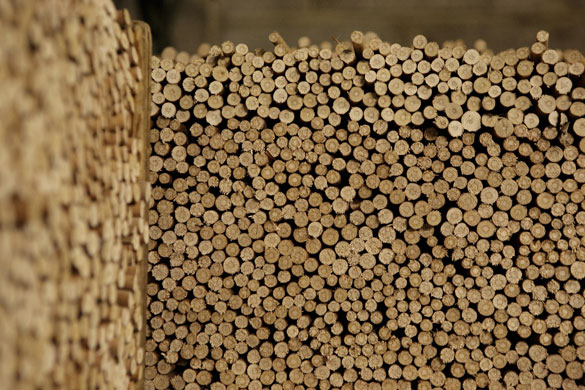
Workers harvest willow ready for processing. The family firm has 70 acres of land on the Somerset Levels, each planted with some 17,000 willows. After three years, a willow will produce up to 30 useable willow rods. Harvesting was done by hand until as recently as 15 years ago Photograph: Sam FrostWorkers setting freshly cut willow out to dry before processing. The rods are sorted in bundles according to size; each bundle measures 3ft 1in around the base (the extra inch being "for luck", much like a baker's dozen) Photograph: Sam FrostThe basket workshop at PH Coate and Son. Outside, some of the company's finished products. Until the 1950s, willow baskets found a use in countless areas of daily life: for vegetables, fruit, laundry, coal, in mail sorting offices, on bicycles, and for shopping. Willow was also extensively used in furniture and for products as diverse as babies' cradles, bird cages and lobster pots Photograph: Sam Frost
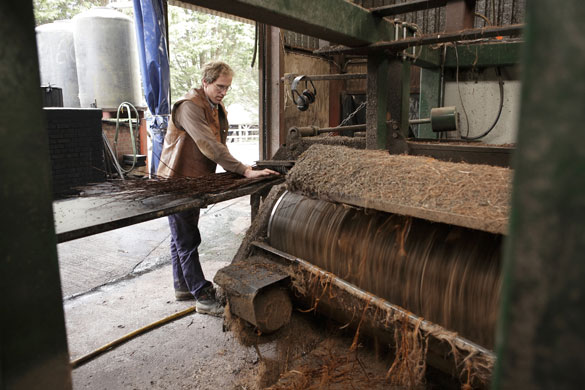
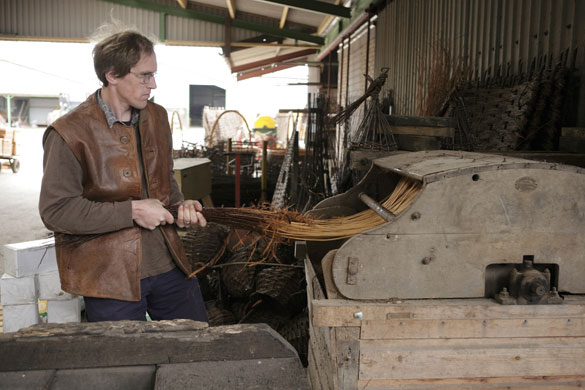
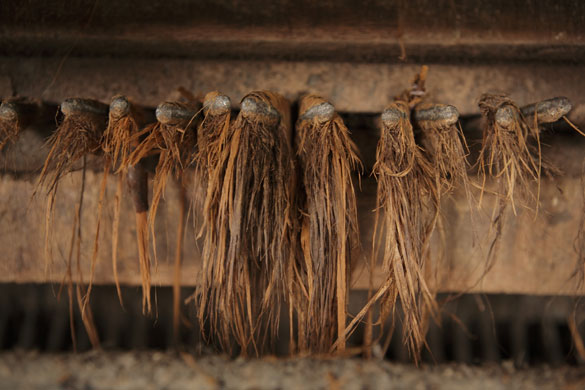
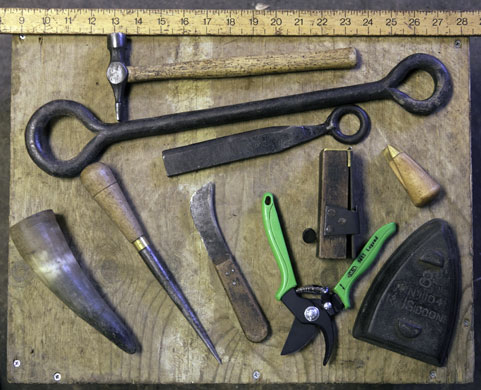
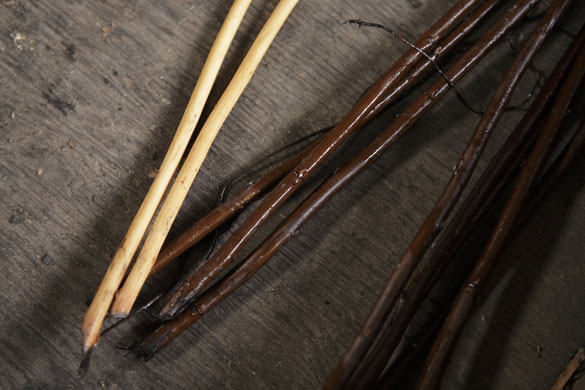
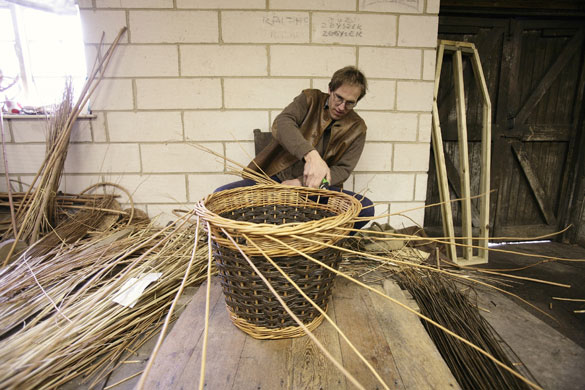
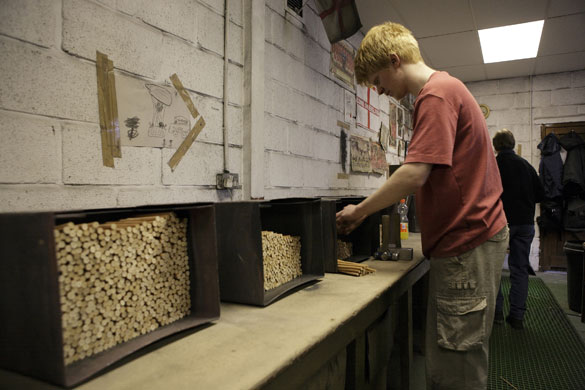
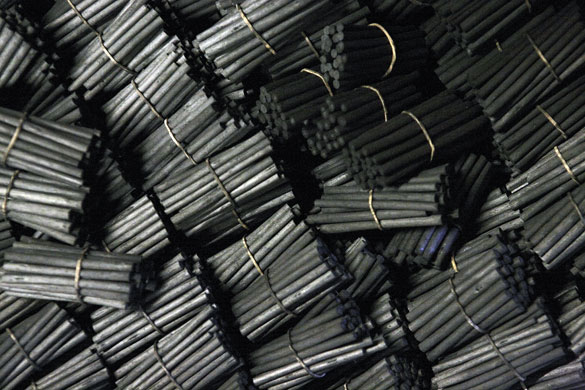
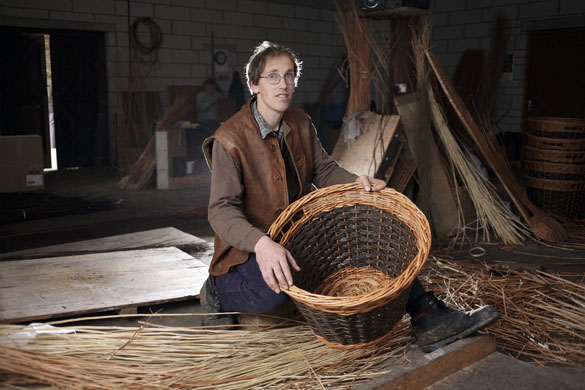
Workers cutting and sorting older, thicker willow stakes. These will be used as frames around which the more slender willow rods are woven to make baskets, hurdles, even coffins. Some may also become chairlegs or other furniture parts Photograph: Sam FrostBefore they can be used, the willow rods are boiled in water for up to 10 hours. Here Jonathan Coate demonstrates the modern machine, built to his design, that strips the bark from the rods after boiling. The discarded bark is ploughed back into the ground as fertiliserPhotograph: Sam FrostCoate demonstrates an older machine for stripping willow rods, dating back to the 1920s and in daily use until 2002. The work was hard and could be dangerous; injuries to fingers and hands were not uncommonPhotograph: Sam FrostMatthew Sparrey at work making a willow coffin. Coffins have become a key product and several dozen are kept available from stock. Matthew, a former van driver, is learning on the job; it takes six months to acquire the basics, Coate reckons, and "a lifetime" to become fully proficientPhotograph: Sam FrostWillow rods being stripped of their barkPhotograph: Sam FrostThe basket-makers tools: from top to bottom, ruler, hammer, commander, beating or wrapping iron; and from left to right: tallow horn, bodkin, shop knife, shears, shave, cleave and flat-ironPhotograph: Sam FrostWillow rods, stripped and unstripped. Some 90% of PH Coate and Son's willow is stripped; a small proportion is boiled but left unstripped. Known as black or brown willow, it is used in weaving to contrast with the familiar buff colour of stripped willow Photograph: Sam FrostCoate finishing off a willow basket; the final weave, around the top, is known as the borderPhotograph: Sam FrostOnce boiled and stripped, the willow rods are allowed to dry in the open air. They are soaked again before being woven to make them more flexiblePhotograph: Sam FrostThese willow rods have been cut to length and are waiting to be sorted by diameter before being fired to make charcoal. High quality artist's charcoal has become a major and profitable part of the business, allowing the family to continue making more traditional willow products which, despite a resurgence in recent years, still only have a niche market Photograph: Sam FrostWillow rods, cut to length and sorted by diameter, are packed into metal tins before being fired to make artist's charcoalPhotograph: Sam FrostFine willow charcoal ready to be packed into boxes and shipped around the world; PH Coate and Son exports to nearly 40 countriesPhotograph: Sam FrostCoate with a finished basketPhotograph: Sam Frost
Sign up to read this article
Read news from 100’s of titles, curated specifically for you.