Will U.S. President Donald Trump be able to cooperate with the Democrats and overcome the conflicts in Congress as he stated? If deliberations deadlock on important legislation and a budget, he will further lose the public's support, putting the management of his administration into a difficult situation.
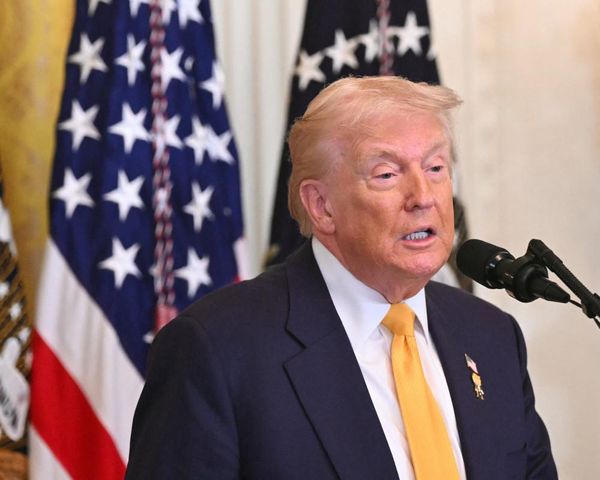
Trump delivered a State of the Union speech before the U.S. Congress, expounding his administrative policies for this year. Emphasizing such achievements as large tax cuts, the easing of regulations, soaring stock prices and job increases, Trump announced the advent of a "new American moment."
Public approval ratings for Trump remain at about 40 percent, a record low in the postwar period. Apparently thinking of the midterm congressional elections in November, he undoubtedly prioritized touting his administration's achievements.
The focal point from now on will be whether he can realize sizable investments to improve the nation's transport network and other infrastructure, and maintain a thriving economy.
Trump presented his idea of raising the amount of infrastructure investment to 1.5 trillion dollars over 10 years, from the 1 trillion dollar he indicated earlier. Cooperation between the Republicans and the Democrats is essential for the passage of related bills.
However, congressional conflicts have deepened rather than the opposite. In late January, for instance, both parties failed to avoid a lapse in the federal budget, shutting down some government offices. Should the state of indecisive politics continue, with Congress not functioning, it will also put a damper on the brisk economy. The national administration must not be sent into disarray over a fruitless conflict.
Stop attacking opponents
Eliminating gaps over immigration policy is a current issue.
In keeping with its key public pledges, Trump's administration will build a wall on its border with Mexico. As a measure to rescue young illegal immigrants as the Democrats want, Trump will offer a path to citizenship for 1.8 million illegal immigrants. In his address, Trump proposed a set of these plans to reform the immigration system.
Shouldn't he also review his style of attacking opposition forces, while unilaterally asserting his own legitimacy via Twitter, so as to encourage a bipartisan consensus?
On foreign and security policies, Trump spelled out the idea of reinforcing national defense, including the nuclear arsenal, to cope with what he calls rivals like China and Russia, terrorist groups and rogue regimes.
These measures appear to be based on reflections that a series of threats heightened under the previous administration, and U.S. influence declined.
To deter North Korea from developing nuclear missiles, Trump made clear once again his policy of applying "maximum pressure." It was reasonable that he emphasized the brutality of the North Korean regime under its leader Kim Jong Un by inviting to the floor the parents of a U.S. university student who was detained in North Korea and died after he was released, as well as inviting a defector from North Korea.
Trump made no reference to United States considering rejoining the Trans-Pacific Partnership free trade pact. It remains unknown how much importance Trump will attach to international cooperation. Trump needs to expedite his efforts to flesh out the Indo-Pacific strategy, including ways to deal with China's maritime advances and military buildup.
(From The Yomiuri Shimbun, Feb. 1, 2018)
Read more from The Japan News at https://japannews.yomiuri.co.jp/