The emergence of the Omicron variant of the coronavirus in southern Africa last month is causing concern around the world, not least because it is thought to be highly transmissible and because the 32 mutations of its spike protein suggest it might be able to resist current vaccines.
The UK has recorded 12 deaths from the new variant so far and 37,101 confirmed cases, prompting fears that further social restrictions could be imposed on the British public in the final days leading up to Christmas, dashing the festive plans of millions.
London mayor Sadiq Khan has declared a major incident over the extent of the Omicron outbreak in the capital while NHS England has announced a return to its highest level of emergency preparedness, level four national incident, meaning that the health service’s response will be coordinated as a national effort, rather than led by individual trusts.
Overall, the UK added another 82,886 infections in 24 hours on Sunday 19 December plus a further 45 fatalities, a slight fall from the pandemic high of 93,045 recorded the preceding Friday.
To put that in perspective, case numbers were at 27,052 precisely one year earlier, the day Boris Johnson “cancelled” Christmas with “a very heavy heart”, abandoning a restrictions amnesty on household mixing and imposing severe tier 4 restrictions on much of the south east of England.
Asked by the BBC’s departing Andrew Marr about the possibility of further new restrictions being introduced before Christmas, health secretary Sajid Javid declined to rule it out on Sunday, saying instead that there are “no guarantees in this pandemic” and that the “fast-moving” situation was being kept under review.
It has since been reported that Mr Johnson, chancellor Rishi Sunak and other ministers are allegedly resisting calls from experts to introduce new measures immediately, with chief scientific officer Sir Patrick Vallance leading the call to drive down infection rates and ease the pressure on the NHS.
Sir Patrick’s fellow advisers have been equally outspoken, with Professor Stephen Reicher, a member of the government’s Scientific Advisory Group for Emergencies (Sage), warning that Omicron is “coming at us like an express train” and insisting that the government must give the public a “good, clear message” about how “serious the crisis is”.
The prospect of introducing a two-week circuit-breaker lockdown after Christmas has been mooted, according to further reports over the weekend, with plans made available to ministers for consideration and apparently including a ban on meeting others indoors except for work purposes and limiting pubs and restaurants to outdoor service only.
Both Mr Johnson and Mr Javid have so far repeatedly declined opportunities to definitively rule out tougher measures of this sort but transport secretary Grant Shapps did say last week that Parliament would be recalled over Christmas to vote on new restrictions should they become necessary.
It is clear that the PM hopes encouraging the takeup of booster vaccines and the “Plan B” restrictions he recently introduced will be enough to see off the threat, at least until after Christmas, although the rising case numbers continue to cast considerable doubt on that contention.
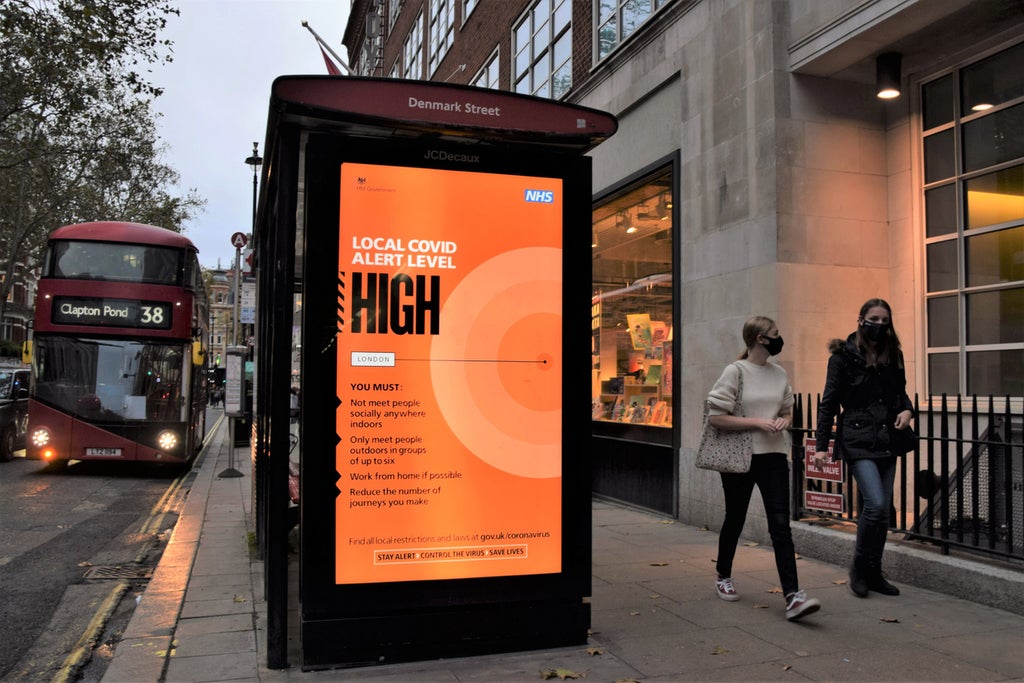
As preventative measures against Omicron under “Plan B”, Britons are currently again being ordered to wear face masks in shops, cinemas, theatres and places of worship and on public transport, to work from home order where possible and to show an NHS Covid pass in return for entry to nightclubs and other large venues and for outdoor events where there are more than 4,000 people, measures voted through the House of Commons despite a significant Tory revolt.
The government has further revised its approach to boosters, planning to make them available to all over-18s by the end of December and halving the amount of time between second and third injections from six months to three, all in the hope of staving off the feared “tidal wave” of infections we are already beginning to see.
Some form of “Plan C” - be it a circuit-breaker or something else - could well materialise should the Omicron outbreak worsen over the festive season and into the new year but, as for imposing a fourth national lockdown as seen earlier in the pandemic, that is considered the most extreme measure that could be taken, given the brutal economic toll it takes, hence the reluctance from Whitehall.
But the Sage advisers have been unambiguous in calling for stricter curbs, with the influential Professor Neil Ferguson of Imperial College London openly entertaining the possibility for several weeks.
Even before Omicron began to cast its sinister shadow across the globe, many Britons were already glancing anxiously towards the continent as Austria and the Netherlands reintroduced lockdowns in response to spiking cases of Covid-19.
The World Health Organisation (WHO) had said it was “very worried” about the spread in Europe and warned 700,000 more deaths could be recorded by March unless urgent action is taken, bringing the total to 2.2 million since the pandemic began.
Prior to the latest worrying developments sparked by Omicon, Mr Johnson’s government had been highly reluctant to reimpose restrictions at all, despite consistently high case numbers, preferring to pass the responsibility for personal safety onto the public and pursue its “Plan A” of promoting vaccine take-up and boosters to counter the waning of the country’s currently impressive level of immunity.
According to the government’s figures, 48.8 per cent of the British population aged over 12 have had a third jab so far, but the increased threat level should see that figure climb rapidly, with demand expected to spike at drop-in centres at weekends.
Mr Johnson’s single-minded approach to the crisis this autumn has continued to attract criticism, with Kamlesh Khunti, a professor of primary care diabetes and vascular medicine and another Sage member, warning in mid-November that ministers in England have “lost the message” .
Professor Khunti said politicians needed to take Covid “more seriously”, arguing that citizens had become negligent regarding masks and avoiding crowded, unventilated spaces thanks to the poor example of their elected representatives.
Conserative peer Sir Desmond Swayne recently branding masks “mumbo-jumbo” and arrogantly claiming he is exempt from wearing one “due to my genetic predisposition for liberty” is precisely the attitude to which the professor was referring.
While the vaccines have consistently kept death rates low since the spring, the UK’s infection level has remained consistently high, typically hovering around the 40,000-per-day mark but are now at more than double that.
But the prime minister nevertheless doggedly refused to bend to scientists’ calls for the implementation of “Plan B” until it became unavoidable, no doubt out of fear that such a step could jeopardise Britain’s stumbling economic recovery.
He might also have been keen to ward off the inevitable anger it would provoke, having seen anti-lockdown protests - some of them violent - erupt in Austria, the Netherlands, Belgium, Switzerland, Denmark, Italy and Croatia.
Londoners were certainly unhappy about the initial return of the mask mandate, accusing the PM of hypocrisy for declining to wear one himself at several public engagements.
However, in other quarters, there appeared to be a clear appetite for new restrictions even before Omicron, at least according to the polls.
A recent survey of 900 managers and 1,200 employees carried out by Hack Future Lab found 53 per cent would welcome a “festive lockdown” for the sake of their own well-being after struggling to come to terms with the return to ordinary working conditions, often finding themselves forced to take on extra tasks to cover for absent colleagues.
Another poll by Savanta ComRes revealed 45 per cent of adults would be in favour of a selective lockdown targeting only those who had declined to get their Covid jabs and therefore could pose an ongoing risk to others
But, until Omicron threw a fresh spanner into the works, there was a credible case for believing that the UK was in such a strong position that it could avoid the worst of the outbreak marauding across Europe.
Although Britain’s infection rate has remained high for months, it has also been highly stable, lingering at a seven-day average of around 600 daily cases per million people, whereas Austria and the Netherlands have suddenly spiked to 1,500 and 1,250 respectively from well below that starting point since the beginning of October.
Part of the reason for this is that the UK was hit by the more infectious Alpha and Delta variants of the coronavirus sooner and was therefore able to tackle them ahead of its European neighbours and unlock earlier.
That strategy had been endorsed by chief medical officer Professor Chris Whitty and Sir Patrick Vallance because it meant Britain could take the hit in summer rather than waiting until flu season when more people were socialising indoors in response to plummeting temperatures.
Another key strength, which should continue to play a crucial role, whatever happens next, is the level of immunity built up by Britain’s strong vaccine rollout, which began back on 8 December 2020 when Coventry grandmother Margaret Keenan, 91, became the first person in the world to receive her jab.
Currently, according to the government’s data, 89.5 per cent of the British population aged over 12 have received their first vaccine injection and 81.7 per cent have received their second dose.
The robustness of the UK’s immunity was demonstrated in late October by projections from the London School of Hygiene and Tropical Medicine, which found that, if everyone in the country were to be exposed to the virus, just 32 people out of 100,000 would end up in hospital, compared with 800 in Romania.
As always with this pandemic, so much remains unknown and nothing can ever be definitively ruled out.
Many will be haunted by memories of Christmas 2020, when plans had to be changed at the last moment to rein in climbing case numbers, and families were left frustrated, disappointed and unable to see vulnerable loved ones.
While the festive television adverts might have been busy encouraging reckless spending and promising a bumper Yuletide to compensate for last year (while stocks last, that is), many would do well to temper their excitement by recalling the haunting words of public health professor Gabriel Scally from last December.
“There is no point having a very merry Christmas and then burying friends and relations in January and February,” he said.