After the tragic death of Canadian backpacker Piper James on K’gari (Fraser Island) on January 19, a coroner found the 19–year–old had been bitten by dingoes while she was still alive, but the most likely cause of death was drowning.
Days later, the Queensland government announced it would cull the entire pack of ten dingoes seen near where Piper’s body was found. Most of those animals have now been killed.
Authorities justified the targeted cull on “public safety” grounds, while also signalling a strong desire to keep tourism moving. Queensland Tourism Minister Andrew Powell reassured tourism operators “the island is open” and urged people to continue to visit.
The cull took place without the knowledge or approval of the Butchulla people, the Traditional Owners of K'Gari. James’ parents also publicly opposed a cull, saying it was “the last thing” their nature-loving daughter would have wanted. There has been backlash from scientific experts, as well as the public.
So, does killing dingoes actually make K’gari safer for people?
The perfect storm
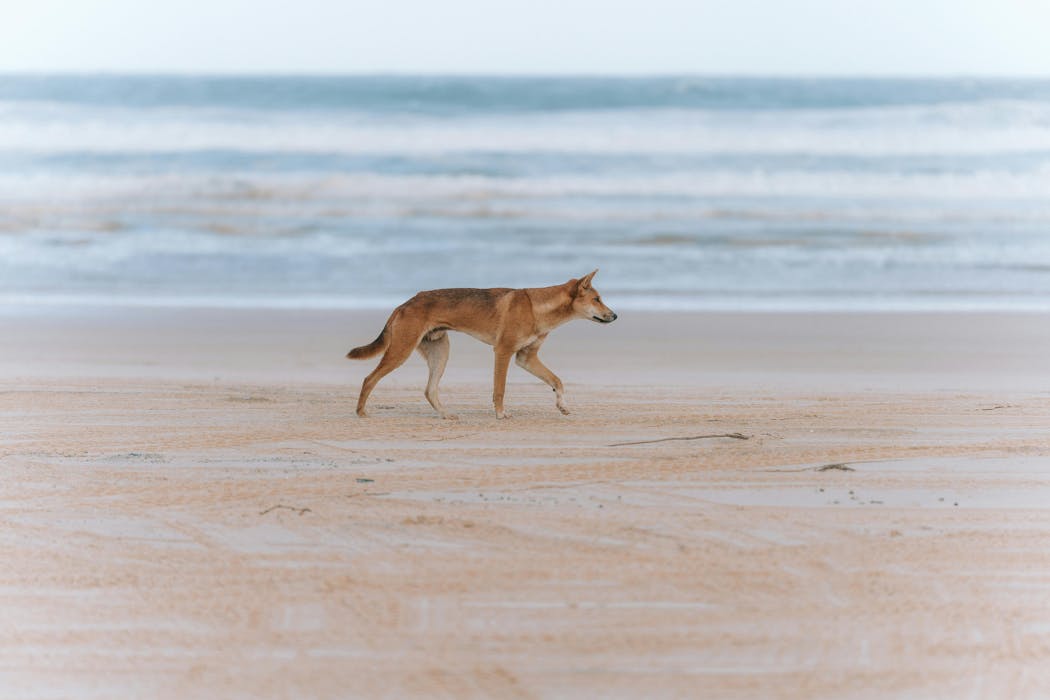
K’gari’s dingoes (called Wongari by the Butchulla) are a population of high conservation and cultural value on this World Heritage–listed sand island. Estimates put their numbers at between 70 and 200.
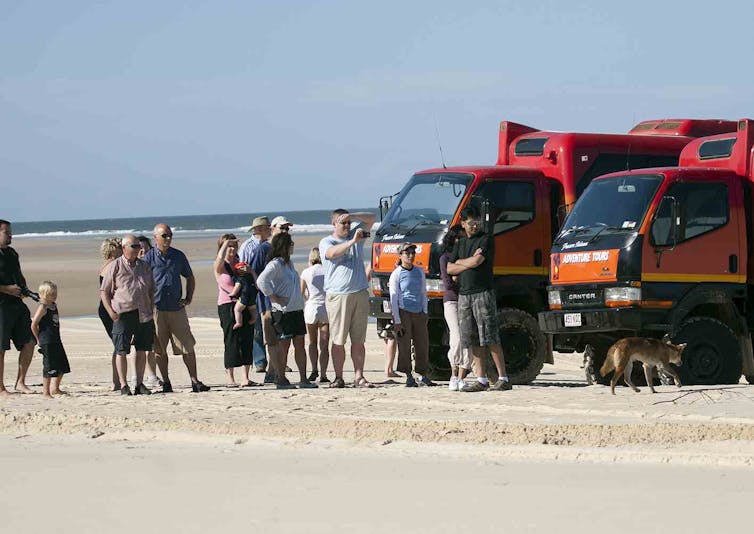
Huge visitor numbers (about 450,000 per year) to the roughly 1,600 square kilometre island means dingoes and humans share the same beaches and come into contact in ways they generally don’t on the mainland. Most encounters are harmless, even enjoyable. Less than 1% of visitors experience a negative interaction and many tourists visit the island specifically to see the dingoes.
Of course, risk increases when dingoes and people are in close proximity. Dingoes are often deliberately or carelessly rewarded with food scraps or find rubbish, which encourages loitering.
Most injuries caused by dingoes are minor, such as nips, bites and scratches. Serious attacks by dingoes are rare on K'gari and the mainland. Children are most vulnerable given their smaller size.
The Queensland Parks and Wildlife Service has consistently worked to reduce incidents. Their “Be dingo safe” campaign includes education, signs, fenced areas and even “dingo sticks” to deter the animals from approaching. But too often these safety warnings are not heeded. People feed dingoes or leave food in their tents or bags, come too close to dingoes and let kids roam unsupervised.
For an apex predator, dingoes are relatively small and dog-like. To many visitors, they don’t look especially dangerous, and people forget dingoes are wild predators.

Decades of lethal control
Authorities have long relied on lethal control of dingoes on K'gari. Between 2001 and 2013, 110 dingoes were killed. In 2001, after the death of nine-year-old Clinton Gage, 28 were immediately killed. In a typical year, one to two are killed.
Removing up to ten dingoes carries serious costs for a small island population. Genetically, the K’gari population has low diversity and an effective population size of about 25 (meaning only about 25 animals are effectively passing genes on, even though more dingoes exist). Studies have found inbreeding, genetic isolation and declining genetic variation in K'gari dingoes over the past two decades.
High levels of inbreeding may lead to physical deformities, reduced breeding success and an increased risk of local extinction. On an island, there is limited scope for “new” dingoes and their genes to arrive, so every avoidable death is important.
That is why our 2025 population viability analysis was sobering. We found if the number of dingo deaths stays close to natural levels, the population could remain stable. But extra deaths due to mass culls or disease outbreaks expose the animals to higher extinction risk. This makes it more likely the island’s dingoes could die out. In the highest-risk scenarios we modelled (that includes several mass culling events), the risk of extinction becomes substantial in about 50 years. Survival can fall close to zero by 100 years.
Culling rarely solves safety problems
Records of dingo incidents on K'gari offer little evidence killing dingoes delivers lasting safety. Our analysis of the “highest severity” incidents reported found the island had an average of 10.7 reports a year from 2001 to 2015. There was no clear downward trend in incidents, even though more than 110 dingoes were destroyed in that period.
What we did find was a predictable seasonal pattern. About 40% of serious incidents took place during breeding season (March to May) and 30% during whelping (June to August). These are periods when dingoes are more active and social dynamics intensify. During breeding, dingoes (especially younger males) may range more widely and test boundaries. During whelping, adults can become more vigilant and take greater foraging risks to meet the demands of pups.
The chance of serious incidents rose and fell with dingo life history and behaviour, as well as what people did around them. Incidents are not explained by visitor numbers alone.
When a dingo approaches people or loiters near them, they can be labelled as “problematic” and are more likely to be culled. But these behaviours aren’t abnormal in a wildlife tourism setting. They are predictable responses to people, food and opportunity. Younger males are often the most persistent around people, but become less exploratory as they mature or disperse.

A people problem, not a dingo problem
K’gari’s dingoes are doing what wild predators do, just as sharks and crocodiles do in Australia’s oceans and rivers.
Our safety depends on how we behave in wild places. To reduce risky encounters with wildlife, secure your food and waste, keep your kids close, don’t venture out alone, respect park guidelines and stop giving rewards such as food.
Killing dingoes won’t make K'gari safer. Changing human behaviour and attitudes will.

Bradley Smith is an unpaid director of the Australian Dingo Foundation, a non-profit environmental charity that advocates for dingo conservation. He is also a member of the International Union for the Conservation of Nature (IUCN) dingo working group.
Kylie M. Cairns receives scientific research funding from the Australian Dingo Foundation, the Australia and Pacific Science Foundation, the NSW and ACT state governments and donations from the general public. She is an unpaid director of the Paddy Pallin Foundation and provides scientific advice to the Australian Dingo Foundation and the New Guinea Highland Wild Dog Foundation. She serves as co-coordinator of the International Union for the Conservation of Nature (IUCN) dingo working group.
This article was originally published on The Conversation. Read the original article.