Does Rakuten, Inc.'s plan to scrap delivery fees for purchases over a certain amount on its online shopping site constitute an act that violates the law?
The Fair Trade Commission on Monday launched on-site inspections of the Tokyo-based company on suspicion of violating the Antimonopoly Law concerning unfair transaction practices.
Rakuten, saying it "believes the measures are in compliance with laws and regulations," has not changed its position on implementing the free delivery scheme as planned.
Under such circumstances, the developments of the FTC investigation are drawing attention.
Unilateral changes
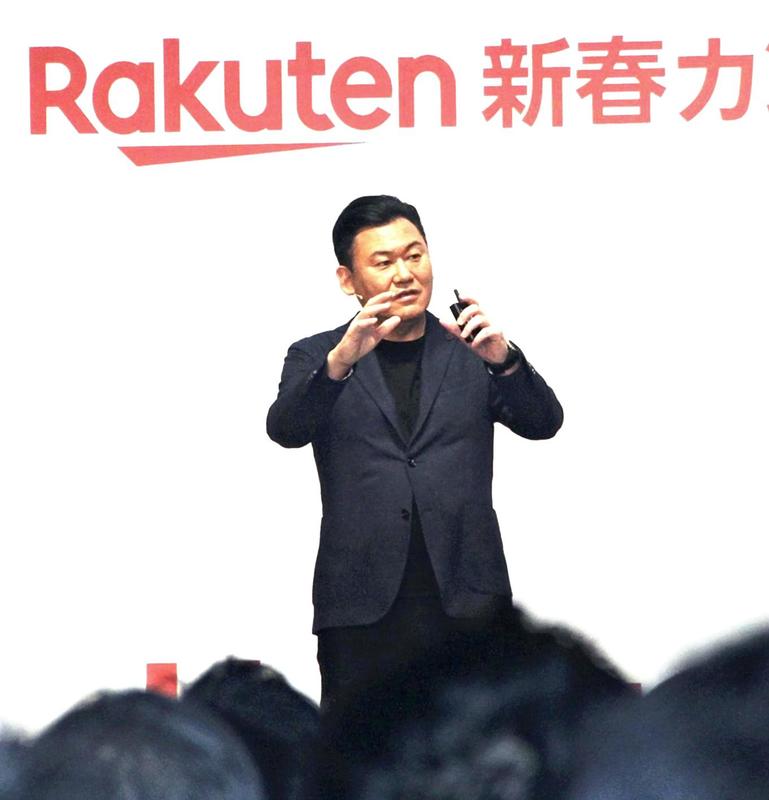
"Even though we have a conflict with the government and the FTC, we will definitely implement the plan," Rakuten Chairman and President Hiroshi Mikitani said, emphasizing the free delivery plan at an event for Rakuten Ichiba cybermall tenants held on Jan. 29 in Tokyo.
It was in August last year when Rakuten announced a detailed plan to scrap delivery fees. The company said it would change the policy concerning delivery fees, which are currently set by respective tenants as they wish. Under the new policy, purchases of 3,980 yen or more at each shop will ship free, excluding to certain delivery areas, and each tenant will shoulder the delivery costs. In December, Rakuten informed tenants that the starting date of the plan to introduce the uniform delivery fee policy is March 18.
Rakuten said that nearly 70% of customers to Rakuten Ichiba have given up making purchases because they wanted to avoid high delivery costs and complicated delivery fee structures. Introducing the free delivery measures could increase sales by around 10%, the company said.
However, the introduction of the new policy will impose additional costs on tenants that they have to cover themselves or through raising prices. As it is difficult to raise prices, tenants have no choice but to bear the costs.
Some tenants oppose the plan, with remarks such as "Rakuten should also shoulder delivery costs" and "If we raise prices, we will lose customers." These tenants formed a voluntary Rakuten Union in October last year. On Jan. 22, they submitted a petition with about 1,700 signatures to the FTC, asking it to conduct an investigation.
The power relations are significantly imbalanced between the tenants and Rakuten, which operates the huge online shopping website comprising nearly 50,000 tenants, so it is difficult for the tenants to oppose Rakuten's unilateral policy changes. According to a fact-finding survey conducted by the FTC last year, 93% of tenants said Rakuten unilaterally changed policies, considerably greater than the 73% of tenants on Amazon and 50% of tenants on Yahoo Japan's shopping site.
With the free delivery system starting in about a month, the FTC is conducting on-site inspections because the measures will have a significant impact if implemented, so it seems to have determined it necessary to judge at an early stage whether the plan is illegal,
Aiming to take on Amazon Japan
Rakuten announced its free delivery plan to vie with rival Amazon Japan.
In online shopping, price competition has been intense, and there has been a growing awareness of delivery fees paid by shoppers in recent years.
Amazon has taken the lead in finding ways to deal with delivery fees. Subscribers to Amazon Prime, its paid service that includes video and music streaming, are not charged delivery fees, in principle. With more than 10 specialized warehouses in Japan, Amazon also offers free shipping to non-subscribers who make purchases of 2,000 yen or more.
On the other hand, the Rakuten Ichiba cybermall leaves the management and shipment of products to each tenant. It is like a shopping mall with 50,000 tenants. Therefore, delivery fees differ among tenants, which prompts many users to point out that it is difficult to understand delivery fee structures. To address the situation, Rakuten announced last year a plan to invest 200 billion yen to strengthen its own distribution network. With costs increasing due to the shortage of workers in the delivery industry, shouldering delivery fees is becoming an issue directly linked to tenants' profit.
According to a survey by the Economy, Trade and Industry Ministry, the domestic e-commerce (EC) market for consumers amounted to about 18 trillion yen in 2018. While Amazon does not disclose its total EC sales, in 2018 Rakuten reported total EC sales of 3.4 trillion yen and Yahoo Japan 2.3 trillion yen. However, online shoppers are said to readily move to other shopping sites depending on the service and the prices of products. In November last year, Z Holdings Corp., which operates Yahoo Japan, acquired Zozo, Inc., the operator of the Zozotown fashion online shopping site, showing that companies are intensely trying to attract and retain customers.
Read more from The Japan News at https://japannews.yomiuri.co.jp/