Interesting times for comedy fans: we’re watching an artform in the process of becoming Art. Time was, international arts festivals had no truck with spit’n’sawdust standup, which had to colonise the fringes to make itself heard. Dance, opera and classical music existed in a more rarefied stratosphere, and showed little desire to mingle.
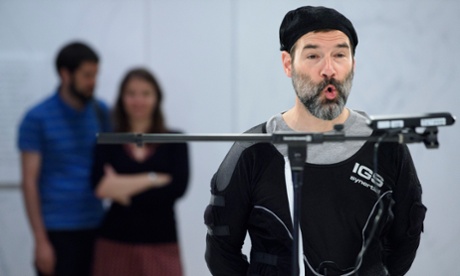
But now, comedy has been elevated. On the bill of the high-end Manchester international festival, alongside Gerhard Richter, Arvo Pärt and Wayne McGregor, we find standup shows by Sara Pascoe, Adam Buxton and the Invisible Dot. What’s the air like up there, comedy? And now you’re up there, will you still remember your old friends?
Of course, this is a process that’s already underway; some citadels already got stormed. Comedy is now pored over in the arts pages of the national press. The state has identified it as export-worthy: the first All-party parliamentary group on the UK comedy industry was convened last year. Comedians appear on the honours list. Festivals are just the latest to open their doors, and where Manchester leads, Adelaide, Edinburgh and (who knows?) Avignon will likely follow. It’s disorientating to think that the Edinburgh international festival – usually seen as the diametric opposite to the fringe – might programme comedy, the quintessential fringe artform. But then you remember, the Traverse (plonked halfway between the EIF and the fringe) already selects and programmes high-end comedy during the festival. A process of curation and cultural distinction is already in place, and could easily be extended.
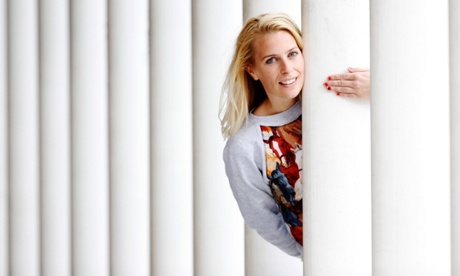
Not that the curated comics see themselves or their work as culturally distinguished. “It’s incredibly high art,” Sara Pascoe said, with heavy irony, of her MIF show when I interviewed her earlier this month. For Pascoe, Manchester festival was just another gig. “Is it high-end? What does that mean? Sometimes all it means is that the audience sit there with their arms folded and judge you, doesn’t it?”
She’s probably right. When comedy appears on the bill of a “highbrow” festival – even one as demotic as MIF – audiences look at it slightly differently. Big-hitting international festivals have lots of money and cultural cachet, and audiences – subliminally or otherwise – expect that to translate into a high standard of professionalism and, ideally, work that’s a cut above the usual fare. In this context, far less than in a club or on the fringe, someone genially waffling into a mic won’t do.
But maybe those expectations need challenging. What is “high culture” anyway? Is it Neck of the Woods, the MIF art-music-theatre event that was so poorly reviewed its creator Douglas Gordon reportedly took an axe to the host venue? At any rate, it looks like we’ll have to get used to standup being part of its mix, for reasons good and ill. Part of this is that – in an era of drastically tightening belts – standup is cheap. It also gives austere international festivals a more democratic air, and ticks the boxes they need ticked about attracting new audiences. Less cynically, the phenomenon also recognises that comedy has earned its place at the high-art table, that a show by Daniel Kitson, Bridget Christie or Tim Key might be as innovative, beautiful or mind-expanding as anything by Hofesh Shechter, Sylvie Guillem or Robert Lepage.
All this must give encouragement to other runts of the entertainment litter. If comedy can be thus gilded, who’d bet against video games, rap battles or even improv being programmed in international arts festivals in years to come? As for comedy, the next barricade to breach is presumably Arts Council funding, and after that... maybe a Stewart Lee set on the national curriculum?
Is there a downside for comedy? Obviously none of us (Eddie Izzard possibly excepted) wishes to see a class emerge of globetrotting internationalist comics making prestige work exclusively for the moneyed festival circuit, as happens to some degree in the other performing arts. More than theatre and dance, comedy has dissenting roots. At their best when outside a tent pissing in, most good comics would be wary of associating with a project of cultural enrichment. But there’s plenty of space to occupy in august festival programmes before that becomes a risk – and in any case, the MIFs of this world want comics precisely because of their anti-elitist cachet, and wouldn’t want it smoothed away. I guess we’ll see more and more standups invading global culture’s most exclusive stages, as the thread unspools further that links comedy to the beer-fugged barrooms where it cut its teeth.