After a veteran officer — also head of their police union — shot and killed a 20-year-old unarmed Black motorist named Daunte Wright during a traffic stop over expired tags and a dangling air freshener, you might think cops in Brooklyn Center, Minnesota, would have at least a brief moment of reflection, even contrition.
Yeah, right.
Instead, officers in the Minneapolis suburb — just 10 miles or so from the corner where Derek Chauvin kneeled on the neck of a dying George Floyd, sparking an American racial reckoning that apparently wasn't — raised a version of the "thin blue line" flag over their embattled station house, which was their bold and outrageously arrogant signal that Brooklyn Center was about to become some kind of Alamo for racist, oppressive policing in America. It was their opening salvo in what has quickly devolved into a police riot.
Their "thin blue line" was especially brutal toward journalists seeking to exercise their First Amendment rights and document what police were doing in our name. Even after a federal judge in Minnesota took the extraordinary step of issuing a temporary restraining order telling state troopers (but, weirdly, not local cops or the National Guard) to stop arresting or dispersing working reporters and photographers, officers in Brooklyn Center have been wilding against the media — epitomized by the pepper-spraying of a French journalist in a yellow "PRESS" vest and her heavily equipped photographer.
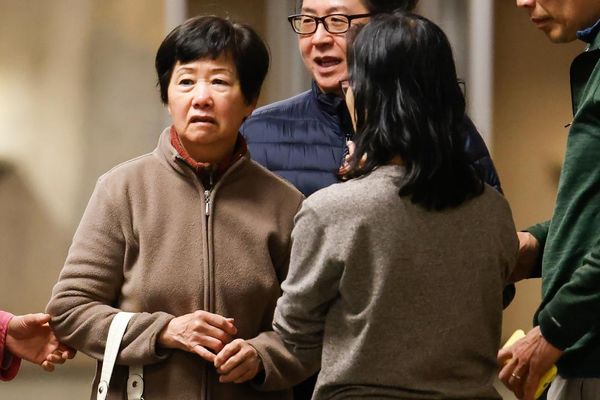
These included the arrest of an Asian American CNN producer, Carolyn Sung, who despite her press credentials was painfully zip-tied and hauled off to jail, with a cop screaming, "Do you speak English?!" — her primary language. One New York Times reporter was dragged out of his car after officers pounded it with wooden sticks. Another Times journalist was grabbed by an officer who pulled him behind police lines and took his phone. When he dared to ask why, the officer responded, "Because that's our strategy now."
Indeed. It was almost as if the cops on the ground in Brooklyn Center were engaged in a race to the bottom to see how many constitutional rights they could violate in just one week. After restricting citizens' right to assemble and air their grievances, and violently assaulting press freedom, the authorities in Brooklyn Center even went after freedom of worship, with a phalanx of 75 officers blocking a church where some in the community had found sanctuary.
The Chauvin trial in Minneapolis — where prosecutors brilliantly laid out an open-and-shut case for the former officer's conviction on murder charges — seems to have signaled to many in the law enforcement community not that it is finally time for a change, but that it is time to circle the wagons. "This is almost like our American way of policing is on trial," one policing expert told NBC News, and while the woman — leader of an association of Black law enforcement officers — meant it in a positive way, other officers in the article who voiced similar sentiments were expressing their alarm. To them, a conviction of Derek Chauvin could change that American way of policing — which, to so many observers, is overly militarized and overly repressive toward Black and brown citizens — in ways they don't like.
There is no more painful evidence of this resistance to change than this: Even as the Chauvin trial presents a devastating drumbeat of condemnation against police violence, and even after nearly a year of sustained protest, cops across America continue to kill citizens at the consistent, mind-numbing rate of three every day. The nation's supposed racial reckoning hadn't stopped cops in Brooklyn Center or Windsor, Virginia, from racially profiling Black or brown motorists, using trivial pretexts like expired tags for traffic stops that escalate into violence. The pleas for a smarter, non-police response to mental health events didn't prevent Portland police from fatally gunning down a man who was having a crisis in a public park. Nor did demands for transparency stop the Black Democratic mayor of Chicago, Lori Lightfoot, from blatantly lying to her constituents about the police shooting of a 13-year-old Latino boy, Adam Toledo, with his hands in the air.
The lessons that our political leaders think they've learned from 2020's George Floyd protests are the wrong ones. Mayors and governors who for the most part have failed to enact meaningful police reforms are now tripping over each other to send out the world's most militarized police force in overwhelming numbers. This will only serve to intimidate protesters who just want to air their understandable — and constitutionally protected — grievances that virtually nothing has changed since Floyd was suffocated. It is the insanity of doing the exact same thing again and again, and expecting a different result.
And what a telling indictment of our system that — despite the airtight case of criminal injustice against Derek Chauvin that's unfolded in that Minneapolis courtroom — officials in Pennsylvania and everywhere else are expecting the very worst from America, that there's still a good chance that a jury will yet again side with the white supremacist style in policing. And that anyone who objects will be met with riot shields and armored personnel carriers.
In intimidating our fundamental right to protest, this increasingly out-of-control American police state will be shutting down an airing of the very grievances that it needs to hear most. That it's past time for the new Biden administration to again end the practice of passing down military hardware to our local police departments. That we need civilians — not armed and trigger-happy police officers — responding to things like routine traffic violations, mental health crises or drug overdoses. That we need to fundamentally end an American way of policing that evolved — and not nearly enough — from slave patrols, and from the ground up create and staff new departments of public safety aimed to keep neighborhoods truly safe, and not by acting like an army of occupation.
These changes need to happen regardless of what the Chauvin jury decides. But the ongoing police riot a stone's throw away in Brooklyn Center has shown us what an uphill climb we face, and the true nature of what stands in our path. Arguably, what's most galling about all of this is hearing politicians justify police actions in the name of public safety. Because when an authoritarian army is teargassing kids in their apartments, pepper-spraying journalists and blockading churches, none of us is truly safe.