After the Vietnam War, the United States and its military-industrial complex had a big problem. Protests at home had led the Pentagon to abandon the draft in the 1970s in favor of a leaner all-volunteer military. If America intended to remain an imperial power throwing its military weight around, it would need to do so with as few boots on the ground as possible. In conflicts from Iraq to Somalia, the brass hoped to rely on superior air power. Since the turn of the millennium that's increasingly meant drone warfare — unmanned, able to attack enemy targets from the skies with zero risk of American casualties.
"Now we kill people without ever seeing them," Navy Adm. Gene LaRocque told a reporter in 1995. "Now you push a button hundreds of miles away. ... Since it's all done by remote control, there's no remorse ... and then we come home in triumph."
I've never seen a better summary of modern Pentagon philosophy carried out through a generation of "forever wars" that have aimed — sometimes immorally, often ineptly — to fight murky enemies in a wide swath of nations on the other side of the world such as Afghanistan, where in 20 years the U.S. spent $2.2 trillion with little to show for it except for thousands of deaths, including innocent Afghanis killed at their weddings by drone strikes.
I know LaRocque's words because they were highlighted recently by a remarkable young man named Daniel Hale. In 2012, Hale was an Air Force intelligence officer in Afghanistan who used cellphone data to track people — sometimes as far away as Yemen — that U.S. intelligence suspected were terrorists, occasionally watching the drone attacks that incinerated them. Now 33, Hale stood up late last month in a federal courthouse in Virginia and accepted a 45-month prison sentence for his work as a whistleblower trying to alert citizens about the drone program, an effort that led him to plead guilty to violating the 1917 Espionage Act.
Hale, who'd provided documents to The Intercept that led to stories publicizing how the U.S. drone assassinations worked and many of the abuses, said he was haunted by remotely watching an August 2012 missile strike that targeted supposed al-Qaida members in Yemen but killed two respected villagers who'd been opposing terrorism. The young officer was horrified when he heard a brother of one of the murdered men speak about the senseless incident at an anti-war conference after he'd returned home the following year.
One of the things that struck me about Hale's story is that it's not unique. Quite the opposite of that U.S. admiral's cocky boast that American men and women would operate drones to kill supposed enemies with "no remorse," a community of young ex-troops or intelligence officers have become anti-war activists or even whistleblowers like Hale.
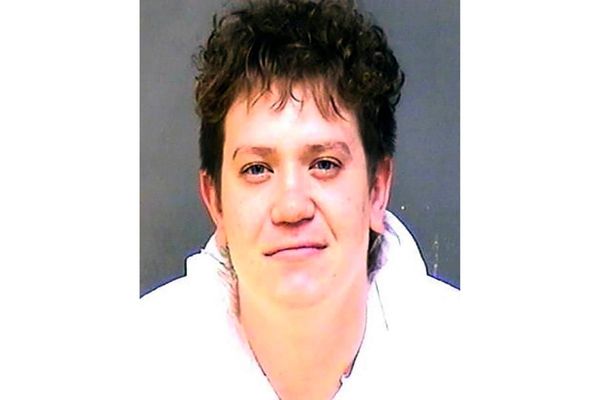
I've been chronicling the case of Reality Winner, also an Air Force veteran who'd been trained as a linguist in order to monitor conversations in languages such as Farsi and Pashto, also troubled that the information was used to target drone attacks. In 2017, back home and working for a defense contractor with a security clearance, she leaked a document to The Intercept showing the government was hiding the extent of Russian efforts to hack the 2016 presidential election. Winner was also prosecuted under the Espionage Act — which prevents whistleblowers like her or Hale from offering a moral defense for their actions — and sentenced to a lengthy 63 months. Now on home release, supporters are still pleading for President Joe Biden to pardon her.
Heather Linebaugh, who was a geospatial analyst working on the drone program for the Air Force from 2009 to 2012, told a 2016 documentary called "National Bird" — which chronicled both the psychic toll on the American operators and the even more haunting impact on villagers who lived in constant fear of their flying death machines — about the PTSD that she and many others suffered. She said "sometimes you'll stick around and watch family come and get them or, like, pick up the parts and put their family member in a blanket. And a couple people hold onto a corner of the blanket, and carry him back to their compound."
After Hale's sentencing, it's hard to say what is more frustrating about it. Is it the rigidity of Justice Department prosecutors in wielding the powerful club of the Espionage Act and winning ridiculously long sentences against whistleblowers, despite considerable evidence that their courage posed no significant threat to national security, while informing American citizens what is being done in their name? Or is it the fact that Hale's compelling case — which led some to compare him to the surveillance whistleblower Edward Snowden, who received tons more publicity — was buried and received virtually no mainstream coverage from a mainstream media distracted by COVID-19 and still obsessed with the follies of The Former Guy?
That's the thing: The lack of public outrage — and even the ho-humming over whistleblowers like Hale or the others who have bravely criticized the program — was pretty much the whole idea behind the flying death robot concept. The Pentagon guessed right that Americans wouldn't rise up to protest our military meddling overseas if their next-door neighbors weren't coming home from some far-away land in body bags, and thus not question our dubious entanglements in places like Afghanistan or places where we didn't even know we were fighting, like Niger. The damaged psyches of Americans like Daniel Hale, Reality Winner or Heather Linebaugh are just the collateral damage, along with the carnage — including between 900 and 2,200 innocent civilians — in those distant nations.,
But that's not enough. It's time that President Biden acknowledge the public good achieved by whistleblowers in this era of rampant government corruption and reward the bravery of Hale and Winner — who knew they would be punished for their actions and who have been, severely — with a small measure of his own courage, by issuing them a pardon. Scrubbing at the stain of a shameful episode in American history is long overdue.
____