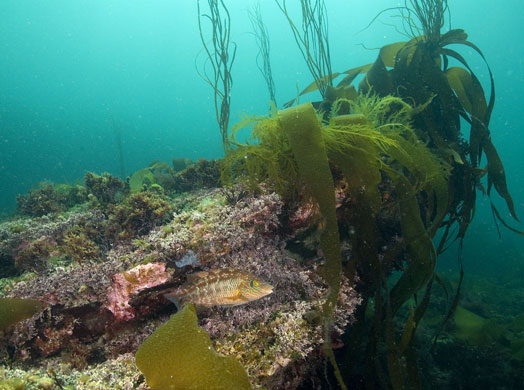
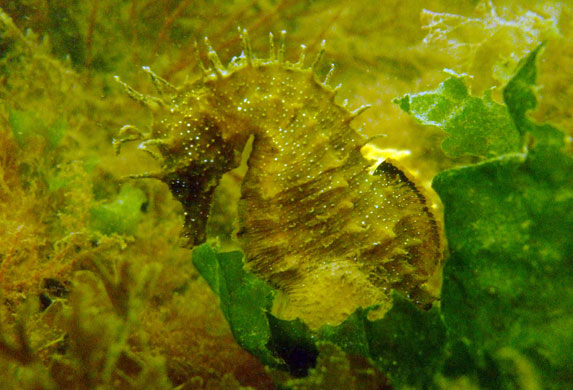
Corkwing male (Crenilabrus melops). Males build a ball-shaped nest of seaweed in rock crevices or, in sedimentary areas, among seaweed or seagrasses. The nest has an entrance hole which the male guards aggressivelyPhotograph: Paul Naylor/The Wildlife TrustsBallan wrasse (Labrus bergylta) and dead man's fingers (Alcyonium digitatum). Dead man's fingers is actually a type of soft coral that forms thick, fleshy finger-like projections. They form in groups and can often cover large areas of reef, as seen here. They may be pink, orange, white, grey or yellowPhotograph: David Stephens/The Wildlife TrustsSpiny seahorse (Hippocampus guttulatus) are masters of camouflage, usually living in underwater seagrass meadows and among reefs. The male of the species bears childrenPhotograph: Helen McNee/The Wildlife Trusts
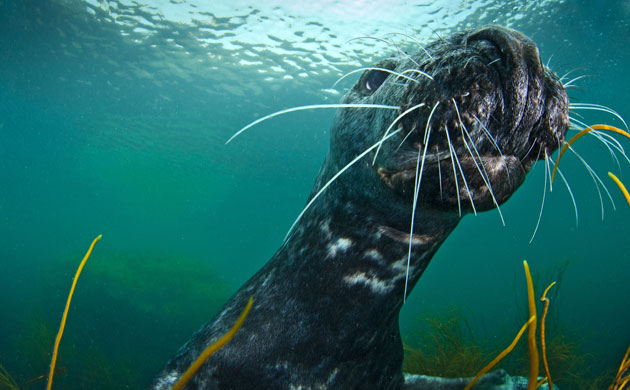
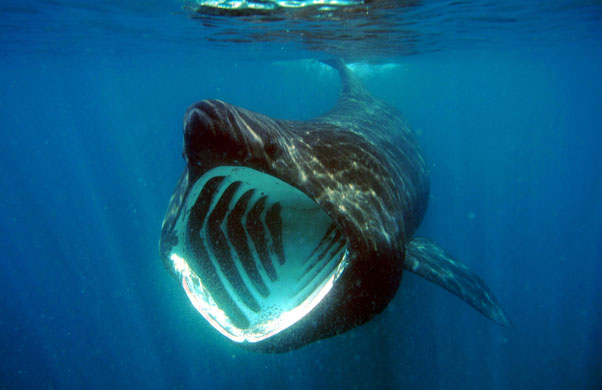
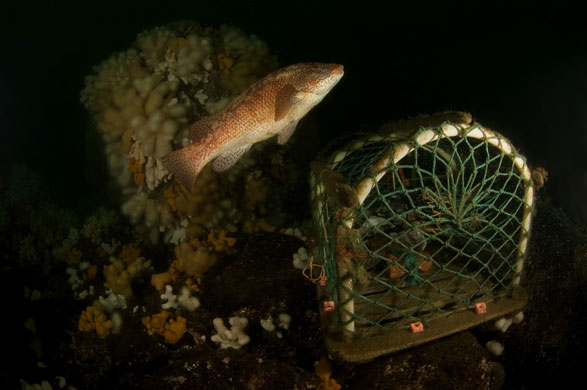
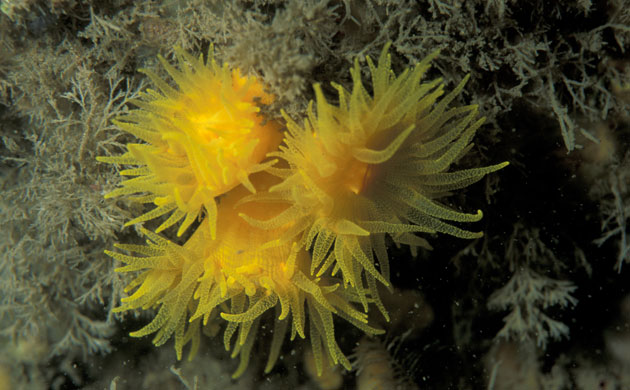
The grey seal is the largest British marine mammal breeding on land. UK coastal waters are vital to the survival of this species with more than half of the global population residing here. They are found in their largest numbers along the Scottish coasts and islandsPhotograph: Alexander Mustard/The Wildlife TrustsThis gentle giant basking shark (Cetorhinus maximus) is the largest fish to be found in the coastal waters of the British Isles. Measuring anything up to 12 metres long, and weighing up to seven tonnes, it feeds on animal plankton, filtering 1,000 to 2,000 cubic metres of seawater per hour to extract its tiny preyPhotograph: Andrew Pearson/The Wildlife TrustsBallan wrasse (Labrus bergylta) swims by a lobster pot. The ballan wrasse is abundant in most rocky areas, from very shallow water down to 20 metres. All wrasse have thick protruding lips, and there are strong teeth, both in the jaws, and within the throat - with these teeth they are able to enjoy a mixed menu of shelled animals including barnacles, other crustaceans, and molluscsPhotograph: David Stephens/The Wildlife TrustsThe sunset cup coral (Leptopsammia pruvoti) was first recorded in Britain from Lundy Island in 1969, since then it has only been found at a small number of isolated locations, in the south-west of England. It is a slow-growing and long-lived species, making it vulnerable to any kind of environmental changesPhotograph: Keith Hiscock/The Wildlife Trusts
Sign up to read this article
Read news from 100’s of titles, curated specifically for you.