Adventurer
Climb a tree
It's all about finding the right tree. Don't choose one with thorns, or with no low branches; you need to be able to find a couple of early footholds to get you up into the main branches… then you can just keep going up into the canopy. At Wallington, Northumberland, you can try out the 45ft-high Nootka cypress known as the 'climbing tree'. Paul Hewitt, countryside manager at Wallington, says: "Trees are the oldest living things on this island. They are also the largest and the heaviest, and many animals call them home. Most of us have a favourite, we admire them, we touch them, we grow them, we collect them and sometimes we hug them. I have always liked to climb them, as there is no better way to get to know a tree. At Wallington, the smooth bark and selection of low branches of our Nootka tree makes it just the perfect climb!!"
Roll down a really big hill
Bumps, nettles, rabbit holes; all a crucial part of a really good hill roll. Find your hill and make sure you're properly sideways to the slope. Then let it rip! If you don't feel dizzy and a bit sick when you get to the bottom, you're doing it wrong. At Croome Park in the West Midlands, besides the secret wartime airbase, there are also a couple of really excellent hills, made for rolling as fast as you can.
Camp out in the wild
It's funny how different a field or a forest is at night. By day it may seem like a friendly, inviting place. But as the sun sets and darkness falls, suddenly there are sounds and shadows that make the hairs on the back of your neck tingle. Everyone should try it at least once. At Gibside, in the North East, you can sleep out in a mega-comfy yurt; keep an eye out for bats, moths and owls, which only come out at night!
Build a den
Pick your base tree first; it needs to be nice and dry and flat around its base (you don't want too many roots to trip over) with a good strong branch coming out not too high up. Slide one branch in to lean against it (make sure it's nice and solid) and then lean more sticks against the branches like a wigwam to make a good solid den. In amongst the trees at Lyme Park, Stockport is a great place to start, says eight-year-old National Trust Kids' Councillor Mia McDade. "Lyme Park is one of the best National Trust places to build a den. I like using lots of different coloured things you can find on the floor there to make my den really cool." Caroline Heap, visitor experience manager adds; "Adjacent to our award-winning Crow Wood Playscape up at Knight's Low Wood, we have beautiful woodland with beech trees and lots of materials to make the most extravagant dens imaginable."
Run around in the rain
Obviously you should always, always, always stay inside when it rains. Right? Except that sometimes, when it's raining really hard, it's amazing to be out in the middle of it, getting soaked to the bone by big, fat raindrops. At Finch Foundry in Dartmoor, the last remaining water-powered forge in the country, you're right in the heart of one of the beautiful wildernesses of England. Get out on the moor in a rainstorm and see how many animals you can spot that love getting wet, just like you.
Discoverer
Go on a really long bike ride
Rushing through the countryside on a bike; is there any better way to explore the outdoors? Try the Mare Way challenge at the Wimpole Estate in Cambridge for example, a route that covers 4.3 miles and takes you on woodland track, through arable fields and along bridleways. The route encompasses all the variety and beauty Wimpole has to offer, with the speed and fun of a good cycle challenge. Cycling ambassador for the National Trust and Kids' Councillor Harry Wilson, aged 11, says: "I like going on a really long bike ride because when you go along at high speed the wind goes through your hair and you feel like you have accomplished something. It's also always great to go really fast.
I like cycling on National Trust cycle paths because there aren't many people or cars to bump into." Jenny Middlehurst, visitor experience ranger, says; "Families will find cycle paths for all ages and abilities at Wimpole, which is what makes it so good. From children just learning to ride to the more adventurous kids looking for a real challenge, there is something for everyone to enjoy here".
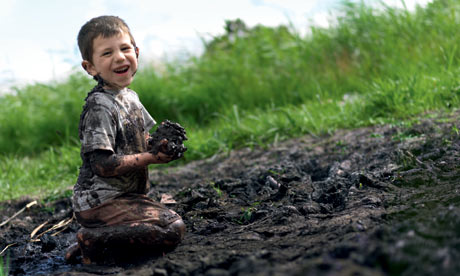
Make a mud pie
Making a good mud pie is actually not nearly as easy as it looks. Of course it all depends on what technique you use; are you going to mould it with a yogurt pot or something similar? Or do you just want to go for the heaped option? And then there's the decoration; fallen flowers, leaves and pieces of grass all make gorgeous toppings, although perhaps not particularly tasty? At Moseley Old Hall, Wolverhampton, there are lovely muddy banks just made for pie-creating. Lot of worms and tiny animals actually live in mud, look out for them!
Make a daisy chain
Although it's best not to pick most flowers, daisies don't really mind being picked as it makes them grow even more! At Lacock Abbey, North Wiltshire, spread out on the lawn and try to make your own daisy chain. You need to delicately make a hole in the stem about 1cm from the bottom and carefully thread the stem of another flower through that to make chains and tiaras. Fiddly, painstaking work, but worth it to be Queen of the Flowers.
Create some wild art
Let the leaves and flowers inspire you! Nature has been the muse of countless artists and poets through the ages; at Sheringham Park, Norfolk, why not use the ground as your canvas and create faces or landscapes with the stones and stick you can find? Try making small animals, or make a secret picture and then ask everyone to guess
what it is.
Play Pooh sticks
It's one of the oldest and best games there is. If you've never played pooh-sticks (named by Winnie the Pooh but certainly played for many years before he came along!) find yourself a couple of sticks or pine cones, a stream and a bridge. The bridge and river at Mottisfont, Hampshire, is splash-tastic for this. And then drop them all at the same time. Make sure you can recognise your stick though so you know if you've won – perhaps you could tie a ribbon to it, or thread a leaf
through it.
Ranger
Explore inside a tree
There's no better way to get to know a tree than to get inside it. In the medieval hunting forest of Hatfield in Bishop Stortford there are trees that are more than 1,200 years old. The ancient trees of the forest are like magnificent living sculptures, peaceful giants worn and fragile from centuries of seasons and use. The oldest trees have the biggest hollows so look out for the big tall trees, creep inside, and listen out for the stories the trees have to tell.
Go on a barefoot walk
Shoes are all very well, useful for keeping out spikes and gravel and the like… but going barefoot is pretty special too. Why not try the walk from Strumble Head to Cardigan, Pembrokeshire? Andrew Tuddenham, area warden, says: "If you head off along the coastal path at Pen Anglas towards the beacon, the path has a soft peaty surface with small stones and rocky outcrops. It runs alongside some heather and gorse and is a truly fantastic place for walking. Walking barefoot presents a real physical challenge, and helps children to make a powerful connection to the rugged spirit of the place." You'll probably never want to put your shoes back on again.
Make a grass trumpet
Opinions differ on how to make the very best grass trumpet. Some think you should make a hole in the grass with your fingernail, place it between your thumbs and blow. But other schools of thought hold that you need to find a nice wide bit of grass and place it sideways on between your thumbs so that it forms a kind of whistle between your thumb joints. Of course the only way to resolve this will be a grass-off. At Hare Hill, in the North West countryside, you can lie back and blast away to your heart's content.
Hunt for fossils and bones
Fancy turning up a few dinosaur bones in your holiday? National Trust Kids' Councillor Kai Bickley, aged seven, says: "Hunting for fossils and bones is great fun and can take you to loads of interesting places. You can find them everywhere once you know what you are looking for. My favourite place to look is in rock pools by the beach. I like doing rubbings of fossils and bones and investigating where they come from and what creatures they may have once been". Once you've made sure you're up to date with the fossil code (online at nationaltrust.org.uk/50things), head to Birling Gap and the Seven Sisters, South Downs, for some proper excavations. Natasha Sharma, learning officer, says: "As the chalk cliffs are continually eroding here on this shingle beach, it's not surprising how many traces of cretaceous fossils are found. Children have particularly sharp eyesight and usually are the ones to spot stones with regular patterns, shapes or crystals that are in fact fossils from the last age of the dinosaurs. Everyone will find something to intrigue them here".
Hold a scary beast
The honest truth about scary beasts is that they are never quite so scary up close. National Trust Kids' Councillor Iona Howells, aged 11, says: "It's good to hold a scary beast because it's a great way to get close to nature and you never quite know what they're going to do. I really like holding them because they feel tickly on my hand and they always make me laugh".
At Clumber Park in Nottinghamshire there are a variety of habitats where you'll find all manner of beasts. Vicky Buckberry, learning officer, says: "Clumber is a great place for spiders – of the 650 species in the UK, over a third of them have been recorded in the Park and all of them friendly! Clumber Park is an amazing place with water, heathland and woodland areas, each providing the perfect habitats for millions of scary creatures, like the devil's coach horse beetle and the wolf spider".
Tracker
Hunt for bugs
You've got to be prepared to poke about a bit for the most successful bug hunting; they don't just introduce themselves to you. Up at Hardcastle Crags, West Yorkshire, take a look in places where bugs like to hide – under rocks or in the mud. Carry a useful stick for levering up stones, peer into puddles, study tree branches, look between roots and under flower petals: you need your most nosy, inquisitive frame of mind to search out these miniature animals.
Track wild animals
Make like a tracker and get down on your knees to study the signs that animals have passed. Tom Wood, senior ranger, says: "The Teign Valley near Castle Drogo on north Dartmoor is a great place to track all manner of wild animals. We have hundreds of fallow deer roaming the estate, as well as badgers, foxes, rabbits, squirrels, otters and lots more. The soil holds footprints really well and there are lots of other signs too, such as deer browsing on brambles, badger latrines in the woods and otter spraint [poo] on the rocks in the river. My advice to anyone is to get outdoors, open your senses and get tracking". Rebecca Glover, visitor services officer, adds: 'There are lots of interesting animals living on the Castle Drogo estate including badgers, dormice and deer. You can always see if you can spot the signs and follow where they have been".
Discover what's in a pond
Lying on your stomach, peering into the murky depths of a pond, it is quite incredible how many creatures will swim up out of the murk. You might spot fish, tadpoles or frogs (depending on which end of the summer it is), water snails or dragonflies. If you're gazing down into a rock pool you might be able to pick out crabs, anenomes or shrimp. At Florence Court, County Fermanagh, look out for water boatmen, which swim upside down with legs that paddle like oars. National Trust Kids' Councillor Max Hodgson, aged eight, says: "I love spotting creatures in ponds and rock pools during the summer holidays".
Make a home for a wild animal
Why not turn your own garden into a wildlife shelter? Go on one of the family nature walks at Fountains Abbey and Studley Royal, Yorkshire, for ideas, and then think of ways you can tempt animals to your own garden. Perhaps you could make a birdhouse, or a bug box. Perhaps you could provide animal food – like bird seed. It's also worth asking your parents to try some bug-friendly plants: flowers that draw butterflies include marigolds, zinnia, heliotrope and sweet william.
Catch a crab
Crabbing is one of the all-time great summer musts. Find the rights spot (Plas Newydd, in Wales comes highly recommended) and then equip yourself with a bucket, crabbing nets (just a bit of netting tied to a long piece of strong string) and bait. (Opinions differ on the best bait; bacon is the most popular, but some swear by black pudding.) And then lie down on your stomach on the warm harbour wall, and get crabbing. Brutally competitive, deeply satisfying… not least at the end of the day when you gently tip your crabs towards the water and they scuttle off.
Explorer
Plant it, grow it, eat it
Can it really be so easy? Growing cress – a delicious sandwich filler – is as simple as strewing a handful of cress seeds on to a damp piece of kitchen paper and watching them grow. If you enjoyed doing that, go up a step and take over one of mum's window boxes; you don't need much room to grow some lettuce (make sure you keep it watered and keep an eye out for predators like slugs and snails though). And if you're starting to think this is all very easy, why not try a pot of tomatoes; give them some nice room for the roots, and make sure they're staked up (maybe someone can help with this). By the end of the summer you'll have all the ingredients for an utterly delicious picnic; why not head to the lawns of Tredegar House, Wales, and show your salad off to the whole family?
Go swimming in the sea
Oh it is so terribly cold when you first go in! But after that first shock, when you're tingling all over, the sea is the most exciting wonderful place for a swim. Try diving straight into a wave, or go in slowly, paddling in the shallows. Or hunt out a snorkel and watch the tiny fish beneath the surface nip in and out of other swimmers legs. At Llyn Peninsula, Wales, seals often swim around shorelines, so you might even be lucky enough to see one!
Go bird watching
Nearly 600 different types of birds have been seen in the UK. How many can you spot? Rob Greenhalgh, outdoor experience co-ordinator at Kingston Lacy, West Dorset, says: "On our new nature trail, we have created a natural bird hide from a laurel bush, complete with stools and seed dispensers. From here, the children can observe some of the wide variety of birds we have at Kingston Lacey. These include jays, great tits, chaffinches and even buzzards." If watching these amazing creatures lift up into the air really thrills you, ask for binoculars and a bird guide for christmas; twitching (that's the nickname for birdwatching) is a lifetime love for many people.
Find your way with a map and compass
Satnav is all very well, but how on earth did any one get around before it was invented? The elegant and pleasing compass kept sailors going in (just about) the right direction for centuries; it makes use of the fact that the north pole is magnetic. Once you know how to use one, you'll never get lost again. At Chartwell in Kent, you can practise using your compass on the Jubilee trail that wends through the gardens of Winston Churchill's family home.
Cook on a campfire
Don't go all Heston Blumenthal! Choose something simple and delicious – like sausages, chops, halloumi cheese (or best of all, marshmallows!) and then camp out and eat straight off the fire under the summer skies. At Stackpole, Pembrokeshire, operations manager Rebecca Stock says: "Ranger-led wild camps let families eat and sleep under the stars in our woodlands. This will be the second year of offering these weekend events, which have proved a real hit with visitors. Families can camp out in tents, hammocks or self-built shelters and wake up to see the sun rise over the cliffs. Wild camp activities include learning bushcraft survival skills – such as how to make bows and arrows, how to light a fire using a flint, and even how to skin, fillet and cook a rabbit!"