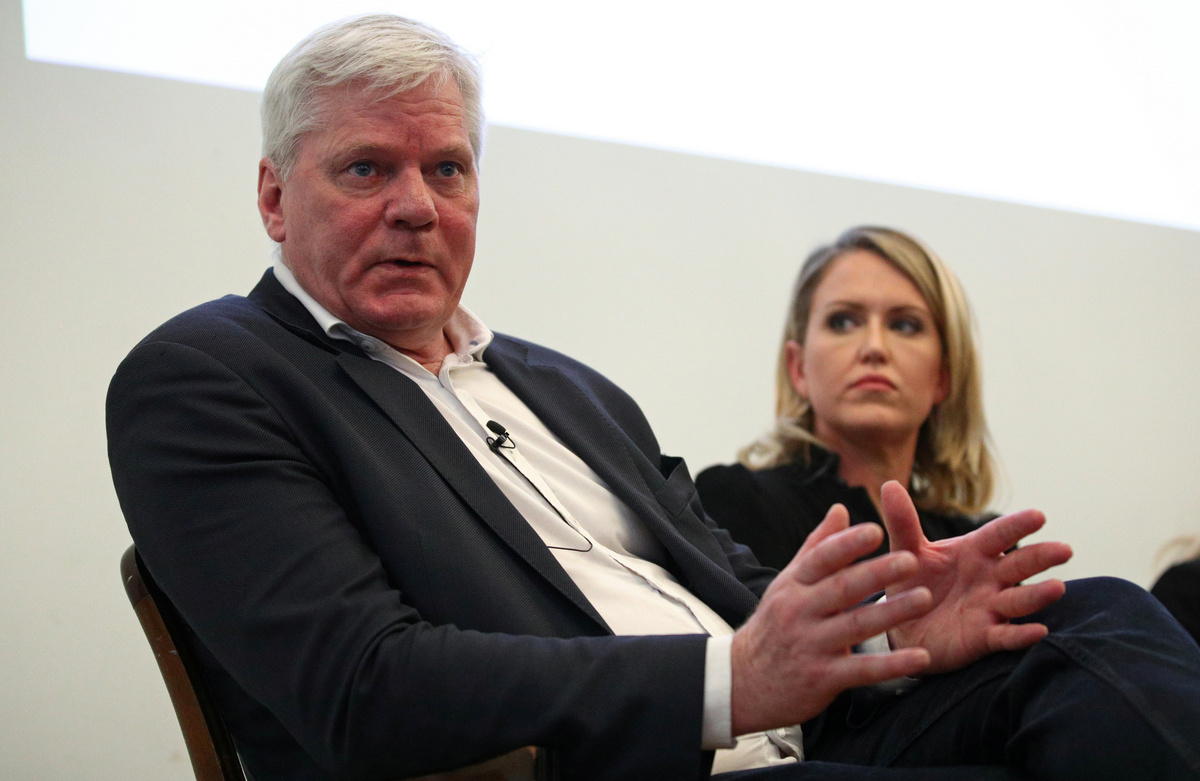
Jailed WikiLeaks founder Julian Assange is no longer being kept in solitary confinement and his health is improving, his spokesman Kristinn Hrafnsson told reporters on Tuesday.
Assange, 48, is in Belmarsh high-security prison in London, fighting an extradition request from the United States where he faces 18 counts including conspiring to hack government computers and violating an espionage law. He could spend decades in prison if convicted.
His supporters had expressed concern about the state of his health after he appeared confused during a court hearing in October, struggling to recall his age and name and saying he was unable to think properly.
Assange was moved from solitary confinement in the medical wing to a different part of the prison with 40 other inmates after his legal team and prisoners complained that his treatment was unfair, Hrafnsson said.
"I saw him about 10 days ago - he has improved thanks to the pressure from his legal team, the general public, and amazingly, actually from other inmates in Belmarsh Prison to get him out of isolation," Hrafnsson said ahead of an extradition hearing that starts next week.
Australian-born Assange made global headlines in early 2010 when WikiLeaks published a classified U.S. military video showing a 2007 attack by Apache helicopters in Baghdad that killed a dozen people, including two Reuters news staff.
WikiLeaks later angered the United States by publishing caches of leaked military documents and diplomatic cables.
Assange has consistently presented himself as a champion of free speech being persecuted for exposing abuses of power. But his critics paint him as a dangerous figure complicit in Russian efforts to undermine the West.
He fled to the Ecuadorean embassy in London in 2012 to avoid extradition to Sweden, where he was wanted for questioning about allegations of sex crimes which have since been dropped. He spent seven years holed up in the embassy until Ecuador decided to stop giving him refuge and he was dragged out last May.
Earlier, a group of doctors representing 117 physicians and psychologists from 18 nations called in a letter for an end to what they described as "the psychological torture and medical neglect of Julian Assange".
His father, John Shipton, said Assange's long confinement indoors had damaged his health and feared that sending his son to the US would be akin to a "death sentence".
"His situation is dire, he has had nine years of ceaseless psychological torture where false accusations are constantly being made," he told reporters.
(Writing by Estelle Shirbon/Guy Faulconbridge; editing by Stephen Addison)