The wife of the former Royal Marine Alexander Blackman has said they will take “sensible” precautions to counter potential terrorist threats when he is freed from prison.
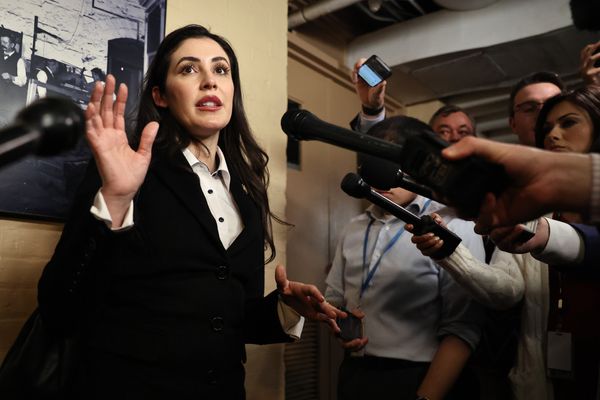
Claire Blackman expressed relief and delight that her husband would be released within weeks after serving three and half years for shooting dead a wounded Taliban fighter.
But acknowledging the potential threat, she said: “I’ve had some really good advice and I’m always mindful of my security but I don’t let it get in the way of day-to-day living and have taken appropriate precautions.
“I’m not sure worried is the right word. We need to be sensible and we need to be mindful and we’ll take whatever action is necessary.”
Blackman was convicted of murder in 2013 and jailed for life. Following a campaign led by his wife, the conviction was quashed after the court martial appeal heard he had been suffering from a mental disorder at the time of the shooting in Helmand in 2011. His conviction was replaced with manslaughter on the grounds of diminished responsibility.
On Tuesday, five of the country’s most senior judges re-sentenced him to seven years, which means he could be out within a couple of weeks.
Following the decision, the Guardian revealed that police had warned Claire Blackman that they could be targeted by terrorists and they had been advised to take a series of precautions including changing their identities and moving house.
Speaking on BBC Radio 4’s Today programme, Claire Blackman said: “We are just waiting for the [release] date to be calculated but know it will be fairly imminent. It has been a long, hard road. It has been a good four and a half years of campaigning and hard work.”
Describing the first telephone conversation with her husband, who is in prison in Wiltshire, following the re-sentencing, she said: “It was lovely. He’s a very calm individual and for both of us it took a while for the news to sink in but obviously very happy to hear the news.”
Asked about the judges’ remarks that Blackman, 42, retained a “substantial responsibility for the deliberate killing”, she said: “He has never denied that his actions on that day were caused by a serious lack of judgment which we now know to be due to a combat stress disorder.
“He’s always regretted his actions. If he could turn the clock back and undo that moment he would do in a heartbeat.”
But she said there were important lessons to be learned about how personnel working in very tough conditions were supported. A crucial plank of Blackman’s appeal was that he was let down by his superiors.
His wife said: “There are huge lessons to be learned from this case in so many aspects … I feel my husband had very little support out on the ground.”
The court martial appeal court ruled previously that Blackman was suffering from an “abnormality of mental functioning” at the time of the killing. It found the incident was not a “cold-blooded execution”, as a court martial had earlier concluded, but the result of an “adjustment disorder”.