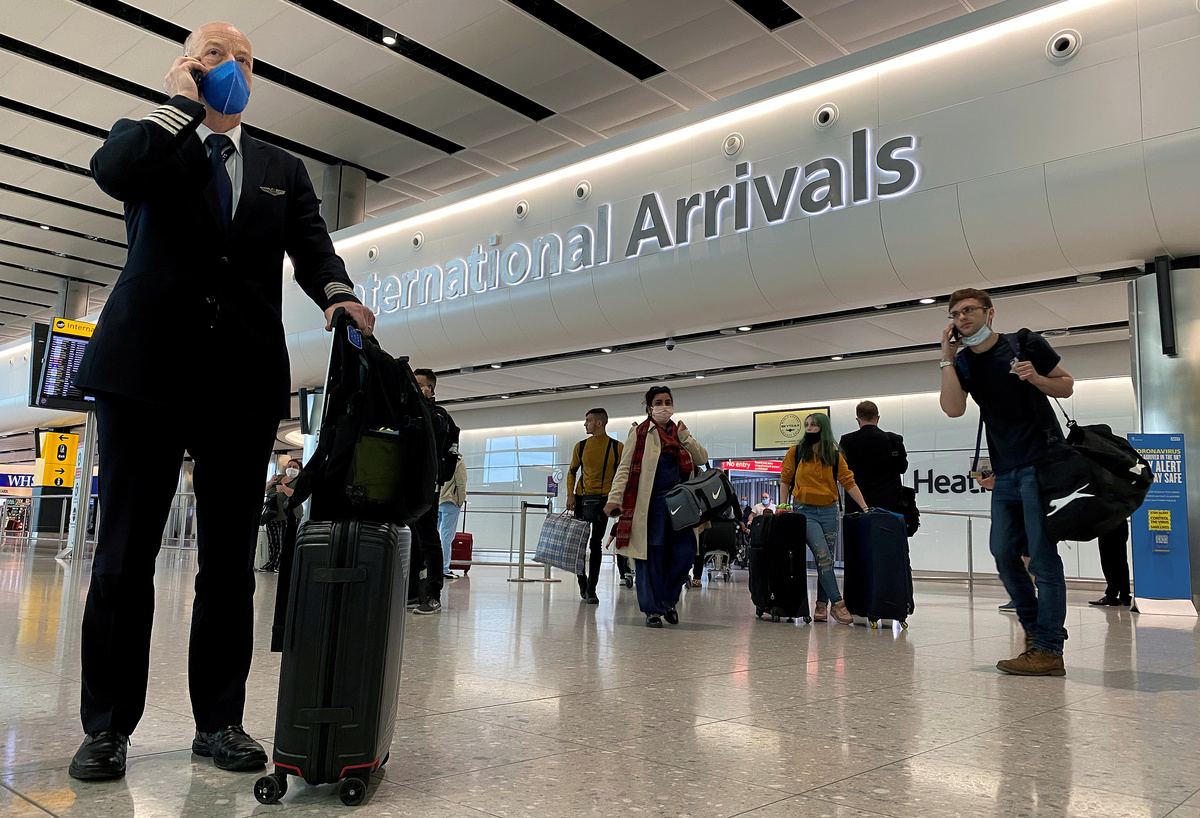
Population-wide face mask use could push COVID-19 transmission down to controllable levels for national epidemics, and could prevent further waves of the pandemic disease when combined with lockdowns, according to a British study on Wednesday.
The research, led by scientists at the Britain's Cambridge and Greenwich Universities, suggests lockdowns alone will not stop the resurgence of the new SARS-CoV-2 coronavirus, but that even homemade masks can dramatically reduce transmission rates if enough people wear them in public.
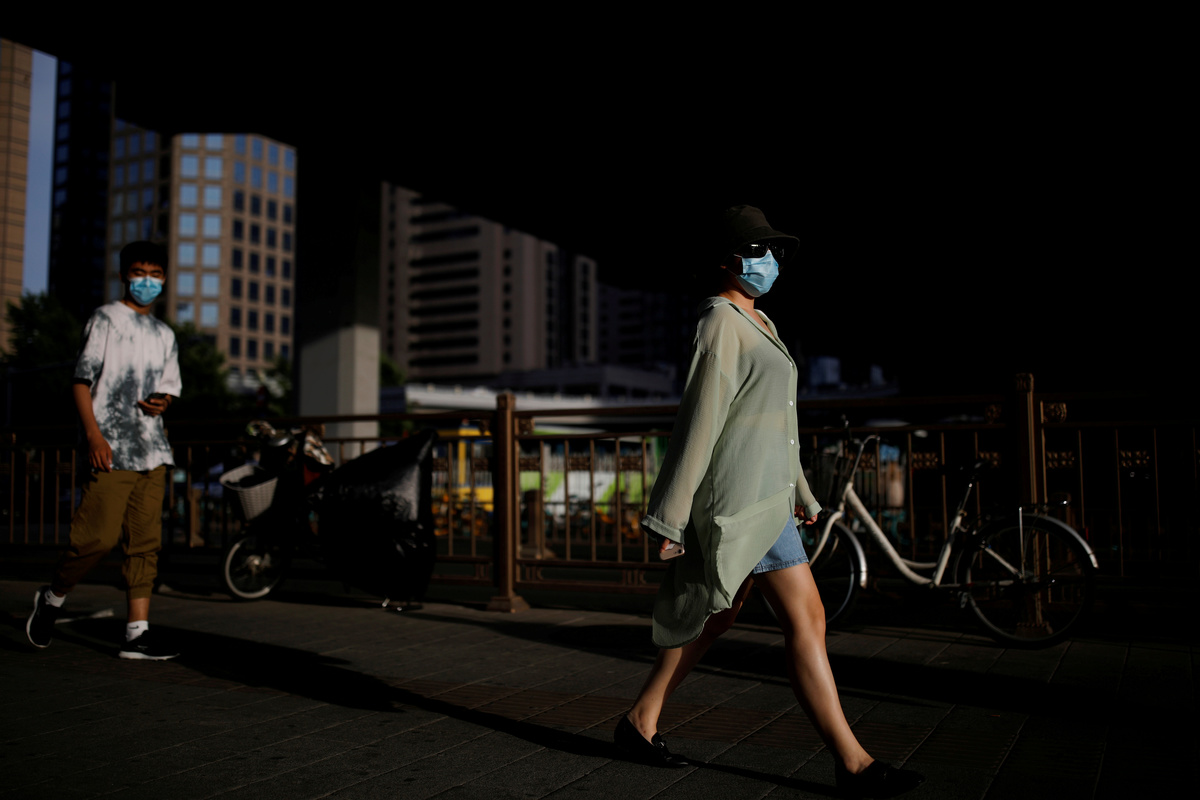
"Our analyses support the immediate and universal adoption of face masks by the public," said Richard Stutt, who co-led the study at Cambridge.
He said combining widespread mask use with social distancing and some lockdown measures, could be "an acceptable way of managing the pandemic and re-opening economic activity" before the development of an effective vaccine against COVID-19, the respiratory illness caused by the coronavirus.
The study's findings were published in the "Proceedings of the Royal Society A" scientific journal.

At the onset of the pandemic, scientific evidence on the effectiveness of face masks in slowing transmission of respiratory diseases was limited, and there was no data on COVID-19 since it was a previously unknown disease.
But, prompted by some new research in recent weeks, the World Health Organization said on Friday it now recommends that everyone wear fabric face masks in public to try to reduce disease spread.
In this study, researchers linked the dynamics of spread between people with population-level models to assess the effect on the disease's reproduction rate, or R value, of different scenarios of mask adoption combined with periods of lockdown.

The R value measures the average number of people that one infected person will pass the disease on to. An R value above 1 can lead to exponential growth.
The study found that if people wear masks whenever they are in public it is twice as effective at reducing the R value than if masks are only worn after symptoms appear.
In all scenarios the study looked at, routine face mask use by 50% or more of the population reduced COVID-19 spread to an R of less than 1.0, flattening future disease waves and allowing for less stringent lockdowns.

Experts not directly involved in the latest British study were divided over its conclusions.
Brooks Pollock, a Bristol University infectious disease modelling expert, said the likely impact of masks could be much smaller than predicted. Trish Greenhalgh, an Oxford University professor, said the findings were encouraging and suggested masks "are likely to be an effective population measure".
(Reporting by Kate Kelland; Editing by Aurora Ellis and Alex Richardson)