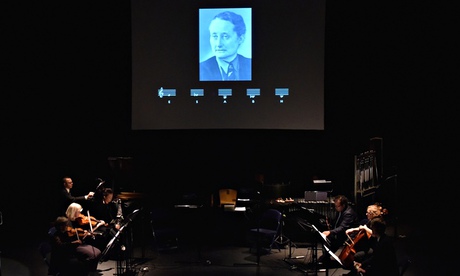
On a free day in Berlin in 2009, composer Christopher Fox paid a visit to the German Resistance Memorial Centre and encountered, at the bottom of the stairs, a picture of his aunt. Elisabeth von Thadden was an educator and active figure in the Solf Circle, a collection of German intellectuals critical of the Nazi regime. The group was infiltrated by a Gestapo spy, and with only 10 months of the war remaining, Elisabeth was executed for conspiring to commit treason.
Widerstehen, which received its UK premiere at the Huddersfield contemporary music festival, is a chamber piece in which Fox evokes his aunt’s final day in prison. The composer describes it as “a documentary in eight scenes”, though it more closely resembles a dramatic cantata in which Fox attempts to find artistic salvation for this harrowing aspect of his family’s history.
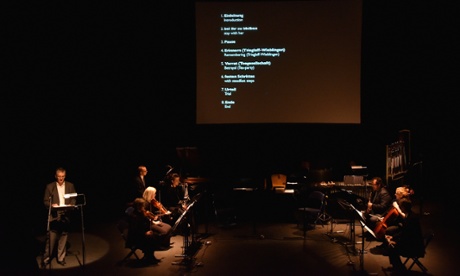
The key to it all is Bach. Fox discovered that his aunt was accompanied in her final hours by a prison official, with whom she sang hymns for comfort. In the manner of a Bach cantata, the piece develops as a turbulent dialogue concluding in a chorale, in this case O Haupt Voll Blut und Wunden, most familiar from its use in the St Matthew Passion. Yet the Lutheran concept of solace in death is undermined by Fox’s sceptical reharmonisation, in which waves of confident counterpoint break down into something shifting, modal, and less certain.
Truike van der Poel characterised Elisabeth’s quiet voice of dissent in a thin, plaintive soprano and Daniela Mohr, in the spoken part of the prison official, embodied the conflict between expressing compassion and doing her job. Ensemble Recherche were an equal part of the drama, with flute and oboe d’amore adopting obligato roles, while the frenzied screaming of a Nazi show trial took the place of the turba choruses in this perfectly realised miniature passion.