Wider Image: Carving Buddha in Myanmar village 'blessed' with marble bounty
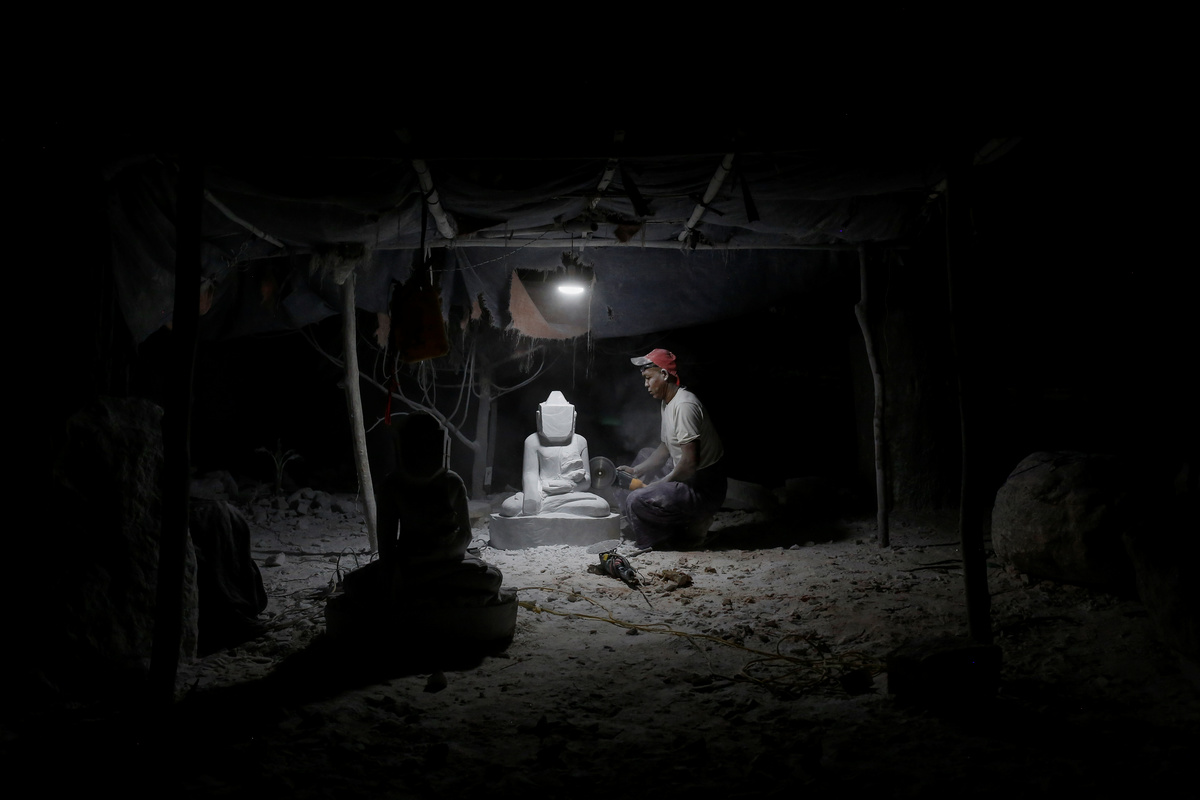
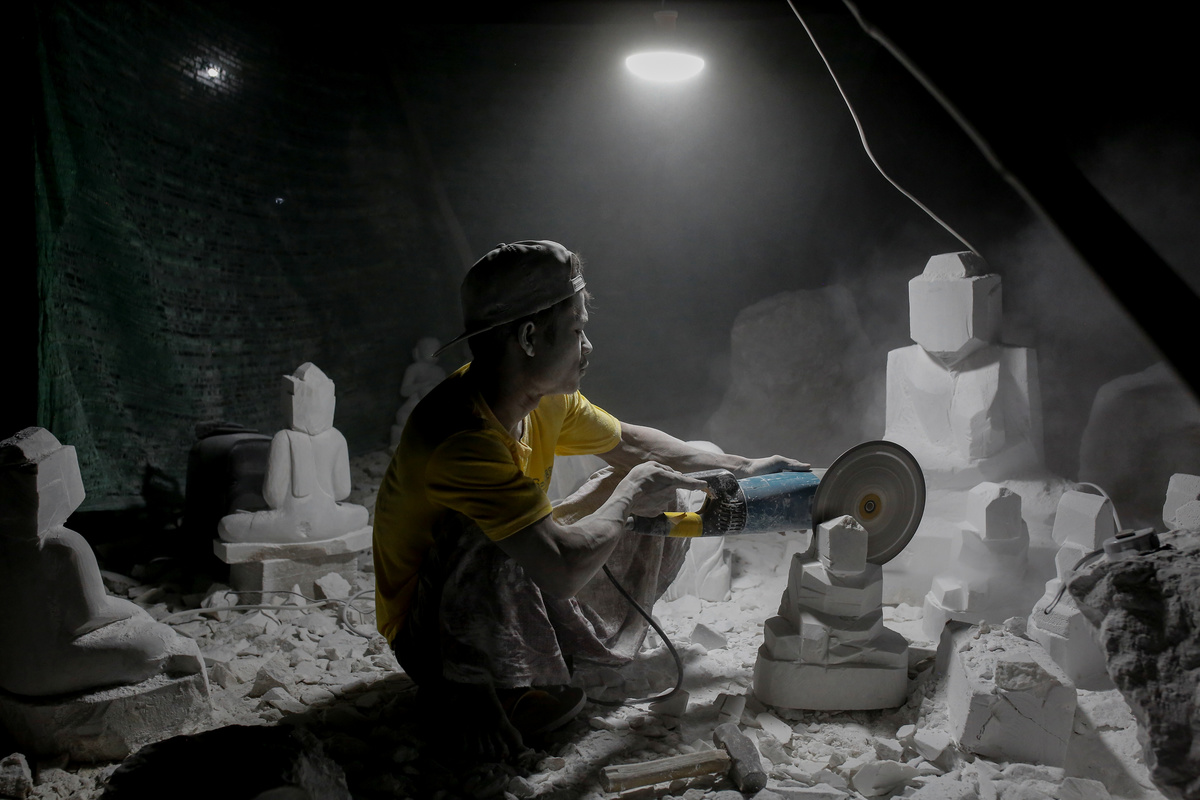
A marble carver works on a statue of a Buddha in his carving workshop in Sagyin, Mandalay, Myanmar, February 13, 2019. REUTERS/Ann Wang
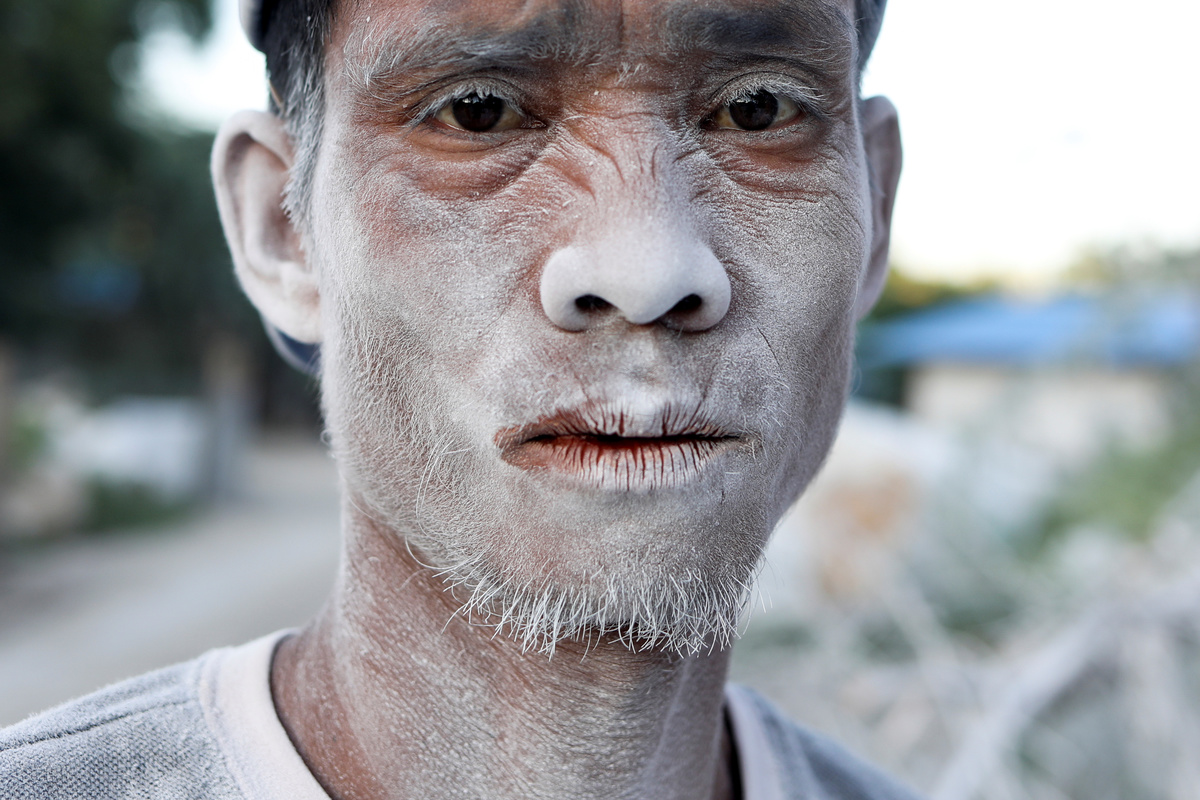
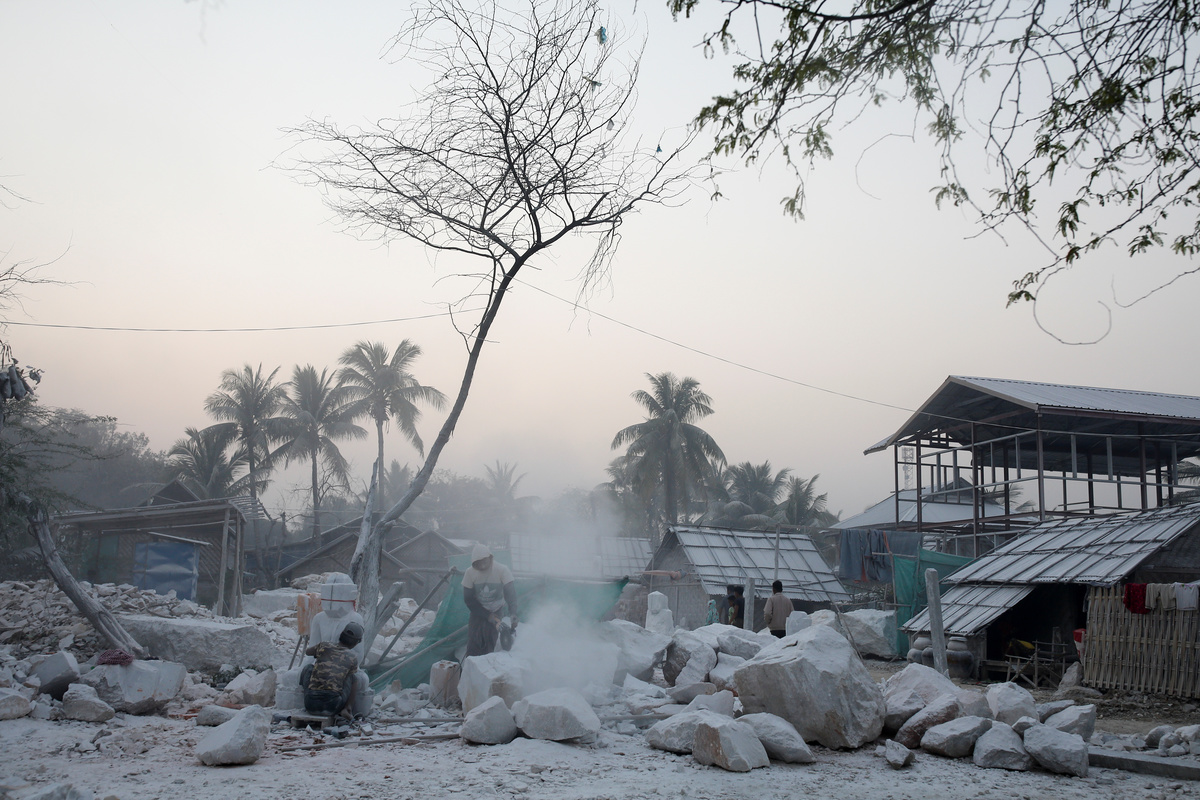
The fine white dust that shrouds much of his northern Myanmar village also covers sculptor Chin Win as he leans over a half-finished Buddha statue.
"We are blessed to carve Buddha," he said at his stone workshop surrounded by the seven white hills that give Sagyin village its name, which means "marble" in Burmese.
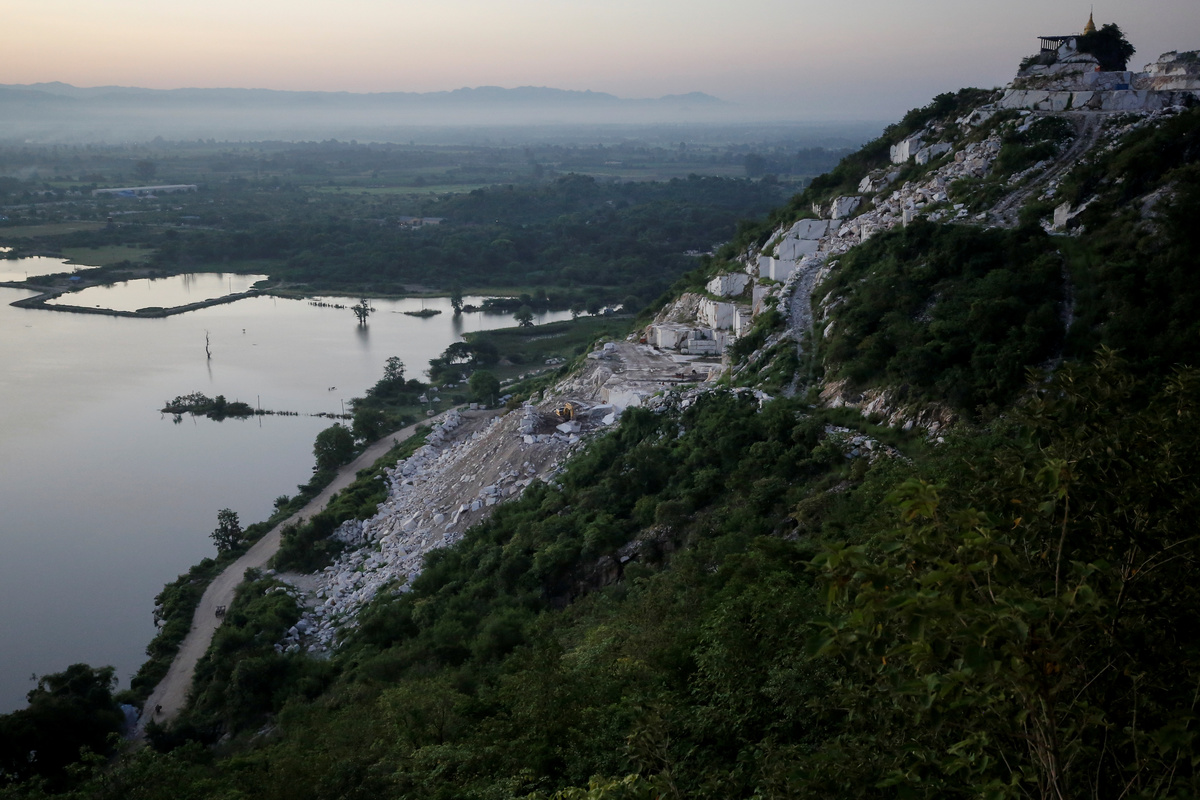
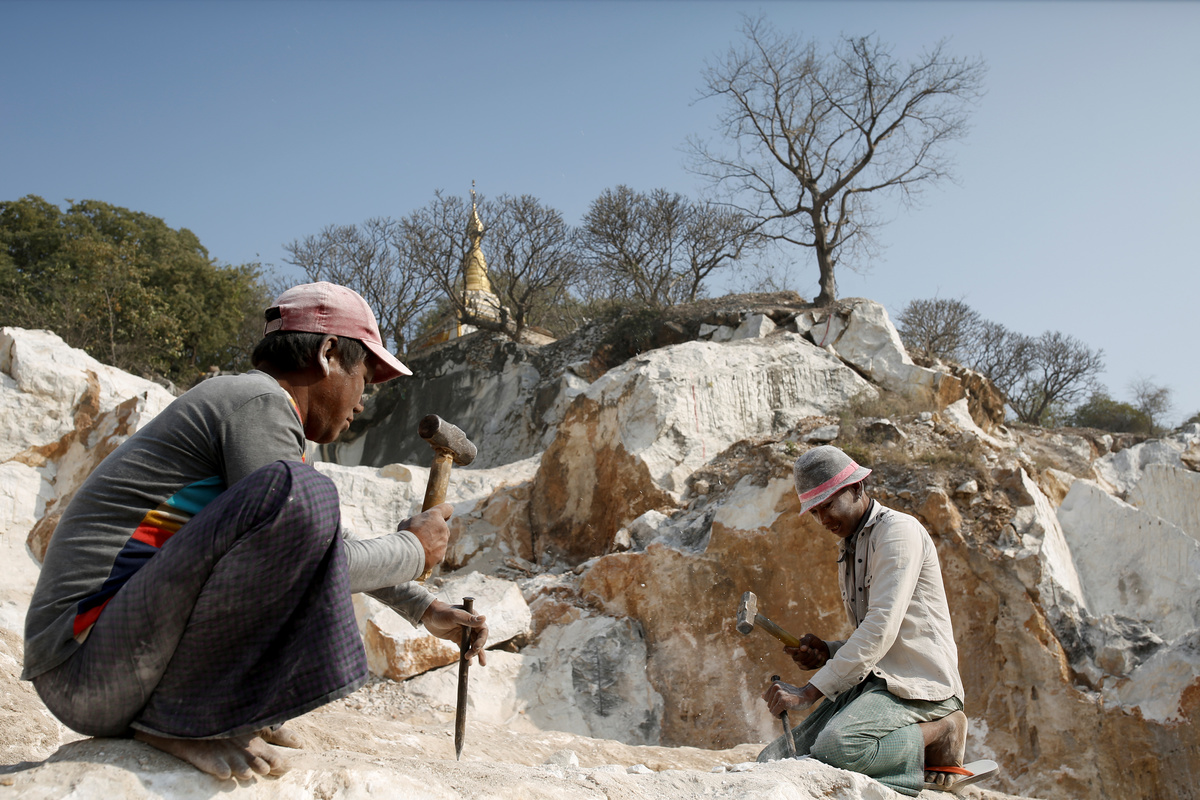
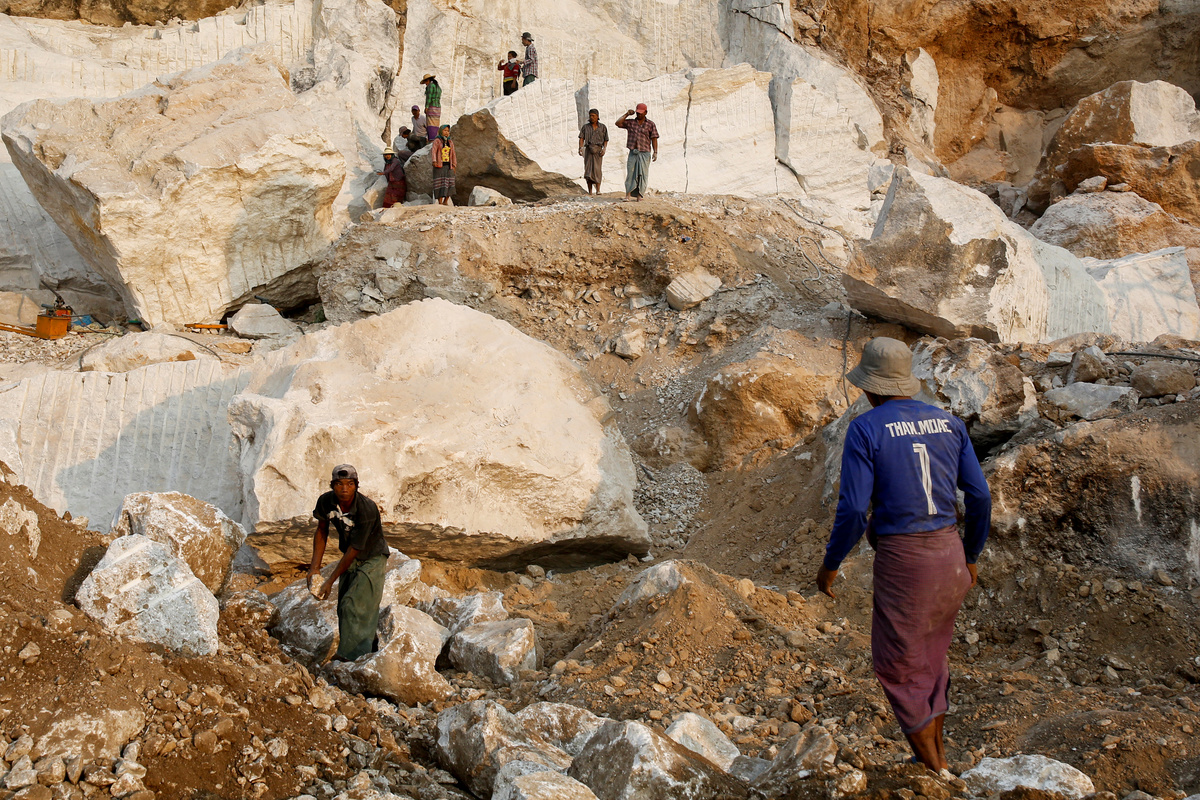
A marble mine is pictured in Sagyin, Mandalay, Myanmar, October 19, 2019. REUTERS/Ann Wang
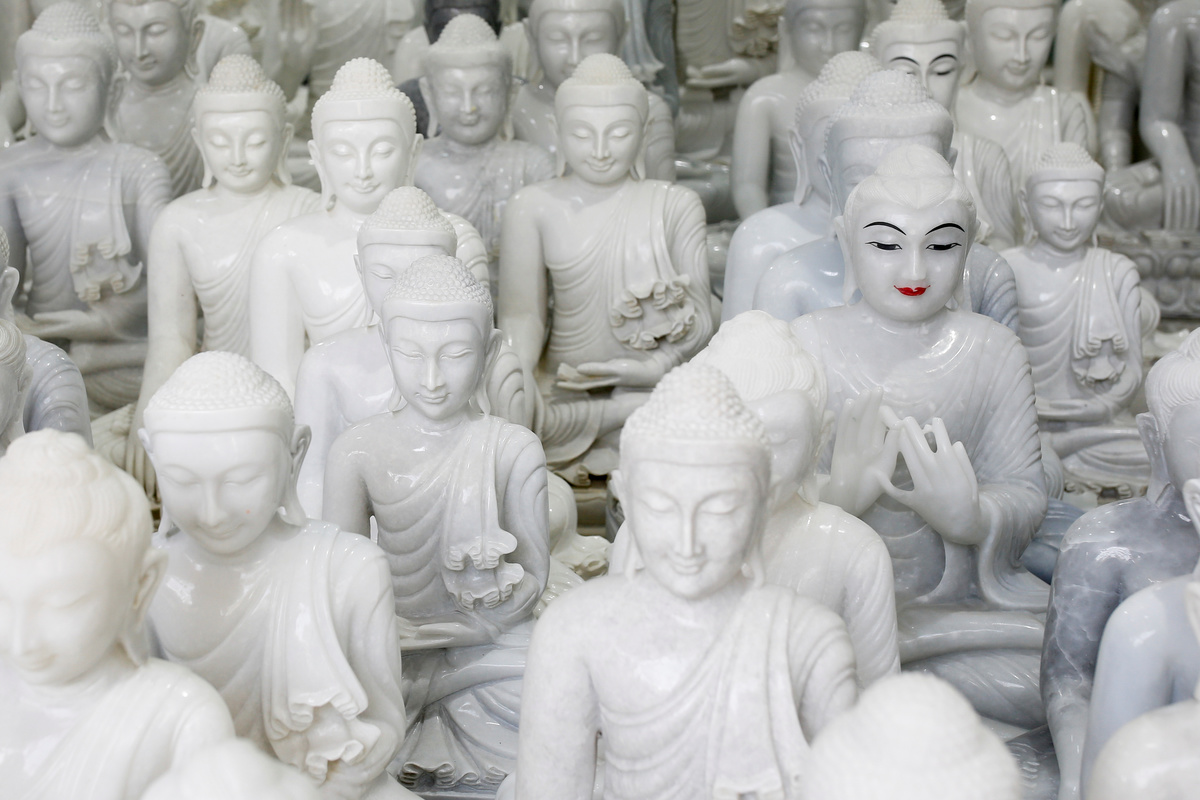
For generations, artisans in this part of Buddhist-majority Myanmar have carved out a living from the marble, fashioning mostly colossal Buddha statues to be sold in the nearby city of Mandalay or exported to neighbouring China and Thailand.
(Click https://reut.rs/2BjaSWE to see a picture package of Sagyin.)
Many of the several thousand villagers here earn a modest living from the marble mines, hauling the slabs down the hill, carving them into statues, or exporting them overseas.
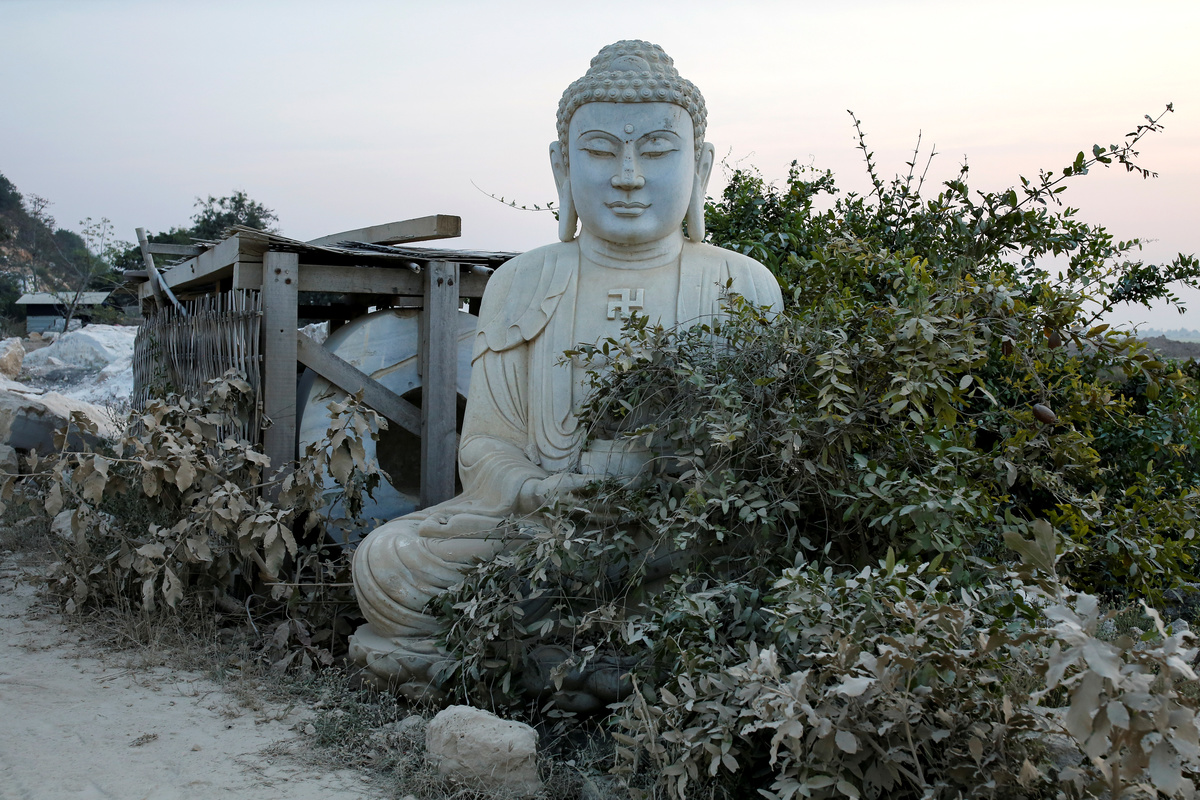
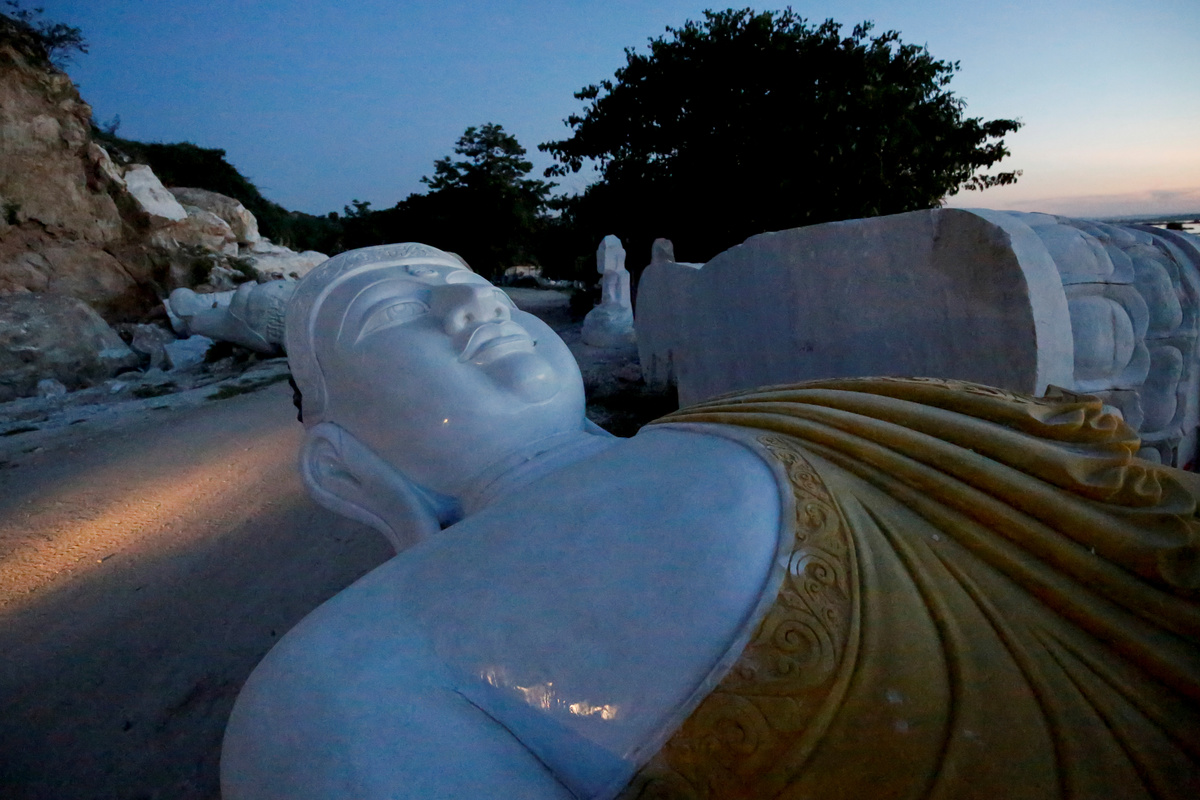
A finished marble statue of a Buddha is left near Irrawaddy River to be transported by boat to a buyer, in Sagyin, Mandalay, Myanmar, February 14, 2019. REUTERS/Ann Wang
Burmese marble, which ranges from pure white to bluish grey, is prized for its hardness and texture. A 45-tonne slab can sell for $40,000. In Sagyin, specks of the stone are used for everything from brushing teeth to washing clothes.
"We grew up breathing the dust," said Chin Win, 35, who has been carving statues since he was 11 years old. "We use it as toothpaste, for soap powder, lipstick."
'NOT SAFE'
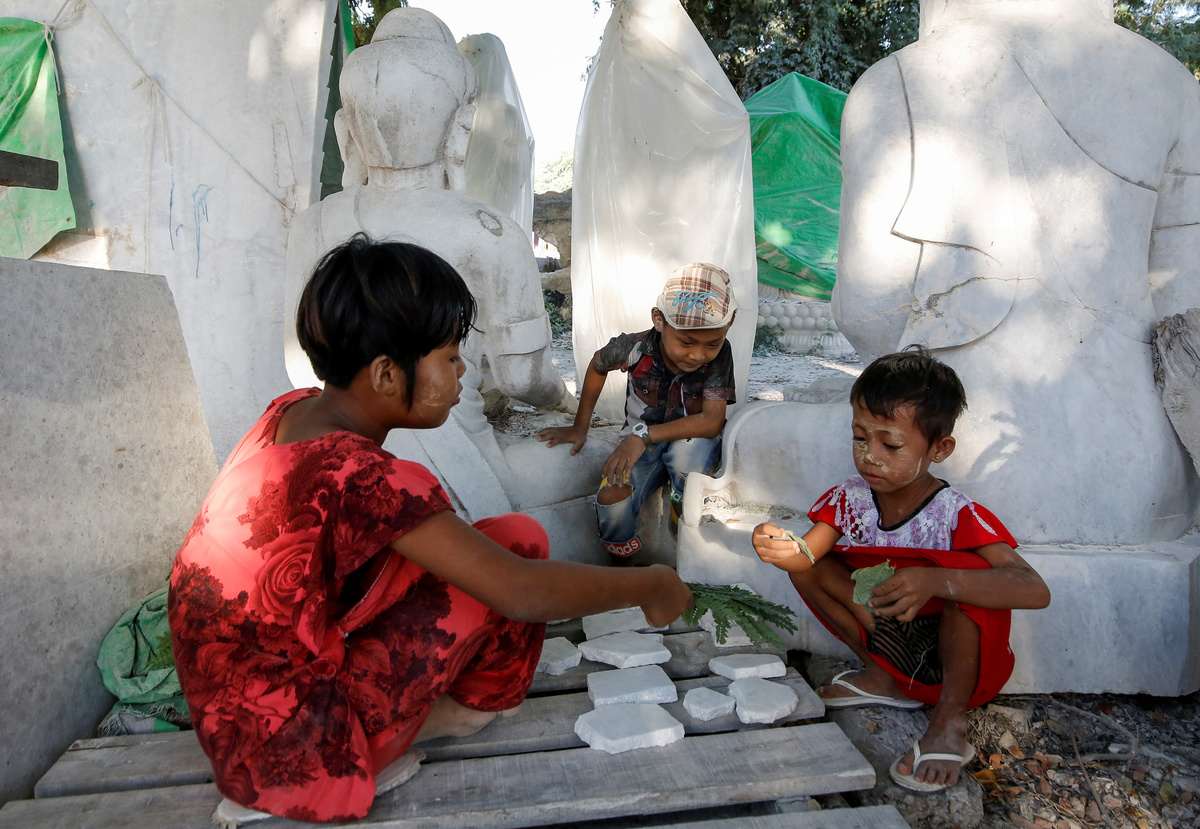
Children play with pieces of marble at a marble carving workshop in Sagyin, Mandalay, Myanmar, October 19, 2019. REUTERS/Ann Wang
The stone used to be chiselled by hand. Now, much of the work is done with machines.
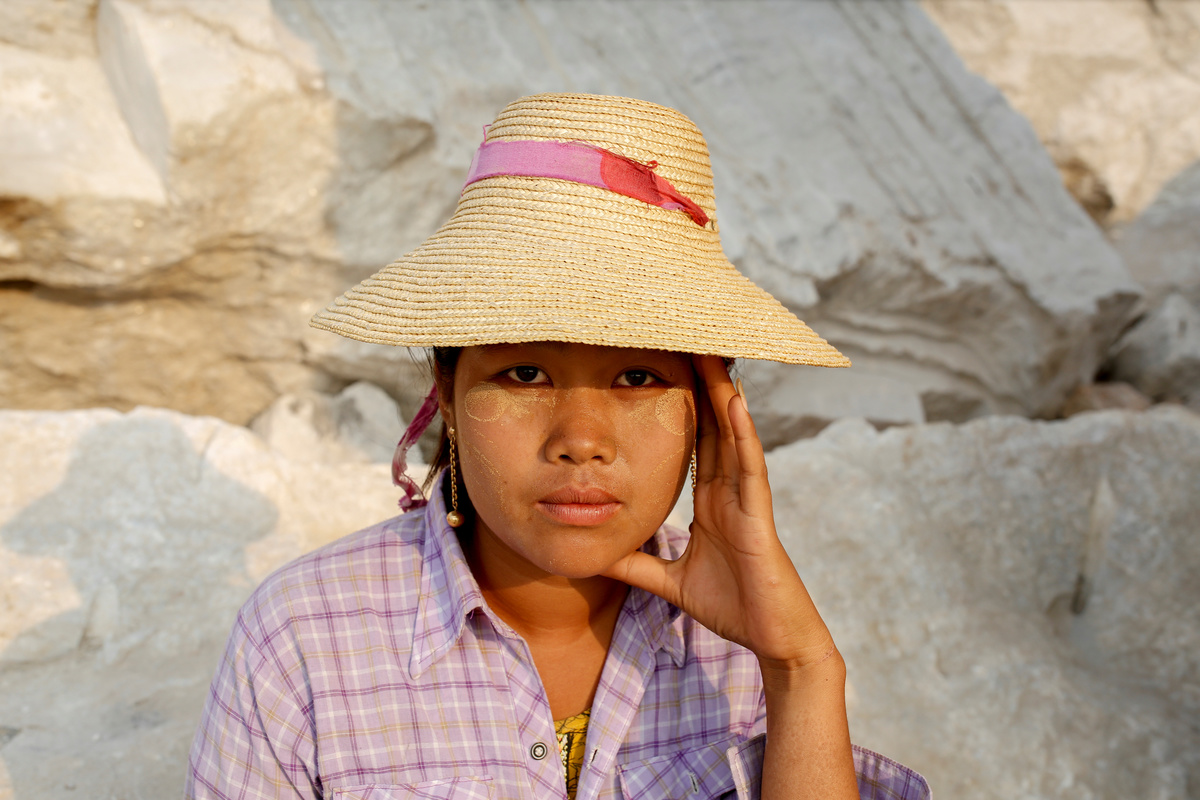
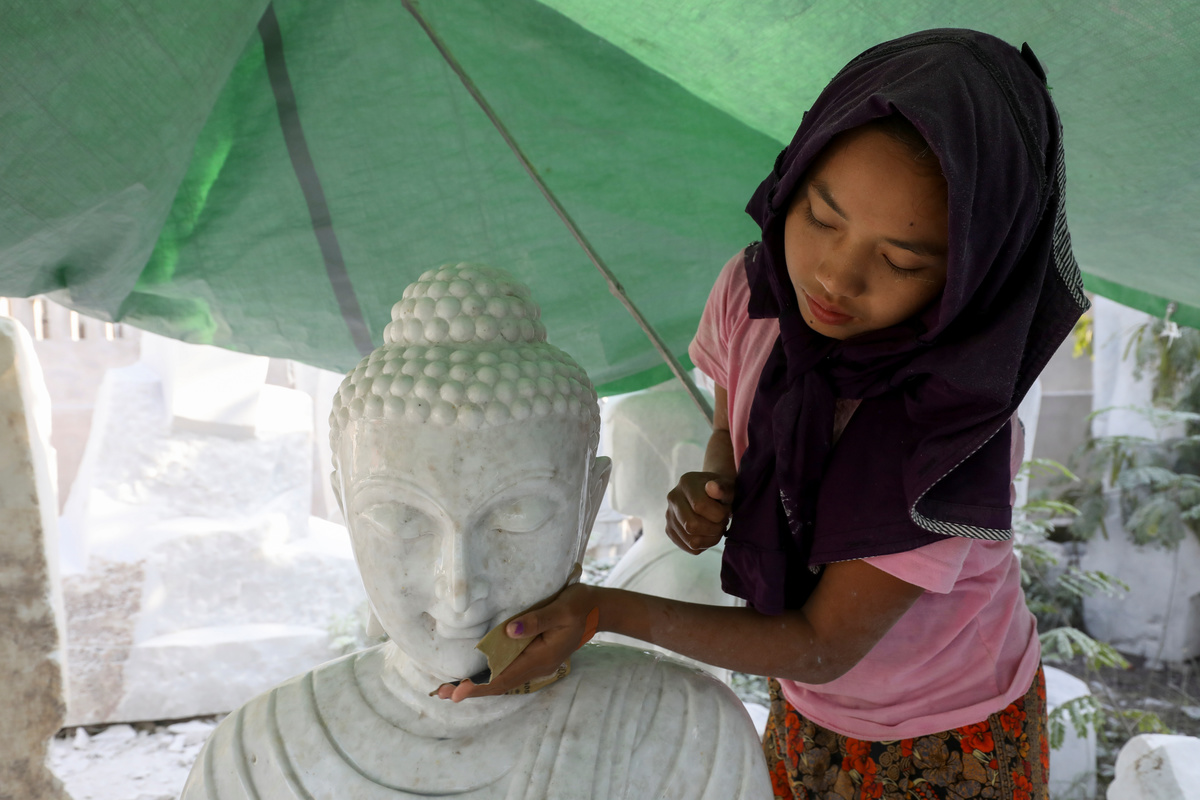
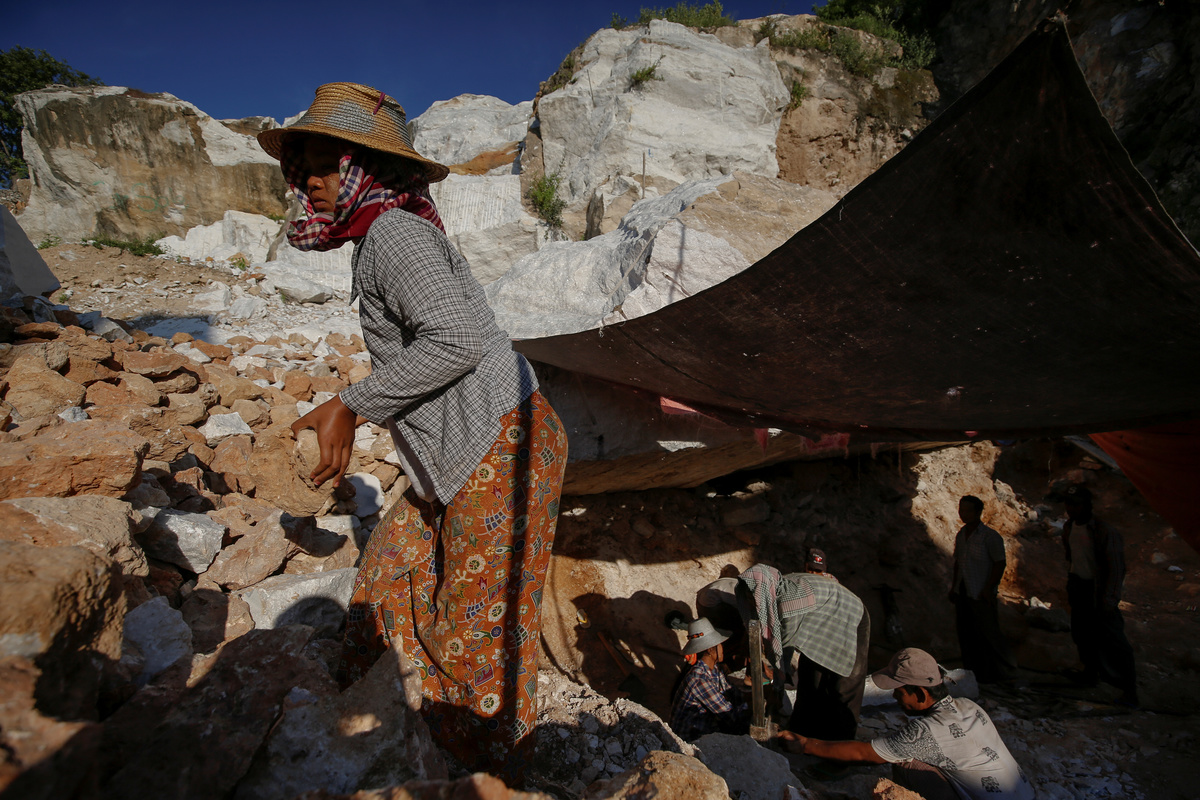
"I was born in this village and for generations this is what we have done: the men work on marble carving and the women work in the marble mines or polish the marble statues," said 25-year-old Mya Lay, in a house fashioned from dry bamboo sheets, with a floor made of marble chippings.
For years, she has walked down from the mines from morning till sunset carrying large marble slabs on her head, laborious work for about $3.50 per day.
Marble carvers carve a statue of a Buddha in Sagyin, Mandalay, Myanmar, October 11, 2019. REUTERS/Ann Wang
"If I could I would leave the village and find a job in the city," she said, adding that she wanted a better life for her daughter.
Some fear the clouds of dust that cloak the village could make them sick. Inhaling marble dust in other contexts has been linked to silicosis, a serious lung disease that can be deadly.
Few workers wear masks or other protective clothing, and several nursed rasping coughs, although they said the coughing could also be the result of smoking.
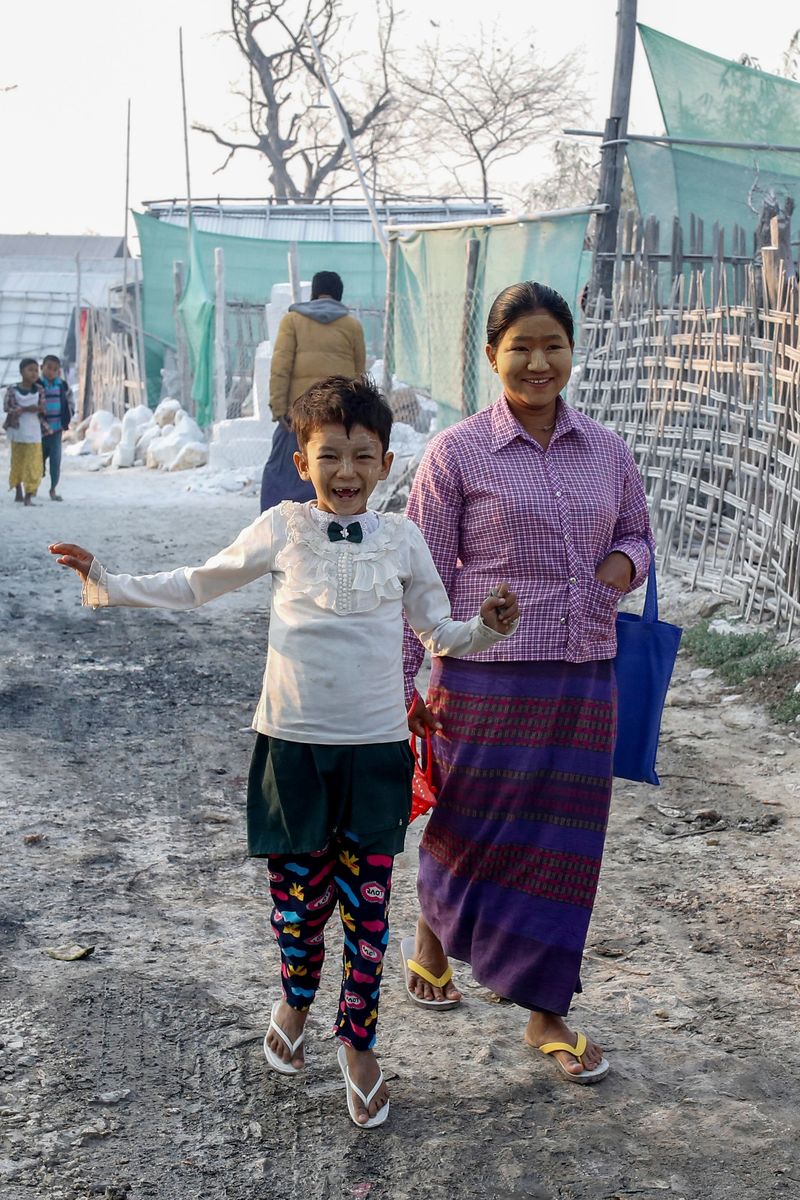
Mya Lay walks, 25, who used to work at a marble mine but lost her job, walks her daughter Kyawt Kyawt Lwin, 7, to school in Sagyin, Mandalay, Myanmar, February 14, 2019. REUTERS/Ann Wang
Kyi Khaing, a workshop owner, said most residents are too poor to worry about their health.
"I think the marble dust is not safe, but most people here only focus on survival, rather than their healthcare," he said.
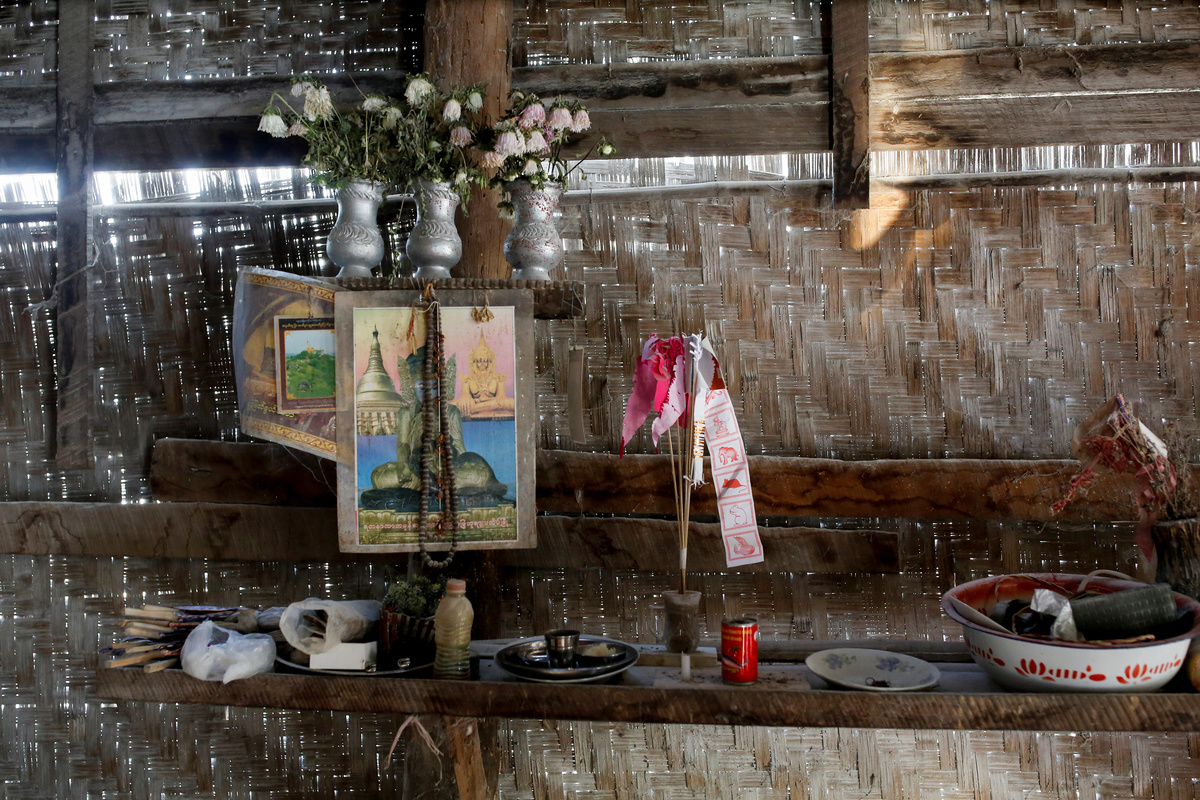
Marble dust covers the surface of a Buddhist altar at Mya Lay's house in Sagyin, Mandalay, Myanmar, February 14, 2019. REUTERS/Ann Wang
NEW CHALLENGES
A bigger worry is the impact of the novel coronavirus, which originated in China late last year and has since spread globally, infecting more than 10.4 million people.
Myanmar has reported only 299 cases of the virus, and six deaths, but trade with China, which buys most of Sagyin's statues, has been hit.
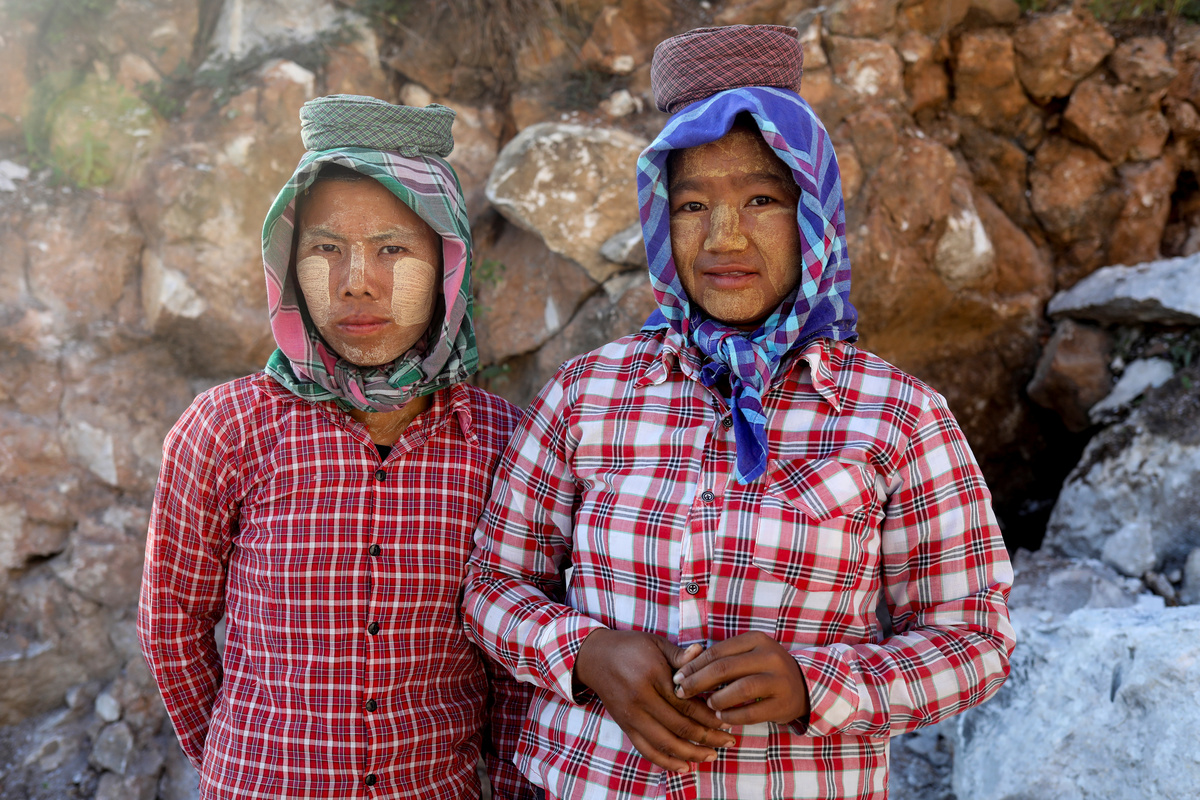
Mya Lay, 25, and one of her colleagues, both of whom work at a marble mine, pose for a photo at the marble mine where they work in Sagyin, Mandalay, Myanmar, October 19, 2019. "I was born in this village and for generations this is what we have done: the men work on marble carving and the women work in the marble mines or polish the marble statues," said Lay. For years, she has walked down from the mines from morning till sunset carrying large marble slabs on her head, laborious work for about $3.50 per day. "If I could I would leave the village and find a job in the city," she said, adding that she wanted a better life for her daughter. REUTERS/Ann Wang
The closure of the border between the two countries has meant Kyi Khaing, 49, has been unable to export his wares.
"The finished products are just sitting still," he said. "I haven't been able to deliver them anywhere. The buyers stopped coming as well."
Still, Kyi Khaing thinks some things in Sagyin will remain constant.
A worker, who's face was covered with marble dust as he carved a statue, poses for a photograph at his carving workshop in Sagyin, Mandalay, Myanmar, October 19, 2019. REUTERS/Ann Wang
"I believe until I die we will still have marble here," he said. "Anywhere you dig, there are marble stones."
(Reporting by Ann Wang. Writing by Poppy McPherson. Editing by Karishma Singh and Sam Holmes)
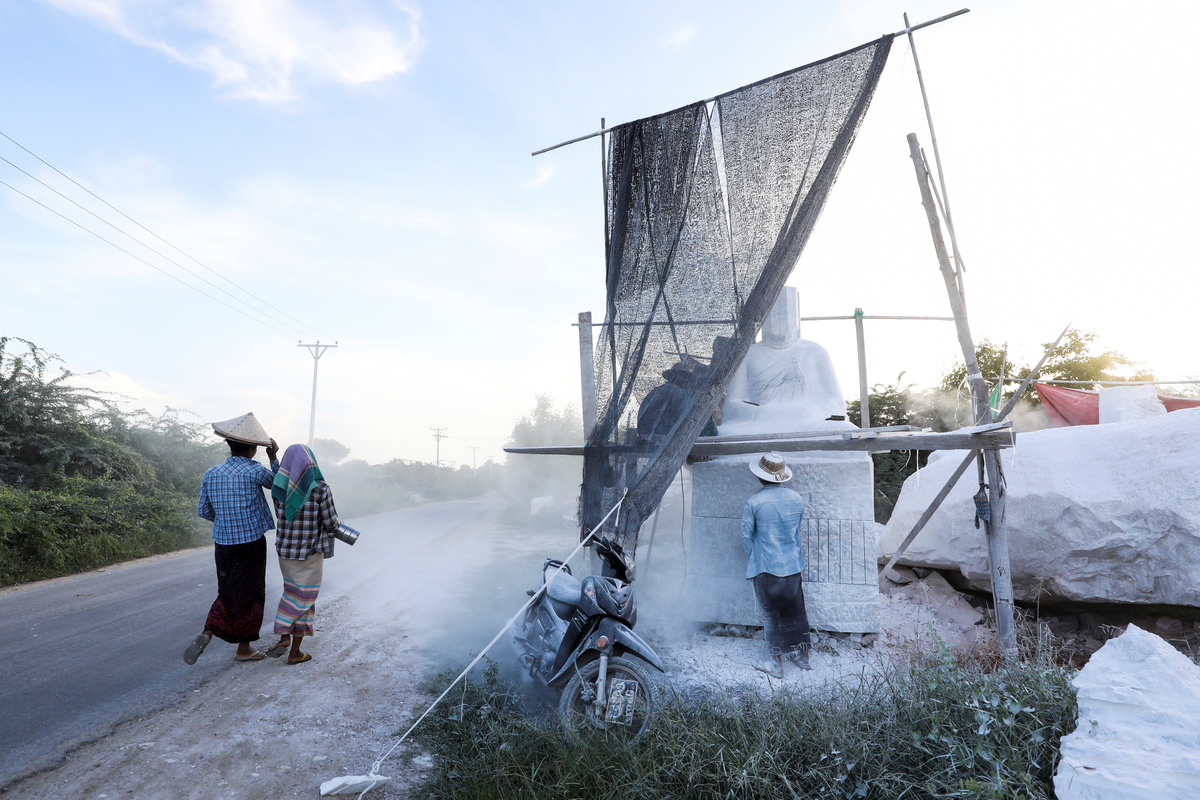
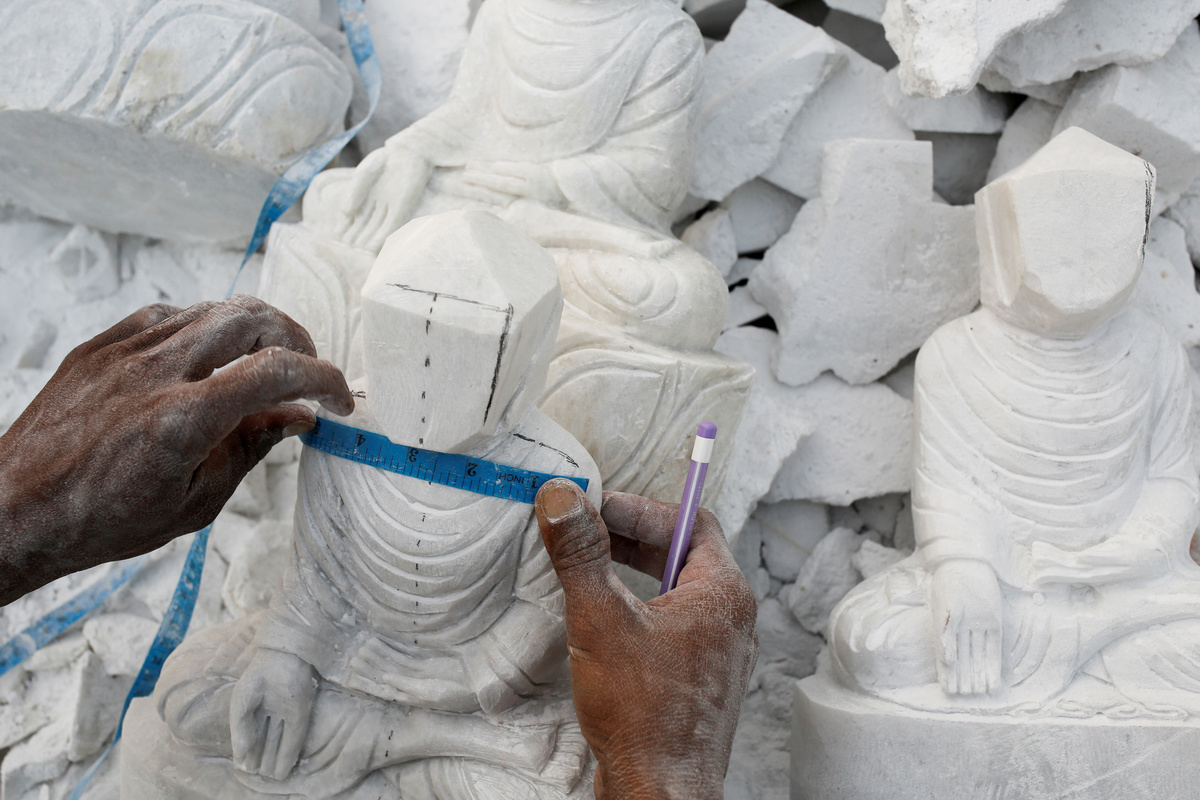
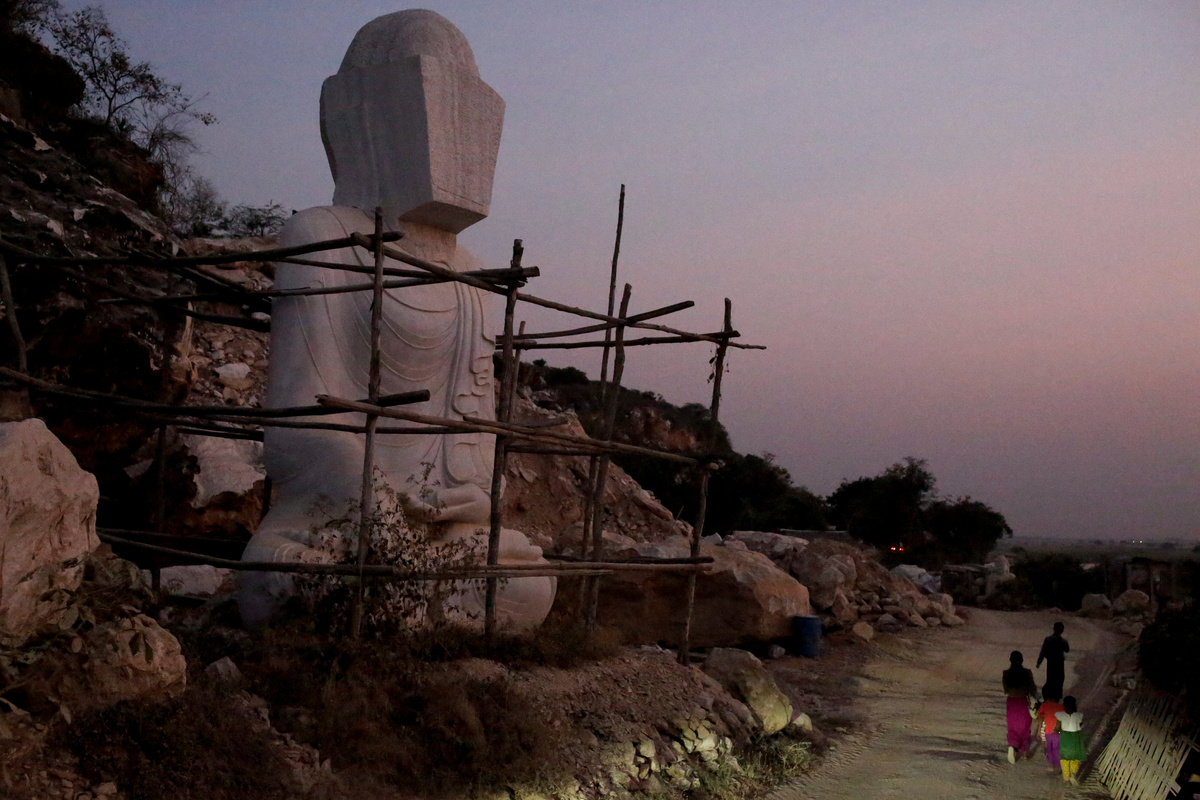
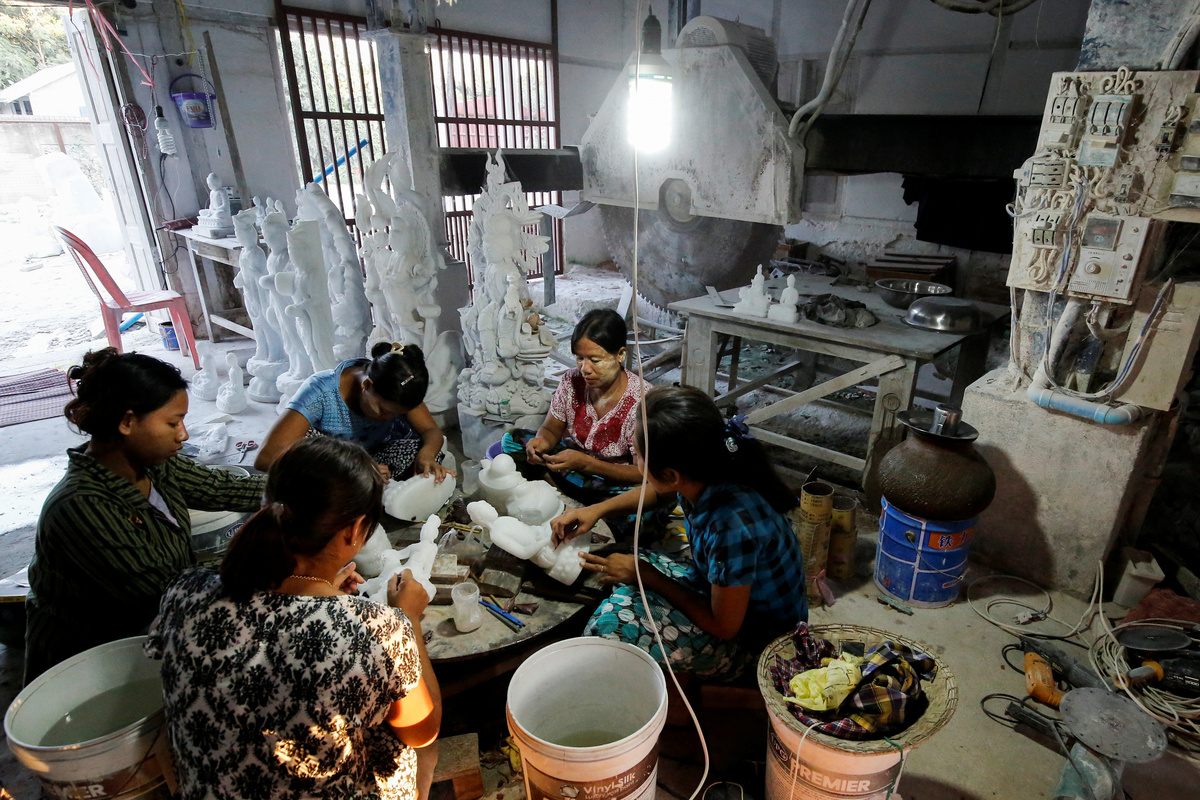
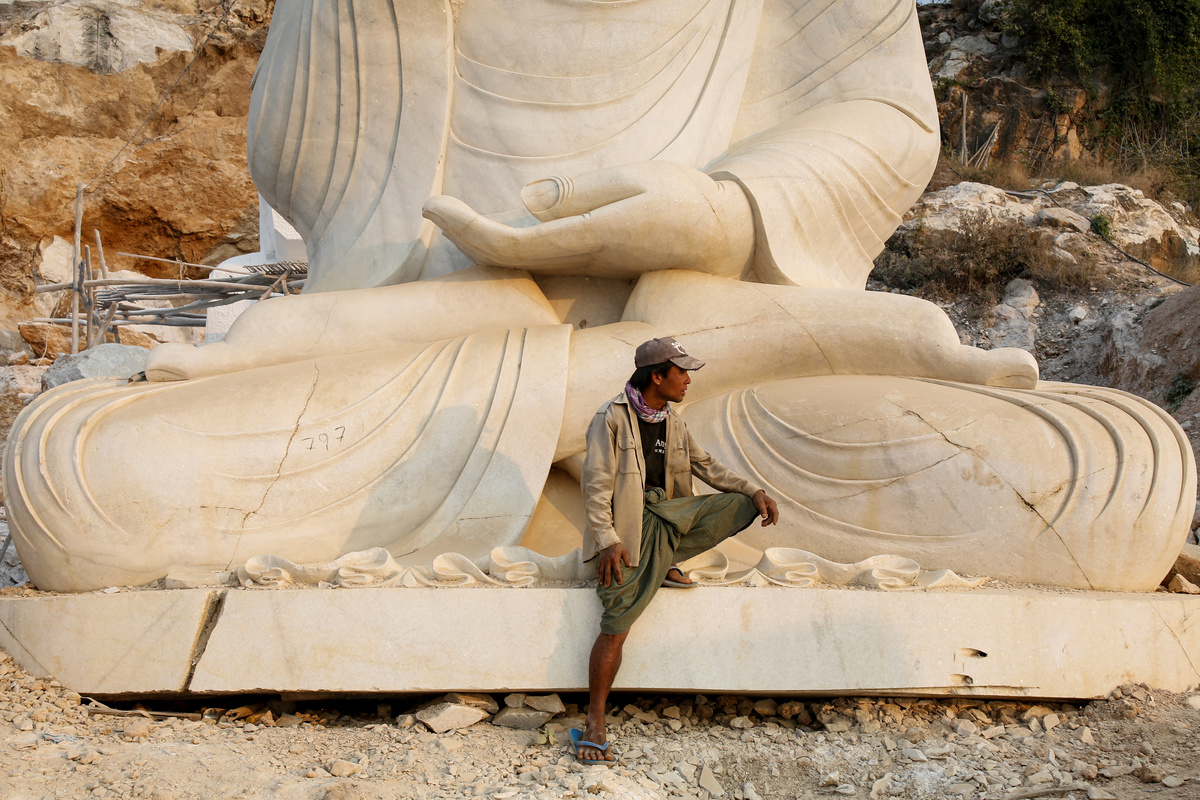
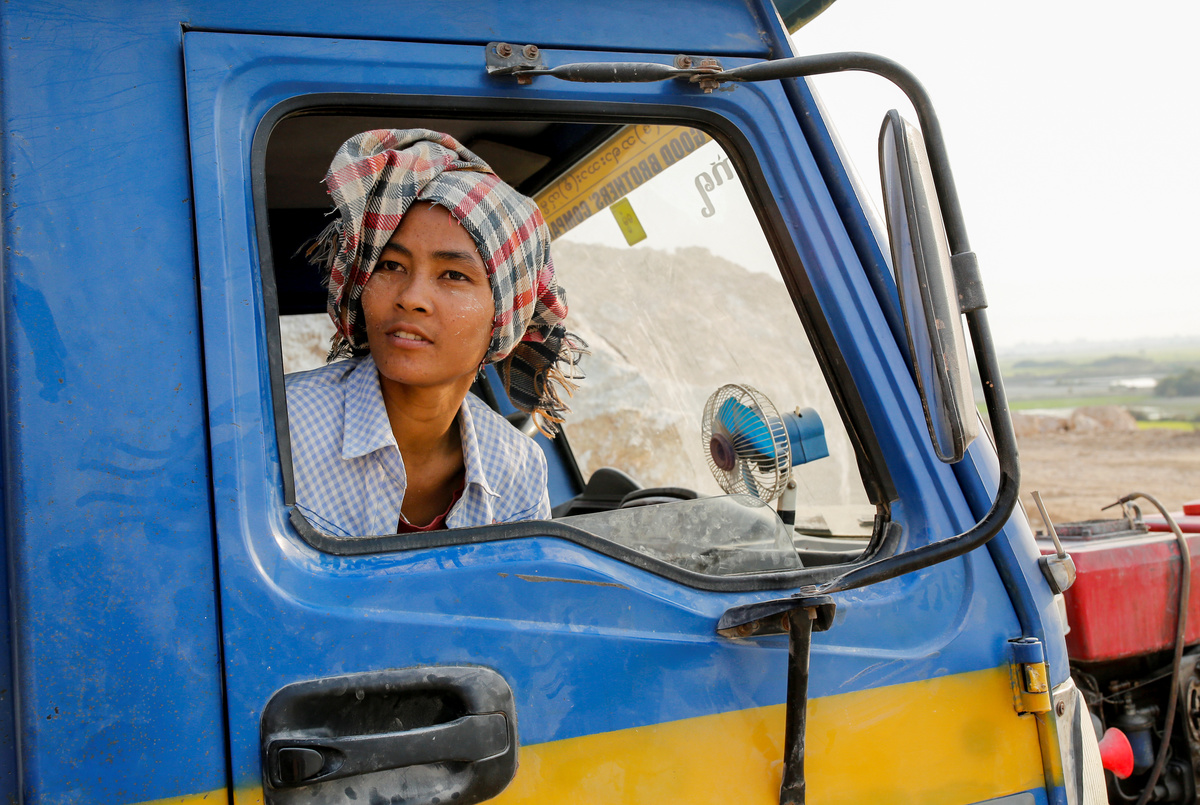
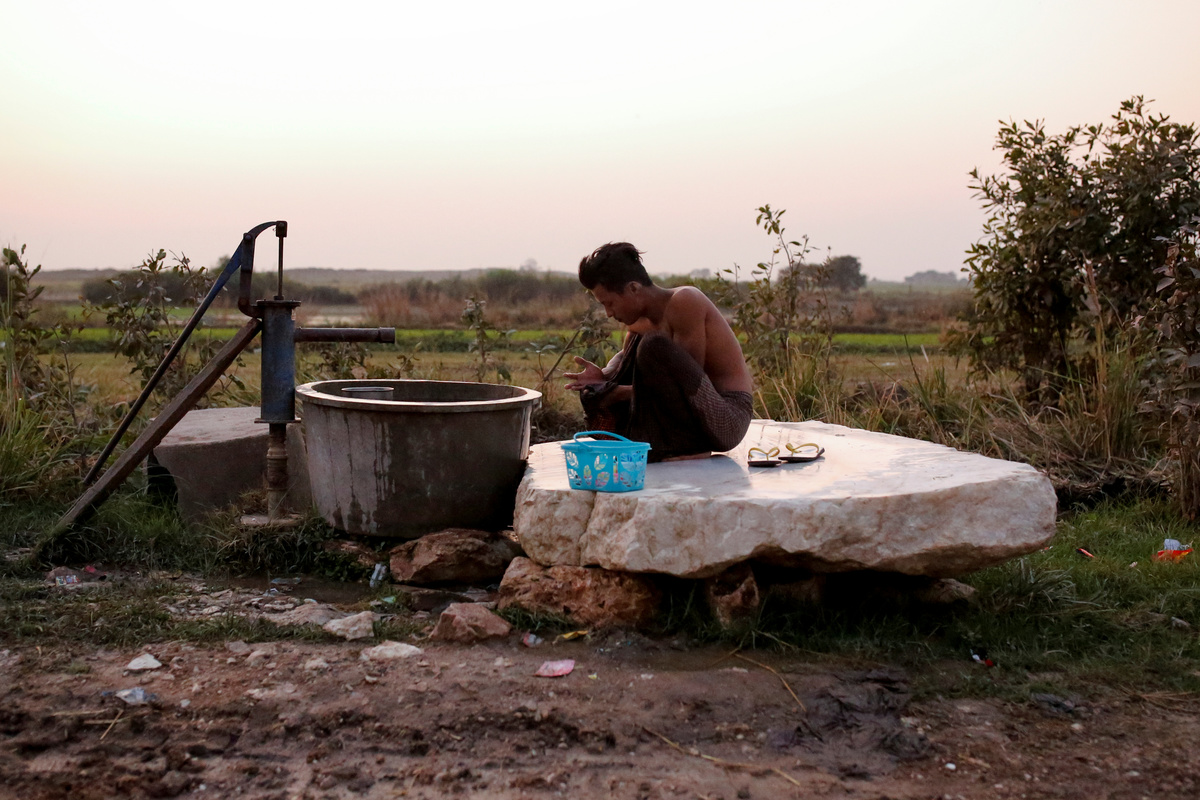
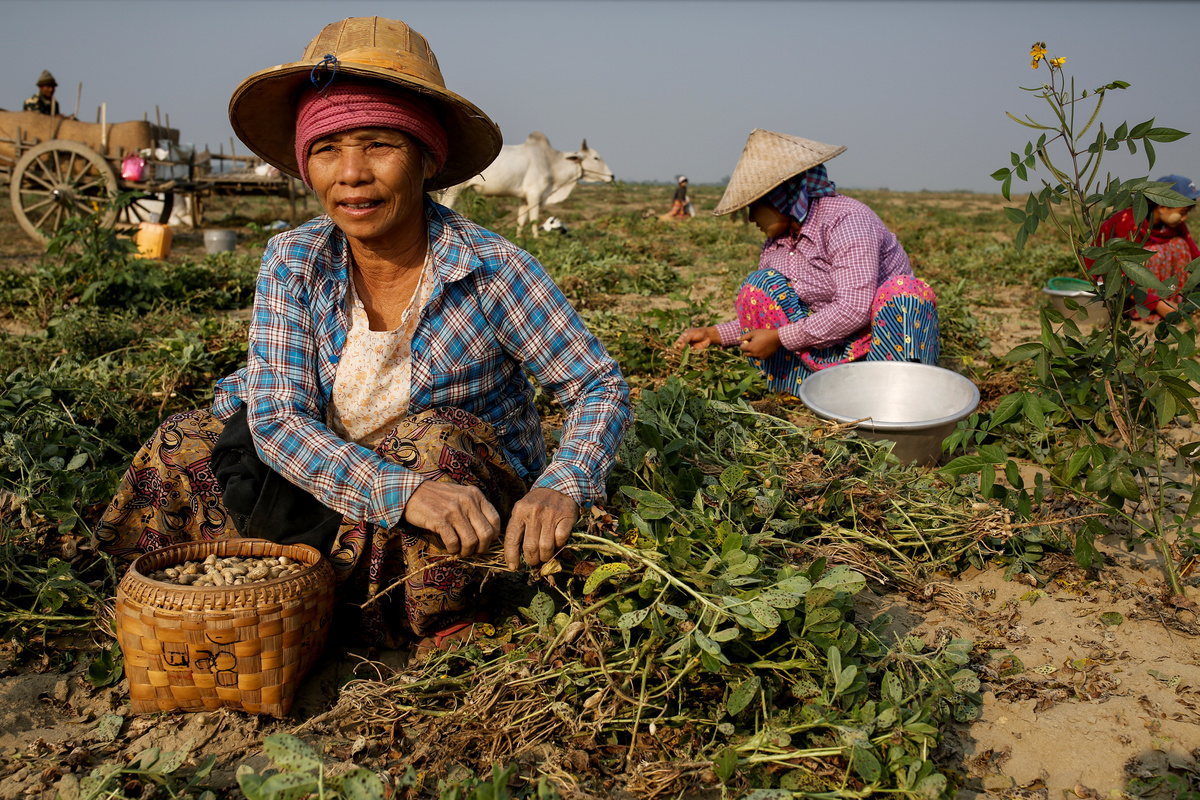
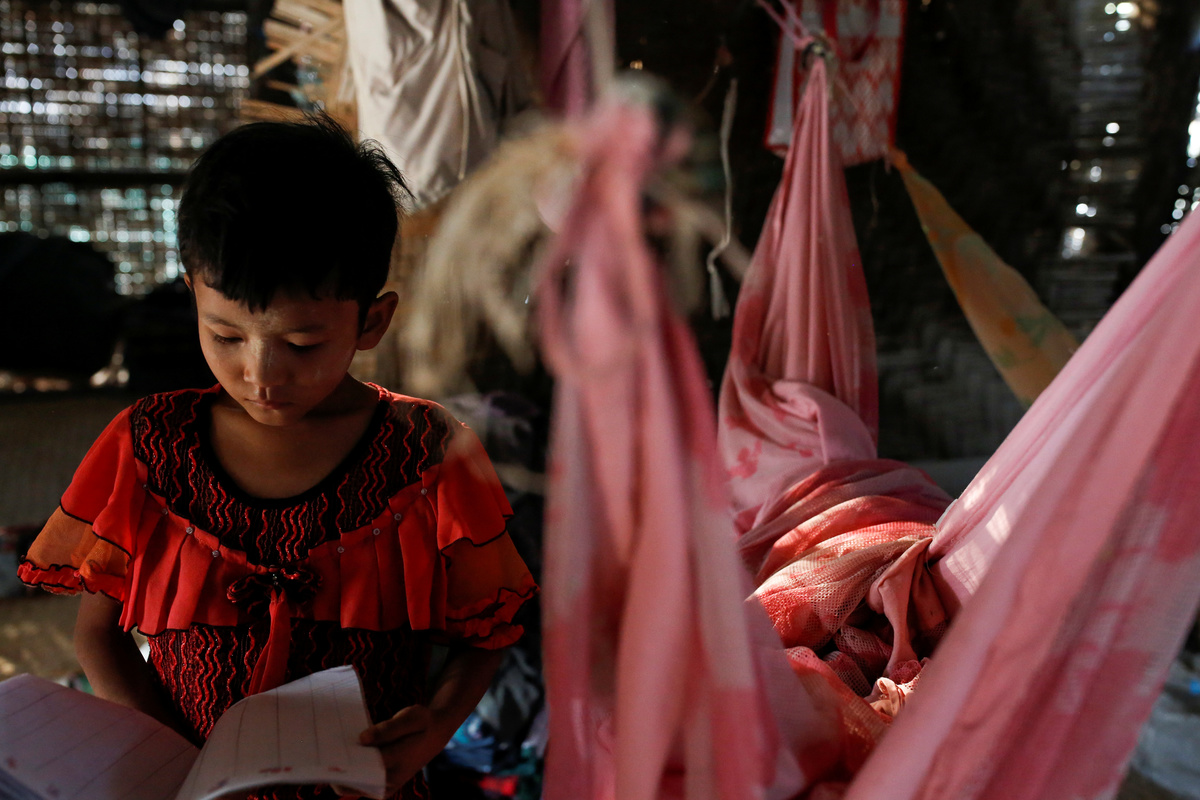
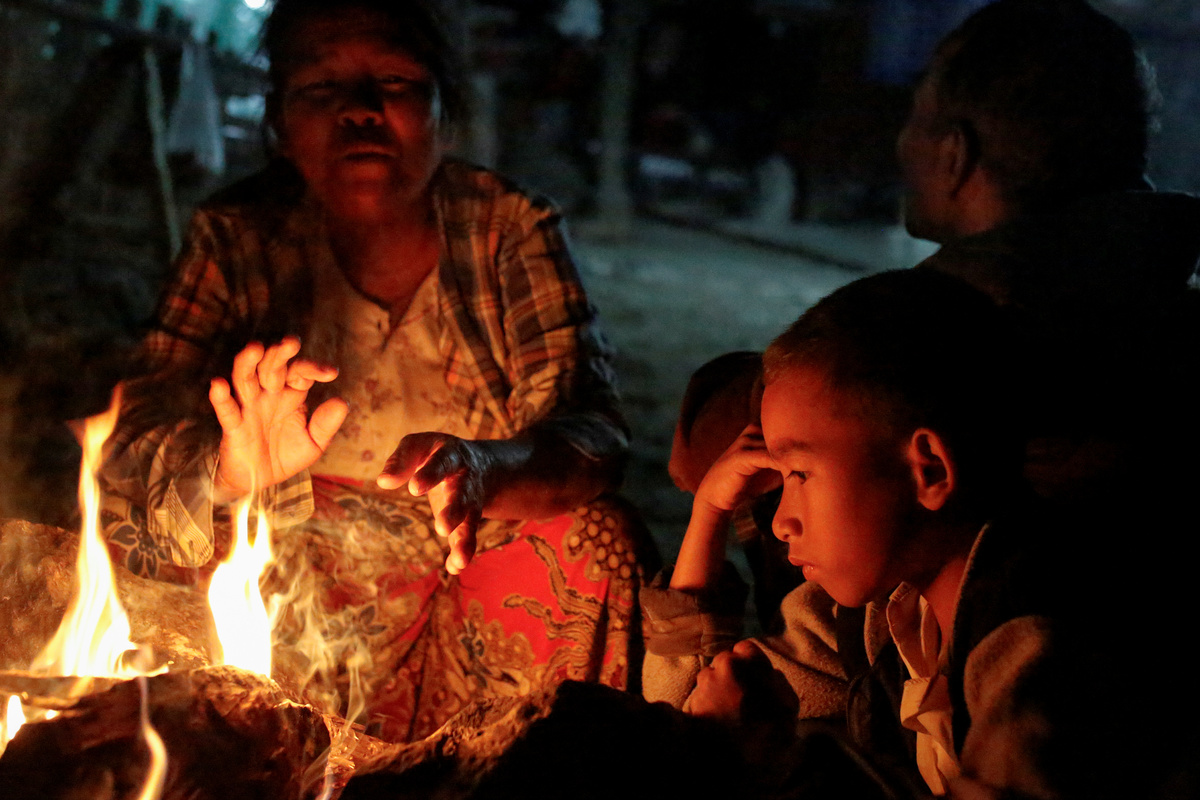
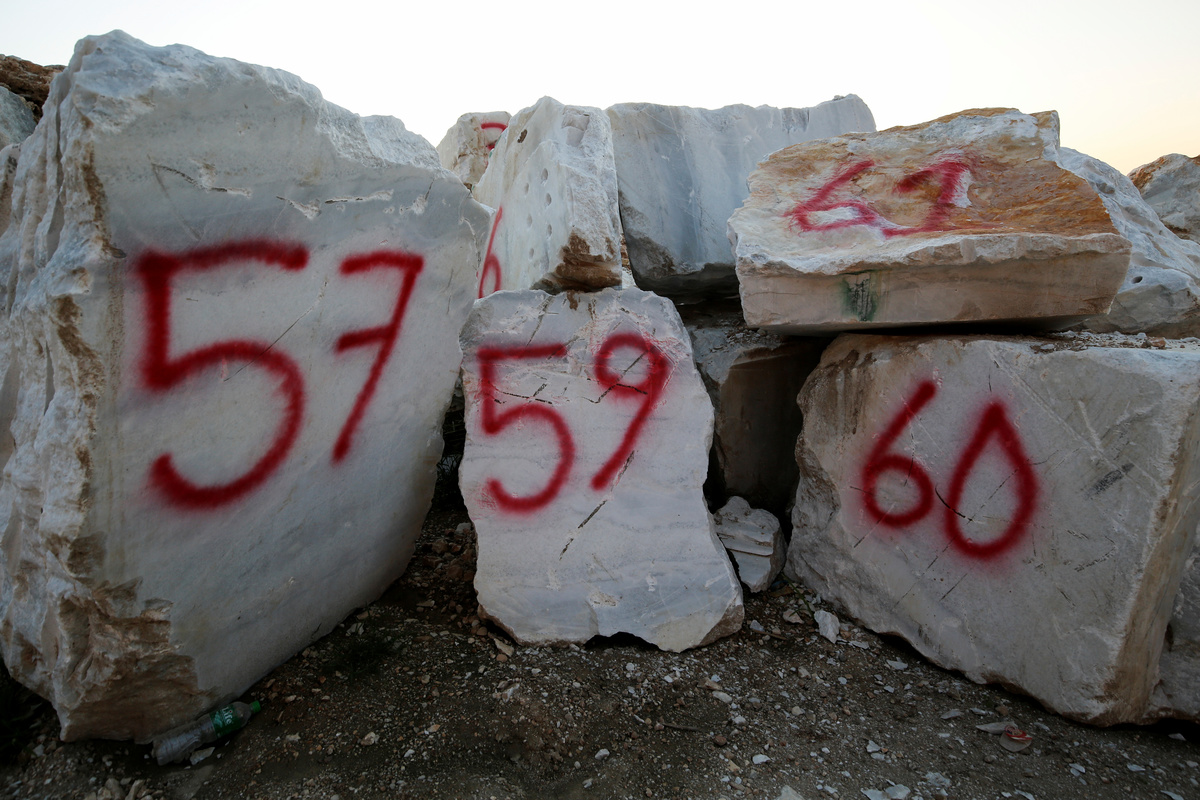
Marble carvers who work for Kyi Khaing, carve statues at a workshop in Sagyin, Mandalay, Myanmar, February 15, 2019. REUTERS/Ann WangA marble carver makes measurements of a piece of marble as he carves a Buddhist statue at a marble carving workshop in Sagyin, Mandalay, Myanmar, February 14, 2019. REUTERS/Ann WangMarble statues that were made in Sagyin, are displayed for sale in a shop at the village, Mandalay, Myanmar, February 16, 2019. REUTERS/Ann Wang A group of people walk past an unfinished marble statue of a Buddha in Sagyin, Mandalay, Myanmar, February 14, 2019. REUTERS/Ann Wang Marble carvers carve statues at a workshop in Sagyin, Mandalay, Myanmar, February 15, 2019. REUTERS/Ann Wang A marble carver carves a statue at his workshop in Sagyin, Mandalay, Myanmar, February 13, 2019. REUTERS/Ann WangWomen who work at a marble workshop, polish marble statues in Sagyin, Mandalay, Myanmar, October 19, 2019. REUTERS/Ann Wang A woman who works at a marble mine poses for a photograph at a marble site in Sagyin, Mandalay, Myanmar, February 15, 2019. REUTERS/Ann Wang A worker leans on a marble statue of a Buddha as he rests at a marble site where he works, in Sagyin, Mandalay, Myanmar, February 15, 2019. REUTERS/Ann Wang A marble statue of a Buddha is left near the Irrawaddy River to be transported to a buyer in Sagyin, Mandalay, Myanmar, October 19, 2019. REUTERS/Ann Wang A woman who works at a marble mine is driven home after finishing work for the day at a marble mine site in Sagyin, Mandalay, Myanmar, February 15, 2019. REUTERS/Ann WangA man sits on a piece of marble as he bathes near a marble site in Sagyin, Mandalay, Myanmar, February 14, 2019. REUTERS/Ann Wang Mya Lay (R), 25, and her colleagues, who used to work at a marble mine but lost their jobs, pick leftover peanuts at a farm where they now work in Sagyin, Mandalay, Myanmar, February 15, 2019. "I was born in this village and for generations this is what we have done: the men work on marble carving and the women work in the marble mines or polish the marble statues," said Lay. REUTERS/Ann WangKyawt Kyawt Lwin, 7, whose mother Mya Lay used to work at a marble mine but lost her job, reads her homework book at their home in Sagyin, Mandalay, Myanmar, February 14, 2019. REUTERS/Ann WangA woman, whose daughter Mya Lay used to work at a marble mine but lost her job, sits by an open fire with other family members at their home in Sagyin, Mandalay, Myanmar, February 14, 2019. REUTERS/Ann Wang Workers at a marble site move pieces of extracted marble from a marble mine in Sagyin, Mandalay, Myanmar, February 15, 2019. REUTERS/Ann Wang A worker polishes a Buddhist statue made of marble at a workshop in Sagyin, Mandalay, Myanmar, October 11, 2019. REUTERS/Ann Wang Workers at a marble site move extracted marble stones from a marble mine in Sagyin, Mandalay, Myanmar, October 18, 2019. REUTERS/Ann WangPieces of marble are sequenced with number markings to be used to build a large statue of a Buddha, on a roadside in Sagyin, Mandalay, Myanmar, October 18, 2019. REUTERS/Ann Wang
Sign up to read this article
Read news from 100’s of titles, curated specifically for you.