WIDER IMAGE-Besieged Amazon tribes grant rare access to Xingu chief’s funeral rites
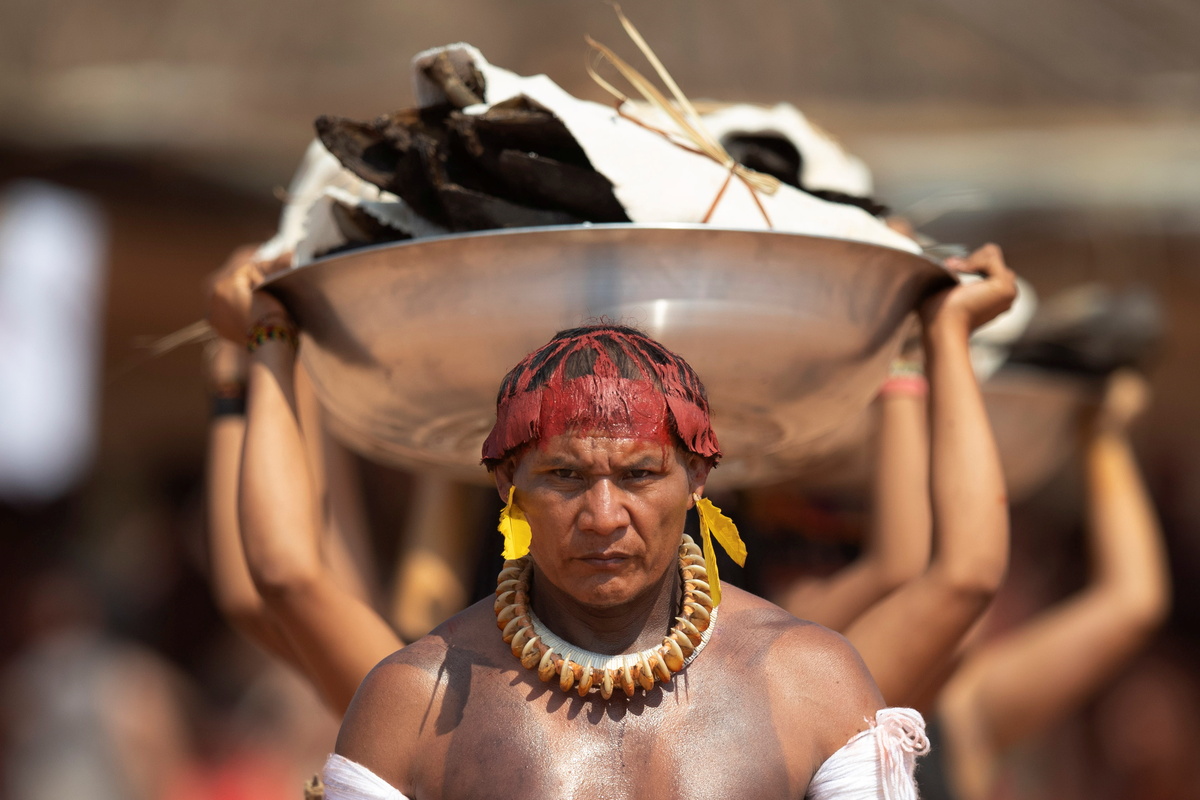
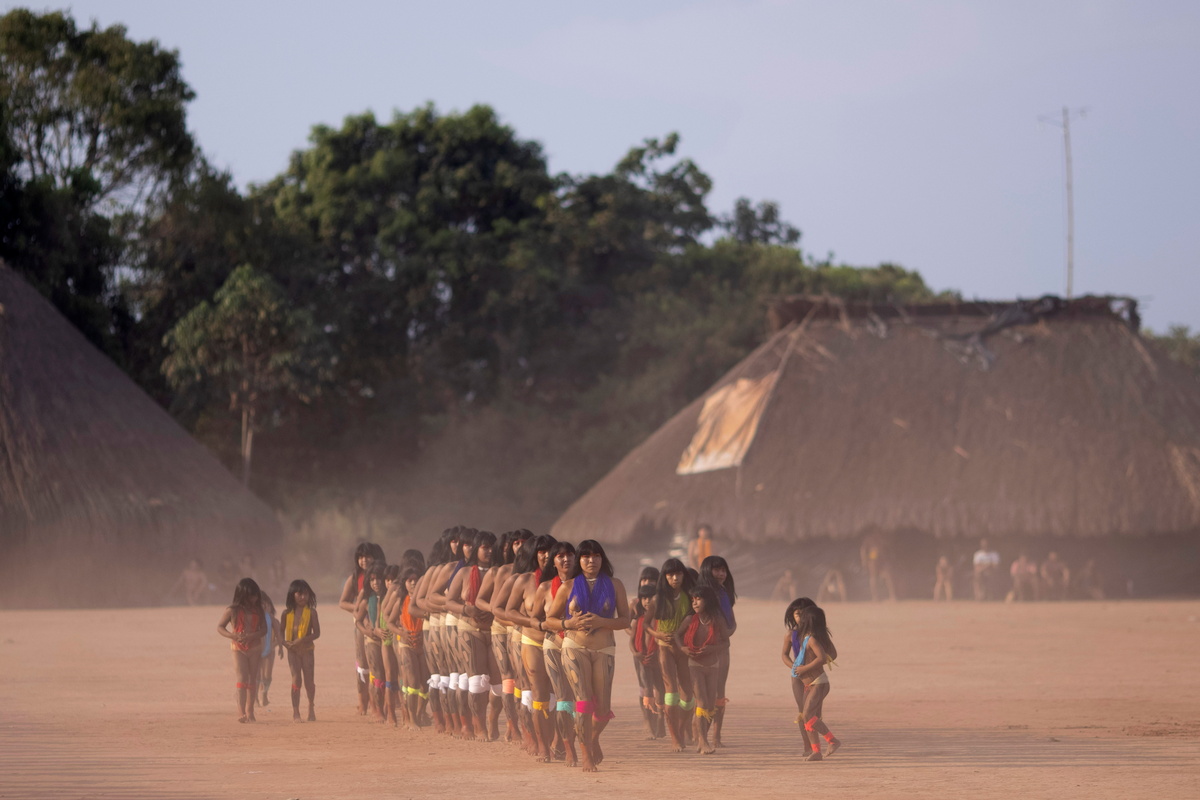
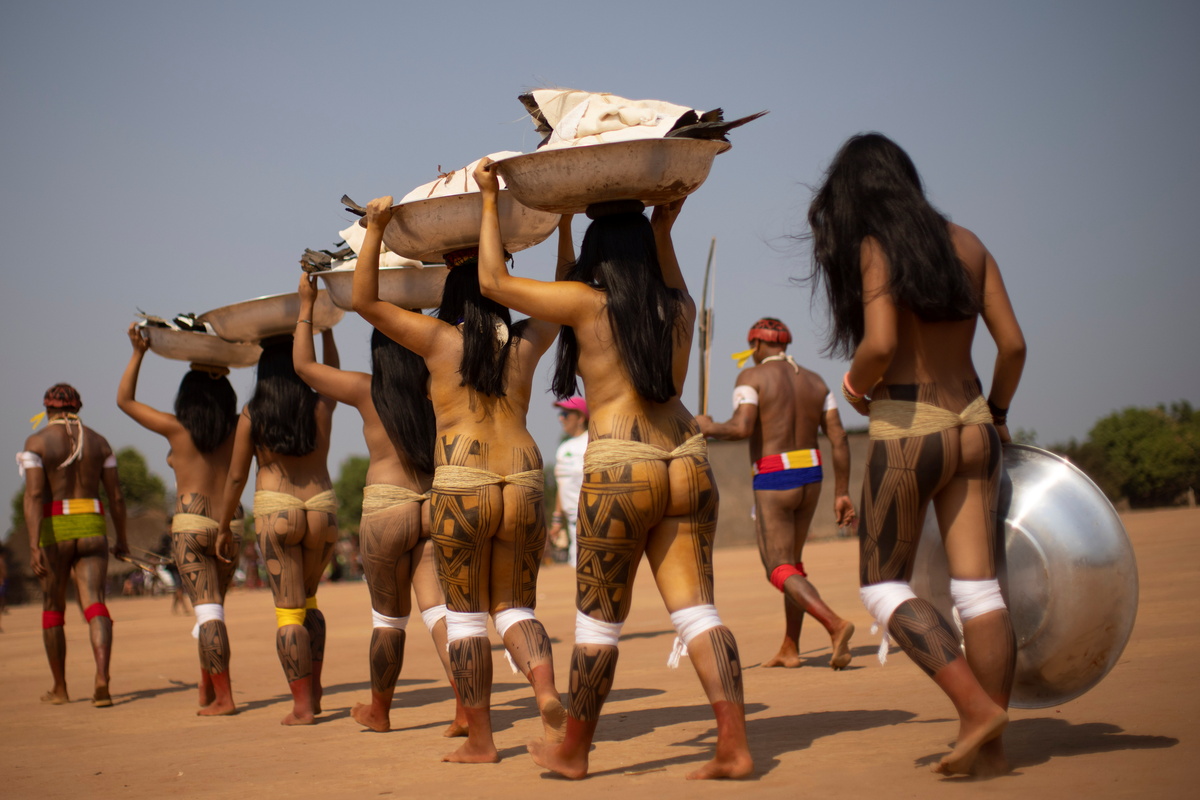
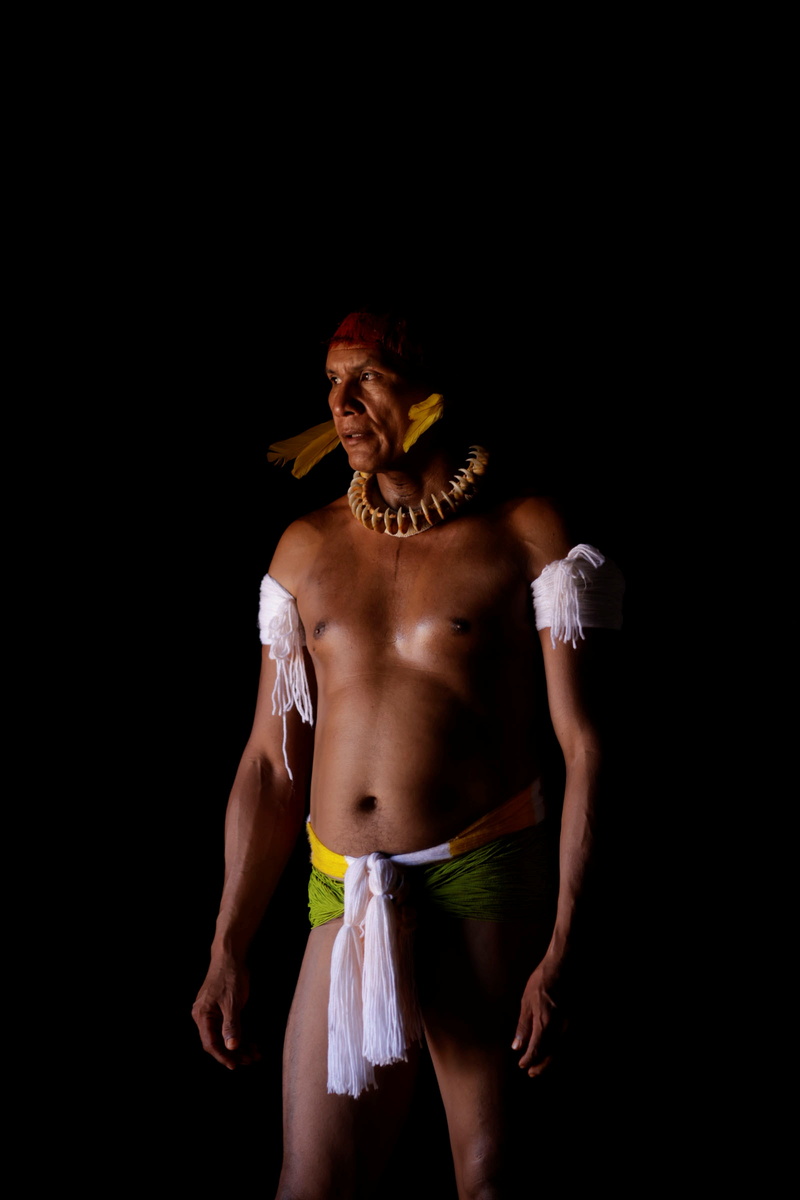
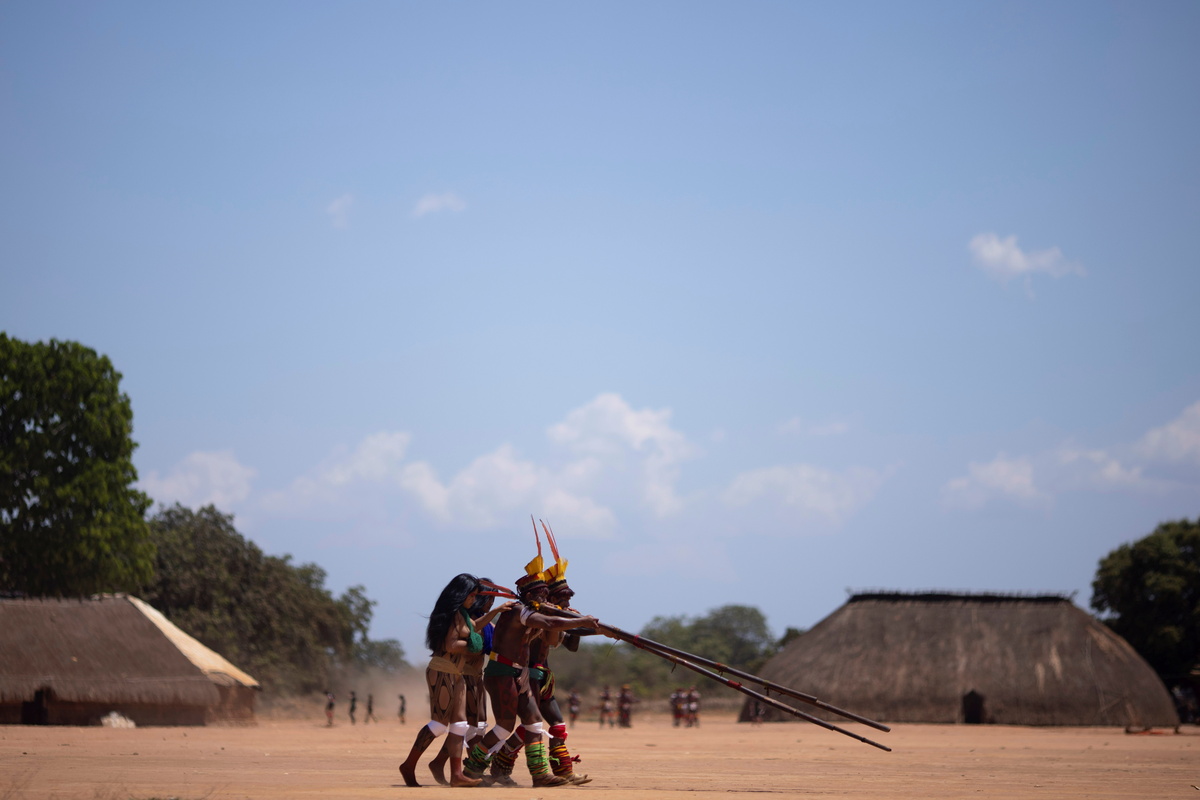
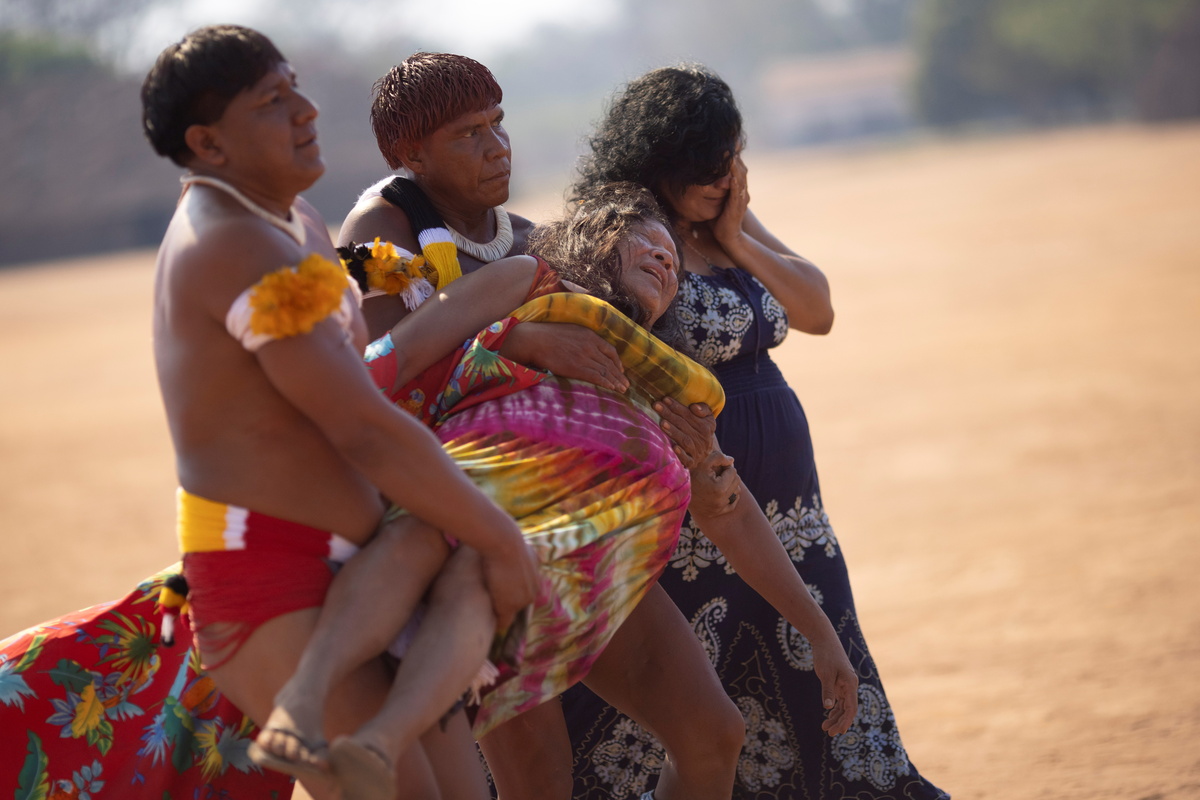
Tapi Yawalapiti, a Yawalapiti cacique (chief), walks alongside women during the closing of the Kuarup funeral ritual to honor the memory of his father Cacique Aritana, at the Xingu Indigenous Park in Brazil, September 12, 2021. REUTERS/Ueslei Marcelino
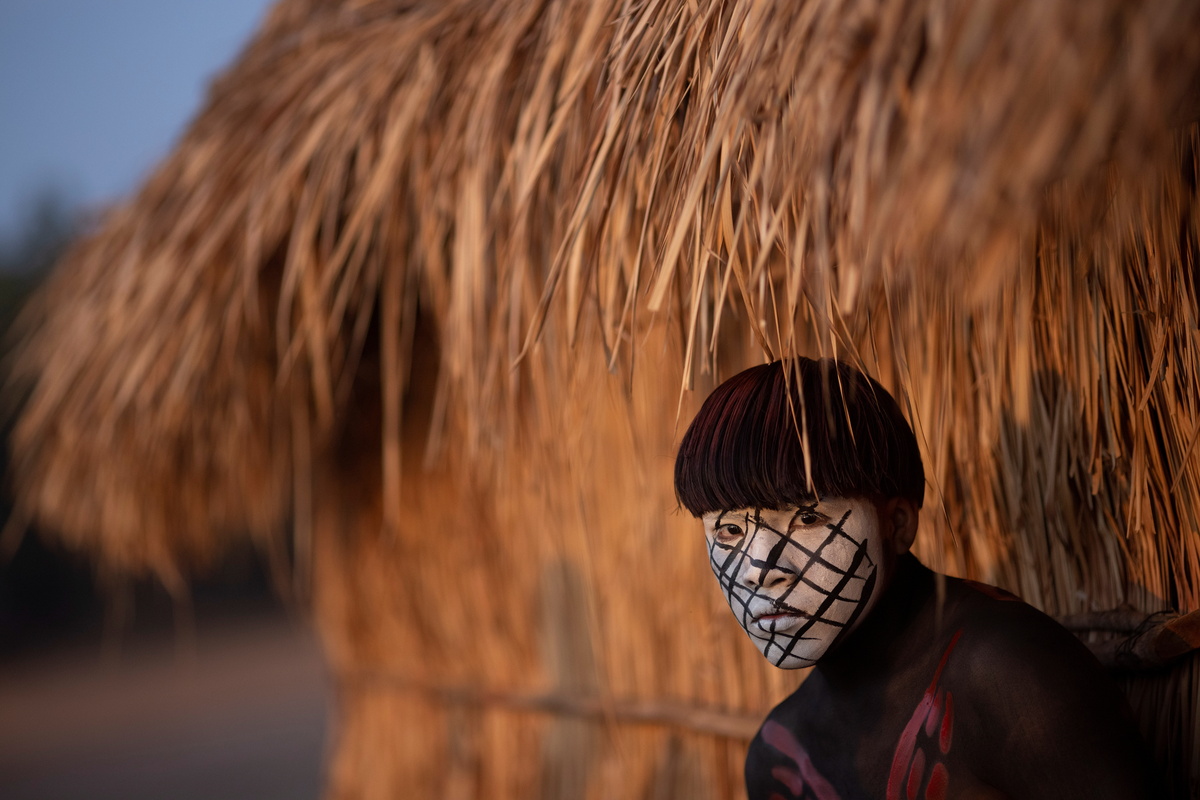
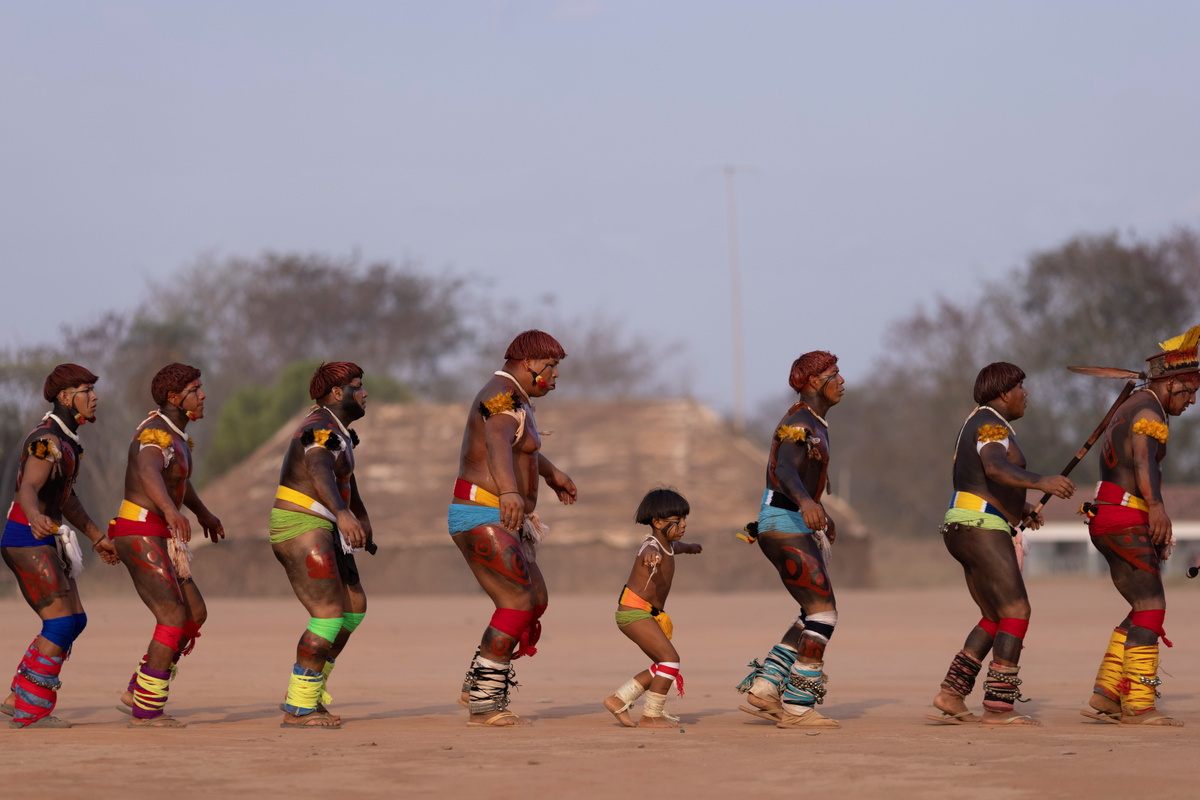
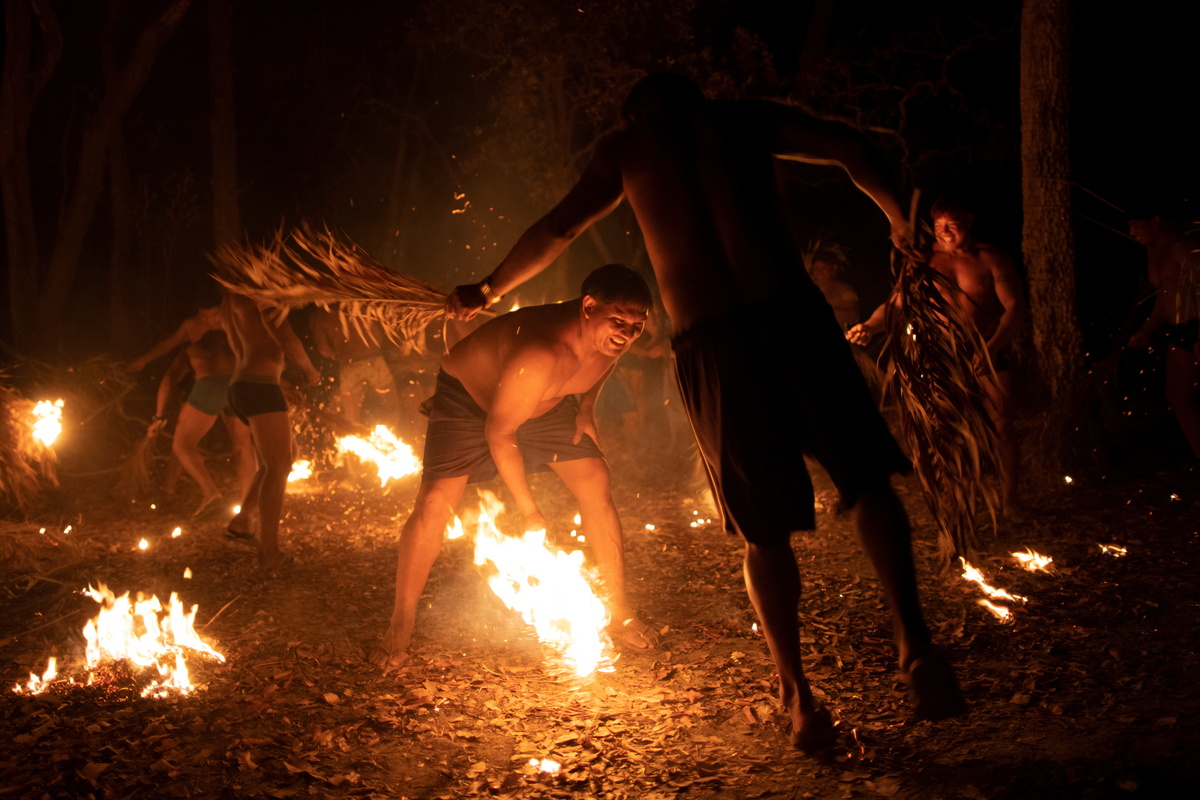
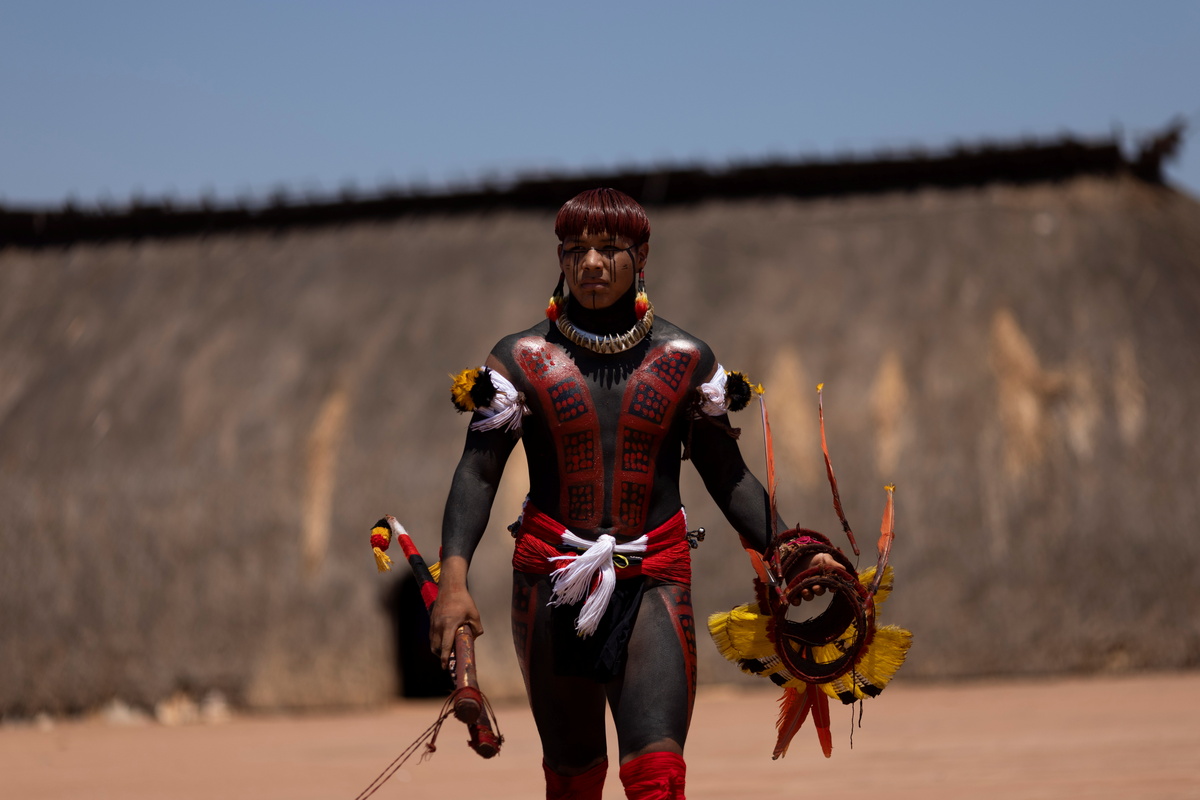
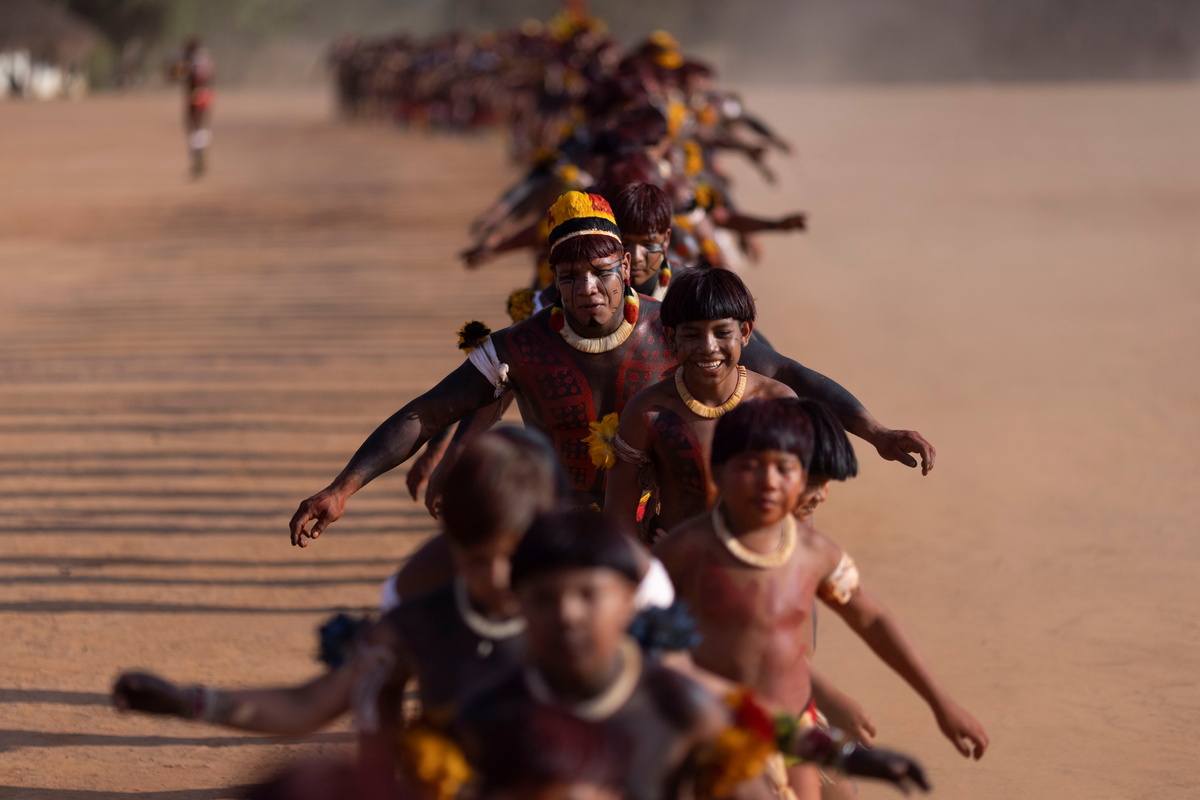
When a big chief dies on the Xingu indigenous reservation, its tribes gather for a unique funeral ritual called the Kuarup. Wearing body paint and bird feathers, they join in ceremonial dances, combat and feasts to celebrate life, death and rebirth.
The loss of Chief Aritana of the Yawalapiti people to COVID-19 in August has shaken the Xingu, leaving its tribes without a strong leader and able negotiator to unite them against mounting pressures on Brazil's agricultural frontier, which has advanced across the Cerrado savanna and into the Amazon rainforest.
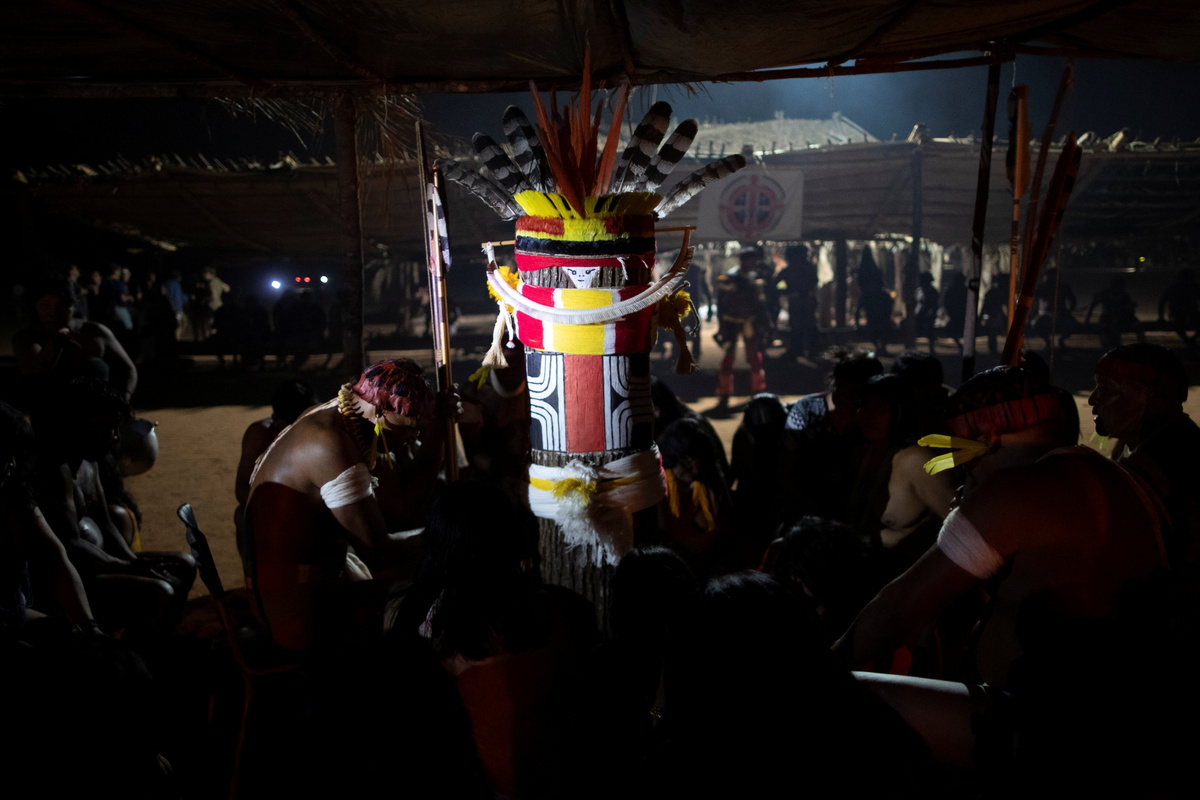
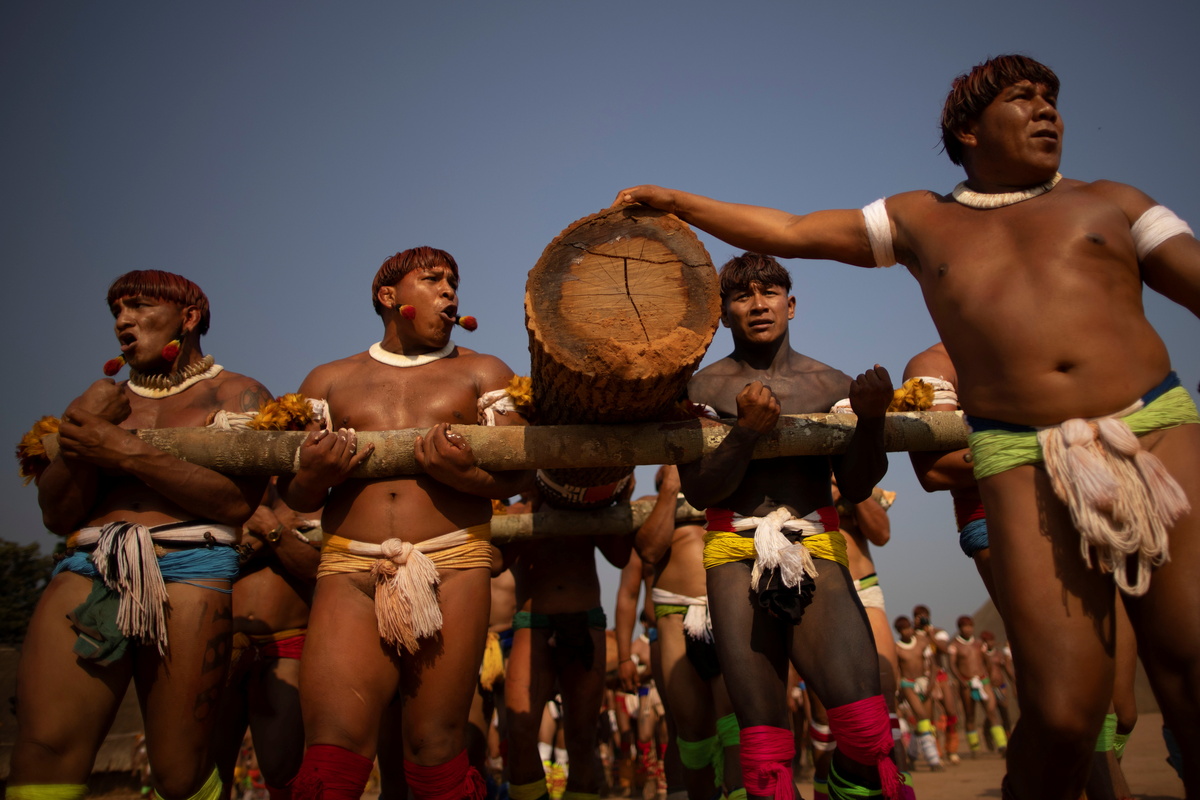
Yawalapiti people mourn next to tree trunks that represent distinguished people who have recently died during the Kuarup funeral ritual to honor the memory of Cacique Aritana, at the Xingu Indigenous Park in Brazil, September 11, 2021. REUTERS/Ueslei Marcelino
Besieged by illegal loggers, cattle ranchers, soy farmers and even gold miners, the Xingu communities face growing degradation of their natural habitat and the challenge of preserving its rich biodiversity for future generations, says Aritana's son and likely successor, Tapi Yawalapiti.
"We are not united today. The Xingu no longer has someone who can organize all the chiefs," Tapi told Reuters, sitting on a tree bough on the banks of a tributary to the Xingu River, which he fears is drying up due to agricultural use.
"Our main challenge is to come together again to save our lands," he said.
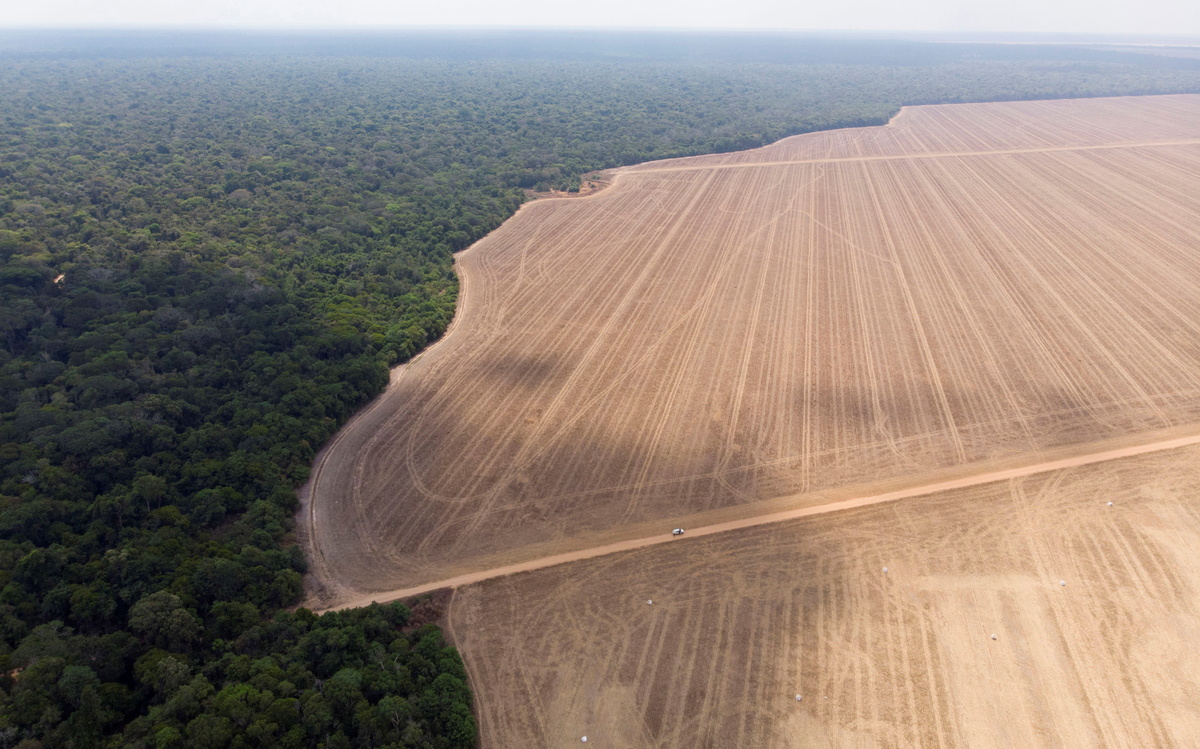
The boundary between the Xingu National Park and farmed land which surrounds the reserve is seen at the Xingu Indigenous Park in Brazil, September 12, 2021. Photo taken with a drone. REUTERS/Ueslei Marcelino
A Reuters photographer was the only journalist invited to the funeral celebrations last month, which lasted several days and gathered upwards of a thousand members of neighboring tribes.
The next generation of leaders in the Xingu are seeking unity at a critical time, as far-right President Jair Bolsonaro is undermining indigenous rights by encouraging commercial farming and mining on protected lands with the support of powerful political lobbies in Brasilia.
Some in the Xingu have been tempted to sell wood or rent farmland to outsiders, although they are still a minority on the reservation covering more land than Israel.
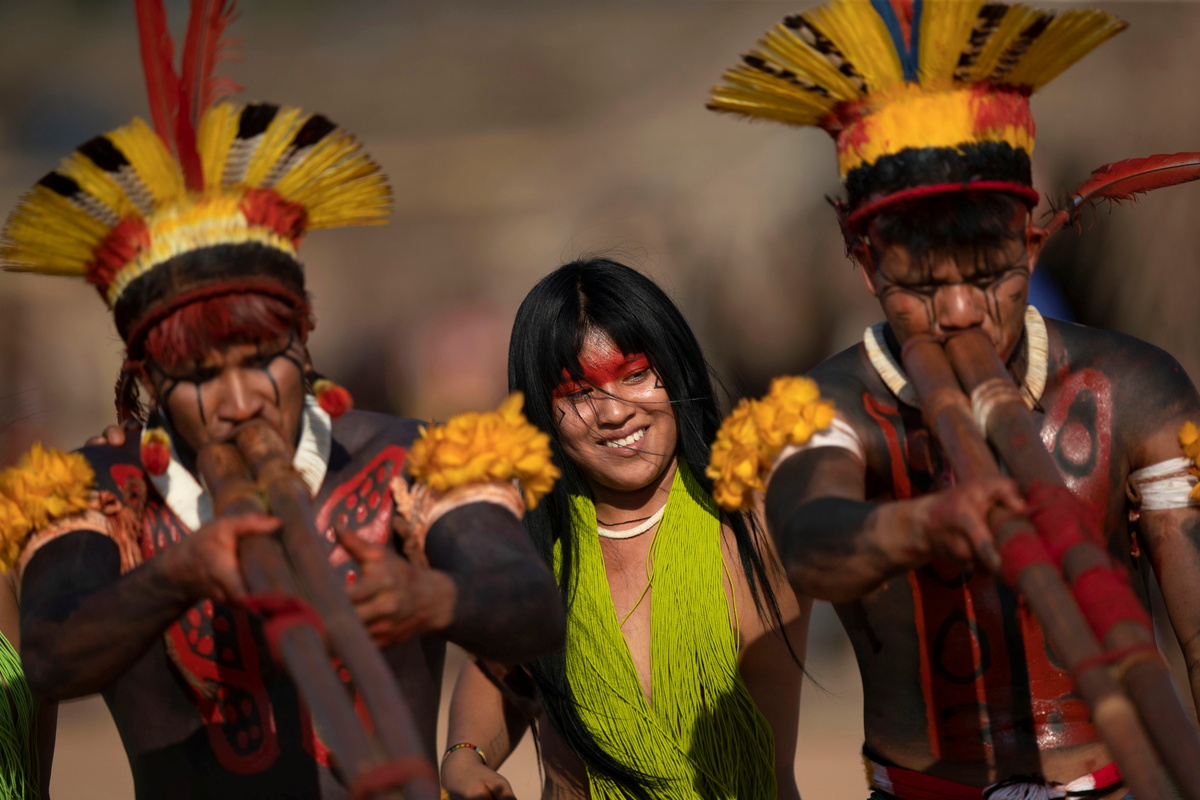
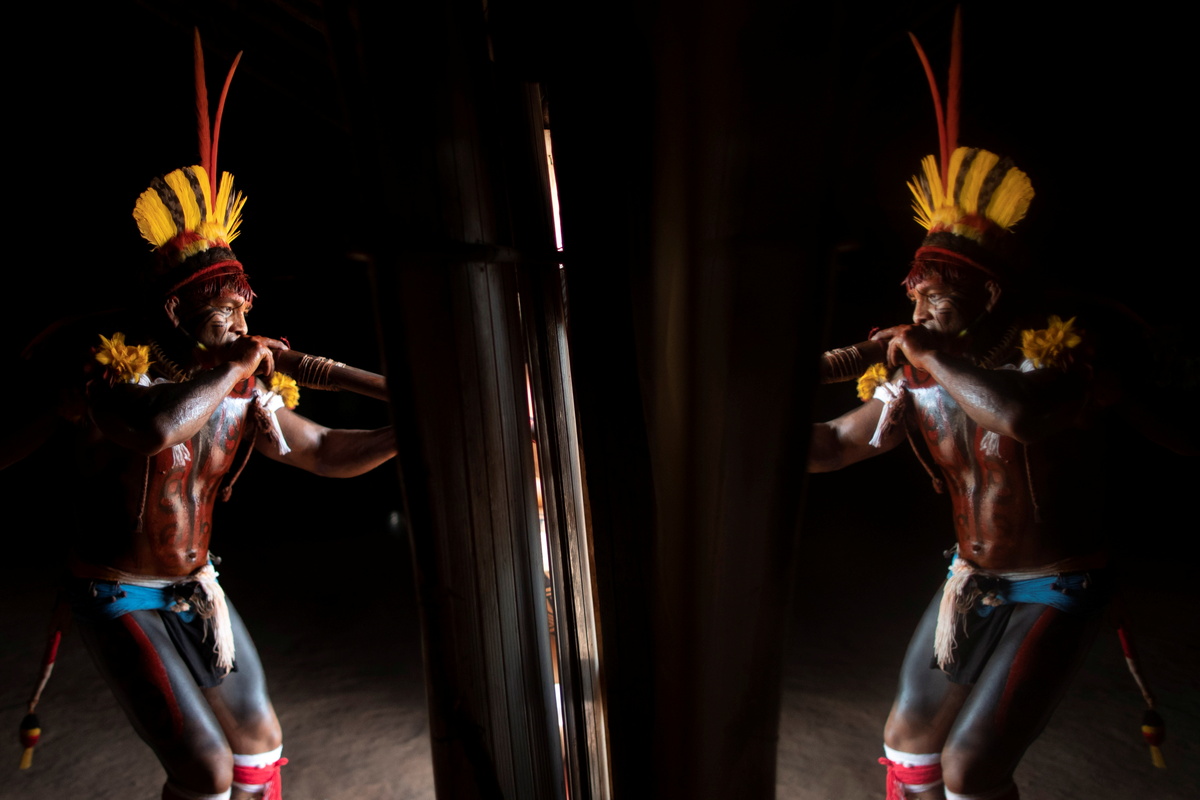
Yawalapiti, Kalapalo and Mehinako people play the urua bamboo flutes as they dance during the Kuarup funeral ritual to honor the memory of Cacique Aritana, at the Xingu Indigenous Park in Brazil, September 11, 2021. REUTERS/Ueslei Marcelino
Climate change is also drying out the forest and increasing the risk of fires, Tapi said, appealing for outside help.
"We need to save the environment to keep our way of life and our culture, and for all mankind."
From above, there is a striking contrast between the green Xingu forests and the brown cultivated fields that today push up against the borders of the reservation in western Brazil.
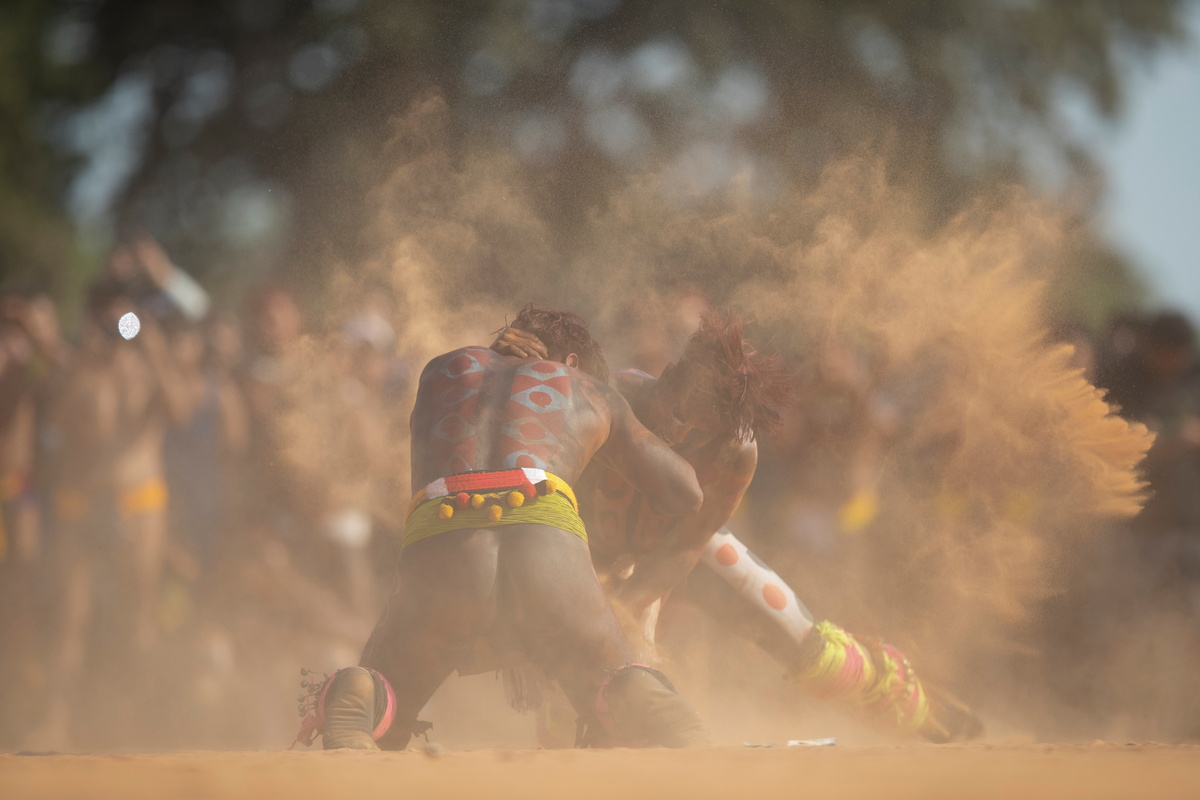
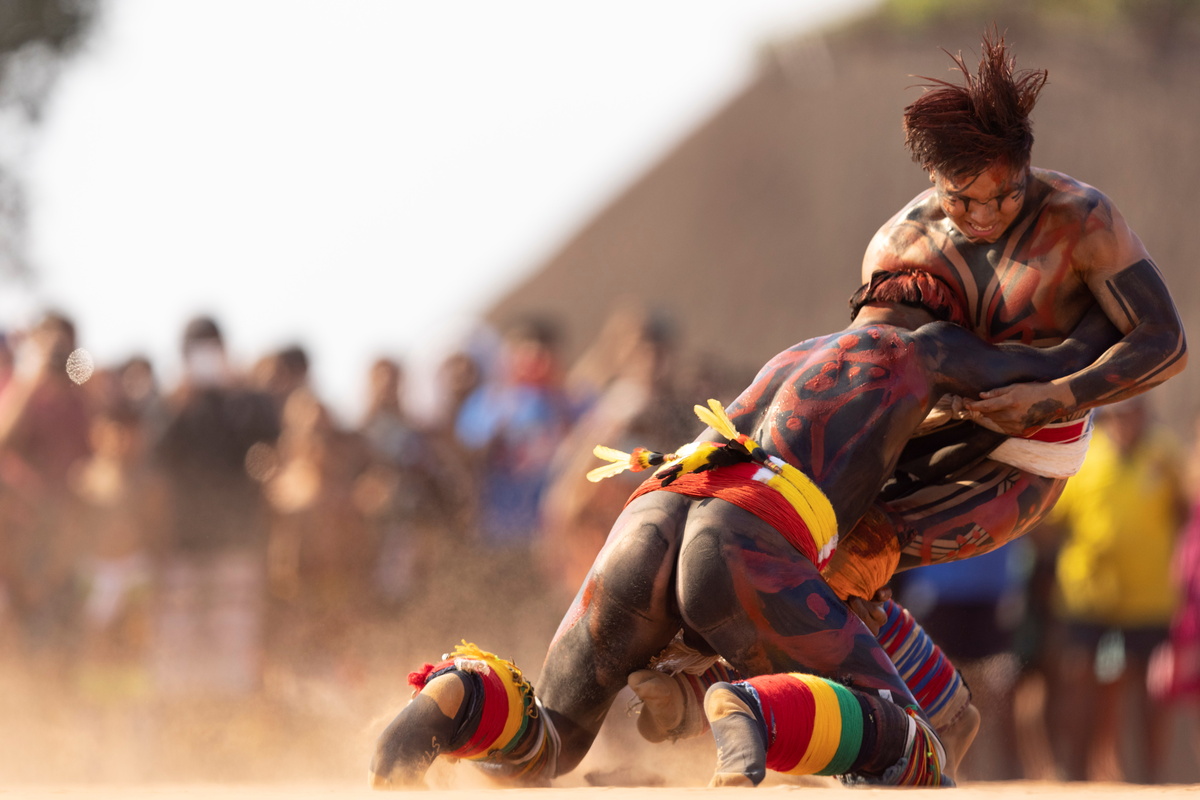
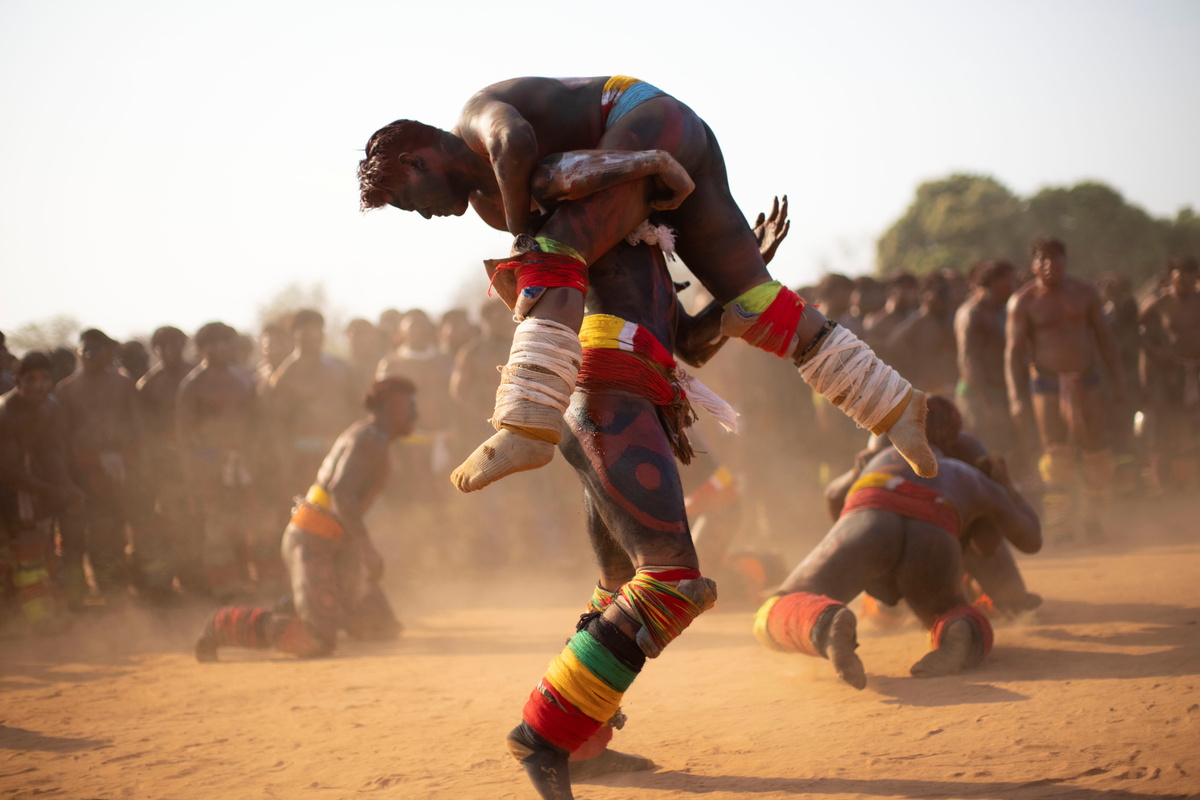
Men from various tribes wrestle during the Kuarup funeral ritual to honor the memory of Cacique Aritana, at the Xingu Indigenous Park in Brazil, September 12, 2021. REUTERS/Ueslei Marcelino
Crop dusters spraying pesticides are polluting the headwaters of the Xingu and nearby rivers, whose levels drop further every year as soy farmers tap more water for irrigation, said anthropologist Claudia Franco.
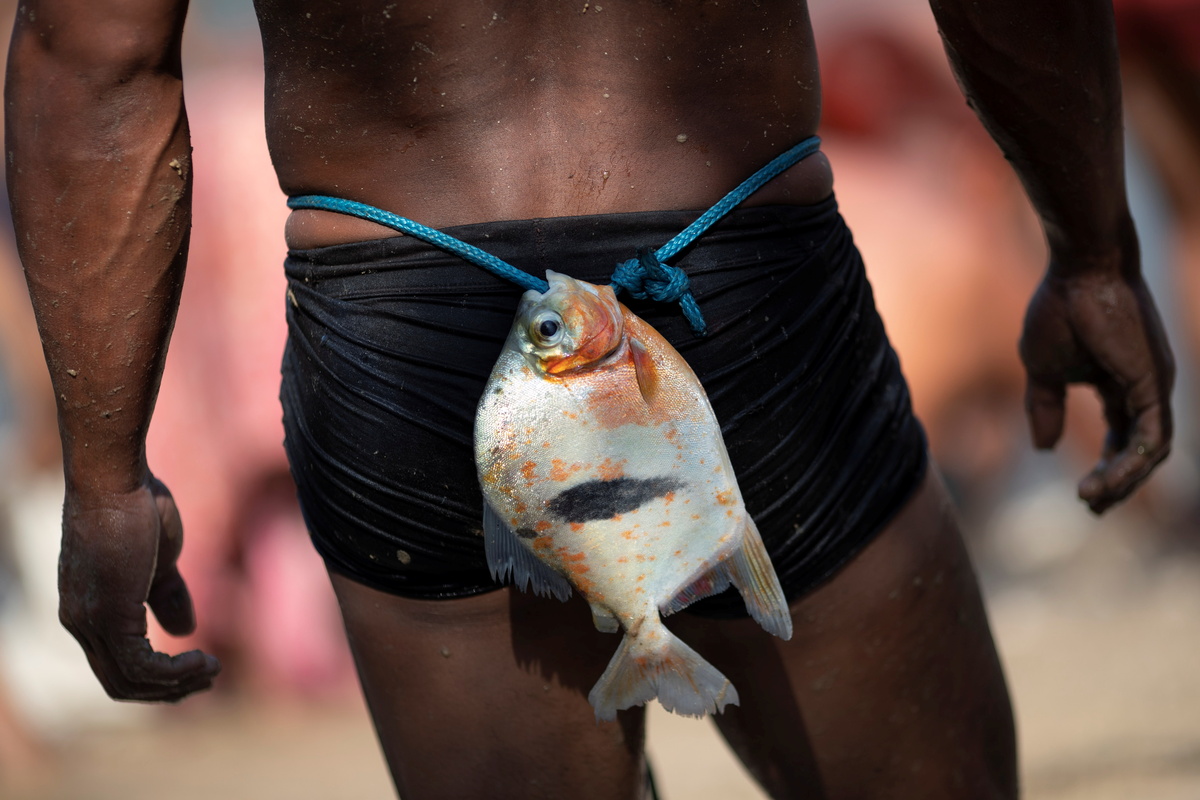
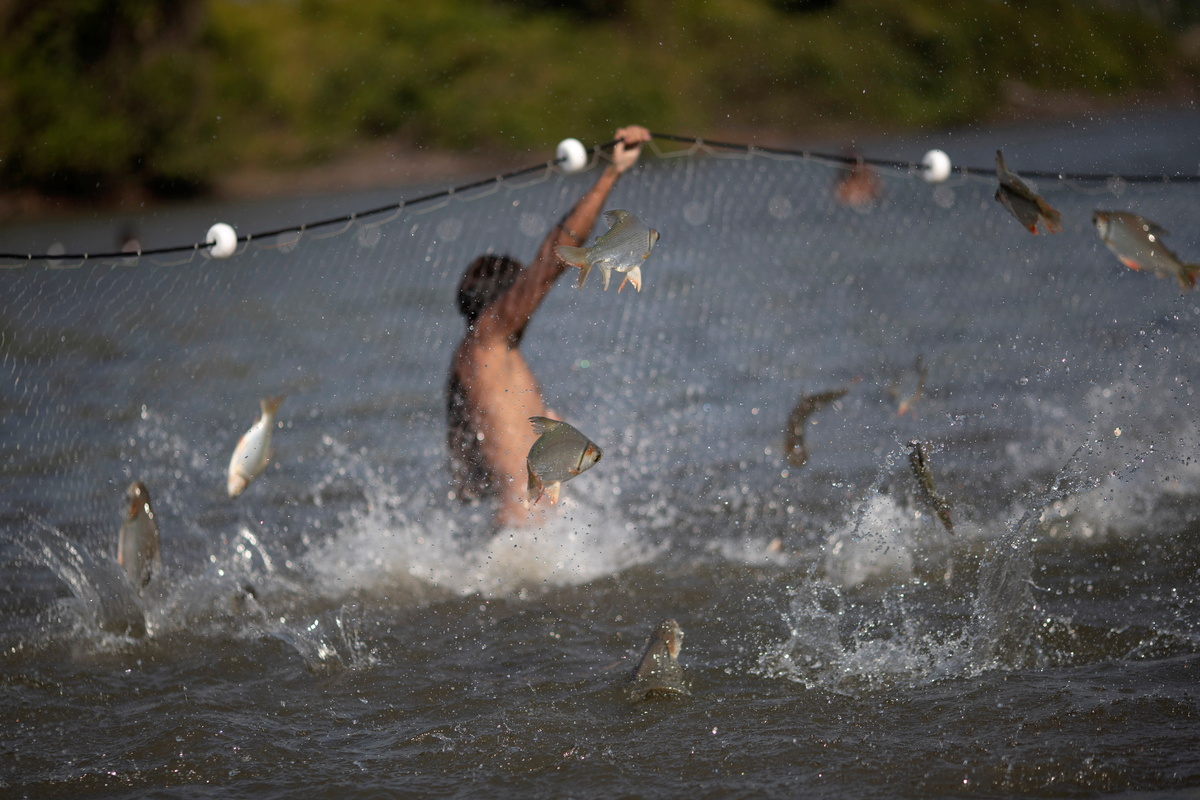
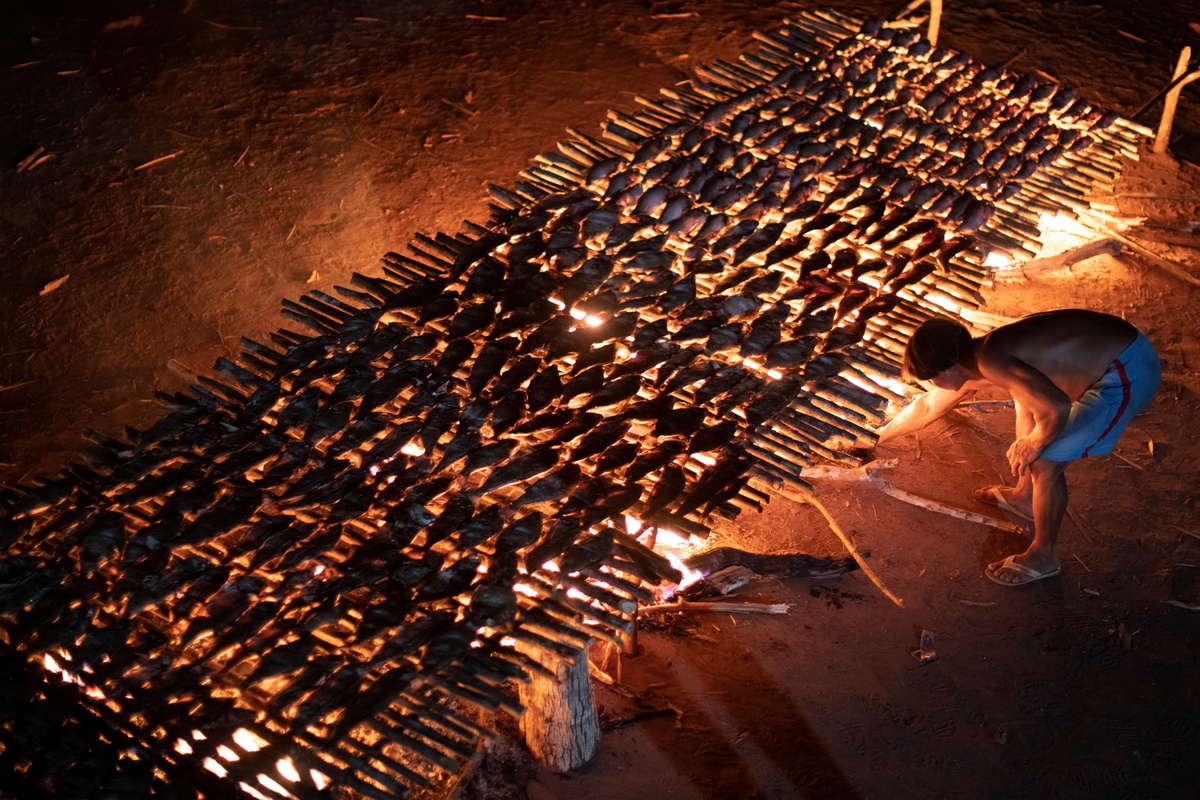
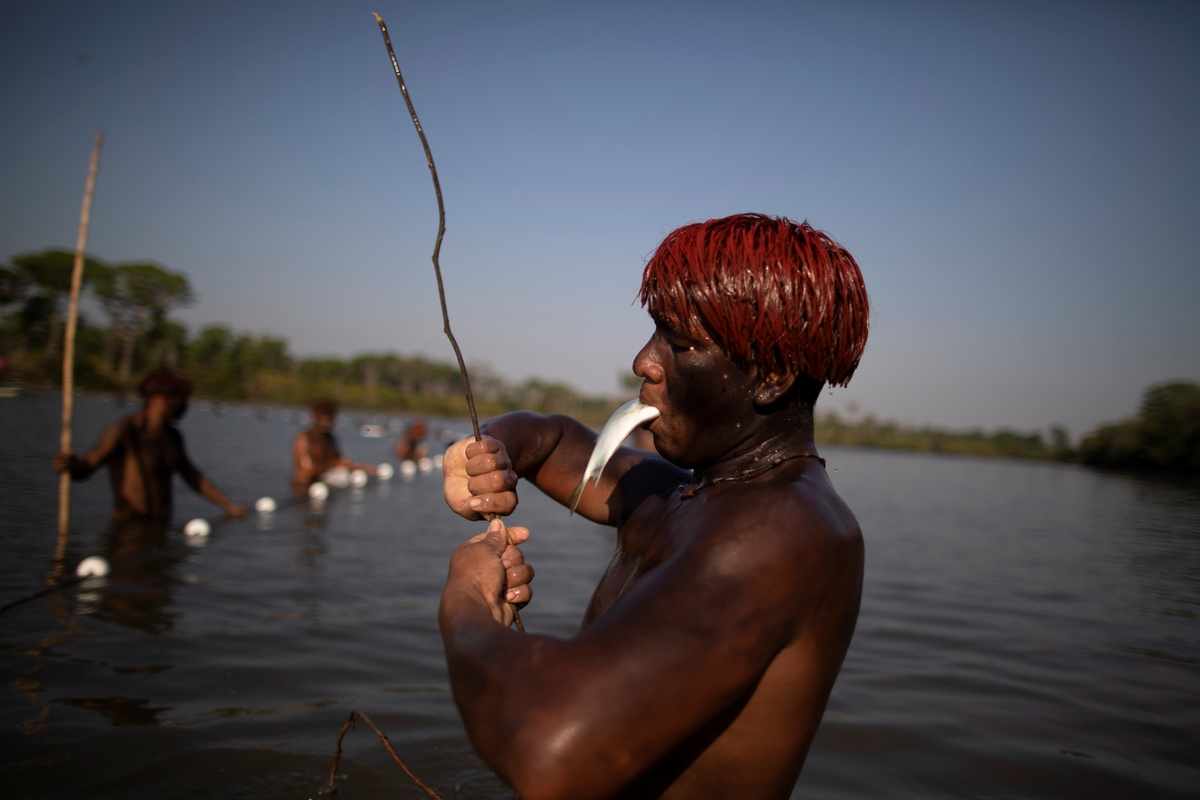
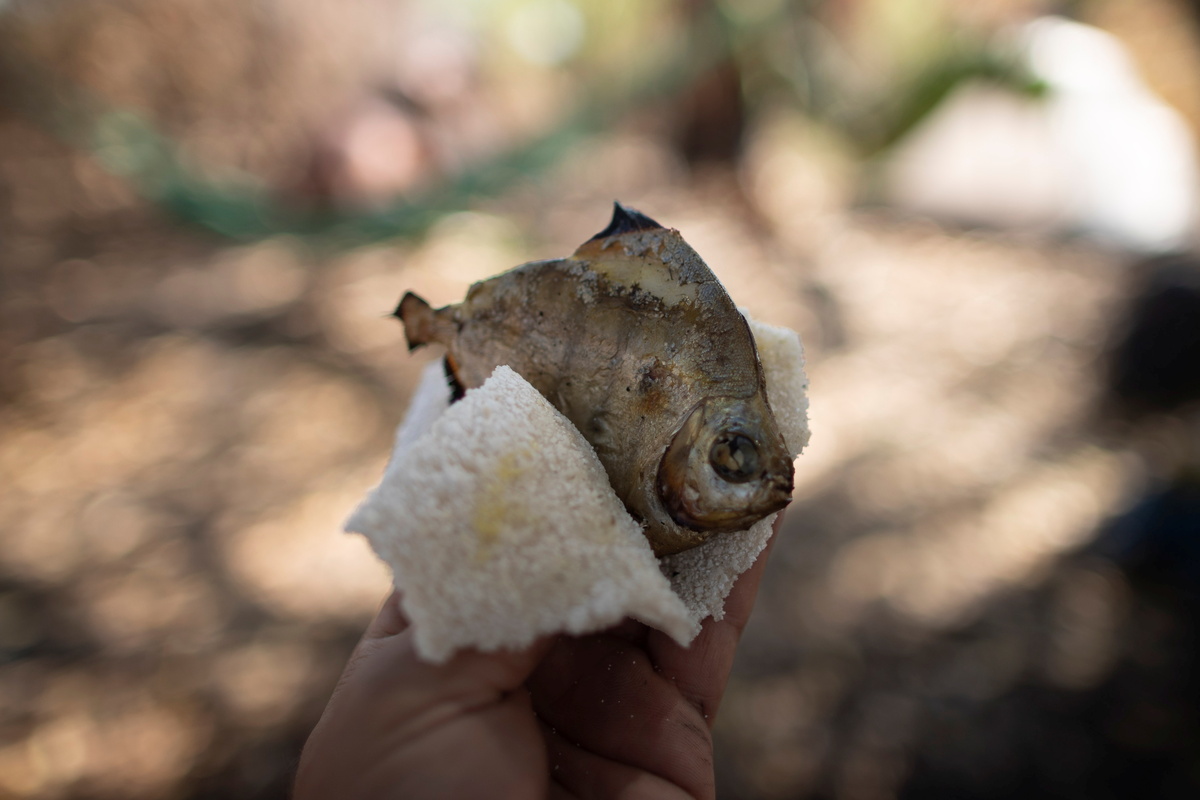
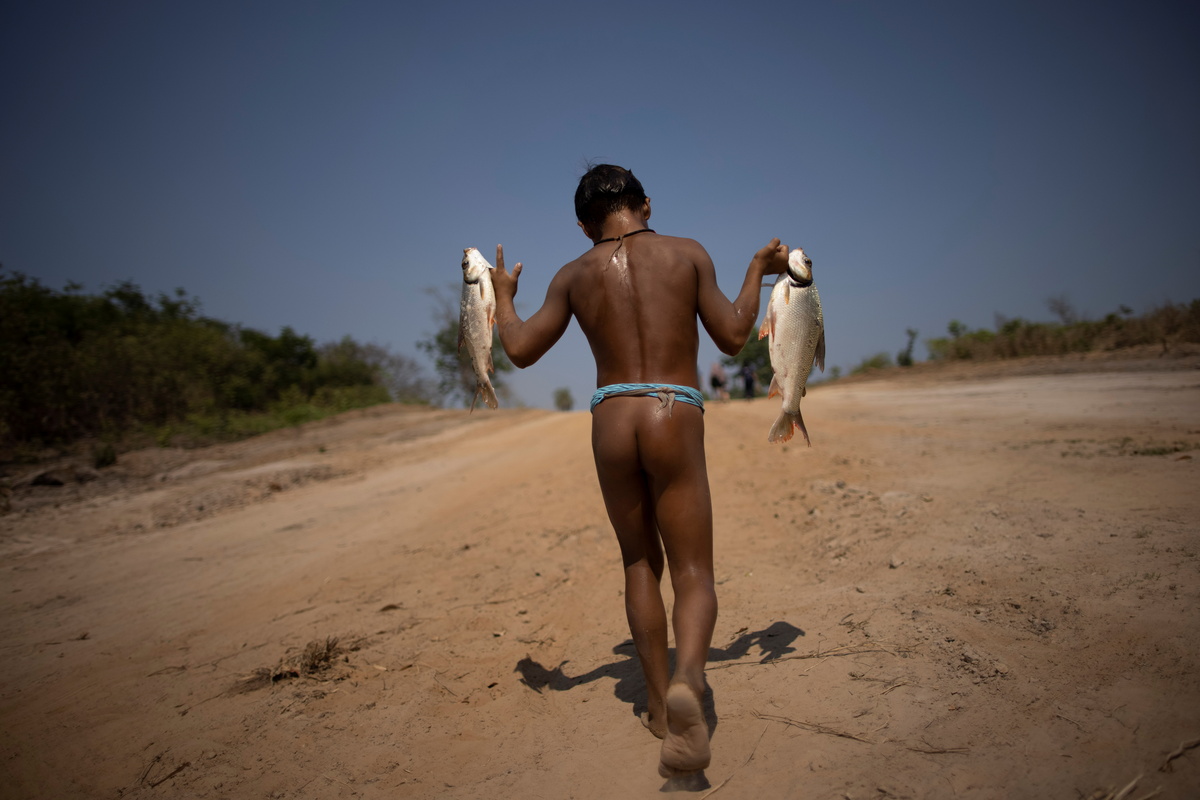
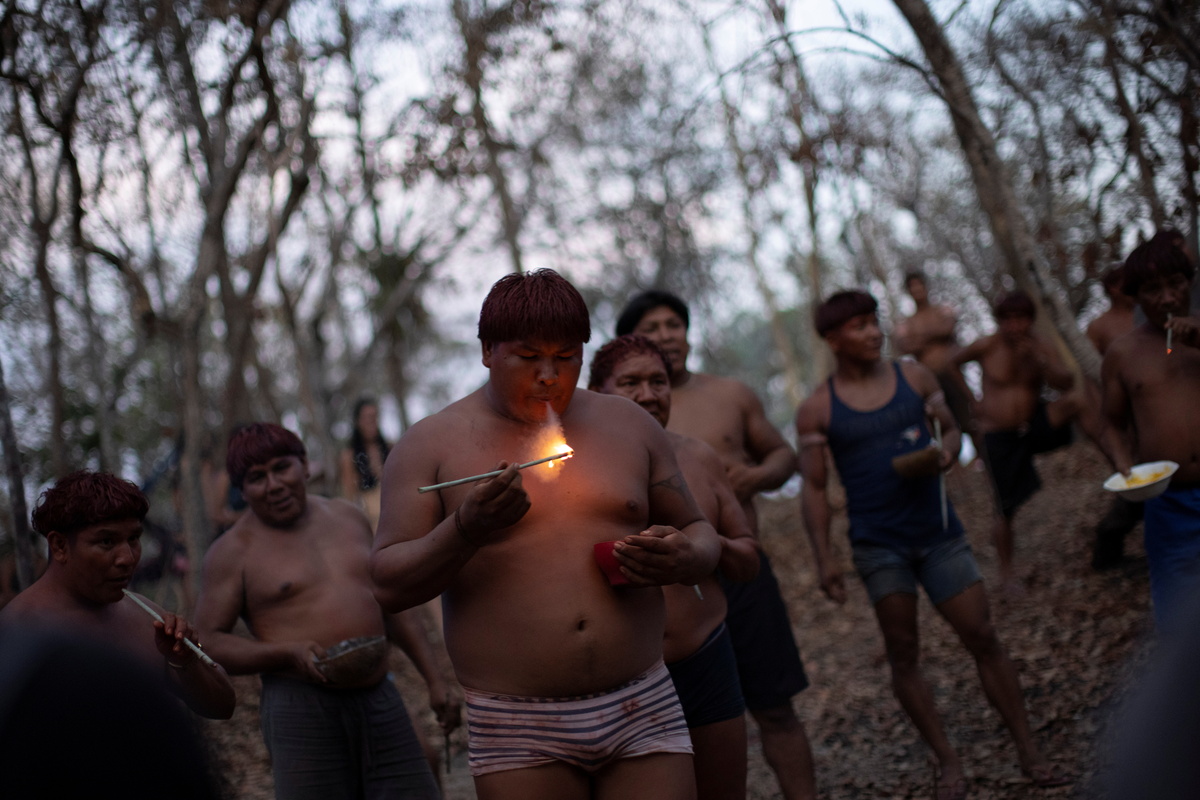
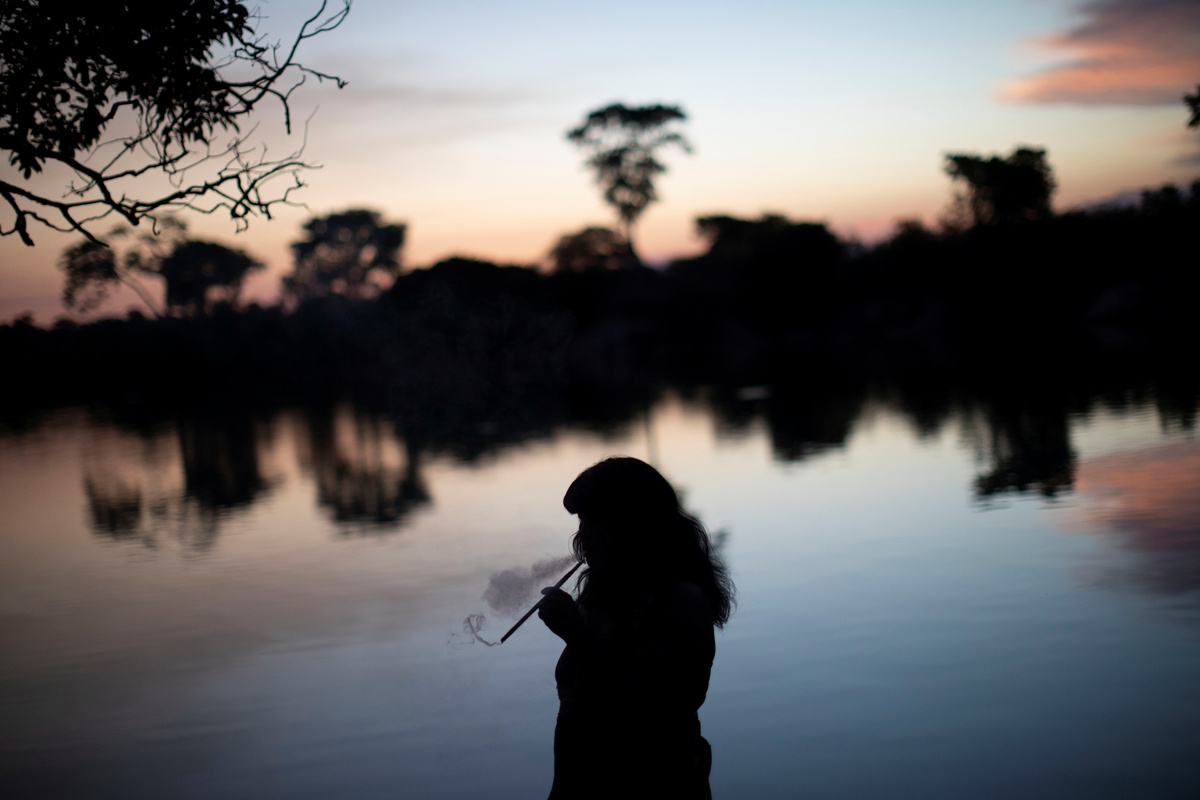
Fish, the tribes' main source of protein, is so vital to the existence of the people of the Xingu that shamans blow smoke from herbs in a religious rite to protect the fishermen from alligators before they cast their nets across the river.
The villagers then feast on the fish cooked on a large open fire and served on pancakes called beiju made by the women from cassava.
The sun rises behind a tree at the Yawalapiti during the Kuarup funeral ritual to honor the memory of Cacique Aritana, at the Xingu Indigenous Park in Brazil, September 7, 2021. REUTERS/Ueslei Marcelino
The men complain that the fish are less abundant each year, as the river runs lower as the agricultural frontier approaches.
The reservation was created in the upper reaches of the Xingu River in 1961 after a campaign by Orlando and Claudio Villas-Boas. The brothers protected the tribes from advancing settlers by getting legal protection for the first massive indigenous area in South America.
Since then, the ranks of the Yawalapiti have grown from 40 survivors of a measles epidemic in the 1950s to some 300 people today living in large thatched communal houses.
Yawalapiti women perform an "end of mourning dance" during the Kuarup funeral ritual to honor the memory of Cacique Aritana, at the Xingu Indigenous Park in Brazil, September 9, 2021. REUTERS/Ueslei Marcelino
Aritana was chosen to be the overall chief of the Xingu tribes by Orlando Villas-Boas because of his wisdom, leadership and diplomatic skills, his son Tapi said.
The fallen chief was one of 12 people in the community killed by COVID-19, most of them elders who took with them knowledge of the Yawalapiti's past, including the stories and songs that have kept their culture alive.
All adults in the community have now been vaccinated against the coronavirus.
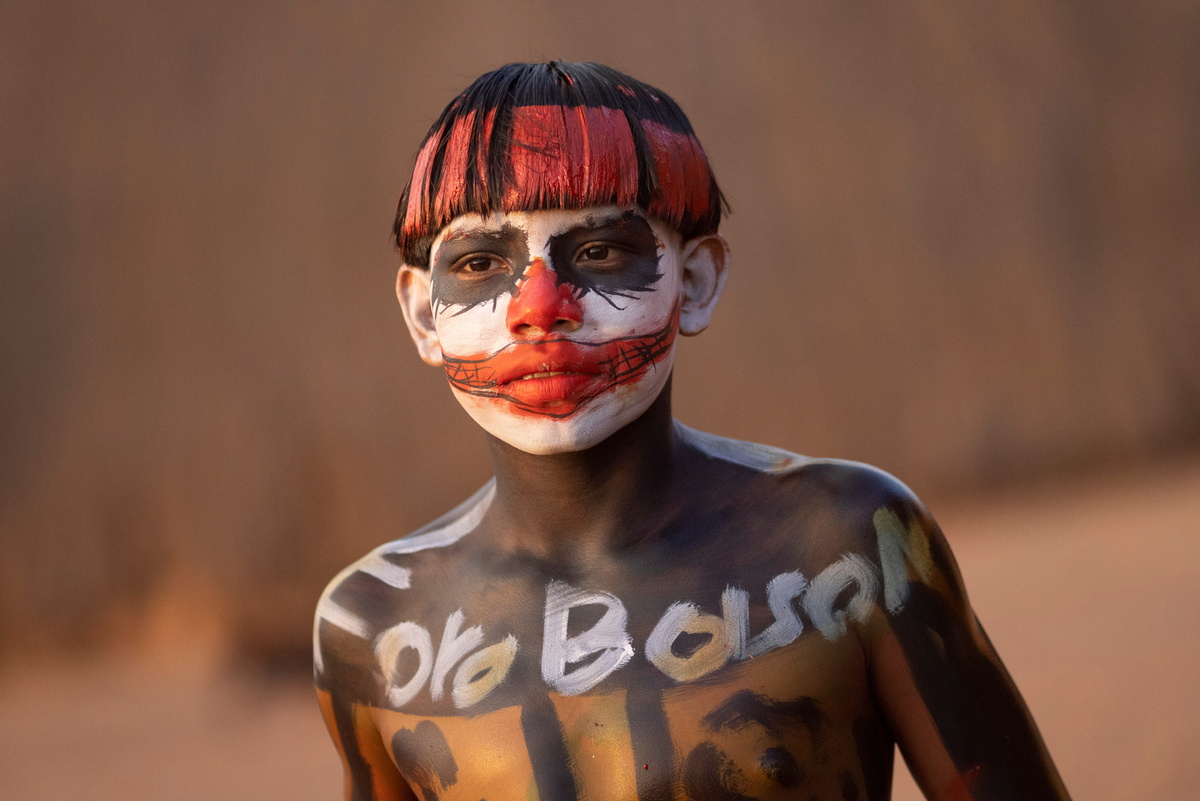
A Yawalapiti boy takes part in a protest against the Brazilian President Jair Bolsonaro during the Kuarup funeral ritual to honor the memory of Cacique Aritana, at the Xingu Indigenous Park in Brazil, September 12, 2021. REUTERS/Ueslei Marcelino
Women cried for days while mourning the death of Aritana and three other tribal elders. Men paraded across the earthen plaza of the village blowing long bamboo trumpets.
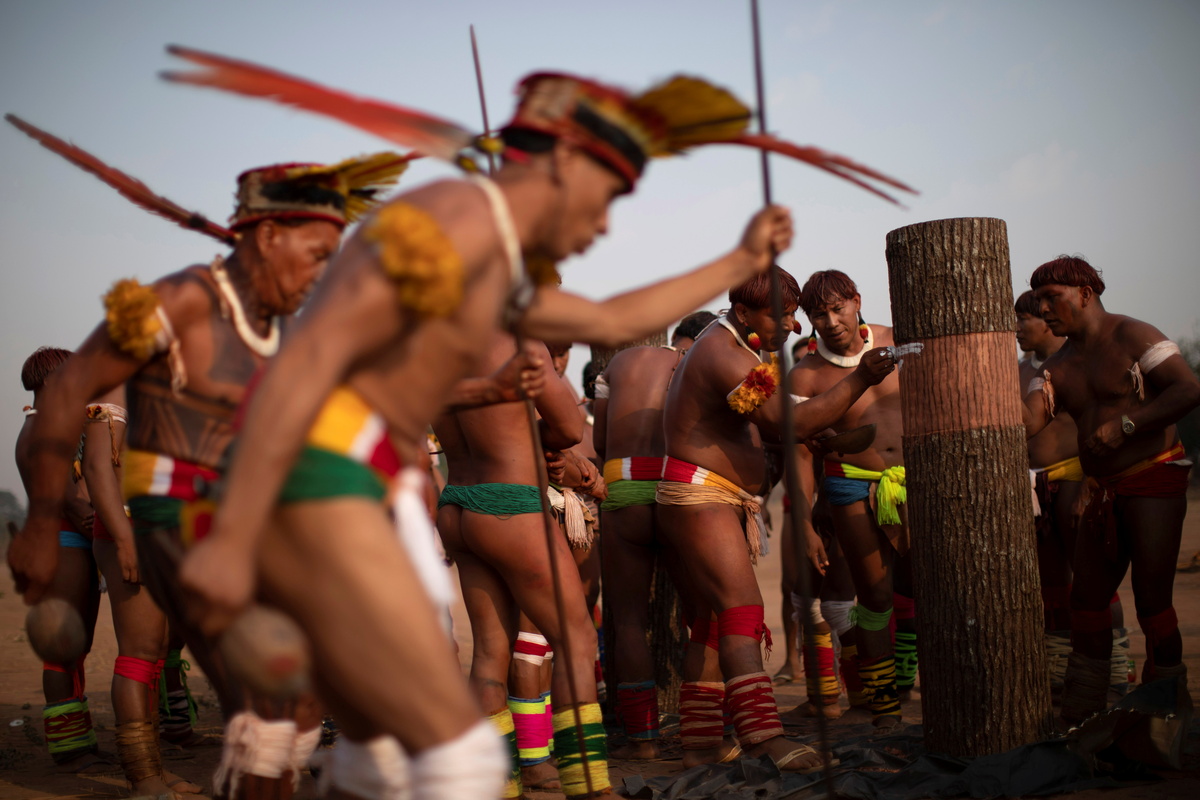
The spirits of the dead were honored with four painted tree trunks placed at the center of the circular village.
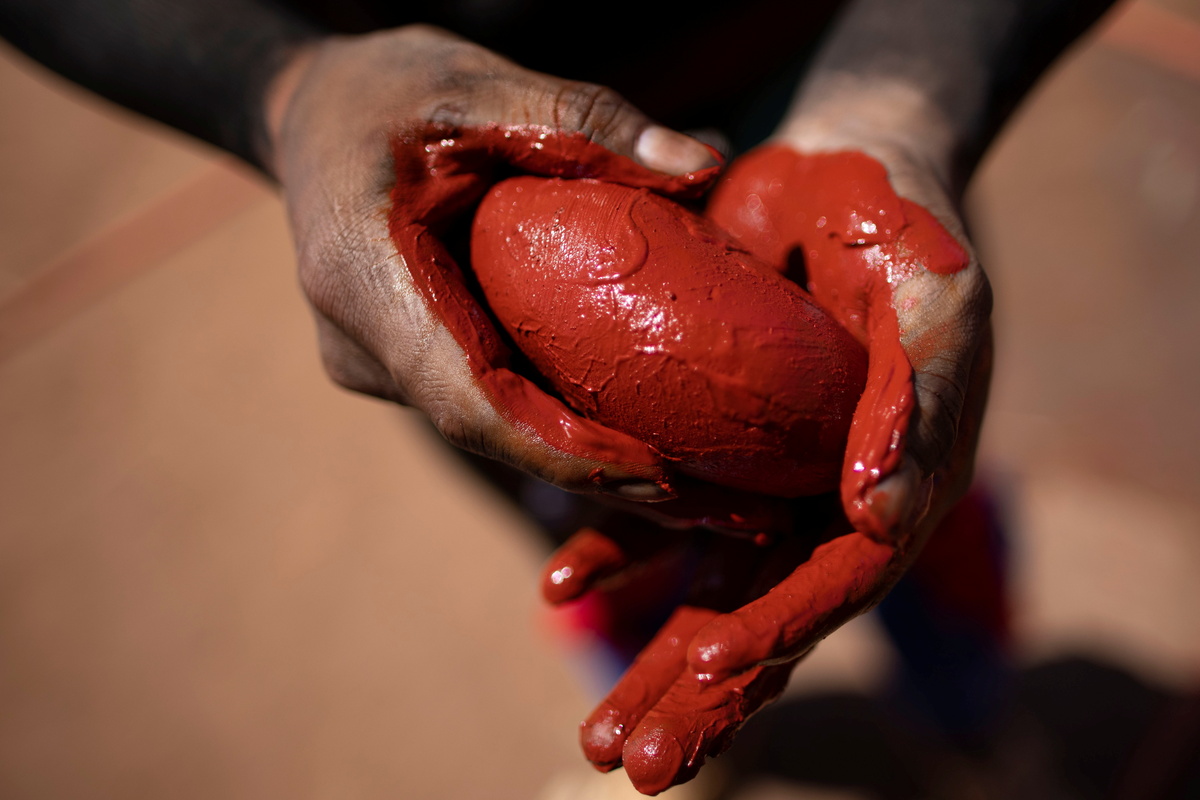
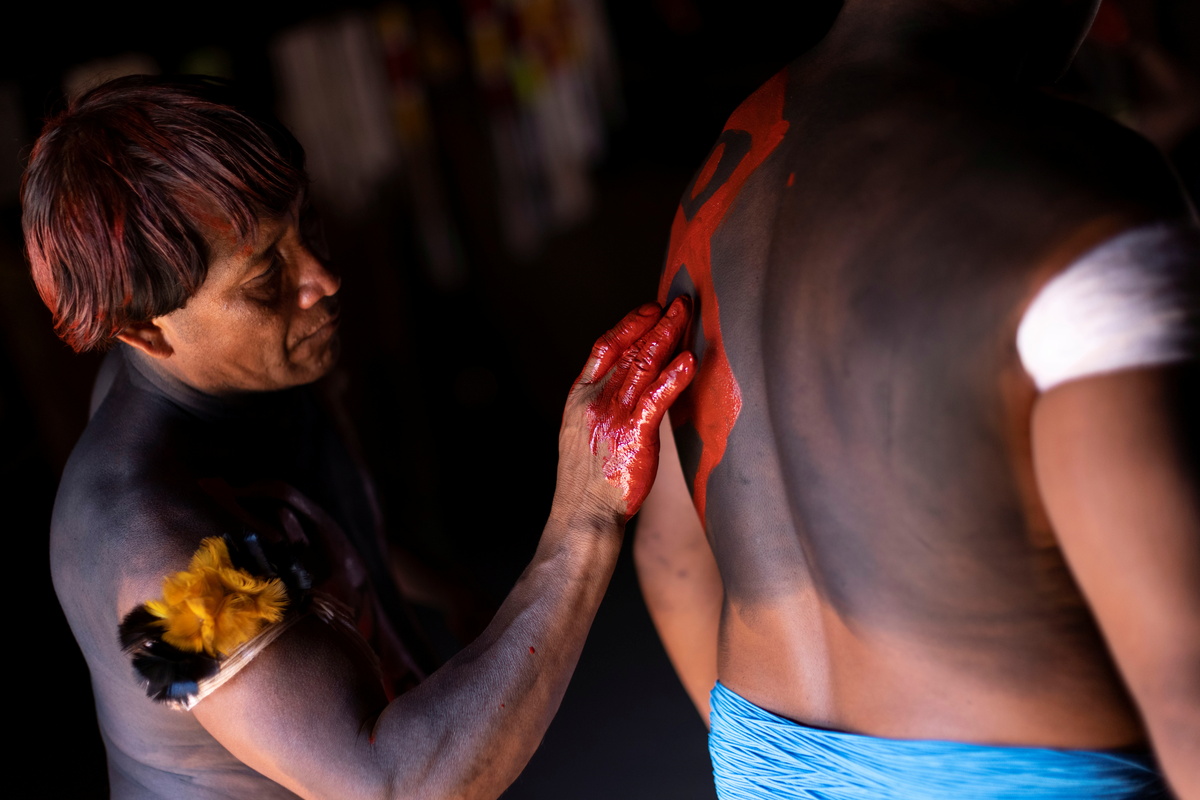
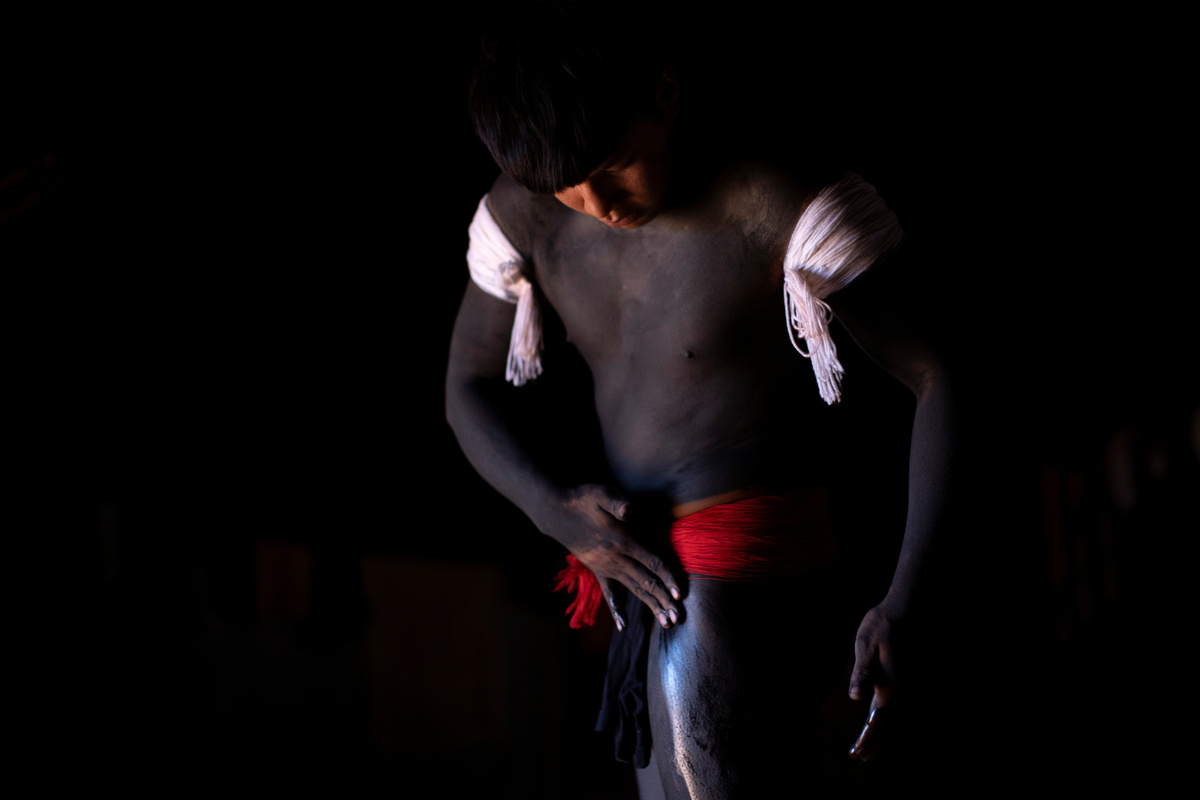
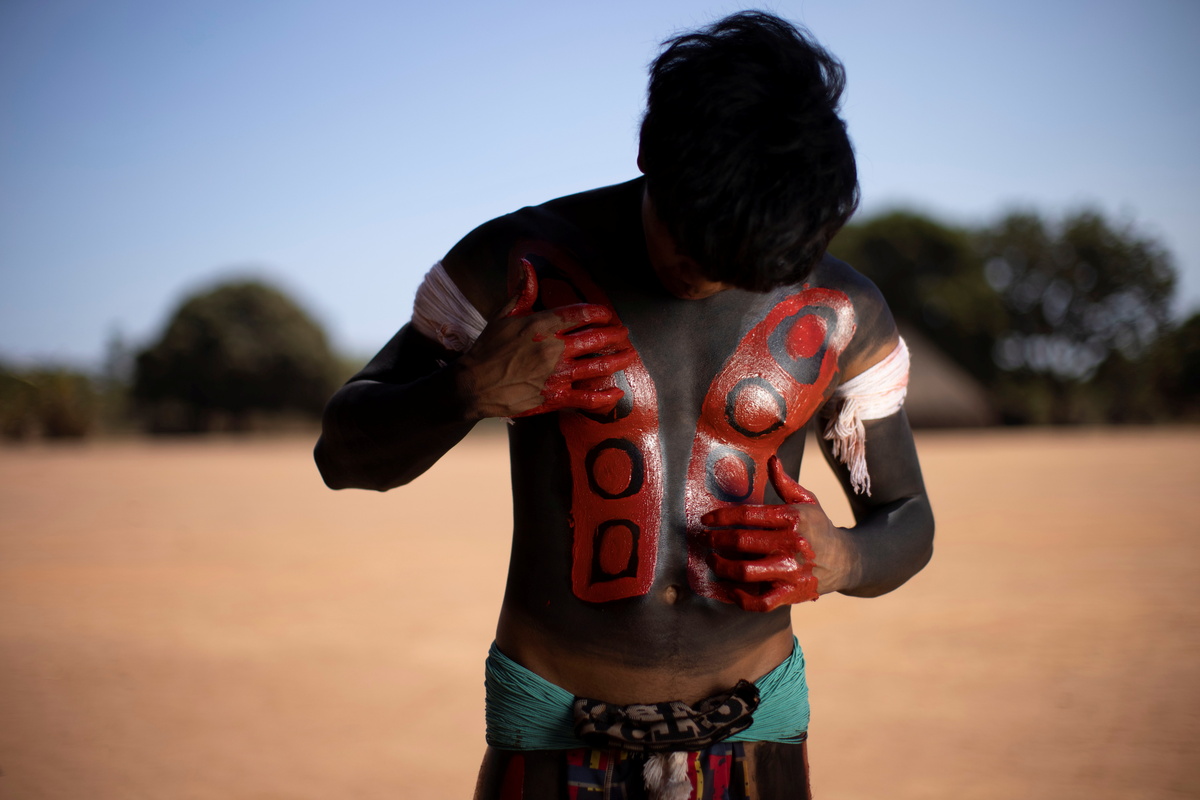
The men panted their bodies with black paint from the fruit of the jenipapo tree and a bright red dye made with urucum seed that is boiled to form a ball of paste.
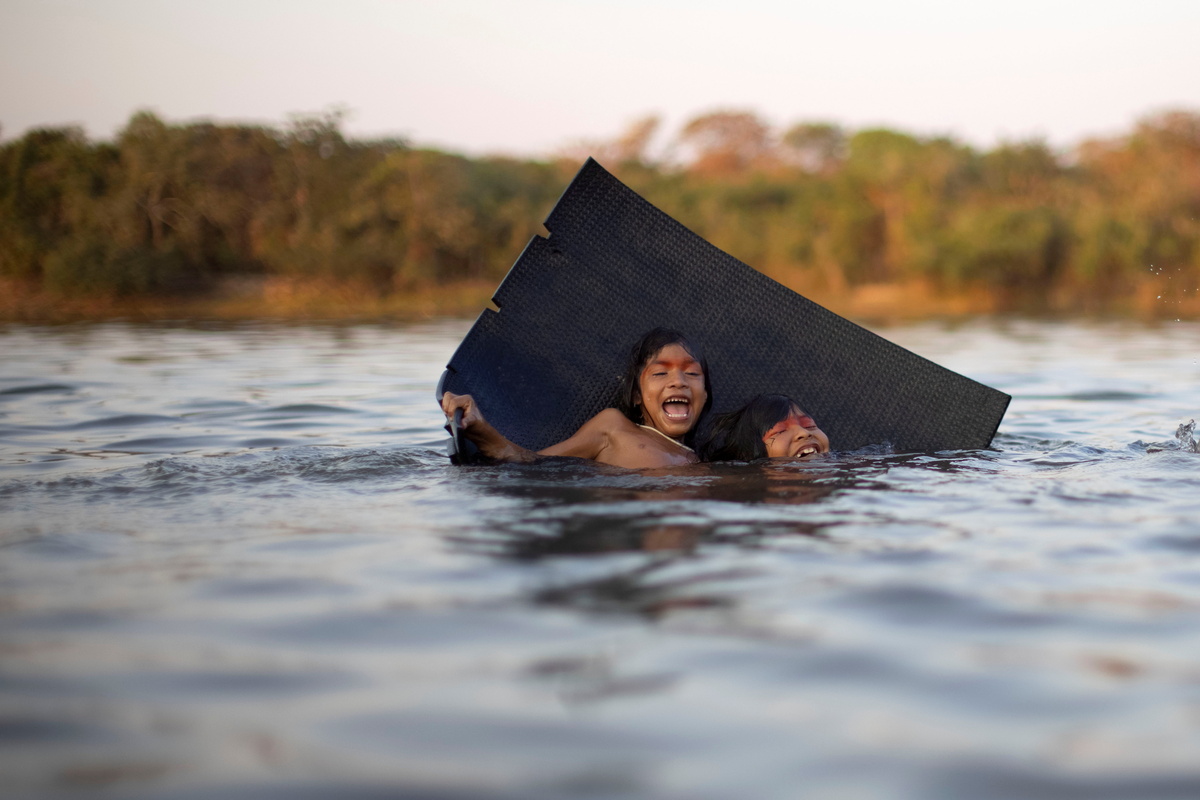
Yawalapiti children play in the Tuatuari river during the Kuarup funeral ritual to honor the memory of Cacique Aritana, at the Xingu Indigenous Park in Brazil, September 10, 2021. REUTERS/Ueslei Marcelino
Contemporary sensibility mingled with tradition. One boy's face paint recalled Batman's nemesis the Joker and a political message was written across his chest: "Out with Bolsonaro."
The Kuarup ritual builds to a climax with a martial arts competition between colorful warriors from nine tribes, who first stomp around the central area of the village in a war-like dance before wrestling begins.
"After hours of weeping and lamentation, before daybreak, the souls of the dead depart the tree trunks to join their ancestors in the underworld," said Franco.
A Yawalapiti man is seen with a fish tied to his waist at the Tuatuari river, during the Kuarup funeral ritual to honor the memory of Cacique Aritana, at the Xingu Indigenous Park in Brazil, September 6, 2021. REUTERS/Ueslei Marcelino
(Reporting by Ueslei Marcelino; Writing by Anthony Boadle; Editing by Brad Haynes and Lisa Shumaker)
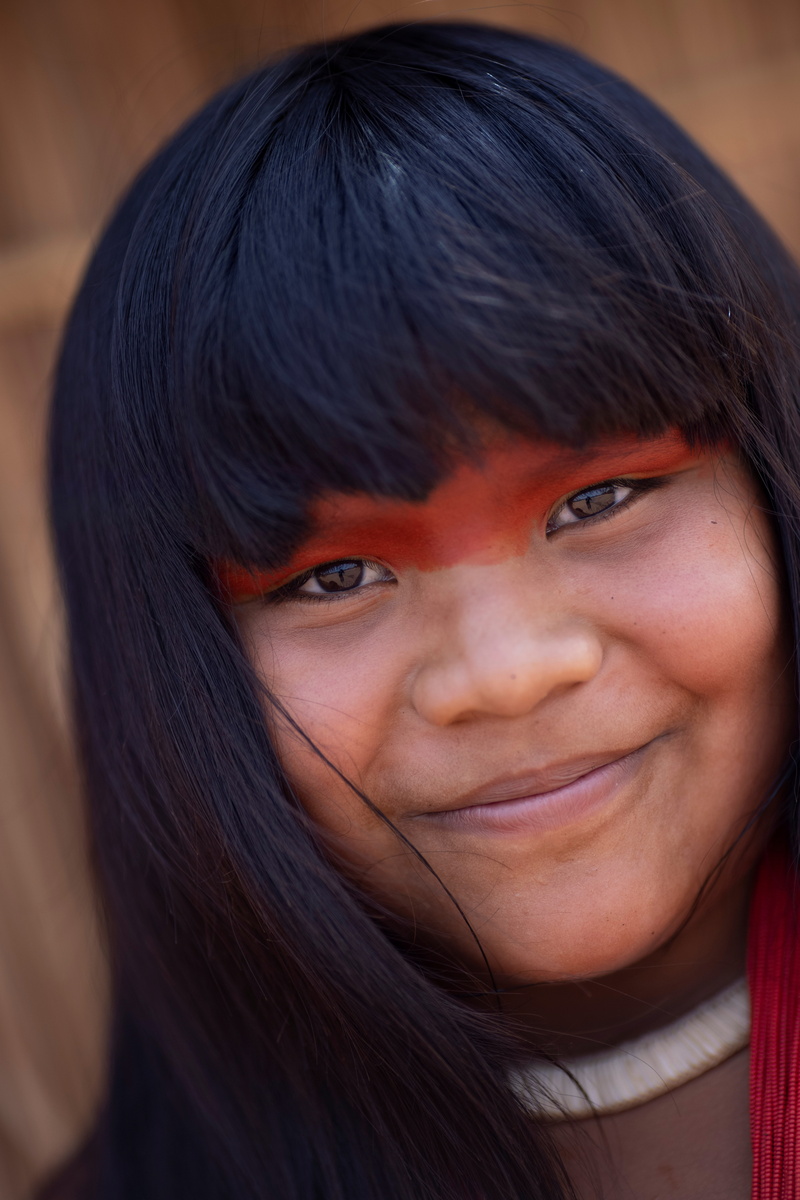
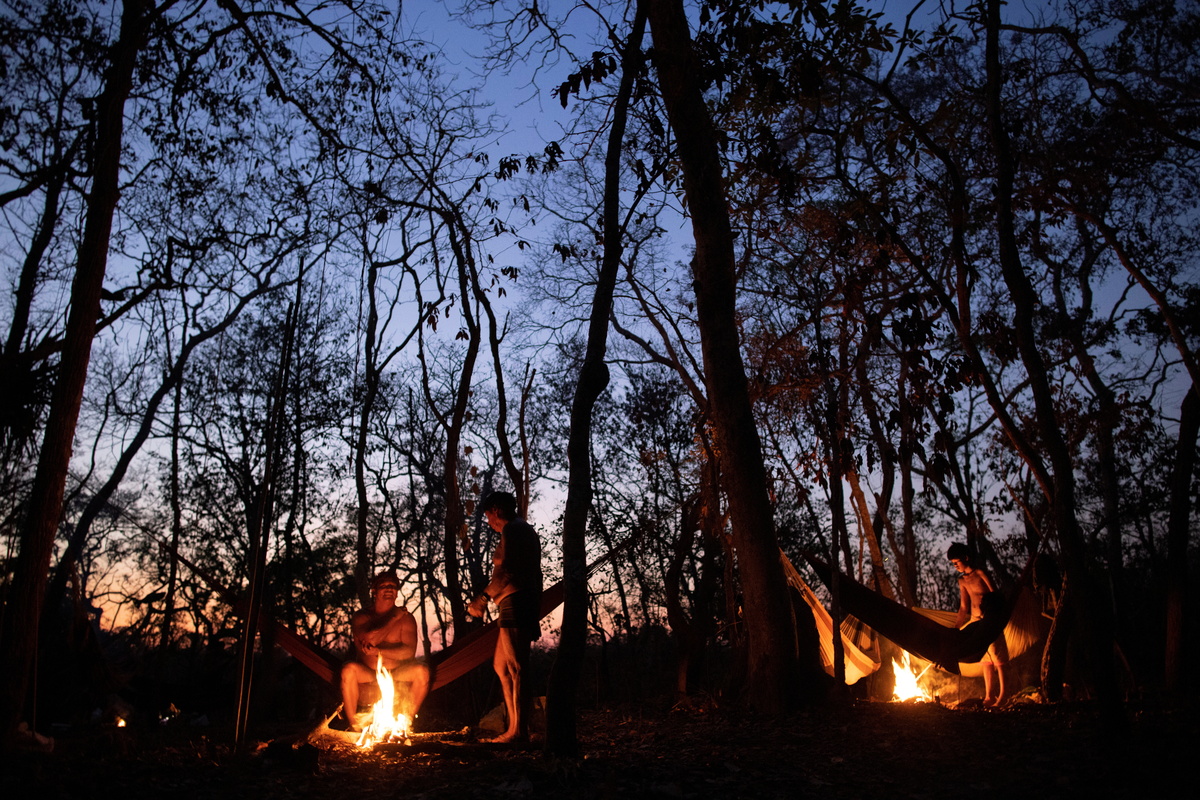
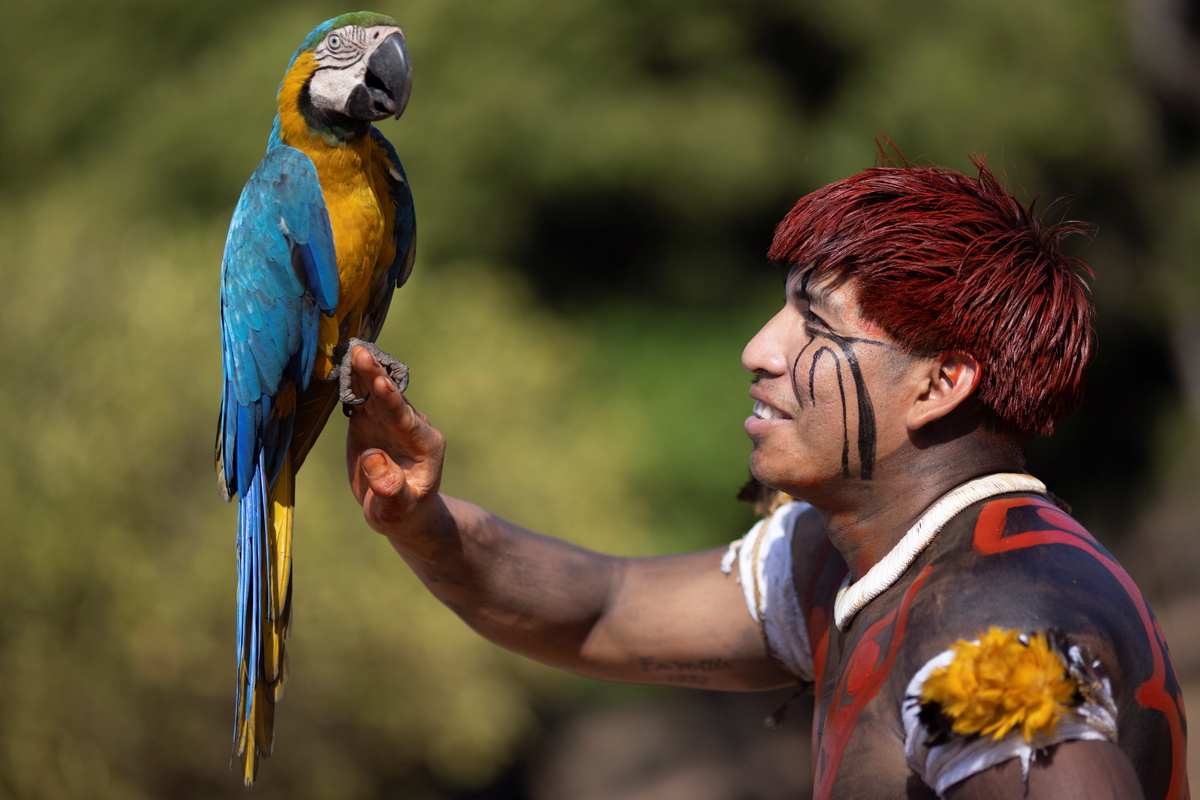
Yawalapiti women carry tapioca bread and fish during the closing of the Kuarup funeral ritual to honor the memory of Cacique Aritana, at the Xingu Indigenous Park in Brazil, September 12, 2021. REUTERS/Ueslei MarcelinoA Yawalapiti man fishes in the Tuatuari river during the Kuarup funeral ritual to honor the memory of Cacique Aritana, at the Xingu Indigenous Park in Brazil, September 6, 2021. REUTERS/Ueslei MarcelinoYawalapiti men decorate tree trunks that are meant to represent distinguished people who have recently died during the Kuarup funeral ritual to honor the memory of Cacique Aritana, at the Xingu Indigenous Park in Brazil, September 11, 2021. REUTERS/Ueslei MarcelinoA Yawalapiti man waits before taking part in a wrestling match during the Kuarup funeral ritual to honor the memory of Cacique Aritana, at the Xingu Indigenous Park in Brazil, September 12, 2021. REUTERS/Ueslei MarcelinoA Yawalapiti man cooks fish during the Kuarup funeral ritual to honor the memory of Cacique Aritana, at the Xingu Indigenous Park in Brazil, September 6, 2021. REUTERS/Ueslei MarcelinoTotomai, a Yawalapiti man, fishes in the Tuatuari river during the Kuarup funeral ritual to honor the memory of Cacique Aritana, at the Xingu Indigenous Park in Brazil, September 6, 2021. REUTERS/Ueslei MarcelinoKanawan, a Yawalapiti man, paints his body during the Kuarup funeral ritual to honor the memory of Cacique Aritana, at the Xingu Indigenous Park in Brazil, September 4, 2021. REUTERS/Ueslei MarcelinoA Yawalapiti man holds manioc bread and fish during the Kuarup funeral ritual to honor the memory of Cacique Aritana, at the Xingu Indigenous Park in Brazil, September 5, 2021. REUTERS/Ueslei MarcelinoTotomai, a Yawalapiti man, plays the urua bamboo flute during the Kuarup funeral ritual to honor the memory of Cacique Aritana, at the Xingu Indigenous Park in Brazil, September 4, 2021. REUTERS/Ueslei MarcelinoYawalapiti men decorate tree trunks that represent distinguished people who have recently died during the Kuarup funeral ritual to honor the memory of Cacique Aritana, at the Xingu Indigenous Park in Brazil, September 11, 2021. REUTERS/Ueslei MarcelinoTapi Yawalapiti, a Yawalapiti cacique (chief), poses for a photo during the Kuarup funeral ritual to honor the memory of his father Cacique Aritana, at the Xingu Indigenous Park in Brazil, September 11, 2021. REUTERS/Ueslei MarcelinoMen from various tribes wrestle during the Kuarup funeral ritual to honor the memory of Cacique Aritana, at the Xingu Indigenous Park in Brazil, September 10, 2021. REUTERS/Ueslei MarcelinoMen from various tribes wrestle during the Kuarup funeral ritual to honor the memory of Cacique Aritana, at the Xingu Indigenous Park in Brazil, September 12, 2021. REUTERS/Ueslei MarcelinoMuyu, a Yawalapiti boy, returns from a successful fishing trip at the Tuatuari river, during the Kuarup funeral ritual to honor the memory of Cacique Aritana, at the Xingu Indigenous Park in Brazil, September 7, 2021. REUTERS/Ueslei MarcelinoKel, a Yawalapiti girl, observes an "end of mourning dance" performance, during the Kuarup funeral ritual to honor the memory of Cacique Aritana, at the Xingu Indigenous Park in Brazil, September 9, 2021. REUTERS/Ueslei MarcelinoYawalapiti people play the urua bamboo flute as they dance during the Kuarup funeral ritual to honor the memory of Cacique Aritana, at the Xingu Indigenous Park in Brazil, September 4, 2021. REUTERS/Ueslei MarcelinoMabitchuri, a Yawalapiti child, takes part in an "end of mourning dance" during the Kuarup funeral ritual to honor the memory of Cacique Aritana, at the Xingu Indigenous Park in Brazil, September 9, 2021. REUTERS/Ueslei MarcelinoYawalapiti men take part in a fire ritual during the Kuarup funeral ritual to honor the memory of Cacique Aritana, at the Xingu Indigenous Park in Brazil, September 5, 2021. REUTERS/Ueslei MarcelinoMatare, a Yawalapiti man, smokes herbs during a fishing ritual during the Kuarup funeral ritual to honor the memory of Cacique Aritana, at the Xingu Indigenous Park in Brazil, September 5, 2021. REUTERS/Ueslei MarcelinoMapulu, a Kamayura woman, smokes herbs during a fishing ritual during the Kuarup funeral ritual to honor the memory of Cacique Aritana, at the Xingu Indigenous Park in Brazil, September 5, 2021. REUTERS/Ueslei MarcelinoYawalapiti men gather around fire pits as the sun rises during the Kuarup funeral ritual to honor the memory of Cacique Aritana, at the Xingu Indigenous Park in Brazil, September 6, 2021. REUTERS/Ueslei MarcelinoA Yawalapiti man paints his son during the Kuarup funeral ritual to honor the memory of Cacique Aritana, a Yawalapiti chief at the Xingu Indigenous Park, Brazil September 4, 2021. REUTERS/Ueslei MarcelinoManapu, a Yawalapiti man, holds a blue-and-yellow macaw during the Kuarup funeral ritual to honor the memory of Cacique Aritana, at the Xingu Indigenous Park in Brazil, September 4, 2021. REUTERS/Ueslei MarcelinoKawa, a Yawalapiti woman, is removed from a ceremony after becoming emotional in front of tree trunks that represent distinguished people who have recently died, during the Kuarup funeral ritual to honor the memory of Cacique Aritana, at the Xingu Indigenous Park in Brazil, September 11, 2021. REUTERS/Ueslei MarcelinoKahugui, a Yawalapiti man, carries a panache (headdress) during the Kuarup funeral ritual to honor the memory of Cacique Aritana, at the Xingu Indigenous Park in Brazil, September 4, 2021. REUTERS/Ueslei MarcelinoKahugui, a Yawalapiti man, paints his body during the Kuarup funeral ritual to honor the memory of Cacique Aritana, at the Xingu Indigenous Park in Brazil, September 4, 2021. REUTERS/Ueslei MarcelinoYawalapiti men perform an "end of mourning dance" during the Kuarup, a funeral ritual to honor the memory of Cacique Aritana a Yawalapiti chief, at the Xingu Indigenous Park, Brazil September 4, 2021. REUTERS/Ueslei MarcelinoKanawan, a Yawalapiti man, paints his body during the Kuarup funeral ritual to honor the memory of Cacique Aritana, at the Xingu Indigenous Park in Brazil, September 4, 2021. REUTERS/Ueslei Marcelino
Sign up to read this article
Read news from 100’s of titles, curated specifically for you.