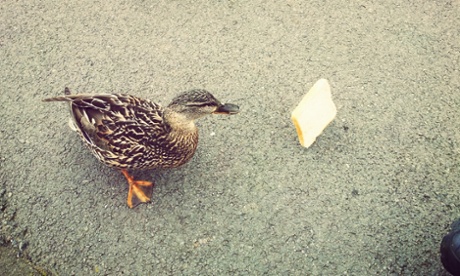
There’s a simple equation that applies at this time of year: bread plus water equals ducks. Lots of ducks. At ponds, canals and riverside beauty spots, children delve into bags filled with crumbs, scattering them towards quacking throngs of ducks and chicks, all flapping and splashing to gobble up the goodies. It’s a timeless scene that conjures up blissful childhood memories for most of us.
That is, unless you’re a bird lover in the know. The fact is that bread isn’t great for ducks, and white bread is the worst. Loaded with carbohydrates but not much else, it’s the avian equivalent of junk food: initially filling, but lacking in the nutrition that growing chicks – and grown ducks – need.
Those brindled brown mothers shepherding a dozen yellowish fluffy ducklings towards your bread bonanza are almost certainly mallards – tens of thousands of them nest alongside the 2,000 miles of waterways looked after by the Canal & River Trust. Like us, mallards thrive best on a varied diet. In the absence of freebies, they feed on grass, weeds, seeds and aquatic plants, as well as worms and even frogs. Overloading them with white bread can induce malnourishment in young chicks. It also teaches them to hanker after the wrong kind of food and prevents them from learning to forage naturally.
Regular feeding at the same spots causes other problems, too. Ducks learn to hang around the most popular feeding sites, creating dependence on handouts and unnaturally large numbers of birds nesting close together. If big groups of males form, they often force females to mate with them, causing distress or even death. In any case, overcrowding can foment territorial aggression and spats between greedy birds, sometimes even directed at the very people feeding them.
When many birds hang around in one place gobbling a carb-heavy diet, they produce a lot of droppings, which can lead to increased algal growth, reducing oxygen in the water and stifling aquatic plants. Droppings can transmit disease such as avian botulism, while mouldy bread may cause lung disease in ducks. And waterways clogged with soggy bread attract pests such as rats, transmitting more disease.
That’s the bad news. The good news is that it’s simple to give ducks what they need – space to thrive and the right food to nurture healthy mothers and their young. Find a spot away from the crowds at a canal or river near you, and take a sensible amount of high-quality feed such as uncooked grains, oats, corn, defrosted peas, chopped lettuce.
Order your free booklet and duck food pouch
To help you and your brood enjoy your duck-feeding days out, Canal & River Trust has created a free booklet packed with duck feeding tips and lots of free fun activities for your little ones to enjoy. Text CANAL to 70060* for a copy and free Quacks Snacks pouch or order online from Canal & River Trust and find out more about the work undertaken by the charity to look after your wonderful waterways in England and Wales.
*This is a charity service for the Canal & River Trust. You will be charged one message at your standard network rate. CRT will be in touch to arrange delivery of your free guide and duck food pouch and to tell you more about their work. If you’d rather the CRT didn’t contact you again in the future, either via phone call or SMS message, please text NOCOMMS CRT to 70060. Charity number 1146792. First Floor North, Station House, 500 Elder Gate, Milton Keynes MK9 1BB.