

It’s the time of year when the baroque makes a comeback. Angels are everywhere, garlands are festooned about the place, and everything that can be decorated, is.
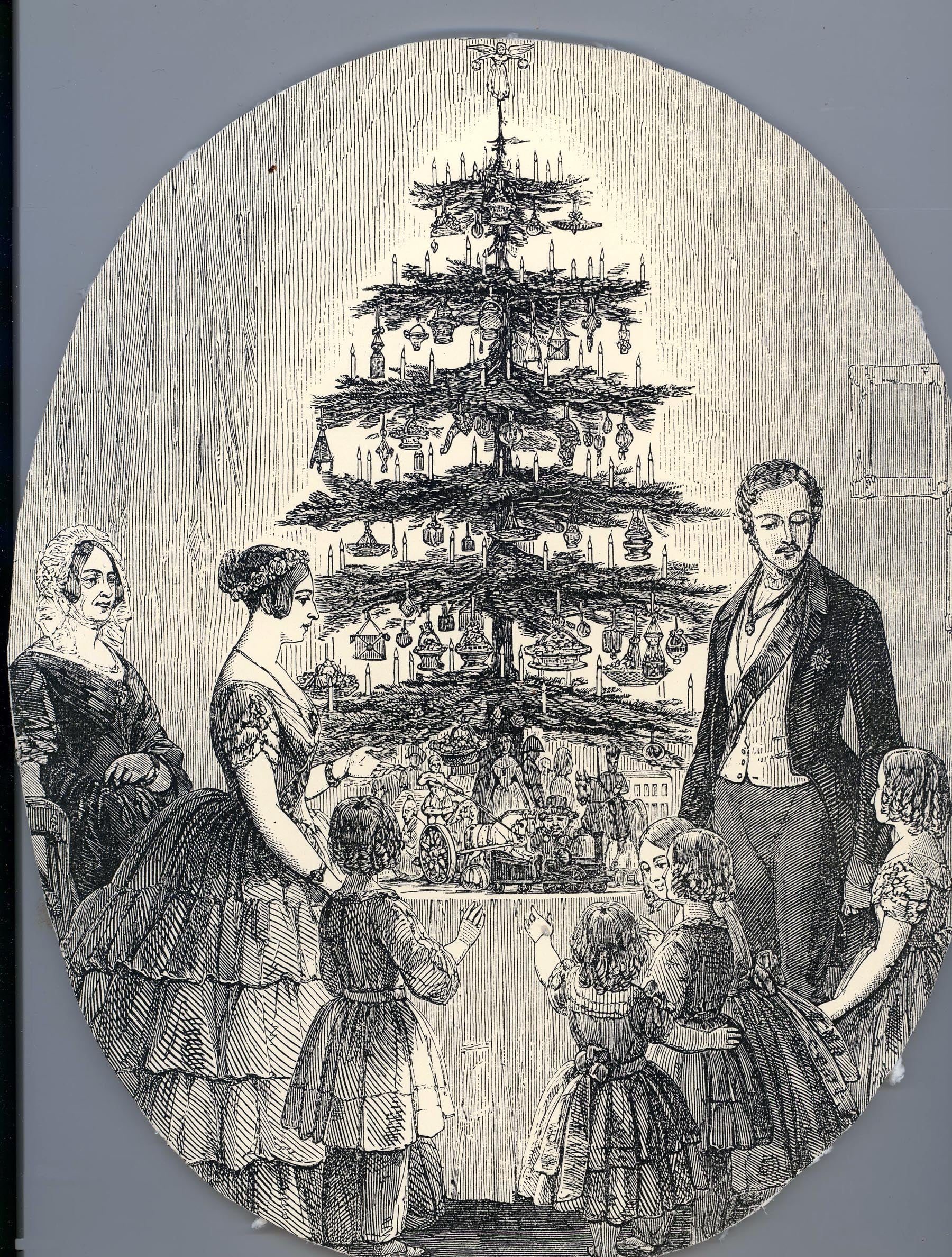
We tend to think of Christmas decorations as a 19th-century idea. In Britain, the first Christmas tree was installed by Queen Charlotte in 1800, and the definitive Victorian Christmas image of the Queen and Prince Consort standing with their children around their tree appeared on the cover of the Illustrated London News in December 1848, launching the German-invented Christmas tree and its attendant decorations into English-speaking popular culture.

Yet the gold and silver, lights and fairies, flamboyance and spectacle of modern decorations echo an art style that existed two centuries before the Victorian age – the over-the-top multimedia experience that was the baroque. Between roughly 1600 and 1750 (the dates vary depending where you look) spectacular baroque architecture, sculpture and painting filled Europe’s palaces, churches and city squares with giant cherubs, pyramidal ornaments, lashings of gold and opulent baubles.
If you think your Christmas tree looks bright and festive, consider the Throne of St Peter, created in St Peter’s basilica in the mid 17th century by Gianlorenzo Bernini. Angels swarm in a molten cloud of gold that cascades upward in an art of pure decorative exuberance. Golden rays of light emerge from the heavenly host and instead of fairy lights – which obviously did not exist in 1648 – a luminous window completes the dazzlement.
Christmas decorations remind me of the baroque because there is something so beautifully gratuitous about both. At this time of year we suspend thousands of lights across city streets and trees in public squares. That collective will to party makes us all the heirs of Bernini. In the fountains this baroque genius built in Rome, flowing energetic masses of marble bring life to piazzas in a completely uninhibited way – just like putting up the Christmas decs, but in marble, and for ever.
Modern Christmas decorations echo baroque art in still more precise ways. The Christmas tree is a kind of sculpture, and the shape of fir trees makes it naturally pyramidal, tapering towards the top. This happens to be a favourite form of baroque public art. In the streets of Naples permanent Christmas tree-like decorations made of marble stretch towards the sky. These stupendous guglie were built to celebrate the end of outbreaks of plague. Like Christmas trees, they exuberantly taper upwards and are handsomely decorated.
Cherubs are another Christmas decoration that revives the baroque age. We might hang plastic cherubs on a tree. On the exterior of St Paul’s cathedral in London, Sir Christopher Wren’s baroque architectural masterpiece, gigantic cherubic faces float among fruit and foliage delicately carved from stone. They are London’s greatest Christmas decorations and can be seen all year round.

Our own love of fairy lights and tinsel at Christmas can help to understand the energy and ecstasy of baroque art. Somehow, the bright lights of Christmas are both ridiculous and profound. The over the top urge to decorate is manic and merry, but it also has something truly beautiful and spiritual about it – a sense of wonder. That same sense of wonder flows in the fountains and ceiling paintings of baroque Europe.
Germany created some of the most brilliant manifestations of the baroque, including the music of Bach and Handel, as well as Bavarian architectural marvels such as Edelstetten Abbey. It also invented the Christmas tree. Decorated Christmas trees are recorded in 16th-century Germany, and Protestant tradition even credits Martin Luther with being the first person to put candles on one. Sometimes people in 17th- and 18th-century Germany built wooden pyramids if they couldn’t get a tree. That sounds incredibly similar to the baroque street spires of Naples.
Christmas decorations don’t just happen to look baroque. They are a gift to the modern world from that age of artistic liberation.













_4.jpg)


