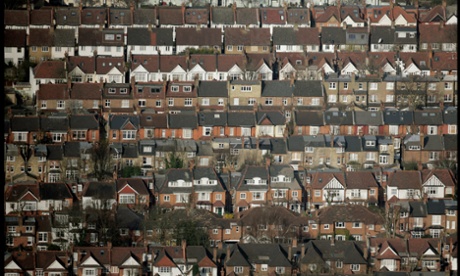
Are the suburbs what make Britain great? Should Reginald Perrin have thanked his lucky stars for a middle-management job, cul-de-sac home and peaceful, if monotonous existence? Daniel Finkelstein writes that Sunshine Desserts – the company that drove Perrin to distraction in the late David Nobbs’s sitcom – represents “the height of civilisation”. He says: “The HR department of a children’s shoe brand has never launched a war. Nobody dies in the creation of advertisements for Kumquat Surprise … the great thing about Britain is our small ideas and our pragmatism, our suburbs and our bourgeois stability.”
And of course he’s right. Suburbia is preferable to war. It’s better to have flying ducks on the wall than a shell-blasted hole in your roof. It is wonderful to live in a country where you can get home, make a cup of tea and put on Gardeners’ Question Time while admiring your own hydrangeas through the window. It’s a nicer life than many in this violent, unequal world.
But it’s not the pinnacle of civilisation, and there’s no reason our quest for fulfilment should end at Acacia Avenue (is that really where Finkelstein himself finds it?) I could invoke Maslow’s hierarchy of needs: once your clothing, food and shelter is looked after, you tend to hanker after something a bit bigger. Something that Sunshine Foods, Human Resources and any amount of Kumquat Surprise is incapable of providing.
Suburbia might look like a comforting embrace, but there’s a risk of suffocation. Among the doubtless millions of contented homemakers, there is dissent. You don’t have to have read all that many misery memoirs to get an idea of how punishing life there can be. Nuclear families frequently explode – but the fallout must be kept quiet, appearances kept up, the casualties tranquillised or sent into exile. As JG Ballard told one interviewer: “Actually, the suburbs are far more sinister places than most city dwellers imagine. Their very blandness forces the imagination into new areas. I mean, one’s got to get up in the morning thinking of a deviant act, merely to make certain of one’s freedom. It needn’t be much; kicking the dog will do.”
It doesn’t have to be kicking the dog, though. The reason I reckon suburbia is part of what makes Britain great is that, without it, huge swaths of our culture would never have come into being. Think of all the artists and writers who were fuelled by suburban ennui, by the feeling that there must be more to life than neatly mown lawns and well-kept porches.
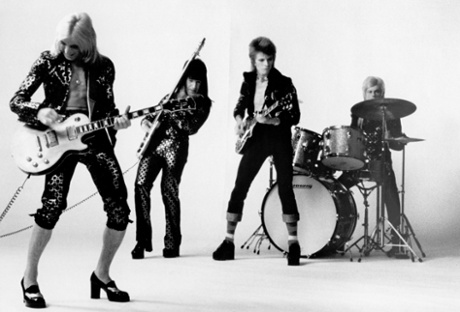
“The rain falls hard on a humdrum town. This town has dragged you down,” sang Morrissey, harking back to the grey streets of his own adolescence. David Bowie felt so constrained by Bromley that London and even New York weren’t enough: he settled on Mars. And speaking of Bromley, the contingent that took the train into town to watch the Sex Pistols spawned Siouxsie and the Banshees, Billy Idol and the New Romantics. We know about John Betjeman’s plans for Slough, an entire town’s worth of suburb, and of its second pummelling at the hands of Ricky Gervais in The Office. David Hockney left the leafy streets of Bradford to make a bigger splash in LA. The suburbs of Hampton were too small to contain the young Lynn Barber, who embarked on a jet-setting romance with a totally unsuitable but (from her perspective) thrillingly urbane man.
The same is evidently true across the Atlantic – where the white picket fence is an enduring emblem for home sweet home gone bad. “Families that live out in the suburbs often make each other cry,” intones Lou Reed, in a heartbreaking song on his album The Bells. David Byrne imagines himself flying over small-town America in an plane. “I wouldn’t live there if you paid me,” he sings. See also: any David Lynch film.
Now, it would be easy to dismiss all this as sneering metropolitanism. A bitter challenge from the left to the idea that “you’ve never had it so good”. After all, the suburbs show that capitalism works, and that families are the building blocks of society. As usual, it’s more complicated than that: even those who make it their mission to escape look nostalgically over their shoulder from time to time.
What it all boils down to is this: if you’re one of those who merrily slots into the niche assigned to them by society, you’ll like the suburbs just fine. But music, literature and film are all driven by those who don’t feel that way. Long may people refuse to settle for life in the shadow of Sunshine Desserts. Without them things would be as boring as blancmange.