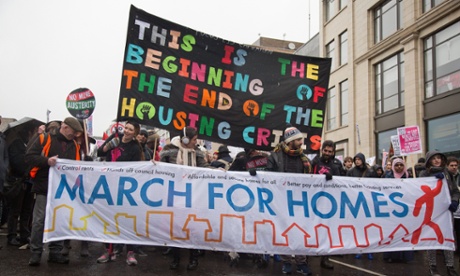
Extending the right-to-buy housing policy to residents of housing association-owned social homes hopes to rekindle the so-called Thatcherite glory days of the 1980s. History promises the Tories an electoral slam-dunk. But times have changed.
Now, the social and economic environment is different: a large, detailed YouGov poll carried out just a week ago tells us that Conservative voters are more likely than Labour voters to disagree with an extension to right to buy, more likely to to consider the £6bn initial cost not a good use of taxpayer money, more likely to oppose tenants getting a 30% discount on their home. Ukip voters are most likely of all to oppose it.
The reason is simple: unfairness. Many of those core Tory and Ukip voters wonder why people who live, often on relatively cheap rents, in good quality social housing should get up to £100,000 of taxpayer’s money to buy their home, when they or more likely, their children, are stuck in poor-quality, high-rent private homes with no chance of getting on the property ladder, or even into social housing.
This is a policy where Tory strategy potentially backfires. You spend five years impressing on your core voters that no one – especially not “undeserving” recipients of social security - should get “something for nothing” - and then the narrative changes jarringly, with an electoral promise to do just that.
The unfairness issue means few think right to buy is a good idea. The same YouGov poll of 8,000 UK adults, for the National Housing federation found just 16% of all voters think it is the best way of tackling the housing crisis. Homeowners are most likely to consider right to buy unfair (67%). Even among those most likely to directly benefit – housing association tenants – support for the policy runs at just 39%.
A separate, smaller YouGov poll, carried out for the Times in March (1,698 adults) was similarly unpromising: almost a third of Conservative voters opposed the idea, rising to 42% for Ukip voters and 51% among Lib Dems. Outside Scotland, opposition to it was strongest in the south of England, and older voters were more likely to see it as a bad idea.
As a practical policy it is a risky thing to make the centrepiece of your manifesto launch. But as Joe Twyman, head of political and social research at YouGov says the obvious infairness may be less potent than the imagery the policy evokes. “It’s a flagpole on which the Tories want to fly a flag of aspiration and the Conservative values of the past – Thatcher’s greatest hits.”
So if not quite the electoral gold dust, is it the right way to tackle the housing crisis? Not according to the social housing sector. Many within that sector regards is as a contributor to the crisis. Since 1980, nearly 2m homes have been sold under the scheme, while just 345,000 new social properties have been built. When the coalition revamped right to buy in 2012, it promised a one-for-one replacement – but less than half of properties sold have been replaced.
This proposed extension promises to be equally unbalanced in terms of securing newly-built homes. As the National Housing Federation has pointed out, the policy means each right to buy will involve the loss of two social homes because it would be paid for by requiring councils to sell off their highest value properties. The proceeds from council sales would then be given to housing association tenants as a right to buy subsidy, leading to the loss of another home.
The recent experience of one London housing association, Phoenix, illustrates the financial reality. Some 82 of its properties, valued at £12.7m were sold under right to buy. A subsidy of £100,000 to tenants meant proceeds dropped to £7m. A transfer agreement meant a further £5m went to the former landlord Lewisham council. Selling 82 homes gave it enough money to build just 12 new one-bed flats.
Legally, it is not clear that the government could compel housing associations – which are private social enterprises and many of them registered charities – to sell their assets. Some associations have argued that they are “duty bound morally to fight it [a right to buy extension]” and would challenge the policy in the courts if it goes ahead – not least because it would put the viability of their businesses at risk.
Launching his election manifesto, the Tory leader, David Cameron, invoked the Thatcherite idea of “a property-owning democracy”. Yet it is not clear that in high property value areas like London most housing association tenants would be able to afford to buy their home, even with a £100,000 discount. It is not uncommon for private property companies to put up capital to enable a tenant to buy their own home with a legal agreement that they would sell to them as soon as they can.
An estimated one-third of sold-off social homes in London are now owned by private landlords, who rent them out. A Daily Mirror investgation found one millionaire landlord, Charles Gow, whose company owns scores of ex-council flats, is the son of Ian Gow, Thatcher’s housing minister in right to buy’s 1980s heyday.
Meanwhile councils are still picking up the pieces from the previous iterations of right to buy. Last month it emerged that Westminster council, in central London, had spent £20m buying back sold-off council flats in an attempt to ease its chronic social housing pressures. The flats, for which some estimate former tenants would have paid less than £100,000, cost the council an average £419,000 each.