
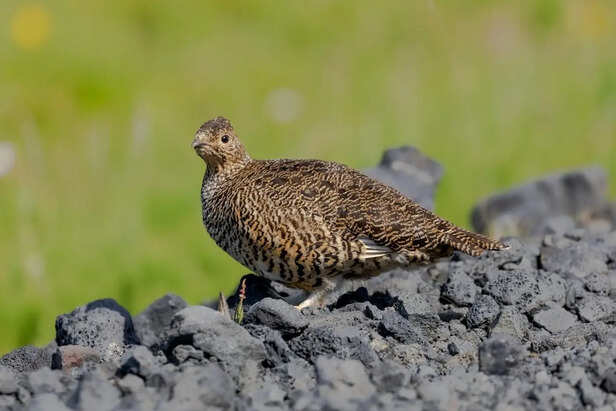
Imagine standing in the snowy mountains of North America, surrounded by endless white landscapes, and looking directly at a bird without even noticing it. That sounds impossible. But hidden high above the tree line lives a small bird that almost disappears into the snow itself. One season it wears bright white feathers like fresh snowfall. Months later, the same bird transforms into brown and grey tones matching rocks and alpine plants perfectly. This mysterious bird is the White-tailed Ptarmigan one of nature’s most fascinating survival experts. And its changing colors are not about beauty. They are about survival in one of the harshest environments on Earth.
The Bird That Turns Invisible in Snow
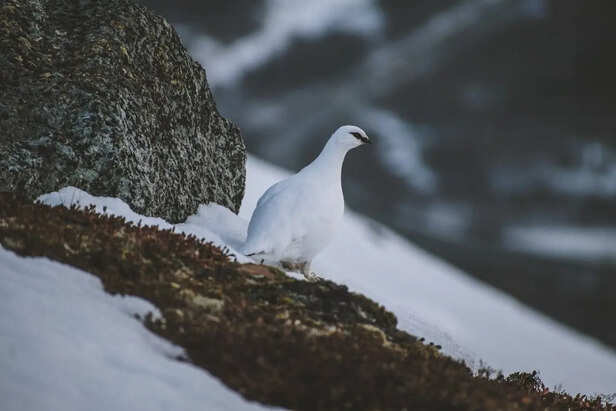
During winter, the White-tailed Ptarmigan grows pure white feathers that blend almost perfectly with surrounding snowfields. Predators such as foxes, hawks, and coyotes struggle to spot it even from close distances. Instead of relying on speed or aggression, this bird survives mainly by remaining unseen. Often, it stays completely motionless when danger approaches, trusting its camouflage to protect it. In harsh alpine regions where escape routes are limited, invisibility becomes a powerful defense strategy. What appears magical is actually millions of years of evolution shaping the perfect survival mechanism for snowy mountain environments.
Why the Bird Changes Color in Summer
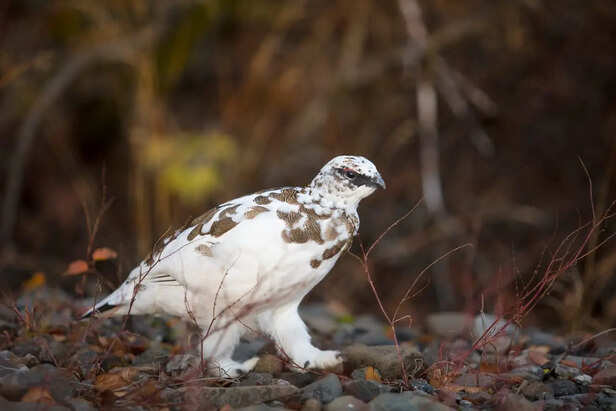
As snow begins melting, white feathers suddenly become dangerous because they make the bird highly visible against dark rocks and alpine plants. To survive, the White-tailed Ptarmigan gradually changes into brown, grey, and speckled tones matching the mountain landscape. This seasonal transformation helps it stay hidden throughout the year. Nature designed the bird to adapt visually to changing surroundings with incredible precision. Scientists consider this one of the most effective camouflage systems in alpine wildlife. Every feather change increases the bird’s chances of surviving in exposed environments filled with predators and unpredictable weather.
The Secret Hidden in Its Feet
One of the most fascinating features of the White-tailed Ptarmigan is hidden beneath its body. Its feet are completely covered with feathers, acting like natural winter boots. These feathers reduce heat loss while helping the bird walk across soft snow without sinking deeply. In many ways, the feet work like built-in snowshoes. This adaptation allows the bird to survive in freezing alpine conditions where many other species struggle. Instead of migrating long distances like most birds, the ptarmigan remains in cold mountain regions year-round, relying on specialized survival traits perfected over thousands of generations.
Why Scientists Are Becoming Concerned
The survival of the White-tailed Ptarmigan depends heavily on stable snow patterns and cold mountain ecosystems. But rising global temperatures are changing those environments rapidly. As snow melts earlier and alpine habitats shrink, the bird’s camouflage becomes less effective. White feathers standing against snowless ground make the ptarmigan easier for predators to spot. Scientists also worry that isolated mountain populations may become trapped as suitable habitats disappear. Since alpine species already live near the highest elevations available, there may eventually be nowhere colder left to escape. The bird’s greatest survival strength could slowly become its biggest weakness.
The Quiet Survival Lesson Hidden in This Bird
Unlike animals that dominate through power, the White-tailed Ptarmigan survives through patience, stillness, and adaptation. It does not fight predators aggressively or outrun danger with speed. Instead, it changes itself to fit the world around it. That quiet survival strategy carries a deeper lesson about nature itself. Sometimes survival does not belong to the strongest creature in the environment. It belongs to the one that adapts best to change. High in the mountains, this nearly invisible bird continues reminding scientists how delicate and intelligent natural evolution truly is.
Celebrate the bond with your pets, explore Health & Nutrition, discover Breeds, master Training Tips, Behavior Decoder, and set out on exciting Travel Tails with Times Pets!