NEW DELHI: So far, six sessions of Parliament have been held ever since the BJP-led NDA government came to power for the second consecutive term under Prime Minister Narendra Modi in May 2019. While Sumitra Mahajan was the speaker of the 16th Lok Sabha, she was succeeded by Om Birla in the current 17th Lok Sabha.
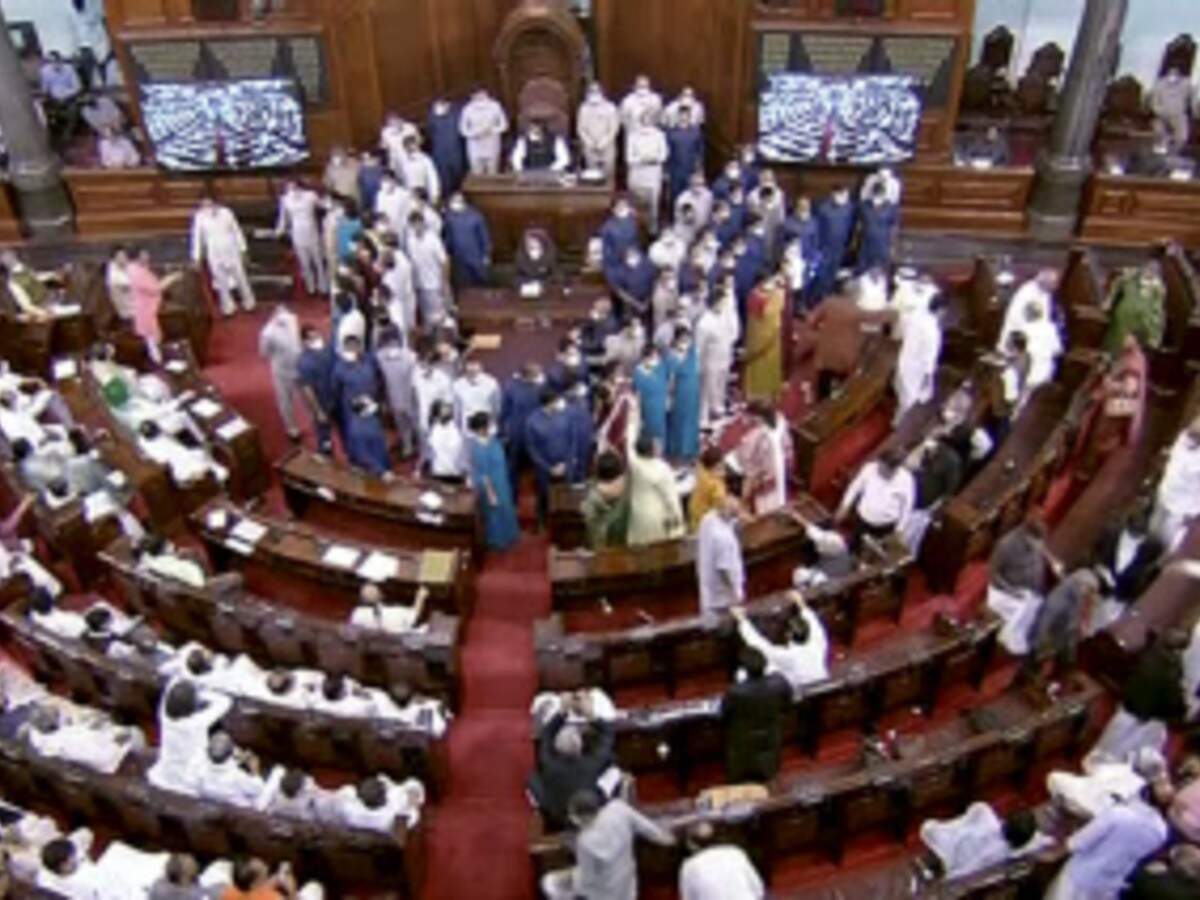
The statistics speak for themselves about the manner in which this session was wasted and so were crores from public exchequer. The performance of both the Lok Sabha and the Rajya Sabha left much to be desired in this session.
No wonder then Vice-President M Venkaiah Naidu, who is also the ex-officio chairperson of the Rajya Sabha, broke down on Wednesday while lamenting the behaviour of some of the members and the poor performance of the House. Om Birla too expressed anguish at the productivity of the Lower House which, he said, was much below expectations.
Of the last six sessions held so far, the fourth session was also not quite productive. However, it had other reasons. Having been held in September last year, it was the first session after Covid-19 hit the country in March 2020. The fourth session had been clubbed as the joint Monsoon and Winter Session of 2020.
Despite several restrictions during the fourth session, first time in the history of Indian Parliament in order to follow the protocols and Covid Appropriate Behaviour, its performance was better than the sixth session on several parameters.
LOK SABHA
In almost all the parameters that were taken into account, the performance of the Lok Sabha in this Monsoon Session has been the worst among the last six sessions.
Number of sittings held
While 37 sittings were held in the first session, 20 in the second, 23 in the third, 10 in the fourth and 24 in the fifth, 17 sittings took place in the sixth session which concluded on Wednesday.
Total number of sitting hours
While the first session sat for 280 hours, the second sat for 130 hours and 45 minutes, third for 110 hours and 15 minutes, fourth for 60 hours and the fifth for 132 hours, the sixth session sat for merely 21 hours and 14 minutes - the least among all the sessions.
Time lost due to interruptions and forced adjournments
Here too the performance of the sixth session was the worst. The total time lost due to interruptions and forced adjournments was the maximum in the sixth session.
While there was no adjournment in the first session, 6 hours and 39 minutes were lost in the second session, 30 hours and 3 minutes were lost in the third session, 3 hours and 51 minutes were lost in the fourth session, there was no adjournment even in the fifth session while a whopping 74 hours and 46 minutes were lost in the sixth session.
Number of hours Lok Sabha sat late to complete listed business
It was the least for the sixth session.
The Lok Sabha sat late for 73 hours and 14 minutes in the first session, 28 hours and 43 minutes in the second, 21 hours and 48 minutes in the third, 23 hours in the fourth and 48 hours and 23 minutes in the fifth session. The Lok Sabha sat for just 2 hours and 12 minutes in the sixth session.
Legislative business
As far as the number of government Bills introduced is concerned, it was 33 in the first session, 18 each in the second and third sessions, 16 in the fourth, 17 in the fifth and the minimum 13 in the sixth session.
In the number of government bills passed, it was 35 for the first session, 14 for the second, 15 for the third, 25 for the fourth, 18 for the fifth and 20 for the sixth session.
Private Members' Bills
Unfortunately, no Private Members’ Bill was either introduced or passed in this sixth session.
Number of matters raised under Rule 377
Rule 377 stipulates that a member who wishes to bring to the notice of the House a matter which is not a point of order, shall give notice in writing to the secretary general specifying clearly and precisely the text of the matter to be raised. The member is permitted to raise it only after the speaker has given the consent and at such time and date as he or she may fix.
While 488 such matters were raised in the first session, 364 were raised in the second, 399 in the third, 183 in the fourth, 405 in the fifth and 231 in the sixth.
Number of matters of Urgent Public Importance raised during Zero Hour
While 1066 matters of urgent public importance were raised during the Zero Hour in the first session, 934 were raised in the second, 436 in the third, 370 in the fourth and 583 were raised in the fifth. Not a single such matter was raised in the sixth session.
Starred questions
If the Covid-affected fourth session is left out because no starred question was admitted in it, the sixth session is the worst performer in asking starred questions.
While 500 starred questions were admitted in the first session, 380 in the second, 420 in the third and 440 in the fifth, 320 of them were admitted in the sixth session.
Similarly, 183 starred questions were answered orally by the concerned minister in the first session, 140 in the second, 98 in the third, 84 in the fifth and the least 66 in the sixth session.
Almost the same is the performance in the case of unstarred questions. While 5711 unstarred questions were admitted in the first session, 4370 unstarred questions were admitted in the second session, 4830 in the third, 2300 in the fourth, 5060 in the fifth and 3680 in the sixth session.
RAJYA SABHA
The performance of the Rajya Sabha in the last six sessions was the worst in the just-concluded Monsoon Session. For the record, it was the 254th session of the Upper House.
The productivity of this session stood at just 28 per cent. It was far below the average productivity of 95 per cent of the Rajya Sabha in the previous five sessions.
Of the 17 sittings in this Monsoon Session, the total time available was 97 hours 30 minutes. However, the Upper House functioned for 28 hours and 21 minutes.
As a result, the time lost due to disruptions was also high at 76 hours and 26 minutes.
The time spent on passing Bills was 45 per cent of the functional time.
The time spent on Question Hour was also a poor 14 per cent of the available time.
Moreover, just 1 per cent of the time was spent on Zero Hour and Special Mentions.