A man in his late 30s isn’t supposed to fancy an 18-year-old woman. It’s predatory, perverted, and downright wrong. Why, then, is it that so many of us diehard Rivals fans are rooting for Rupert Campbell-Black and Taggie O’Hara? A couple with such a vast and glaring age gap – he works with her dad! She calls her mother, “mummy”! She uses words like “willy”! – that it can only be some sort of TV sorcery that has brainwashed viewers into forgetting it’s even really there.
I certainly did while watching the first few episodes in season two of the hit series, which dropped on Disney+ last week. In case you’ve missed the very well-deserved cultural brouhaha, Rivals is based on Jilly Cooper’s 1988 joyous book of the same name about a group of horny and outrageous high society types living it up in the fictional countryside town of Rutshire.
It’s shag central, with more bare bottoms and bad behaviour than anyone could imagine, but coloured through a very distinctly Eighties lens: think bouffant hair, giant shoulder pads, and excessive amounts of taffeta.
Rupert (played by Alex Hassell) is the resident f***boy, a swaggering polo player-slash-MP who we watched last season fall for the adorable, doe-eyed ingenue Taggie O’Hara (Bella Maclean), whose age has been slightly upped for the series (she’s now in her early 20s). Now, after essentially professing his love to Taggie, Rupert is living with his coworker-slash-girlfriend, the more age-appropriate Cameron Cook (Nafessa Williams). But the will-they-won’t-they dynamic persists as Taggie and Rupert share many sweet so-close-snogging moments that have viewers like me on the edge of their seats.
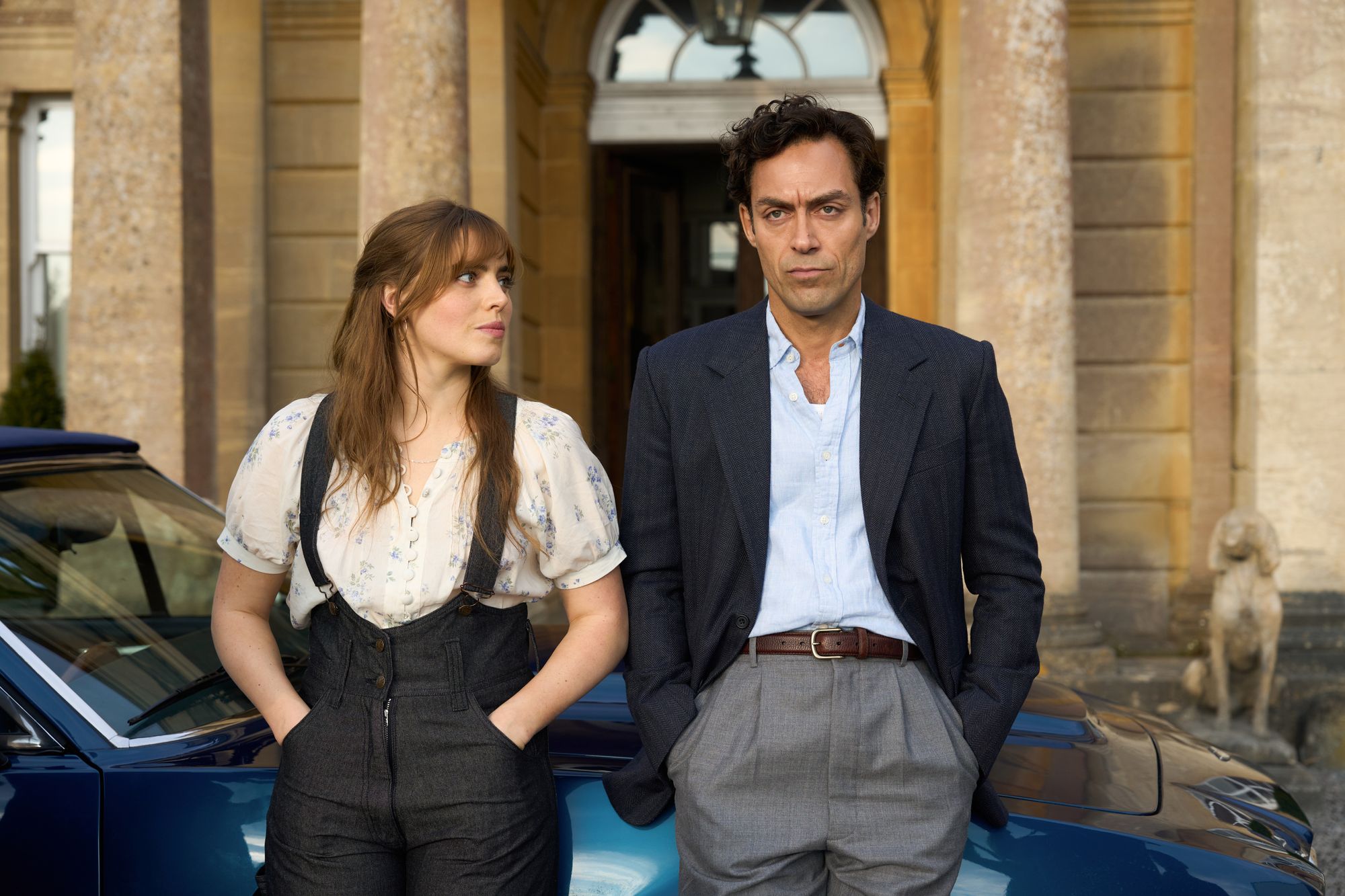
This is despite the fact that I’ve always been rather judgmental of large age gaps, particularly when it’s an older man with a younger woman. My gut instinct tells me someone is being taken advantage of, manipulated, or moulded into someone they wouldn’t have otherwise become. But perhaps Rupert puts it best when he’s challenged on his growing flirtation with Taggie and responds, simply, “What does age even mean? It’s just a number.” It’s a classic retort from a man pining after someone nearly two decades his junior. And yet, I found myself agreeing with him.
It could just be down to very clever writing; so far, Rivals has only elicited positive reviews, with hardly anyone turning their nose up at the age gap between the two romantic leads. Taggie is also a well-formed character; she has agency, and her role in the show extends far beyond the object of Rupert’s desires. And despite his philandery, Rupert also has more heart this season; we see him in his role as the father of young children, which could, in clumsier hands, make his pining for Taggie feel all the more inappropriate. But it only makes us root for him – and his burgeoning romance with Taggie – more.
Perhaps there’s something else going on here in terms of how society views age-gap relationships. Yes, they’re a perennial source of intrigue, debate and fascination, but also of shame and stereotype, one that typically favours men. A man pursuing younger women might have a Lolita complex, but a younger man pursuing older women is generally rewarded as a feminist icon. Meanwhile, a woman who pursues an older man is instantly diagnosed with “daddy issues”, and a woman pursuing a younger man is essentially an embarrassment: desperate cougar at best, delusional Miss Havisham at worst.
My gut instinct tells me someone is being taken advantage of, manipulated, or moulded into someone they wouldn’t have otherwise become
Then there’s the simple matter of generational differences; will a fortysomething be able to understand a twentysomething when one was reared on DVDs and the other on TikTok? Will they find each other’s conflicting cultural diets (Friends versus Em The Nutritionist) exciting or tedious? And what about when it comes to starting a family?
Recently, it feels like these potential concerns might matter less. Consider New York Magazine’s viral feature on age gap relationships from 2023, in which couples with 20-year age gaps and more spoke about the nuances of their relationships, which were healthy, stable, and generally lovely. Then there was Bridget Jones: Mad About the Boy, in which our recently widowed heroine bedded a younger man, resulting in an overwhelmingly positive sexual awakening of sorts.
More recently, there’s Netflix’s Age of Attraction, the reality TV show released earlier this year that saw single people aged 22 to 60 dating one another without revealing their ages – one of the couples from the show is now engaged.
Last month, a viral Vogue article by Eileen Kelly titled “My Boyfriend is Twice My Age” was widely shared. “There is something to be said for a man who’s simply had more time to get his shit together, and my much older boyfriend seems genuinely excited to be with me,” writes Kelly. “Not like he’s biding his time before he can swipe for someone better. He is fully aware that he’s one lucky bastard.” These are solid points, and as a single 31-year-old woman myself who has long tired of dating immature men my own age, I can easily see her reasoning for dating up.
Elsewhere, there’s Alice and Steve, the new Disney+ series about two old friends whose relationship becomes strained when Steve starts dating Alice’s daughter – cue several yikes moments (he went on family holidays with her when she was a child!), but again, somehow, their relationship comes across as sweet and endearing rather than problematic. Again, like with Rivals, you can’t help but root for them.
Are we entering a post-age-gap era? It’s starting to feel that way. Either that or we’ve all been successfully spellbound by the cultural zeitgeist into condoning something we’ve long been conditioned to be suspicious of. But as the discourse rolls on, I’m starting to think Rupert Campbell Black might have a point; in 2026, maybe age really is just a number.