At least I got one thing right. Asked on Radio 2 to predict the headlines the morning after the Olivier awards, I suggested "Matilda waltzes to Olivier triumph". I don't think anyone actually used that precise line (though one of the news agencies came pretty close, but that was the general gist. In the same way that The Artist dominated this year's Oscars, so Matilda walked off with seven Oliviers. I've no problem with that – except, perhaps, that there is something faintly surreal about a Roald Dahl story that is a hymn to the solitary pleasures of reading being turned into a big, glitzy, mass-market musical.
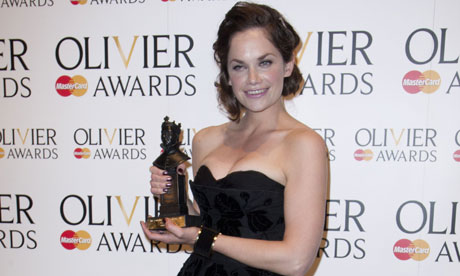
But although the awards this year are pretty sensible – I was especially pleased at the recognition given to Ruth Wilson and the superb revival of Anna Christie – I feel the real story has been missed. When the SWET awards, as they were then known, were set up in 1976, there was a straightforward motive. Commercial producers felt there was a strong bias in the existing Evening Standard Drama awards towards the subsidised sector. They felt the work of the West End was not being acknowledged and decided to set up their own rival ceremony.
Thirty-six years later, what do we find? The awards list is dominated by productions from the RSC, the National, the Donmar Warehouse and the Open Air theatre in Regent's Park. It is true that many of the winning productions transferred to the West End, but they originated elsewhere. Scanning the list, I can find only three awards for work that actually stemmed from the commercial sector: Derren Brown's Svengali for best entertainment, Sheridan Smith for best performance in a supporting role in Trevor Nunn's production of Flare Path and Nigel Harman for best supporting performance in a musical, for his turn in Shrek. Three awards is not much of a tally and, if the evening proves anything, it is the consistent failure of the West End to create, rather than merely showcase, exciting work.
What the Society of London Theatre (SOLT) has really become good at it is self-publicity. I wasn't at the Sunday night ceremony (I wasn't going to miss Homeland for that) but Julian Bird, SOLT's chief executive, said it was "possibly the biggest one-nighter anyone has done ever". But why do the Oliviers feel they have to compete with Broadway's Tony awards or the Oscars? I remember these awards when they started consisted of a very pleasant dinner and modest ceremony at the Cafe Royal: a very British, informal occasion. Now they have become part of standard showbiz razzmatazz. But that, in itself, shows just how much the West End has chosen to model itself on Broadway: the less it has to shout about, creatively, the more noise it feels obliged to make.