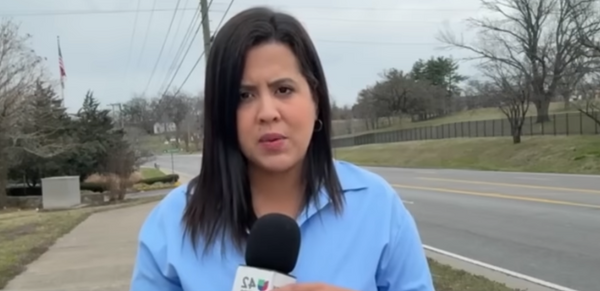
When Bengals head coach Zac Taylor was asked on Monday about the Patriots filming his team in advance of Week 15’s matchup between the two teams, Taylor kept it brief: “No comment, and they are aware.” The “they” in question was the NFL itself, and per Ian Rapoport of the NFL Network, the Pats had reached out to the Browns (Cincinnati’s Week 14 opponent) for a credential for a videographer to shoot a behind-the-scenes piece on one of the New England’s advance scouts — the scouts who travel ahead to diagnose what a future opponent is doing. The Patriots have done several of these types of pieces for their “Do Your Job” series, so on its face, this would seem to be innocuous.
Except that the team in question was the Patriots, who have their own obvious and well-documented history with illegal video. The “Spygate” scandal, in which the Patriots were busted for videotaping the Jets’ defensive coaches’ signals during a 2007 game, is the most recent iteration of the team’s violations of the NFL’s rules regarding these things. Belichick was fined $500,000, the Patriots were fined $250,000, and the team was stripped of its first-round pick in the 2008 draft.
So, there was going to be an odd look to this. On Monday, the team released a statement on its website, in which the team confirmed the nature of the “Do Your Job” project, and also that on December 8, the team sent a three-person video crew to Cleveland’s FirstEnergy Stadium to capture one part of a feature on the Patriots’ scouting department — specifically a pro personnel scout working in the press box.
All well and good, except that while the Patriots got credentials from the Browns to do so, the organization failed to make the Bengals or the NFL aware of the move was not a good look at all. While the Patriots admitted these omissions in the statement, they also called it an “unintended oversight.”
Then, the Patriots admitted that the production crew “without specific knowledge of League rules – inappropriately filmed the field from the press box. The sole purpose of the filming was to provide an illustration of an advance scout at work on the road. There was no intention of using the footage for any other purpose. We understand and acknowledge that our video crew, which included independent contractors who shot the video, unknowingly violated a league policy by filming the field and sideline from the press box. When questioned, the crew immediately turned over all footage to the league and cooperated fully.”
The statement then went on to say that the production crew was independent of the team’s football operations, and that while a Patriots scout was being profiled, the team’s staff “had no other involvement whatsoever in the planning, filming or creative decisions made during the production of these features.”
“We accept full responsibility for the actions of our production crew at the Browns-Bengals game,” the statement concluded.
Had this happened to any other team, one could take the statement on its face and move on. But this is the Patriots, so there are going to be legitimate questions about it. One can ask why the Patriots would spy on the 1-12 Bengals, but the 2007 Jets weren’t much better. They were 3-11 when they faced off against New England that year — also in Week 15 — and finished the season 4-12. The competence, or lack thereof, of an opponent shouldn’t — and won’t — factor into the potential bad acts of an organization, and their subsequent punishments.
And since we’ve brought up “bad acts,” when it comes to the Patriots failing to inform the Bengals of the NFL of their intentions, the league should be within its rights to punish the Patriots not only under its own ethics, but also under the Prior Bad Acts/Other Crimes Evidence statute. Massachusetts law states that while “evidence of a crime, wrong, or other act is not admissible to prove a person’s character in order to show that on a particular occasion the person acted in accordance with the character,” evidence may be used for other purposes, such as “proving motive, opportunity, intent, preparation, plan, knowledge, identity, absence of mistake, or lack of accident.”
The Patriots would obviously argue that their prior bad acts have nothing to do with what they would categorize as a mistake. But given that past, and while the NFL is not bound to recognize any law other than its own, precedent does give the league a bit of weight here when one combines the team’s past bad actions and the withholding of information to both the league and to the Bengals. If any team would strive to be overly careful with aboveboard intentions when it comes to the filming of an opponent’s space in any capacity, it would be the Patriots.
That the Patriots were not completely aboveboard tends to give credence to the “absence of mistake, or lack of accident” arguments. Had they given the league and the Bengals full notice, perhaps the argument could be made that, hey, this was an independent film crew, they didn’t understand the NFL’s specific rules against videotaping opponents, and it was all an honest mistake.
But there’s no way the NFL, or Commissioner Roger Goodell, can do that. Goodell has to weigh this specific incident along with New England’s prior incidents, and it’s been his general practice to make an example of teams and individuals who don’t snap to after they’re caught. When the Patriots were involved in the “DeflateGate” scandal, Tom Brady was suspended four games, the team was fined $1 million, and New England was stripped of its 2016 first-round draft pick, as well as their 2017 fourth-round pick. NFL Executive Vice President of Football Operations Troy Vincent sent a letter to Brady which included this:
“Your actions as set forth in the report clearly constitute conduct detrimental to the integrity of and public confidence in the game of professional football… With respect to your particular involvement, the report established that there is substantial and credible evidence to conclude you were at least generally aware of the actions of the Patriots’ employees involved in the deflation of the footballs and that it was unlikely that their actions were done without your knowledge. Moreover, the report documents your failure to cooperate fully and candidly with the investigation, including by refusing to produce any relevant electronic evidence [emails, texts, etc.], despite being offered extraordinary safeguards by the investigators to protect unrelated personal information, and by providing testimony that the report concludes was not plausible and contradicted by other evidence.”
In this letter, Vincent made it clear that conduct detrimental and public confidence in the game were two primary factors in the NFL’s particular punishment. This jibes with Goodell’s history. Adding that it was unlikely Brady didn’t know of the actions of the team’s employees gives Goodell a precedent in this case — whether the three-person film crew was acting at the team’s behest or not, the NFL wasn’t going to look the other way despite an argument that there was no prior knowledge of a bad-faith act. That the Patriots appear to be acting in cooperation with the league in turning over the video evidence probably won’t work in their favor as much as the failure to inform the league and the Bengals will work against them — especially given the team’s history.
So, what’s a likely punishment for this? The NFL could easily take away New England’s 2020 first-round pick, as well as additional draft picks. Since there was no known player or coach specifically involved in the taping, a fine is far more likely than any kind of suspension. Whatever the cost to the Patriots, expect it to be high — no matter the team’s specific knowledge or involvement at the time.