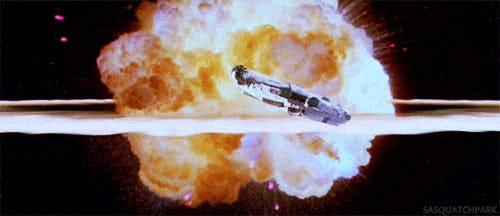
What makes for a realistic explosion in space? In 1976, when pyrotechnic artist Joe Viskocil blew up the Death Star, he noted that “No one has actually seen a space station or ship blown to smithereens.” This is still true today. While astronomers have observed supernovas (as a speck of light), and nuclear weapons have been detonated in low Earth orbit, and of course, actual spacecraft have exploded during launch, the notion of something like a moon-sized space station blowing up from the inside is the kind of thing that only exists in movies or TV series that rely heavily on VFX.
Today, nearly all spaceship sci-fi explosions in movies (or TV shows) are handled digitally, which is, of course, much safer than blowing up plastic or wood or fiberglass models inside a warehouse. And, for on-set explosions, like the decimation of Blofeld’s base in the 2015 James Bond film Spectre, you still need to set off real explosions. In fact, Spectre entered the Guinness Book of World Records for the largest film stunt explosion of all time, proving that things that go boom on movie sets are still an art form that is very much alive. And yet, a close relative of the on-set, full-scale explosion is basically extinct: The miniature explosion — a term that sounds like a joke — is basically a thing of the past. And what’s odd about this single piece of sci-fi tech is that none of your favorite movies could exist without it. And like many historical VFX milestones, we have Star Wars to thank.
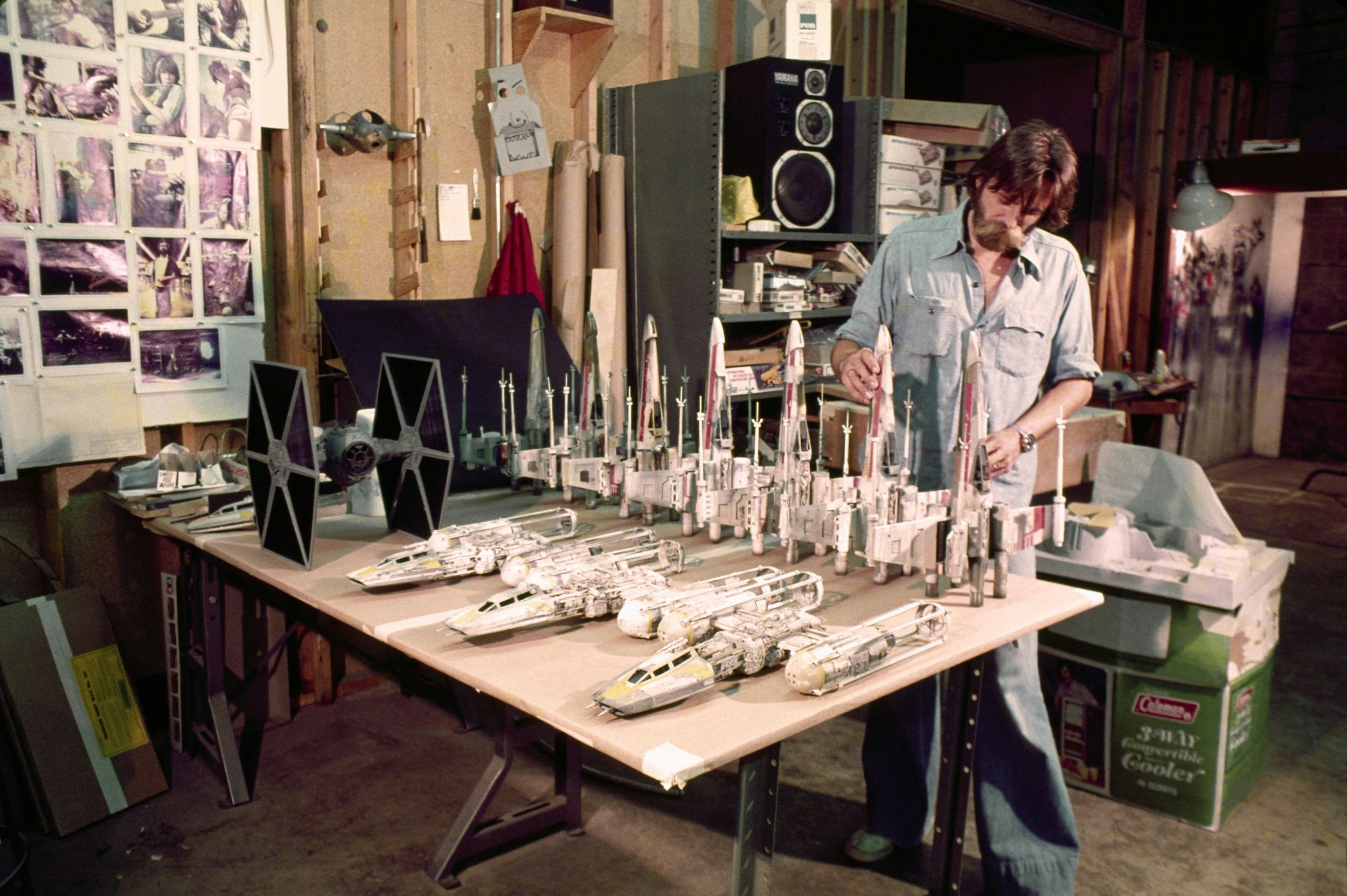
“You have to have a background and understanding of not only film, and be intimate with lenses and cameras, and you also have to understand physics, chemistry, and mechanics to be able to build the miniatures that will look good on screen.” That’s John Dyskstra, famous ILM VFX pioneer, speaking in July 1977, just a few months after the release of the original Star Wars. And, if you dip into any behind-the-scenes journalism on sci-fi movies and TV from the 1950s through the start of the 1990s, nearly every single VFX expert has some kind of physical arts-and-crafts, hands-on skillset.
The way CGI or emerging tech like virtual production or digital prosthetics are discussed today was the way miniatures and miniature explosions were discussed in the heyday of great sci-fi TV and films from the 1970s and 1980s. Even in 1994, the year after Jurassic Park brought CGI to the mainstream with raptors created (partially) in a computer, the seventh Star Trek film, Generations, crashed a 12-foot model of the starship Enterprise into a fully practical, physical landscape. There’s zero chance this kind of scene would be filmed with a real model today, but in 1994, through much of the early 2000s, miniatures and miniature explosions were still very much a thing.
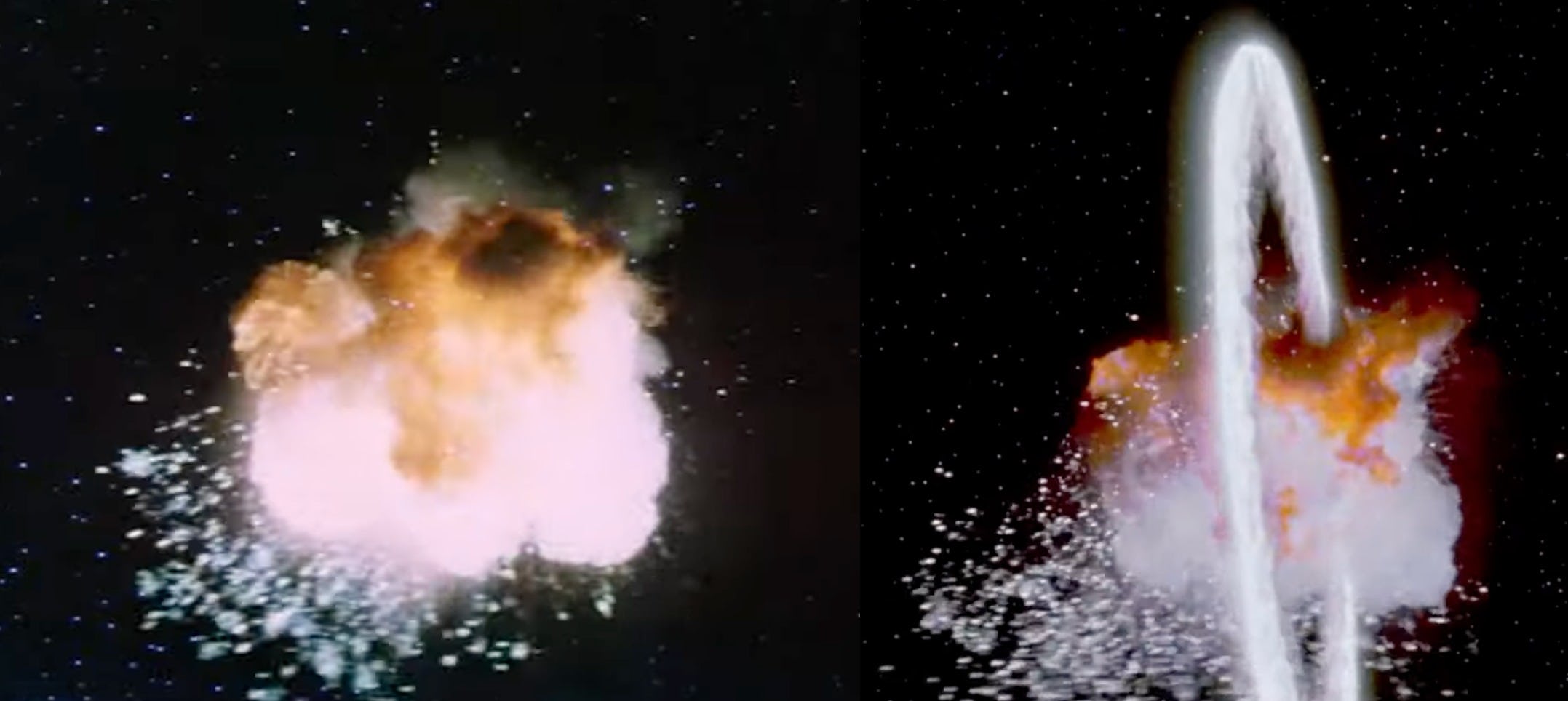
To understand why this all matters, you need to go back to the Death Star in 1977. If you watch Star Wars today, you’re likely getting the “special edition” version, which is the moment in 1997, when a shockwave was added to the explosion effect, to, in theory, make it look cooler. This is sometimes called “the Praxis effect,” named for a CGI shockwave explosion developed by Industrial Light and Magic from 1991’s Star Trek VI: The Undiscovered Country. And while the first version of that effect was created partly on an “Apple Macintosh” with “Adobe Photoshop,” when the Praxis-style shockwave was added to the destruction of the Death Star in the 1997 Star Wars special edition, the explosion itself, which served as the basis for this expanding ring of doom, was created in 1976, at the first version of ILM, and was largerly invented by Joe Viskocil, under the supervision of John Dyskstra.
While Star Wars is known today for the innovations Dykstra created for filming moving miniatures with his special DykstraFlex camera, but we talk less about how those miniatures were blown up. And it turns out there was a meticulous, well-thought-out process to every 1977 Star Wars explosion.
“There should always be some reason for the location of the explosion,” Viskocil told Starlog in an in-depth 1978 interview, part of that magazine’s long-running series on VFX and VFX careers. “I insist upon some sort of continuity, some sort of design to the explosions themselves, so that if you see a ship blowing up, it will look more or less like the rest of the ships blowing up.”
Canon-obsessed fans will take this kind of comment as a sort of “no duh” approach to basic sci-fi continuity today, but the idea that most of the TIE Fighters exploded with a kind of green flame, as opposed to other colors, was a small, specific decision that enhanced the veneer of faux-realism in the classic Star Wars. The name implies conflict, and those conflicts result in things blowing up. Therefore, it follows that if the miniature explosions in Star Wars were silly, bad, or noticeably inconsistent, then Star Wars itself would have failed to connect with audiences and grown into the world-changing phenomenon it became. Guys like Viskocil, Dykstra, as well as Joe Johnston and model-builders Grant McCune and Lorne Peterson were doing the will of the Force, and changing history by figuring out how to blow things up convincingly.
One major innovation from ILM and Viskocil was all about filming the explosion from below rather than above. As he told Starlog, Viskocil was frustrated by films like This Island Earth in which “sparks were falling straight down.” And so, on Star Wars, he “insisted on almost every explosion being shot straight up from below — that was the key to the zero-gravity effect. The circumference of the explosion would fill the entire frame, instead of dropping off to one side.”
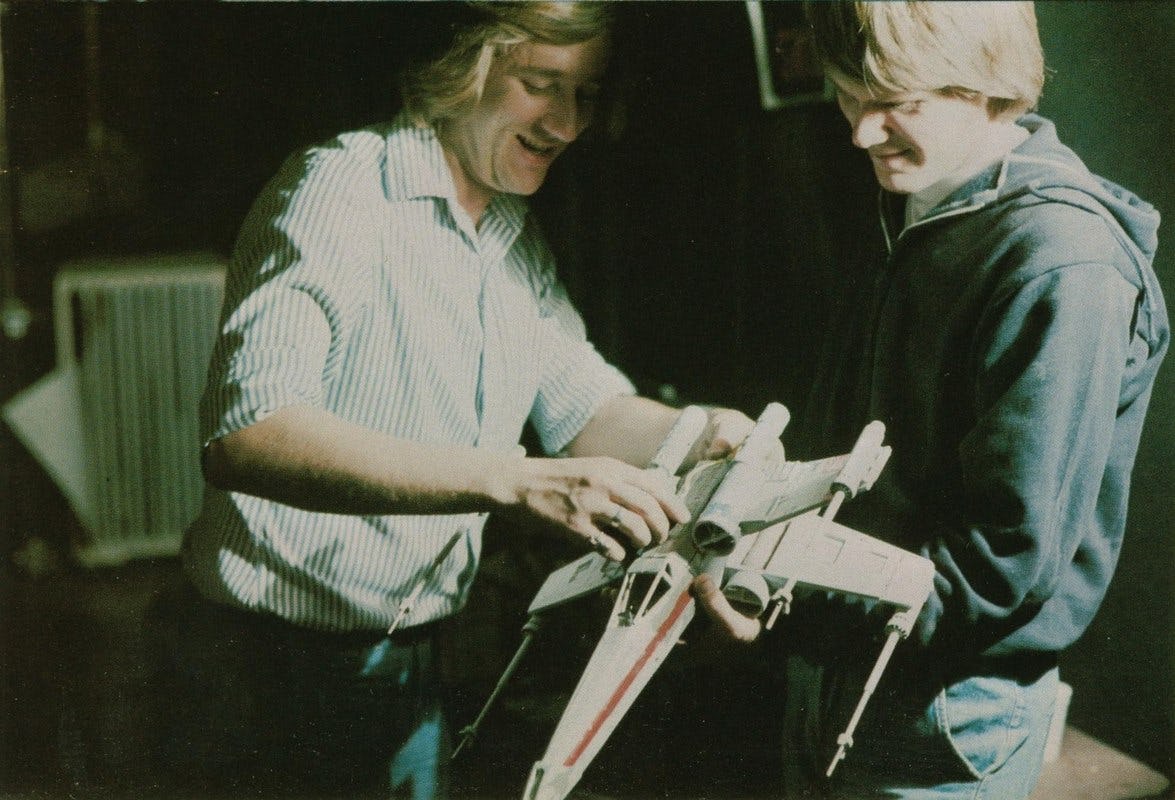
This may seem like a small thing, but the approach Viskocil and ILM took toward miniature explosions continued to inform how miniature buildings, ships, cars, and Stay Puft Marshmallow Men were destroyed for nearly two decades. One of the most famous miniature explosions of all time, the alien destruction of the White House in Independence Day, was created by Viskocil, who worked as the pyrotechnics supervisor on that film, alongside Volker Engel, Douglas Smith, Clay Pinney, and Mike Joyce. The miniature White House in Independence Day was 15-feet-wide, and populated with dollhouse furniture in its interior, to ensure that the explosion would look as realistic as possible.
One imagines that if a person like Viskocil were still alive today (he passed away in 2014) the would go back in time and put tiny furniture into the Death Star, or tell J.J. Abrams to add a lot of miniature trees to a snowy model to make Starkiller Base seem more real in The Force Awakens. This isn’t to say that the legacy of miniature explosions is entirely gone from modern movies; Christopher Nolan is quite fond of minatures, which are used extensively in The Dark Knight and Interstellar. More recently, ILM used a miniature of the Razor Crest throughout the filming of The Mandalorian.
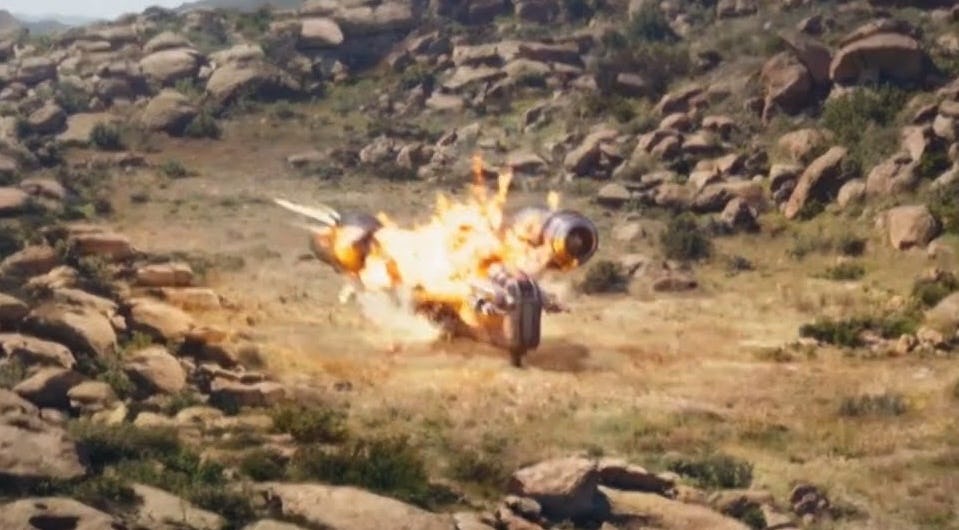
That said, when it was time to blow up the Razor Crest in the Season 2 Mandalorian Episode, “The Tragedy,” that explosion was mostly done with CGI effects, even though aspects of the model and the larger set were constructed of real materials. In the upcoming feature film The Mandalorian and Grogu, the beloved ship is back.
And while we’ll likely get an in-universe reason for that, perhaps the real reason is a bit more metaphysical. The bygone era of miniature explosions left a visceral feeling on viewers, making those moments feel more lasting. There weren’t multiple takes of the Death Star being destroyed, or of the White House getting zapped in ID4. So, if you don’t blow up a fictional spaceship or space station using an actual model and tiny pyrotechnics, did you really blow it up at all?