The Print Is the Argument
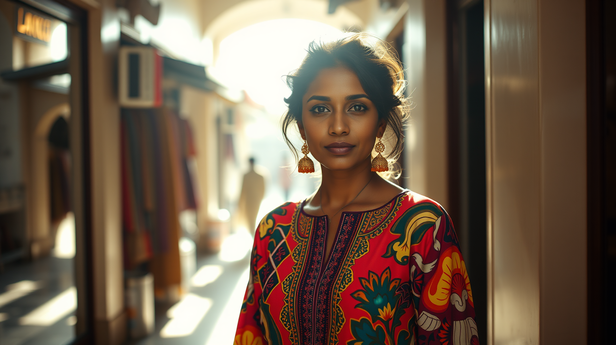
Masaba Gupta did not put a telephone or a mithai box on a kurta because she wanted to be different. She put them there because those objects are real, they exist in Indian homes, in Indian afternoons, in the specific texture of a life lived here. When a designer from London or Milan does "India-inspired" work, the reference is always at a safe distance: a paisley pulled from a museum archive, a lotus rendered in muted gold. Masaba's prints name things you actually own. That specificity is not whimsy. It is a position.
The position is this: Indian visual culture is not a mood board. It is a source. And a brand built on that distinction is doing something that most Indian fashion houses, chasing international minimalism, have quietly refused to do.
What the Label Has Always Known About Its Customer
The House of Masaba customer is not someone who wants to look global. She wants to look like herself, and herself happens to be Indian, urban, opinionated, and tired of the idea that sophistication requires subtraction. She does not want to tone it down. The brand has understood this from the beginning, which is why its silhouettes are structured enough to wear to a board meeting and loud enough to be unmistakable across a room.
This is where wearability becomes a design philosophy rather than a feature. A print this strong could easily become a costume. The fact that it doesn't, that women wear House of Masaba sarees to work, to weddings, to airport terminals, is a function of cut and proportion working in service of the statement, not against it. The clothes are made to be lived in, not photographed once and retired.
The Identity Question No One Asks Directly
Masaba Gupta is the daughter of Neena Gupta and Vivian Richards. She grew up in a country that had strong feelings about what that combination meant. The brand did not emerge despite that history, it emerged from it. A designer who spent her early life being told she didn't fit a single clean category built a label that refuses clean categories. The prints are maximalist because restraint was never an option that was honestly on the table.
Indian fashion has a long tradition of apologising for itself in international spaces, softening the embroidery, neutralising the palette, translating the reference so it travels more easily. House of Masaba does not translate. The culture reference stays intact, and the customer is trusted to carry it.
Beyond Clothing: What the Brand Has Built
The expansion into beauty, into Lovechild by Masaba, into the Netflix series that bore her name, none of this is brand extension in the conventional sense. It is the same argument made in different rooms. The beauty line uses the same visual language: bold, Indian, specific. The foundation shades are named for things that feel familiar rather than aspirational in a borrowed way. The Netflix show put the designer's actual contradictions on screen without resolving them neatly, which is exactly what the clothes do.
A fashion label that can hold that much coherence across categories is not riding a trend. It has a point of view, and the point of view is durable because it was never about what was fashionable. It was about what was true.
The prints were always the least interesting thing about House of Masaba. What the brand actually sells is the permission to be completely, specifically, unapologetically Indian, and the cut that makes that permission wearable every single day.