French clubs have never been in love with the Heineken Cup, or the H Cup as government legislation there forces them to call it. Their national league, long and drawn-out as it is, comes first and second for most, with Europe an often unwelcome diversion.
In the early years of the Heineken Cup, French sides found refereeing tolerance thresholds much lower than they were used to. Brawls ended up in bans and malpractice such as gouging cost some players their careers. It helped convince Bernard Laporte, the France coach from 1999 to 2007, that to succeed on the European and world stage the French needed to become disciplined. It did not come easily, or quickly.
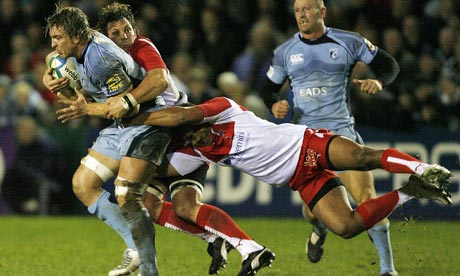
French clubs still have problems with referees. Biarritz were regularly blown up at the Arms Park when they faced Cardiff last week, having also been on the wrong end of the penalty count at home. Their players were told off in English, a language a few of them can speak, but there should be no need for an interpreter in the professional era, especially given all the directives the International Rugby Board is keen on issuing.
The directive on the breakdown has made the season in Europe disjointed. The first six weeks of the Premiership saw a flood of penalties before a gentle easing off, but the effect of referees constantly penalising attacking sides for sealing off, entering from the side and indulging in various other ways of retaining possession was to slow games to a crawl. Small wonder that England collapsed in the second half against Australia, South Africa and New Zealand.
The experimental law variations have not been given a chance to work in England because the breakdown directive has been taken so literally. Another problem for players is that referees, despite being centrally controlled now, still have vastly different approaches.
Marius Jonker blew only twice for breakdown offences when Australia defeated England, both times for scrum-halves not releasing the ball. A couple of weeks later, Alain Rolland found 18 breakdowns to take exception to when New Zealand visited Twickenham. England were at fault on 13 occasions. Rolland applied the directive, Jonker did not, but a week later, when Bath met Glasgow at the Recreation Ground, Rolland did not penalise a side at the breakdown until the 27th minute, even though Butch James tested his tolerance in the opening minute when he charged into a ruck from the side and took out a defender.
The problem with directives is that they make the game arbitrary, which is where the French worry about Europe. For example, every year the IRB reminds referees that a feed into a scrum has to be straight, which usually results in the visiting team getting blown once for the offence near the halfway line.
The central thrust of the IRB's thinking over the ELVs was to make refereeing less subjective, but the effect has been the reverse. The three major southern-hemisphere unions were all surprised last month at the high interference levels of referees in Europe; they are used to a more laissez-faire attitude, with precious little evidence of the breakdown directive being enforced in either the Super 14 or Tri-Nations earlier this year. The consequence was games that were fast and open, rather than the stop-start version Europe has had to endure.
The differences, some of them subtle, that existed in the game in the top countries over the years have been eroded by more regular contact with each other, tournaments that bring them together, such as the Heineken Cup, Super 14 and World Cup, and the movement of players and coaches all over the world.
France were always more different than most. The former Cardiff prop Bob Newman once had a stint with Clermont Ferrand. Before a derby match, a new player came into their dressing room. Newman was not the biggest of front-rowers, but he towered over the newcomer. The club's president, introducing the recruit, instructed the captain to take the kick-off if he won the toss and the outside-half was told to hang the ball in the air as high as he could.
By the time the kick-off had reached the visitors, two of them were lying flat out on the ground. They were taken off on a stretcher, unable to be replaced, while the new prop was sent off for violent conduct. Turned out he was a boxing champion, not a rugby player. Clermont won. French rugby has changed a huge amount since then, but it has not entirely lost its sense of insularity. Or its disapproval of referees.