The internet is awash in speculation, suspicion and disgust over the millions of new pages of Jeffrey Epstein files released by the Justice Department on Friday.
- Few believe the story is anywhere near finished.
Why it matters: The DOJ's final release has delivered tantalizing revelations about Epstein's ties to elite society. But it has brought neither clarity nor closure to the fundamental questions that have kept the scandal alive.
The big picture: The Epstein files metastasized beyond the Trump administration's control in 2025. Here are five reasons the public's obsession is unlikely to abate in 2026.
1. An expanding blast radius.
- Some Epstein associates — British power broker Peter Mandelson, Norwegian royal Mette-Marit, celebrity doctor Peter Attia — are paying real reputational and professional costs in the wake of new revelations.
- By contrast, figures such as Elon Musk and Commerce Secretary Howard Lutnick have faced few consequences after emails undercut their denials of contact with Epstein following his 2008 sex-crime conviction.
- Partisans on both sides continue to treat Epstein as a proxy war — accusing President Trump and former President Clinton of crimes that far exceed any substantiated evidence in the files.
2. A gap between government and public.
- The Justice Department has framed its massive document release as the end of its Epstein review, with no indication that further prosecutions are coming — unchanged from its position last July.
- That declaration of finality has collided with a wave of backlash, as Democrats accuse the DOJ of withholding as much as 50% of the files after blowing past the law's Dec. 19 deadline.
- Victims expressed outrage after the files appeared to expose the names of at least 43 survivors, along with dozens of unredacted nude images. At the same time, some critics say the DOJ's sweeping redactions shielded powerful figures from scrutiny.
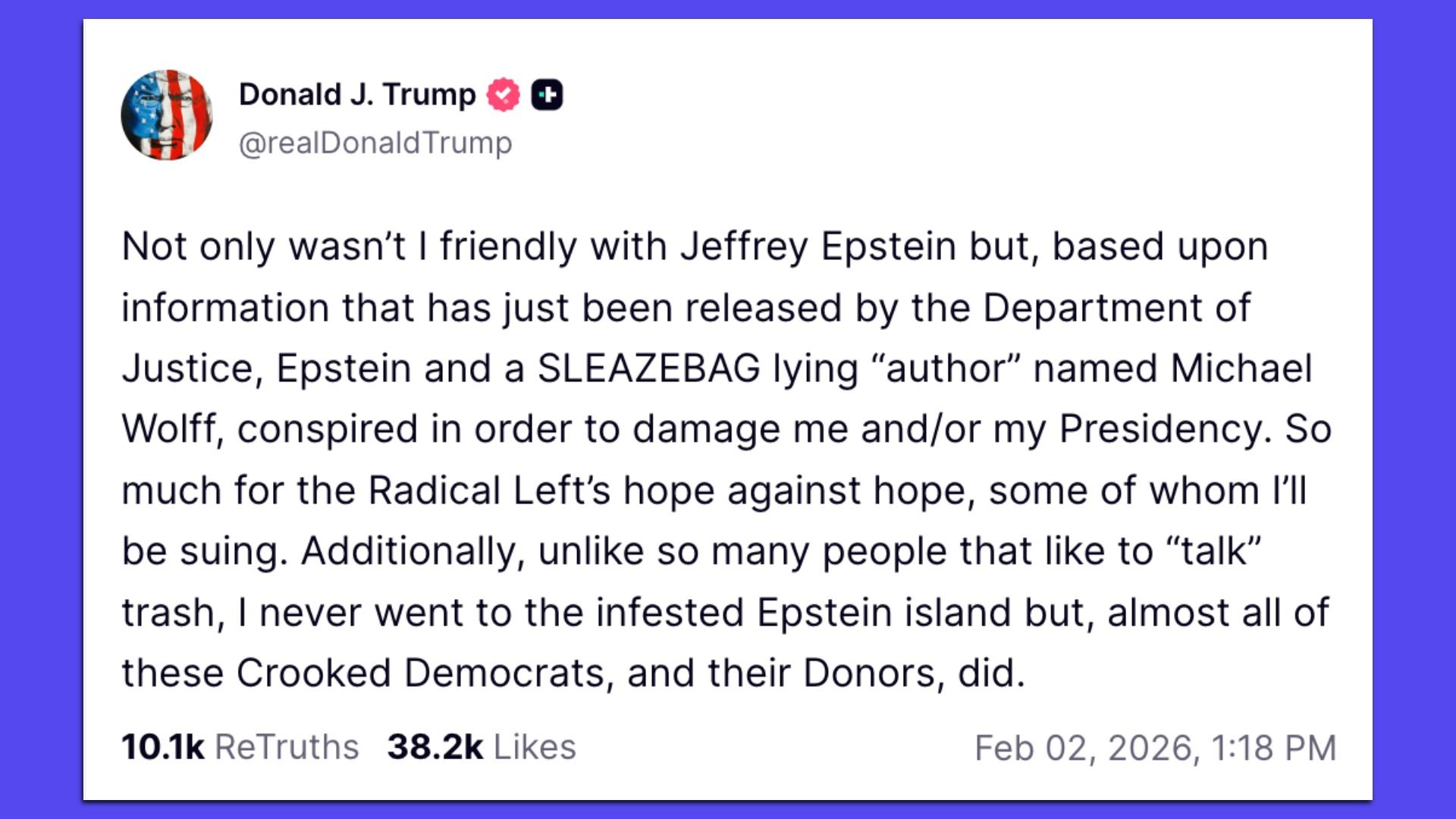
3. Endless intrigue, overwhelming volume.
- The sheer scale of the Epstein archive — millions of pages of emails, contacts, calendars and recordings — will provide a steady stream of new stories and leads for both journalists and conspiracy theorists.
- Among them: Emails show Epstein met with the founder of 4chan around the same time the site launched /pol/ — the far-right forum where QAnon first appeared. There's no evidence Epstein influenced the forum, but the coincidence is already fueling new conspiracy theories.
- FBI source reports and internal emails contain unverified claims and secondhand suspicions about Epstein's possible ties to Mossad and other intelligence services — material that stops well short of proof but offers ample fodder for speculation.
4. Thriving misinformation.
- The Epstein files are being consumed in an information ecosystem that struggles with nuance, context and legal standards — where guilt by association has become the default reaction.
- The confusion is further compounded by AI: Fake emails, doctored screenshots and AI-generated images circulate alongside authentic documents, tricking even veteran journalists.
- One example: A passing mention of filmmaker Mira Nair attending a party at Ghislaine Maxwell's home has fueled viral conspiracy theories and AI-generated images falsely linking her son, New York City Mayor Zohran Mamdani, to Epstein.
5. Epstein as a symbol.
- For many people, the Epstein case has become shorthand for a deeper belief that powerful figures operate by different rules, and that the system is either unwilling or unable to hold them fully to account.
- Nowhere is that clearer than what many see as the case's original sin: the 2008 plea deal that effectively foreclosed federal prosecutions of alleged Epstein co-conspirators.
- The Trump administration's slow-walking of the files, refusal to clarify who benefited from Epstein's trafficking, and failure to bring additional cases have only deepened the systemic trust deficit.